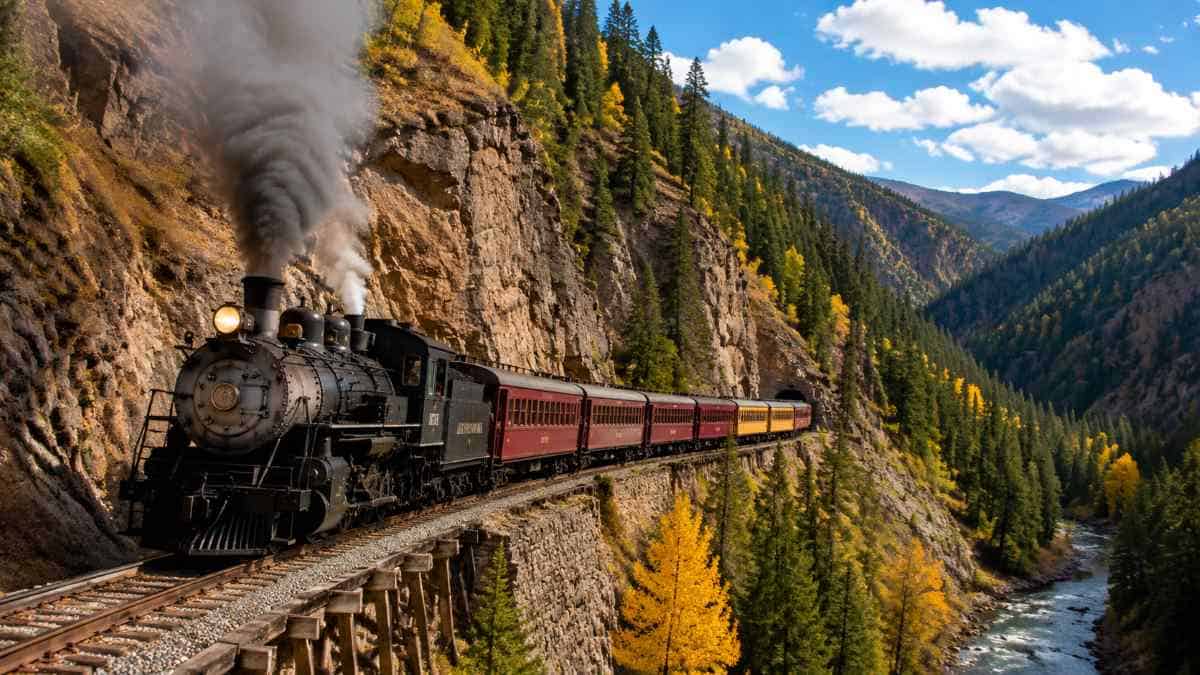
Image generated with Ai
This year, Cumbres & Toltec Scenic Railroad (C&TSRR) will provide one of North America’s most authentic heritage rail excursions by offering its historic rail service on a 64-mile narrow gauge steam rail on the route between Chama, New Mexico and Antonito, Colorado, travelling through one of the most stunning areas of the Rocky Mountains. The route is a National Historic Landmark preserving the longest and highest, and most complete, authentic steaming narrow gauge rail service in the United States. Passengers on scenic journeys enjoy a combination of preserved steaming locomotives, rail service on one of the most beautiful sections of railroad lines in the West, and heritage rail cars.
Many rail fans consider the Cumbres & Toltec Scenic Railroad (C&TSRR) a slow travel alternative to the modern day rail systems designed for speed and efficiency. Passengers of the rail journey travel across a rugged mountain landscape. Along the route they see historic engineering feats of the American West preserved in historic railroad structures. Colorado and New Mexico consider the rail service an important tourism asset since it connects visitors to the history of the Railroad and the two states while accommodating the needs of travelers who want to experience and enjoy the authentic and unique.
The story of the Cumbres & Toltec Scenic Railroad began in 1880, when the Denver & Rio Grande Western Railroad (D&RGW) constructed the narrow-gauge line to support mining communities and economic activity in the San Juan Mountains. The railway was originally built to transport essential resources, including silver, gold, timber and supplies, through one of the most challenging landscapes in the western United States. Engineers selected a 3-foot narrow gauge design because it allowed trains to navigate tighter curves, steep mountain routes and difficult terrain while reducing construction costs.
Over time, the railroad became a vital transportation link between communities in southern Colorado and northern New Mexico. When larger railway systems replaced many narrow-gauge operations, the historic route faced the possibility of being dismantled. In 1970, the states of Colorado and New Mexico jointly purchased the railway, protecting the line from being scrapped and creating a foundation for long-term preservation. More than four decades later, the railroad received National Historic Landmark designation in 2012, recognising its exceptional historical importance and its preserved collection of infrastructure, locomotives and passenger equipment. Today, the Cumbres & Toltec Scenic Railroad represents a living museum where visitors experience railway history while travelling through some of the most spectacular landscapes in the Rocky Mountain region.
Advertisement
Advertisement
The Cumbres & Toltec Scenic Railroad’s route stretches 64 miles between Chama and Antonito, crossing the Colorado–New Mexico state border 11 times during the journey.The changing scenery is one of the railway’s biggest attractions. Passengers move through several distinct environments during the full-day excursion, including:Route Landscape Travel Experience High desert plains Open views across the western landscape Alpine forests Pine and aspen-covered mountain areas Mountain valleys Remote wilderness scenery Deep canyons Dramatic cliffs and historic engineering structures Rocky Mountain passes High-elevation railway adventure
The railway provides access to areas that remain largely untouched by modern development. The journey allows travellers to observe landscapes that are difficult to reach by road, creating a distinctive slow-travel experience. The route is especially popular during the autumn season when the Rocky Mountain forests transform with golden aspen foliage, creating one of the most visually impressive periods for railway tourism.
The highlight of the Cumbres & Toltec Scenic Railroad is the dramatic climb over Cumbres Pass, reaching an elevation of 10,015 feet. It is the highest point on the railway and the highest mountain pass reached by passenger rail in the United States. The climb from the Chama side requires steam locomotives to tackle steep mountain grades, including sections reaching a challenging 4% gradient.
During the ascent, historic steam engines work through difficult terrain while pulling passenger cars through forests and mountain landscapes. The combination of elevation, engineering and steam power creates one of the most memorable sections of the journey. The route also features the historic Lobato Trestle, another example of the engineering solutions developed by early railway builders to overcome the challenges of the Rocky Mountain environment. For railway enthusiasts and general travellers alike, the Cumbres Pass section represents the true character of historic mountain rail travel.
Advertisement
Advertisement
After crossing Cumbres Pass, the railroad continues toward one of its most dramatic natural features, the Toltec Gorge. The train travels along narrow ledges positioned approximately 600 to 800 feet above the Rio de los Pinos, providing passengers with views of steep canyon walls and rugged mountain scenery.
The route includes two important historic structures:
These engineering achievements demonstrate the challenges faced by nineteenth-century railway builders who created transportation routes through remote mountain regions. The Toltec Gorge section has become one of the most photographed areas of the railway because it combines dramatic scenery with historic infrastructure.
Full-line excursions include a stop at Osier Station, Colorado, located at an elevation of approximately 9,637 feet. Situated near the centre of the route, Osier provides passengers with an opportunity to leave the train and enjoy a hot buffet lunch before continuing the journey.
The isolated mountain station has become an important part of the passenger experience because it combines railway travel with hospitality in a remote Rocky Mountain setting. The inclusion of dining services reflects the changing nature of heritage tourism. Visitors increasingly seek complete experiences that combine transportation, scenery, culture and regional hospitality.
Travellers can begin their journey from either Chama, New Mexico, or Antonito, Colorado, with each departure point offering a different perspective of the route.Feature Chama, New Mexico Antonito, Colorado Landscape Forested mountain terrain High-desert plains and valleys Main Highlight Cumbres Pass climb Toltec Gorge scenery Railway Experience Powerful steam locomotive ascent Gradual mountain and canyon journey Key Views Pine forests, alpine landscapes San Luis Valley and Rio de los Pinos
The Chama departure provides an immediate mountain railway experience, with locomotives beginning a challenging climb toward Cumbres Pass. The Antonito departure introduces travellers to the wide-open landscapes of the San Luis Valley before moving toward canyon environments and mountain scenery. Both options connect visitors with the complete historic route and include access to the railway’s major attractions.
The Cumbres & Toltec Scenic Railroad maintains a fleet of historic narrow-gauge steam locomotives that continue to operate passenger excursions. The current operational roster includes Baldwin-built locomotives such as K-27 and K-36 class engines, including locomotives numbered 463, 484, 487, 488 and 489. One important modernisation project involved K-36 Locomotive No. 489, which was converted from coal-burning to recycled oil fuel to help maintain operations during periods of increased wildfire risk and environmental restrictions.
The railroad continues to balance historic preservation with modern operational requirements, ensuring that steam-powered tourism remains viable in changing environmental conditions. Historic passenger equipment is also maintained, with restoration support from organisations including the Friends of the Cumbres & Toltec Scenic Railroad, which assists with preservation, restoration and interpretation efforts.
The railway offers several passenger options designed for different travel preferences.Class Experience Coach Class Historic seating with traditional railway interiors and openable windows Deluxe/Tourist Class Enhanced comfort with upgraded seating, extra space and beverage service Parlor Class Premium seating, dedicated attendant, snacks and beverages Open Gondola Outdoor viewing area with 360-degree mountain views
The open gondola remains one of the most popular features, allowing passengers to experience fresh mountain air and unobstructed photography opportunities.
The Cumbres & Toltec Scenic Railroad continues to grow in popularity, providing evidence that heritage and experiential tourism trends in the United States will continue to increase. Along with scenic rail tourism, the railroad provides access to the history, innovation, and landscapes and areas formed through generations of railroad construction.
The Cumbres & Toltec Scenic Railroad’s history combined with its industrial innovation and preserved train infrastructure, National Historic Landmark status, and its route through the dramatic mountain scenery gives it distinction among all other heritage rail tours in North America. As the demand for authentic travel grows, the railroad protects the historic rail transport of Colorado and New Mexico and demonstrates how an historic transportation route can become a core attraction of the tourism economy.
Advertisement
Tags: Chama New Mexico tourism, Colorado scenic train, Cumbres & Toltec Scenic Railroad, New Mexico heritage railway, Rocky Mountain steam train
Advertisement
Advertisement












Tuesday, September 1, 2026

Tuesday, September 1, 2026

Tuesday, September 1, 2026

Tuesday, September 1, 2026

Tuesday, September 1, 2026

Tuesday, September 1, 2026

Tuesday, September 1, 2026

Tuesday, September 1, 2026