
Spain Aligns With France And More Unveils Tech Driven Future Reshaping Urban Tourism Experience

Published
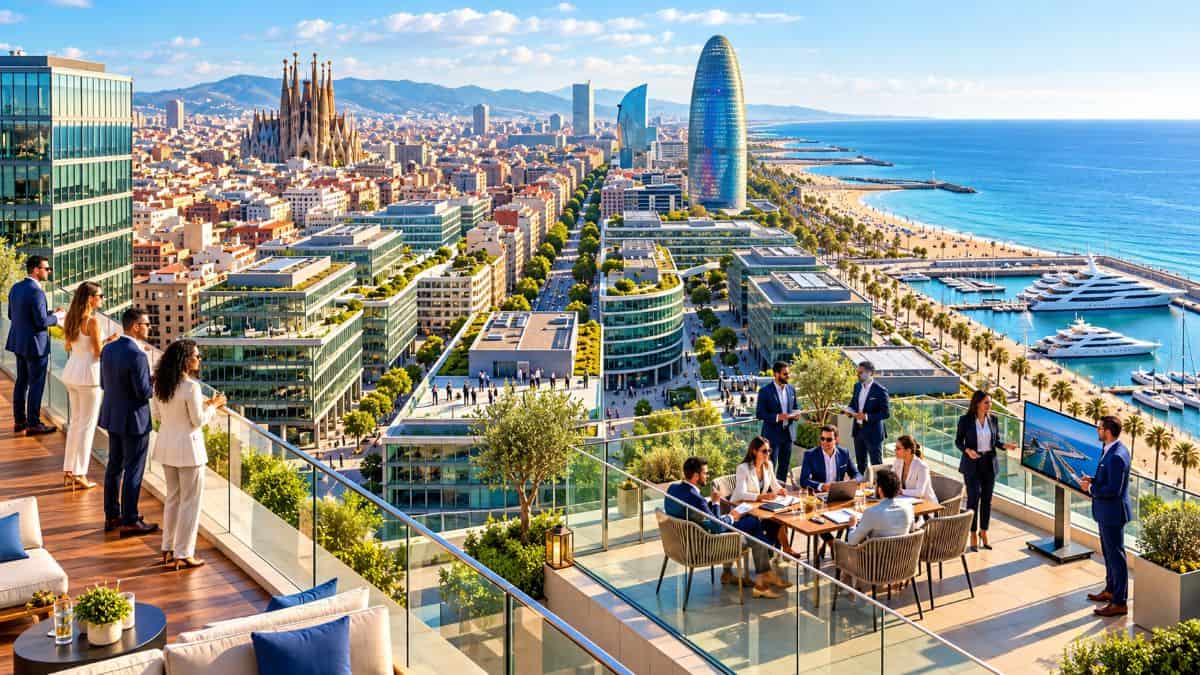
Image generated with Ai
Spain aligns with France and more unveils an ambitious economic shift, prioritizing high-value digital industries to transform its urban landscape and travel ecosystem. As major Southern European destinations evaluate their visitor capacities, Barcelona is actively leading a pivotal transition away from over-reliance on traditional mass holiday travel. The municipal leadership in the Catalan capital is deliberately steering strategic investments into technology, audiovisual production, and biomedical research to establish a balanced and resilient financial foundation. City officials have explicitly stated that a tourism sector contributing above thirteen percent to regional gross domestic product no longer generates optimal long-term social value for local communities, sparking a fundamental evolution in how international hubs approach urban growth.
This structural rebalancing addresses critical challenges surrounding metropolitan living standards, residential stability, and regional transport infrastructure. By fostering digital hubs that attract global enterprise investments, local authorities aim to elevate local wage structures to better match rising urban living costs. The transition seeks to cultivate high-quality, year-round employment opportunities rather than seasonal positions, creating an environment where skilled workers can build long-term careers. Concurrently, regional transit upgrades and housing management plans are being deployed to ensure that economic prosperity spreads evenly across the wider metropolitan basin, establishing a sustainable framework for both local residents and international business travellers visiting Western Europe.
Advertisement
Advertisement
Strategic Transition Towards Digital Innovation and Audiovisual Hubs
The shift in Catalonia represents a calculated strategy to modernize urban infrastructure and diversify local industries. Over the past decade, the technology and audiovisual sectors have steadily expanded, now matching the economic output of traditional hospitality. Together, digital technology and creative media contribute nearly thirteen percent to the regional economy while employing roughly 250,000 skilled professionals. By contrast, while leisure hospitality yields a similar percentage of economic output, it requires a workforce of 500,000, underscoring a sharp difference in overall productivity and compensation levels. Municipal policy now actively incentivizes specialized innovation zones, such as the 22@ innovation district, transforming former industrial areas into modern tech centers housing multinational life science firms and audiovisual studios.
Real Estate Management and Resident Security in Modern European Cities
Economic diversification is deeply connected to local housing management strategies designed to safeguard residential living standards. City leaders advocate strongly for conditions that allow residents to secure affordable housing within urban boundaries, ensuring that local workers are not displaced by rising costs. To support this objective, municipal authorities are curtailing the expansion of short-term tourist accommodation, refusing license renewals for holiday rentals, and directing property development toward long-term residential availability. By managing visitor accommodation capacity, the city aims to stabilize private rental markets while encouraging sustainable urban planning that aligns real estate growth with actual demographic needs.
Advertisement
Advertisement
| Economic Sector | Regional GDP Contribution | Total Employment Volume | Average Wage Profile | Strategic Focus |
| Technology & Audiovisual | ~13.0% | 250,000 Professionals | High Value / Specialized | Primary Expansion Zone |
| Leisure Tourism & Hospitality | 12.8% | 500,000 Professionals | Traditional / Moderate | Capped & Managed Growth |
| Biomedical & Life Sciences | Rapidly Growing | High-Specialization Roles | Executive / Scientific | Targeted Capital Support |
Connecting Metropolitan Infrastructure to High Value Employment Zones
Sustaining rapid expansion across technology and scientific research requires comprehensive public transit systems that efficiently connect city centers with surrounding metropolitan areas. Regional transport plans emphasize major infrastructure upgrades, specifically focusing on suburban railway lines and suburban bus connectivity across the broader metropolitan area. Enhancing public transport efficiency allows professionals to commute easily from surrounding towns, reducing central urban traffic congestion and supporting environmental sustainability targets. This interconnected regional approach ensures that employment hubs remain accessible across the territory, preventing over-concentration in inner-city districts while distributing economic vitality across surrounding municipalities.
Balancing Foreign Enterprise Investment with High Level Professional Talent
While local policies focus on resident retention and public welfare, private sector investment leaders highlight the continuous need to attract international expertise and high-value capital. Major global industry events, including international mobile tech congresses, bring vital business travel and exposure to the region, yet local ecosystems must continuously nurture highly skilled domestic talent to fulfill technical demands. Striking an effective balance involves combining municipal incentives for corporate headquarters with heavy investments in local universities and digital training centers. Ensuring local workers possess advanced technical skill sets guarantees that foreign corporate investments translate directly into long-term domestic economic security and sustained regional competitiveness.
Advertisement
Advertisement
Redefining Business Travel Frameworks within Evolving Smart Destinations
As Southern European capitals recalibrate their tourism frameworks, the profile of international visitors is undergoing a natural transformation. High-value corporate travel, scientific conferences, and collaborative academic research are increasingly supplementing conventional leisure travel. Professional visitors participating in technology ecosystems typically demonstrate higher spending patterns while generating less seasonal strain on public urban resources. This evolution aligns perfectly with broader regional goals to encourage purposeful, high-value travel experiences, ensuring that international arrivals actively contribute to knowledge sharing, professional networking, and long-term urban economic development without overwhelming local public amenities.
Frequently Asked Questions
What is the primary goal of Barcelona’s current economic transition? The city is shifting its focus toward technology, audiovisual production, and biomedical sectors to foster higher-paying jobs and establish long-term economic stability.
Why are municipal authorities limiting short-term tourist accommodations? Capping short-term vacation rentals helps relieve residential housing pressures, prioritizing long-term rental availability and housing affordability for local residents.
How do wages in the tech sector compare to traditional hospitality? Technology and audiovisual roles offer significantly higher average salary structures compared to traditional hospitality, despite employing half the total volume of workers.
What role does metropolitan transport play in this economic strategy? Upgrades to suburban rail lines and public transit networks ensure seamless connectivity between surrounding residential areas and central innovation hubs.
Which districts are central to this digital innovation expansion? The 22@ innovation district and specialized biomedical facilities serve as the primary hubs for global enterprise headquarters and research centers.
Advertisement
Advertisement
How does this policy shift impact international business visitors? The focus prioritizes high-value corporate travel, professional industry conferences, and academic collaborations over unmanaged leisure tourism growth.
What proportion of regional GDP does the tech sector account for? The technology and audiovisual sectors combined now contribute nearly thirteen percent to the regional gross domestic product.
How is the city balancing foreign investment with local workforce needs? Authorities are combining foreign enterprise incentives with local educational programs to ensure residents qualify for high-value technical positions.
What concerns have private sector investment leaders raised regarding these policies? Private investors emphasize that cities must remain open to global top-tier engineering talent and foreign capital to maintain international competitiveness.
Will leisure tourism continue to exist in Catalonia under these new plans? Yes, leisure travel remains an essential economic component, but municipal management strategies prioritize visitor quality, sustainability, and capped capacity over volume.
Advertisement
