
Korean Air Phases Out A380 From Major Global Routes, Shifts to Boeing 777-300ER Operations: Everything You Need to Know

Published
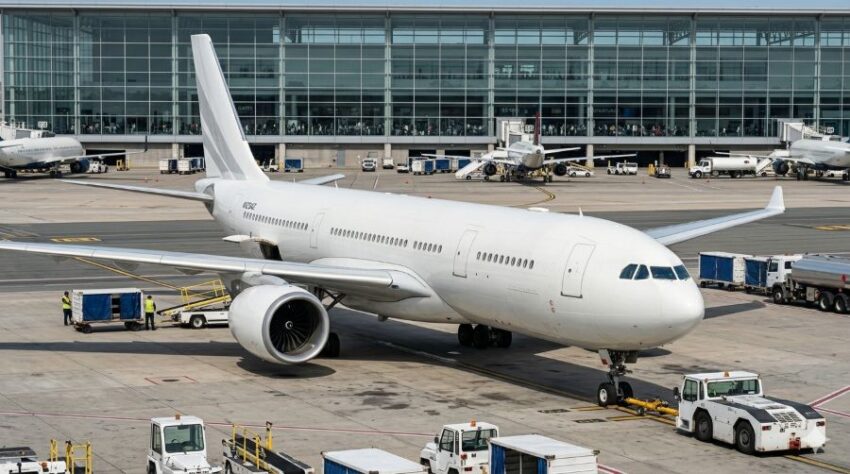 Image generated with Ai
Korean Air has officially pulled its Airbus A380 from 11 of its long-haul international routes, signaling a major turning point in the airline’s fleet and operational strategy. The move, which has been unfolding gradually since 2011 and reached its conclusion in early 2026, reflects a wider industry shift away from large, four-engine aircraft toward leaner and more economical alternatives.
The double-decker superjumbo, once celebrated for its sheer size and passenger capacity, is now becoming an increasingly rare sight in Korean Air’s network. With only six A380 aircraft remaining in active service — down from an original fleet of ten — the South Korean carrier has made it clear that the era of the A380 within its operations is drawing to a close.
Advertisement
Advertisement
Routes Affected by the A380 Phase-Out
The list of routes no longer served by the A380 spans three continents and includes some of the world’s busiest aviation corridors. Departing from the airline’s main hub at Seoul Incheon International Airport (ICN), the aircraft previously connected South Korea to destinations including Paris, London Heathrow, Frankfurt, Atlanta, Sydney, Hong Kong, Bangkok, Taipei, Guangzhou, Beijing Capital, and Prague.
The final chapter of the A380’s regular service came in February 2026, when Korean Air completed its last scheduled A380 flight to Taipei. While some routes such as Prague saw only brief or one-time A380 deployments, others including Paris Charles de Gaulle and Hong Kong had been served consistently by the aircraft for close to a decade before being phased out.
Advertisement
Advertisement
Why Korean Air Is Moving Away From the A380
The decision is firmly rooted in economics and operational efficiency. The Airbus A380 was built for an era when airlines prioritized maximum passenger volume on trunk routes. However, shifting travel patterns, fluctuating demand, and the rising importance of cargo revenue have made smaller twin-engine widebody jets a far more attractive proposition for carriers worldwide.
Korean Air has already retired and scrapped four of its A380s as part of a broader fleet optimization plan. The remaining six aircraft continue to serve select high-demand routes, but their long-term future within the airline’s operations remains uncertain as the transition accelerates.
Advertisement
Advertisement
Boeing 777-300ER Steps Into the Spotlight
Taking the place of the A380 on most of these routes is the Boeing 777-300ER, a twin-engine widebody that strikes a balance between passenger capacity and operational cost. Crucially, the 777-300ER also offers substantial cargo hold space — an increasingly vital feature for Korean Air, which operates one of the world’s largest cargo divisions.
The 777-300ER provides airlines with more scheduling flexibility, as it can be deployed profitably on routes where filling an A380’s 500-plus seats would be challenging. This adaptability makes it a preferred choice for airlines navigating the unpredictable demands of modern aviation markets.
A Broader Industry Trend
Korean Air’s decision is not an isolated one. Across the globe, major carriers have been quietly retiring or reducing their A380 fleets. Airlines are increasingly investing in next-generation aircraft such as the Boeing 787 Dreamliner and the Airbus A350, both of which offer superior fuel efficiency and lower operating costs per seat compared to the A380.
The accelerated decline of A380 operations worldwide was further pushed along by the global travel downturn of 2020, after which many airlines found little justification to return the massive jets to service. Korean Air followed a similar path, withdrawing the aircraft from key European routes including London Heathrow and Frankfurt around that period.
What This Means for Passengers
For travelers flying Korean Air between Seoul and major international destinations across Europe, North America, Asia, and Oceania, the transition to the Boeing 777-300ER means a different onboard experience. While the 777-300ER lacks the iconic twin-aisle upper deck of the A380, the aircraft still offers a premium travel experience across all cabin classes.
As Korean Air continues to reshape its long-haul network across Asia, Europe, and North America, passengers and aviation watchers alike should expect further fleet changes in the months ahead, with fuel efficiency, cargo capability, and route profitability guiding every future decision the airline makes.
Advertisement
