
Norway’s Fjord Oslo Light Festival 2026 Turns Waterfront Into Spectacular Free Art Experience

Published
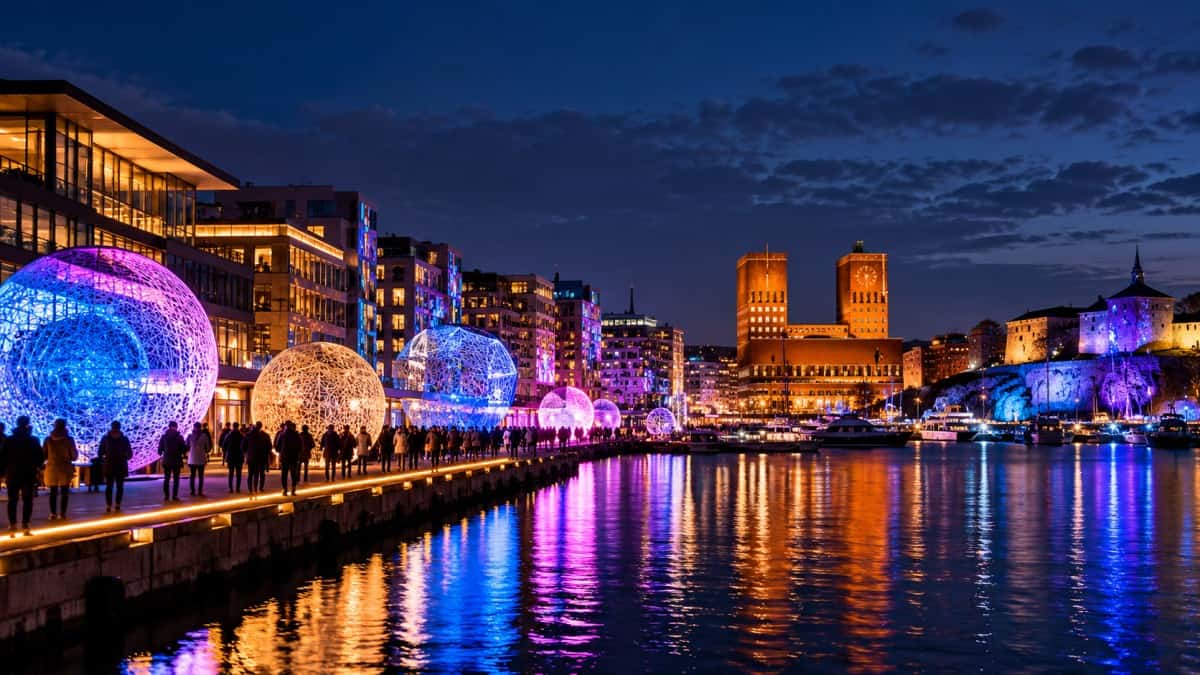
Image generated with Ai
Fjord Oslo Festival of Light Art is set to take place from 5-8 November 2026, bringing light into the Nordic darkness in Oslo, which will transform Tjuvholmen, Aker Brygge, Rådhusplassen and Akershusstranda into a gigantic outdoor museum of light. The festival is free to enter. During every night from 6 to 11 pm, tourists will be able to enjoy contemporary light art in the beautiful surroundings of the Oslofjord for five hours each evening, while at the same time enjoying a lovely walk along the waterfront. For tourists interested in visiting Oslo in autumn or winter, there is nothing easier. There is no need for a special accommodation to enjoy or participate in the festival, no need to buy a ticket, make a booking, or search for an indoor venue. Everything is done in a form of an open-air exhibition, turning the central promenade of the waterfront into a unique museum in the outdoors. Norway is already advertising it as the biggest light festival in the country, featuring impressive projections, installations, sculptures and other art pieces.
Fjord Oslo 2026 Brings Four Nights of Free Art to Norway’s Capital
Fjord Oslo will take place across four consecutive evenings from Thursday, 5 November, to Sunday, 8 November 2026. Each night runs from 18:00 until 23:00. All installations operate continuously throughout the published opening hours, meaning tourists can arrive at different times instead of following a fixed performance schedule. Entry to the festival itself remains completely free.
This format gives international visitors considerable flexibility. Travellers can spend the daytime exploring Oslo’s museums, architecture and neighbourhoods before walking towards the waterfront after dark. Those with shorter stays can also incorporate the festival into an evening itinerary without sacrificing an entire sightseeing day. The extended nightly programme makes Fjord Oslo particularly convenient for weekend visitors and short city-break travellers.
Tjuvholmen and Aker Brygge Become Part of the Exhibition
The 2026 festival stretches through Tjuvholmen, Aker Brygge, Rådhusplassen and Akershusstranda, creating a waterfront route through some of central Oslo’s best-known public spaces. Rather than concentrating visitors inside one building, organisers use the Harbour Promenade as the exhibition environment. This approach links contemporary light art directly with the city’s fjord-facing urban landscape.
Advertisement
Advertisement
The location offers another advantage for travellers: sightseeing becomes part of the festival experience. Visitors move between artworks while seeing Oslo’s waterfront after dark. VisitOSLO already recommends the harbour promenade as one of the city’s worthwhile free experiences, particularly for budget-conscious travellers interested in public art, architecture and waterfront walking.
No Festival Ticket Is Required for Fjord Oslo 2026
The most important practical detail for tourists is simple: Fjord Oslo is free. VisitOSLO lists every festival date as free, while the organisers describe the event as an open cultural experience available to everyone. Travellers therefore do not need to buy an admission ticket for the light installations or pay an entrance charge at the main festival areas. VisitOSLO
Advertisement
Advertisement
That makes the festival particularly valuable in a destination where travellers may already budget for accommodation, restaurants, museums and transport. Visitors can explore the illuminated waterfront without increasing their attraction costs. However, tourists should still budget separately for public transport, food, drinks, accommodation and any additional paid Oslo attractions they combine with their evening festival visit.
International Artists Will Turn Oslo Into an Outdoor Gallery
Fjord Oslo brings international artists together to explore light as an artistic medium. Visit Norway says visitors can expect experiences ranging from projections on landmark buildings to intimate installations, site-specific light sculptures and immersive video works. The festival therefore offers significantly more than decorative city lighting, positioning the waterfront as a temporary contemporary art exhibition. Visit Norway
Advertisement
Advertisement
Previous editions demonstrate the festival’s international reach. Fjord Oslo reports that its first four editions presented 42 artworks, 13 premieres and 37 artists representing 19 countries, while attracting a cumulative audience of 560,000. Those figures reinforce the event’s growing significance within Oslo’s cultural calendar and give overseas travellers another reason to consider visiting outside Norway’s traditional summer tourism season. Fjord Oslo
IMAGINE PEACE Gives the 2026 Festival a Wider European Dimension
The 2026 edition forms part of IMAGINE PEACE, an EU co-funded project connecting five European light festivals. Fjord Oslo will participate alongside Copenhagen Light Festival in Denmark, Essen Light Festival in Germany, Water Light Festival in Italy and Visualia in Croatia. The initiative focuses on cultural diversity, peace, sustainability and collaboration across the participating festivals. Fjord Oslo
For visitors, this adds a cross-European dimension to the Oslo event. Rather than functioning only as a local autumn festival, Fjord Oslo sits within a broader network of European light-art experiences. Travellers interested in creative tourism, contemporary public art or cultural city breaks can therefore view Oslo as one stop within a larger European calendar of illuminated urban festivals.
Getting to Fjord Oslo Is Straightforward by Public Transport
Travellers can reach the festival area from several central Oslo transport points. Nationaltheatret is the closest train and metro station. Tram Line 12 serves Aker Brygge and Kontraskjæret, both within the festival area, while tram Lines 13 and 19 stop at Nationaltheatret. Nearby bus stops include Vika Atrium, Tjuvholmen, Dokkveien, Klingenberg and Wessels Plass. Fjord Oslo
Advertisement
Advertisement
Visitors arriving from Nesodden can use ferry B10, which reaches Aker Brygge directly within the festival zone. Organisers recommend using Ruter’s journey-planning services when arranging public transport. The festival also encourages visitors to walk, cycle or use public transport rather than driving, supporting its wider focus on lowering environmental impact. Fjord Oslo
Accessibility Makes the Festival Easier for More Travellers
The official festival information states that all installations are accessible for everybody, an important consideration for visitors with mobility requirements and families planning an evening route. Because artworks operate continuously rather than at tightly scheduled performance times, travellers can also move through the waterfront at a pace that suits their individual requirements. Fjord Oslo
Practical facilities are available nearby. Public toilets are located at Rådhusbrygga, while Aker Brygge and Tjuvholmen contain cafés, restaurants and bars where visitors can stop before, during or after their festival walk. The organisers deliberately rely on existing local hospitality businesses rather than operating a separate food programme, helping reduce additional waste and disposable plastic. Fjord Oslo
Travellers Should Prepare for Cold November Evenings in Oslo
Fjord Oslo takes place outdoors, so suitable clothing matters. VisitOSLO classifies November through March as winter and reports average temperatures within a broad range from approximately -5.3°C to 4.4°C during that season. Actual conditions can vary, so travellers should check the forecast shortly before attending and prepare for cold, potentially wet waterfront weather. VisitOSLO
Warm layers, weather-resistant outerwear and comfortable walking shoes are sensible choices because visitors may spend several hours moving between installations. Gloves and hats can also improve comfort during longer evening walks. The combination of darkness, waterfront scenery and illuminated artworks is central to the experience, but travellers should plan for Nordic seasonal conditions rather than treating the festival as an indoor cultural event.
Why Fjord Oslo 2026 Could Be a Strong Autumn City-Break Experience
Fjord Oslo offers something increasingly valuable to modern travellers: a major cultural experience without an entrance fee. Visitors receive access to international contemporary art, atmospheric waterfront sightseeing and several central Oslo districts within one evening. Its 18:00–23:00 schedule also leaves daylight hours available for museums, shopping, architecture and other attractions throughout the Norwegian capital.
Advertisement
Advertisement
The festival also strengthens Oslo’s appeal beyond the peak summer period. Visit Norway highlights light festivals as part of the country’s darker-season cultural offering, when shorter days create natural conditions for illuminated art experiences. For travellers considering Norway in November, Fjord Oslo provides a distinctive reason to visit the capital before the main Christmas and winter holiday period.
Fjord Oslo 2026 Traveller Essentials
- Dates: 5–8 November 2026
- Opening hours: 18:00–23:00 each evening
- Admission: Free
- Main areas: Tjuvholmen, Aker Brygge, Rådhusplassen and Akershusstranda
- Format: Outdoor light-art exhibition
- Installations: Operate continuously during festival hours
- Closest train/metro: Nationaltheatret
- Closest tram: Aker Brygge and Kontraskjæret on Line 12
- Accessibility: All installations listed as accessible
- Food and drinks: Restaurants, cafés and bars available around Aker Brygge and Tjuvholmen
- Best for: Art lovers, couples, photographers, families, budget travellers and autumn city-break visitors.
Conclusion
Fjord Oslo 2026 draws visitors to Norway’s capital during the gloomy month of November. The famous light festival has free entrance, is conveniently located on the waterfront, and works until late evening, which makes it easy to fit into a trip to Oslo. Tourists have a unique chance to see spectacular illuminated art objects in Tjuvholmen, Aker Brygge, Rådhusplassen, and Akershusstranda against the background of the dramatic Oslofjord. There is a good transport connection, the installations are easy to access, and there are plenty of cafes and restaurants nearby to make your visit even more enjoyable.
Advertisement
