

Greece Moves With Türkiye and Others as Cruise Routes Navigate Travel Border Checks Amid Santorini Limits

Published
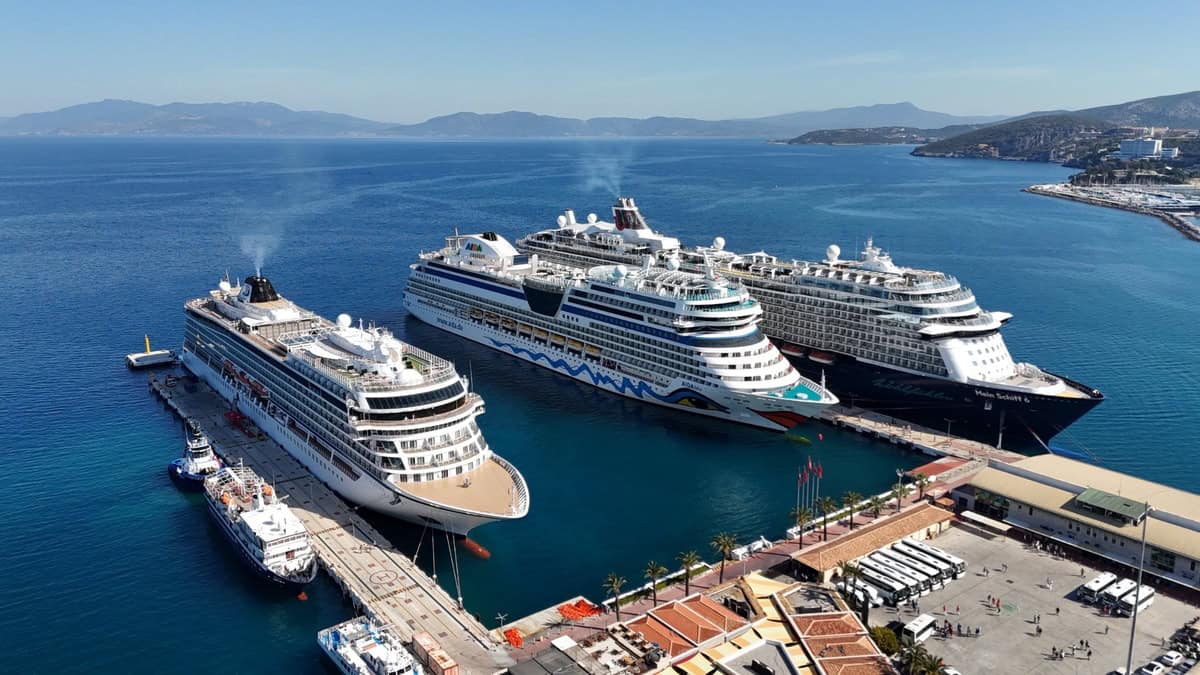
Mediterranean cruise tourism faces a growing planning challenge as Greece, Türkiye, Cyprus, Egypt and Malta remain connected through international cruise itineraries but operate under different port, immigration and safety requirements. A published 24-night voyage covering all five countries, alongside the EU Entry/Exit System, Santorini’s cruise visitor limits and fresh national cruise statistics, highlights why reliable scheduling matters. Travellers can still explore these destinations through regional cruises, but cruise operators and travel agents must pay closer attention to passenger documents, port capacity, shore excursions and destination-specific safety notices.
Mediterranean Cruise Tourism Faces a Critical Test as Five Countries Share One Travel Network
The Mediterranean cruise market is bringing five important destinations together through a connected travel network. Greece, Türkiye, Cyprus, Egypt and Malta offer different holiday experiences, from ancient cities and famous islands to busy harbours and cultural attractions. Yet these destinations do not follow one common set of entry rules. Their ports also have different operating conditions, visitor capacities and security considerations. This creates a complex planning environment for cruise lines that want to offer several countries within one holiday.
Advertisement
Advertisement
A clear example emerged from the original itinerary published by P&O Cruises for its 24-night Grand Mediterranean voyage, scheduled from 14 September to 8 October 2026. The route included Valletta in Malta, Piraeus in Greece, Kuşadası and Bodrum in Türkiye, Limassol in Cyprus and Alexandria in Egypt. These destinations formed part of a longer sailing from Southampton that also included several other Mediterranean ports. The published itinerary confirms a direct commercial connection between all five countries, although it does not independently establish that every scheduled port call took place without alteration.
The central issue is not evidence of a regional cruise shutdown. No verified five-country port-closure announcement or jointly imposed cruise restriction has been established. Instead, the 2026 planning challenge involves the interaction between existing cruise demand, individual port-management policies, newer European border procedures and location-specific travel advice.
Advertisement
Advertisement
For travellers, that distinction matters. A cruise can remain available for booking even when shore access, passenger documentation or individual port timings require additional preparation. For tourism businesses, the quality of that preparation increasingly influences whether a multi-country cruise delivers the experience originally advertised.
A Published Mediterranean Cruise Itinerary Connects All Five Countries
The five-country connection is particularly important because the destinations do not merely share the same sea. They appear together within a single published cruise programme.
Advertisement
Advertisement
The original itinerary for the September 2026 Grand Mediterranean voyage offers a practical example of how cruise passengers can encounter several different travel systems during one holiday.
| Country | Scheduled port of call | Voyage day | Travel significance |
|---|---|---|---|
| Malta | Valletta | Day 8 | Central Mediterranean access and Schengen entry arrangements |
| Greece | Piraeus | Day 10 | Access to Athens and an important cruise embarkation market |
| Türkiye | Kuşadası and Bodrum | Days 11–12 | Aegean tourism and separate Turkish entry procedures |
| Cyprus | Limassol | Day 14 | Eastern Mediterranean access outside the Schengen Area |
| Egypt | Alexandria | Day 16 | Cultural excursions and Egyptian immigration requirements |
Source: Original Grand Mediterranean cruise itinerary, September–October 2026. These are published scheduled calls, not independently verified arrival records.
Advertisement
Advertisement
The itinerary demonstrates how cruise tourism combines different countries into a single travel product. A change affecting just one stop can have consequences for excursion bookings, transport arrangements and subsequent arrival schedules. It also explains why travel documentation should be checked against the entire voyage rather than the first departure port alone.
Greece’s Cruise Economy Shows Why Reliable Port Access Matters
Greece remains an important part of the Mediterranean cruise market, supported by its islands, historical attractions and major ports.
According to the Bank of Greece annual travel services report released on 7 May 2026, cruise passengers generated €1.1663 billion in receipts during 2025, an increase of 4.9% from 2024. The country recorded 5,806 cruise ship arrivals, compared with 5,308 a year earlier. Estimated cruise passenger numbers reached 5.61 million, while passenger visits across Greek ports totalled approximately 8.18 million. These are different statistical measures and should not be treated as interchangeable.
The same official report identifies Piraeus as the largest contributor to cruise receipts, accounting for 49.3% of the national total.
Advertisement
Advertisement
These figures explain why itinerary reliability is economically important. Cruise tourism generates value through port services, local transport, attractions and passenger spending. When shore visits become more predictable, tourism businesses gain a better opportunity to plan staffing, manage demand and serve passengers.
Santorini’s Daily Cruise Limit Creates a Measurable Planning Challenge
Santorini provides a particularly clear example of destination-capacity management.
The Municipal Port Fund of Thira’s published cruise-berthing policy sets a maximum of 8,000 cruise visitors per day in 2026. It also establishes a ranking system for berth requests, followed by adjustments to vessel arrival and departure times. Alternative dates can be proposed when capacity limits prevent a requested call from being confirmed.
An examination of the official cruise-arrival calendar for 12 October 2026 identifies four scheduled vessels with estimated passenger figures of 2,148, 2,074, 1,773 and 2,126. Together, these amount to 8,121 potential passengers, slightly above the published daily visitor ceiling.
This calculation does not establish that the limit was breached. Scheduled passenger estimates are not verified disembarkation totals, and the published timetable may change. Nevertheless, the comparison illustrates why passenger forecasts, actual shore movements and berth allocations must be managed carefully.
Türkiye’s Growing Cruise Market Strengthens Aegean Tourism Connections
Türkiye provides another important link in the regional cruise network, particularly through Kuşadası, Bodrum, İzmir and Istanbul.
Advertisement
Advertisement
According to the Turkish Ministry of Transport and Infrastructure’s release of 22 June 2026, the country’s ports received 455,580 cruise passengers during January–May 2026, an increase of 3.9% compared with the corresponding period in 2025. Cruise vessel calls reached 324, representing growth of 2.2%.
May alone accounted for 257,897 cruise passengers and 169 vessel calls. Kuşadası handled 127,670 cruise passengers during that month, highlighting its importance as an Aegean destination.
For Mediterranean cruise operators, Türkiye adds cultural attractions and additional route options. However, it operates outside the Schengen Area. Passenger documents must therefore be assessed according to Turkish requirements rather than assuming that permission to visit Greece also permits entry into Türkiye.
The growing cruise market also makes reliable shore transfers, passenger processing and local excursion arrangements commercially important.
Cyprus Adds Another Border System to Eastern Mediterranean Cruise Travel
Cyprus occupies a strategic position between the Aegean, the Levant and the wider Mediterranean cruise network.
Limassol is its principal cruise gateway. The original Limassol Cruise Terminal operator confirms that the passenger terminal covers approximately 7,000 square metres and began operations in July 2017. This infrastructure supports international cruise calls and organised shore visits.
Advertisement
Advertisement
Cyprus is an EU member but does not operate the Schengen Entry/Exit System. Consequently, a traveller moving between Greece and Cyprus may encounter different immigration arrangements even though both destinations belong to the European Union.
The Republic of Cyprus High Commission’s official visa guidance also explains that certain valid double-entry or multiple-entry Schengen visas can be recognised for entry into Cyprus, subject to applicable conditions.
This distinction is important for travel agents arranging multinational cruises. They must confirm each passenger’s nationality, visa type and eligibility before departure rather than applying one general European entry rule.
Egypt’s Alexandria Port Demonstrates Active Links With Greek Cruise Destinations
Egypt’s Mediterranean cruise activity provides evidence of continuing tourism connections despite wider regional security concerns.
According to Egypt’s Maritime Transport and Logistics Sector, Alexandria received the cruise vessel Mein Schiff 5 on 27 September 2026 after its departure from Heraklion, Greece. The vessel carried 2,560 tourists and 942 crew members, a combined total of 3,502 people. Its published onward destination was Rhodes, Greece.
This movement is significant because it demonstrates a direct operational connection between Greek island cruising and Egyptian cultural tourism.
Advertisement
Advertisement
Another official Egyptian maritime announcement, dated 6 July 2026, recorded the Star Flyer visiting Alexandria, Port Said and Safaga between 26 and 30 June. The voyage carried 103 passengers and supported excursions to Egyptian cultural destinations.
Egypt’s cruise market therefore includes both Mediterranean coastal calls and wider itineraries involving other Egyptian ports. Nevertheless, Egyptian entry requirements and regional safety advisories must be assessed separately for each itinerary and shore excursion.
Malta’s 2026 Passenger Figures Reveal a Different Cruise Market Challenge
Malta extends these regional cruise connections into the Central Mediterranean, with Valletta serving as a gateway for international visitors.
The National Statistics Office of Malta reported 321,616 cruise passengers during the first six months of 2026, a decline of 5.7% compared with the same period in 2025. However, cruise liner calls increased from 154 to 159.
This difference between passenger traffic and vessel calls is important. More ships do not automatically produce more visitors. Vessel size, passenger loads, cruise schedules and embarkation patterns can influence the totals.
During the second quarter, Malta recorded 256,369 cruise passengers, including 208,068 transit passengers, representing 81.2% of quarterly traffic.
Advertisement
Advertisement
The figures underline the importance of scheduled shore visits to Malta’s cruise economy. Reliable port operations and organised excursions can help businesses serve transit visitors, while the country’s Schengen participation creates an additional documentation consideration for routes arriving from outside that area.
New European Border Checks Add Complexity to Multi-Country Cruise Itineraries
The European Entry/Exit System is a particularly important development for international cruise planning in 2026.
According to the European Commission, the system became fully operational at external border crossing points in participating European countries on 10 April 2026. It electronically records information concerning eligible non-EU nationals entering or leaving for short stays, including travel-document details and biometric information.
Greece and Malta participate. Cyprus, Türkiye and Egypt do not operate the same system.
This difference can affect the documentation and passenger-processing arrangements for multinational cruises. However, the precise checks depend on the passenger’s status, route and applicable maritime border procedures. It would be incorrect to assume that every passenger must complete a new biometric registration at every port.
Official EU sea-carrier guidance also identifies carrier verification requirements for certain passengers holding single-entry or double-entry short-stay visas when sailing from a non-participating port into an EES country. The guidance includes a verification window beginning no earlier than 48 hours before the relevant scheduled departure.
Advertisement
Advertisement
Cruise Passenger Documentation Requirements Across Five Countries
| Destination | Entry framework | Critical planning consideration |
|---|---|---|
| Greece | Schengen and EES | Check visa validity, available entries and applicable border registration |
| Türkiye | Turkish national entry rules | Establish whether a visa or another authorised entry arrangement is required |
| Cyprus | Separate national entry framework | Confirm nationality-specific conditions and recognition of qualifying visas |
| Egypt | Egyptian national visa requirements | Arrange appropriate immigration permission before shore travel |
| Malta | Schengen and EES | Check Schengen eligibility and the effect of previous stays or entries |
Egypt’s official government e-Visa portal instructs eligible applicants to submit applications at least seven days before departure. This is particularly relevant when Egypt appears midway through a longer cruise.
The separate European Travel Information and Authorisation System, ETIAS, was not operational as of 12 October 2026, according to the official EU ETIAS guidance. Travellers should not confuse that future requirement with the already operational EES.
Regional Safety Notices Require Careful Interpretation Rather Than Blanket Cruise Warnings
Safety planning represents another major consideration, but official travel warnings are not identical across the five countries.
The UK Foreign, Commonwealth and Development Office identifies destination-specific risks. Its Greece guidance highlights seasonal wildfire risks from April to October. Cyprus guidance addresses unpredictable regional tensions and also identifies wildfire risks during the warmer months.
For Türkiye, UK guidance warns against travel to specific areas, including locations near the Syrian border. Egypt’s guidance contains restrictions and warnings for designated areas, including North Sinai. These notices must not be interpreted as warnings against every cruise port in either country.
Malta’s published UK travel guidance does not establish an equivalent nationwide prohibition affecting cruise tourism.
Advertisement
Advertisement
The practical message for cruise operators is to review the actual ports, excursion routes and transport corridors involved. Regional tensions can justify closer monitoring, but they do not prove that a particular Mediterranean sailing has been cancelled.
Cruise Infrastructure and Sustainable Port Development Are Becoming Strategically Important
Beyond immigration and safety, port infrastructure is becoming increasingly important to Mediterranean cruise competitiveness.
The European Commission’s EU Ports Strategy, adopted on 4 March 2026, identifies digitalisation, security, sustainability and port efficiency as major priorities. The strategy addresses European ports generally, rather than announcing a dedicated five-country Mediterranean cruise programme.
These priorities are relevant to cruise operations. Better passenger-flow systems, efficient berths, stronger security arrangements and improved terminal facilities can support predictable shore operations.
They also influence destination competitiveness. Ports capable of managing peak visitor demand without excessive congestion may be better positioned to attract future cruise calls.
For Türkiye and Egypt, which are outside the EU, developments depend on their own national infrastructure programmes and commercial arrangements.
Advertisement
Advertisement
Original Analysis: Why One Cruise Itinerary Creates Several Different Operational Risks
The central planning challenge becomes clearer when the five-country itinerary is examined as one continuous journey.
A passenger may begin with a valid Schengen entry arrangement, travel to Türkiye, continue through Cyprus and Egypt, and later return to another European port. Whether additional checks or visas are necessary depends on the nationality, documents and sequence of entry and exit.
The itinerary sequence therefore matters just as much as the list of destinations.
Port capacity creates a separate risk. A cruise vessel may have a confirmed timetable, but shore operations still depend on local visitor-management arrangements. Santorini’s published daily limit illustrates why ship capacity and actual visitor movements should be monitored separately.
Commercial exposure also extends beyond the vessel. An altered port call may affect local guides, transport suppliers, attractions and passengers who purchased excursions.
For travel agents, the strongest risk-management approach is to assess documentation, port access and excursion feasibility together before confirming a holiday.
Advertisement
Advertisement
This is the main lesson from the official evidence: successful Mediterranean cruise planning increasingly depends on treating the entire itinerary as one connected operation while respecting each destination’s independent rules.
The evidence supports a need for careful coordination. It does not establish that any of the five governments has introduced a new joint cruise policy.
Critical Operational Takeaways for Travel Agents and Cruise Operators
- Verify complete itineraries: Check every destination, not only the embarkation and final disembarkation ports.
- Review visa entries: Confirm nationality-specific permissions, including single-entry and multiple-entry restrictions.
- Monitor berth allocations: Use official port schedules and account for local capacity limits.
- Check safety notices: Assess the particular port and excursion area instead of applying broad regional assumptions.
- Prepare alternative excursions: Maintain workable arrangements if a shore visit or arrival time changes.
- Explain passenger protection: Clarify cruise contract terms, package protections and relevant passenger rights before booking.
EU maritime passenger-rights legislation applies to certain cruises, but its remedies differ from those for ordinary passenger services. The European Commission’s official passenger-rights guidance provides the relevant framework.
What Happens Next for Mediterranean Cruise Tourism?
The longer-term opportunity for Mediterranean cruise tourism lies in combining attractive destinations with dependable port access and straightforward travel arrangements.
Greece and Türkiye have substantial cruise markets. Cyprus and Egypt add geographical reach and cultural attractions, while Malta connects the wider Mediterranean network. Their different border regimes and operating systems will continue to shape itinerary planning.
The next important developments to watch are updated port-call schedules, future passenger statistics, implementation of European border procedures and any formally announced changes to regional maritime operations.
Advertisement
Advertisement
For travellers, careful preparation can help preserve the benefits of a multi-country cruise. For the cruise industry, reliability may become an increasingly important competitive advantage as Mediterranean destinations seek to grow without overwhelming their infrastructure or compromising visitor safety.
FAQs
1. Which five countries are connected through this cruise tourism story?
Greece, Türkiye, Cyprus, Egypt and Malta are connected through published Mediterranean cruise itineraries and share an interest in reliable port operations and international passenger travel.
2. Is Mediterranean cruise tourism facing a regional shutdown?
No verified five-country cruise shutdown has been established. The main issues examined are different entry requirements, local port capacity policies and destination-specific safety notices.
3. Does the EU Entry/Exit System apply to every country?
No. Greece and Malta use EES. Cyprus, Türkiye and Egypt do not. Individual passenger requirements depend on nationality and immigration status.
4. Are cruise ships still scheduled to visit Santorini in October 2026?
Yes. The official Santorini port calendar lists October 2026 cruise calls, subject to port-authority scheduling and operational conditions.
5. What should travellers check before booking a multi-country cruise?
Travellers should verify passports, visas, permitted entries, the latest itinerary, official travel advisories, excursion conditions, insurance and the operator’s policies on itinerary changes.
Advertisement
