
Ho Chi Minh City International Travel Expo 2026: AI, Green Tourism, and MICE Growth

Published
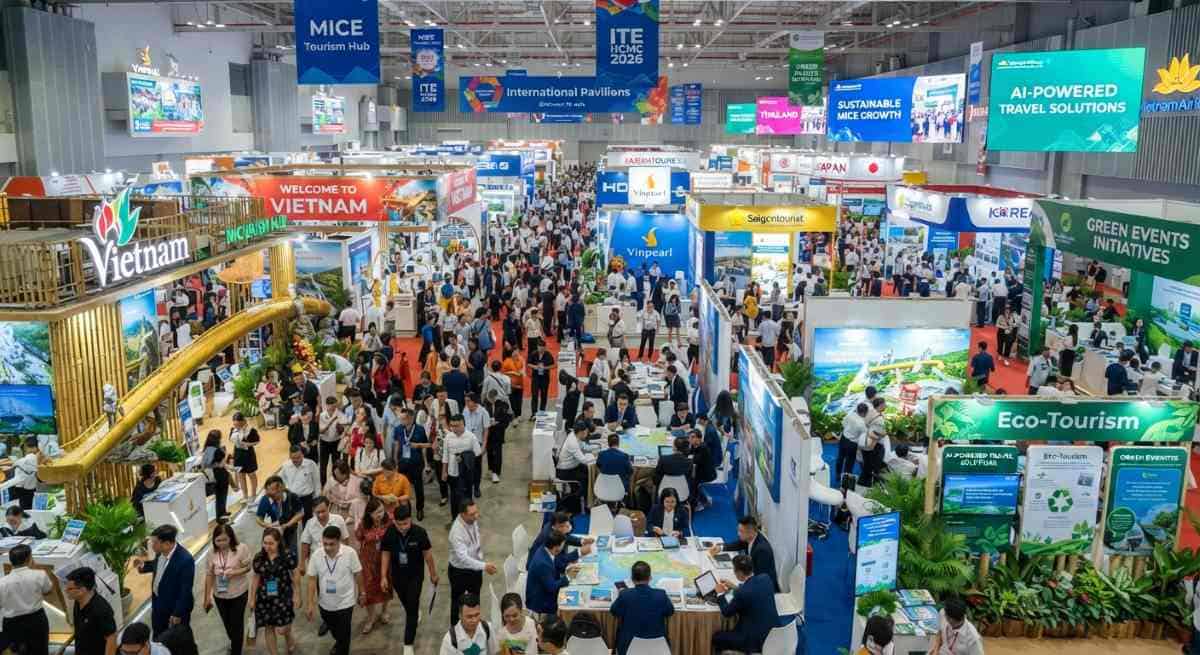
Image generated with Ai
The Ho Chi Minh City International Travel Expo has historically served as a critical cornerstone for the Southeast Asian tourism landscape, functioning as a primary bridge linking local Vietnamese destinations with vast international markets. Over the course of its two-decade journey, the exhibition has consistently adapted to shifting global economic dynamics and emerging technological waves.
In its landmark twentieth iteration, the event has been structured around modern imperatives, specifically addressing the global transition toward digital modernization and ecological accountability. Institutional organizers, regional stakeholders, and governmental bodies have collectively steered the narrative away from conventional promotional displays, pivoting instead toward deep market connectivity, technological integration, and resilient cross-border cooperation within the Mekong sub-region and broader international spheres.
Advertisement
Advertisement
Impact on Travellers
For modern visitors, tourists, and business delegates, the strategic evolution witnessed at the expo translates into a more streamlined, technologically advanced, and environmentally conscious travel experience. The integration of artificial intelligence and advanced digital tools allows travelers to access customized itineraries, seamless booking channels, and hyper-targeted recommendations that align with contemporary preferences.
Furthermore, the strong emphasis on green events and sustainable tourism practices ensures that popular destinations within Vietnam and neighboring countries are protected from over-tourism. Travelers are increasingly presented with eco-friendly accommodation options, carbon-conscious transit alternatives, and authentic cultural encounters that minimize ecological disruption while maximizing the overall quality of their journeys.
Advertisement
Advertisement
Industry Insights
Industry analysts and tourism experts participating in the event have highlighted a decisive structural transformation in how regional business is conducted. The focus has been heavily placed on scaling up meetings, incentives, conferences, and exhibitions, commonly known as MICE tourism, to capture higher-value visitor streams.
Advertisement
Advertisement
Data shared during high-level forums indicated that the global business travel and MICE sector is scaling unprecedented financial heights, prompting local operators to upgrade their infrastructure and service standards. Artificial intelligence is being actively deployed by hospitality and aviation networks to predict demand fluctuations, optimize operational workflows, and automate customer engagement. Industry leaders noted that collaboration between regional airlines, hospitality providers, and digital platforms is vital to maintaining long-term competitiveness in a post-pandemic global market.
Practical Information
The comprehensive trade expo brings together an extensive ecosystem of international buyers, exhibitors, and government delegates. Thousands of structured business-to-business appointments are systematically arranged to facilitate direct contract negotiations, partnership formations, and product launches.
Exhibitors spanning aviation, hospitality, transport, and travel technology converge in a centralized hub to showcase their latest offerings. Attendees are advised to utilize the official digital applications and matchmaking platforms provided by the organizing committee to maximize their networking efficiency, schedule pre-arranged meetings, and navigate the vast exhibition floor effectively. Registration details, seminar schedules, and forum agendas remain accessible through official municipal tourism portals.
Comparison with Previous Policies or Developments
When contrasted with previous editions of the exhibition, the current developmental framework demonstrates a clear departure from sheer volume-based promotion toward targeted, high-value economic output and ecological sustainability. Earlier iterations of the travel expo primarily concentrated on traditional destination marketing, basic brochure distribution, and generalized consumer awareness.
In contrast, the current approach leverages sophisticated data analytics, artificial intelligence, and rigorous green certifications for events. While past policies sought numerical growth in visitor arrivals, current strategic initiatives prioritize sustainable yield, longer length of stay, and minimized environmental footprints across all participating regional tourism sectors.
Advertisement
