
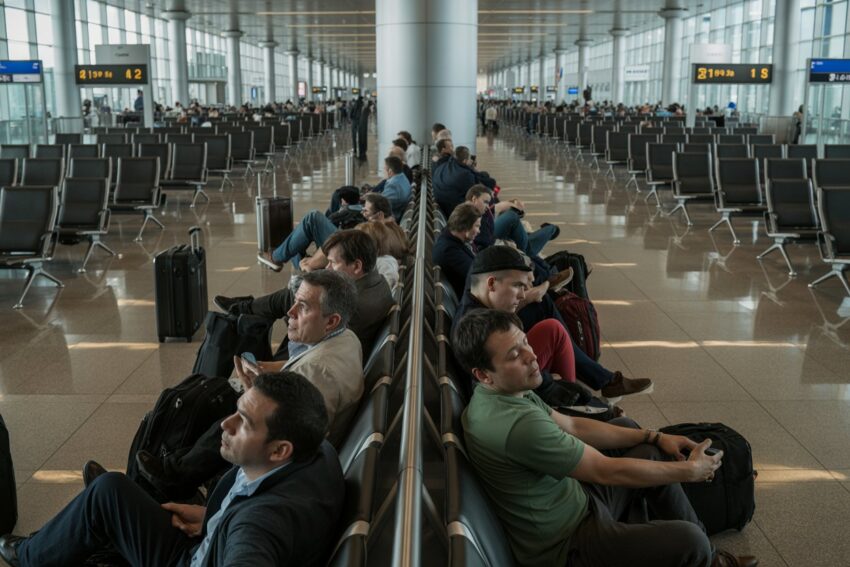
Image generated with Ai
Brazil’s aviation network experienced a significant operational setback as airlines cancelled a total of 49 scheduled departures across multiple regions. These Brazil flight cancellations affected major hubs and regional airports, with disrupted routes linking São Paulo, Rio de Janeiro, Brasília, Belo Horizonte, Campinas, and Recife to destinations such as Goiabeiras, Porto Alegre, Cuiabá, Salvador, Curitiba, Natal, Chapecó, Navegantes, Uberlândia, Ipatinga, Araraquara, and international cities including New York and Dallas–Fort Worth. The scale and geographic spread of the cancellations highlight how pressure at key airports can ripple across the national and international network.
São Paulo–Guarulhos International Airport, the country’s primary international gateway, recorded one of the highest numbers of cancelled departures. Over two days, airlines withdrew 11 flights, affecting both domestic and long-haul services.
Advertisement
Cancelled flights included multiple LATAM Airbus A320 and A321 services to Goiabeiras, Marechal Rondon in Cuiabá, Salgado Filho in Porto Alegre, Ministro Victor Konder in Navegantes, Guararapes International in Recife, and Chapecó. Azul cancelled Embraer E295 and Airbus A320neo flights to Porto Alegre, while American Airlines cancelled its Boeing 787-9 service to New York JFK. These São Paulo flight cancellations reduced connectivity from Brazil’s busiest hub and disrupted onward travel nationwide.
At Presidente Juscelino Kubitschek International Airport in Brasília, LATAM cancelled an Airbus A320 flight to São Paulo–Congonhas, affecting a high-frequency business corridor. Although only one service was withdrawn, the route’s importance amplified the impact.
Advertisement
Advertisement
Viracopos International Airport in Campinas recorded two cancellations. Azul grounded an early morning Airbus A320 flight to Cuiabá, and a Cessna 208 service to Araraquara was also cancelled, limiting regional access from this strategically important airport.
São Paulo–Congonhas Airport experienced 17 cancellations, making it one of the most affected locations. The majority involved high-density domestic routes with limited recovery options.
LATAM cancelled multiple Airbus A319 and A320 flights to Santos Dumont in Rio de Janeiro, Salvador, Porto Alegre, Curitiba, Natal, Belo Horizonte, and Brasília. GOL cancelled several Boeing 737-800 and 737 MAX services, primarily on the Congonhas–Santos Dumont shuttle and flights to Salvador. Azul also cancelled an Embraer E295 service to Santos Dumont. The concentration of LATAM cancelled flights and GOL Airlines delays at Congonhas shows how tightly packed schedules leave little margin for disruption.
Rio de Janeiro/Galeão International Airport recorded two cancellations. GOL cancelled a Boeing 737-800 flight to Goiabeiras, while American Airlines withdrew its Boeing 787-8 service to Dallas–Fort Worth, affecting transcontinental travel.
At Santos Dumont Airport, nine departures were cancelled, mainly on the São Paulo shuttle. LATAM cancelled several Airbus A319 flights to Congonhas, while GOL cancelled multiple Boeing 737 services to the same destination and one flight to Brasília. These Rio de Janeiro flight disruptions significantly affected one of the world’s busiest short-haul air corridors.
Tancredo Neves International Airport in Belo Horizonte recorded five cancellations spanning regional and trunk routes. Azul cancelled two ATR 72 turboprop flights to Uberlândia and Ipatinga. LATAM withdrew Airbus A320 services to São Paulo–Congonhas and São Paulo–Guarulhos, while GOL cancelled a Boeing 737 MAX flight to Rio de Janeiro/Galeão. The variety of aircraft types involved suggests system-wide operational strain rather than isolated technical issues.
Guararapes International Airport in Recife saw two cancellations. Azul cancelled an ATR 72 flight to Natal, and LATAM cancelled an early morning Airbus A321 service to São Paulo–Guarulhos. These changes reduced both regional mobility and access to major domestic hubs from northeastern Brazil.
| Departure Airport | Number of Cancellations | Affected Destinations |
|---|---|---|
| São Paulo–Guarulhos (SBGR) | 11 | Goiabeiras, Porto Alegre, Cuiabá, Navegantes, Recife, Chapecó, New York |
| Brasília (SBBR) | 1 | São Paulo–Congonhas |
| Campinas Viracopos (SBKP) | 2 | Cuiabá, Araraquara |
| São Paulo–Congonhas (SBSP) | 17 | Santos Dumont, Salvador, Porto Alegre, Curitiba, Natal, Belo Horizonte, Brasília |
| Rio de Janeiro/Galeão (SBGL) | 2 | Goiabeiras, Dallas–Fort Worth |
| Santos Dumont (SBRJ) | 9 | São Paulo–Congonhas, Brasília |
| Belo Horizonte (SBCF) | 5 | Uberlândia, Ipatinga, São Paulo–Congonhas, São Paulo–Guarulhos, Rio de Janeiro/Galeão |
| Recife (SBRF) | 2 | Natal, São Paulo–Guarulhos |
| Total | 49 | Multiple domestic and international destinations |
The cumulative effect of these Brazil flight cancellations extended beyond individual airports. Travelers faced rebookings, missed connections, and longer travel times, particularly on high-frequency business routes with limited alternative slots. Airlines had to reshuffle aircraft and crews across an already congested network, compounding operational challenges.
The presence of Azul Airlines cancellations alongside schedule reductions from LATAM and operational setbacks linked to GOL Airlines delays demonstrates that the disruption cut across different airline models and fleet types. As demand remains high at Brazil’s busiest airports, these events underscore the need for realistic scheduling, stronger contingency planning, and improved resilience to minimize passenger disruption when pressure builds across the system.
Advertisement
Tags: Brazil flight cancellations, LATAM Azul GOL American Airlines cancellations, Rio de Janeiro Flight Delays, São Paulo airport disruptions
Advertisement
Advertisement













Sunday, September 6, 2026

Sunday, September 6, 2026

Sunday, September 6, 2026

Sunday, September 6, 2026

Saturday, September 5, 2026

Saturday, September 5, 2026

Sunday, September 6, 2026

Saturday, September 5, 2026



