
Germany Joins Belgium, Netherlands and More as European Events Turn Conference Check in into a Reward Hunt

Published
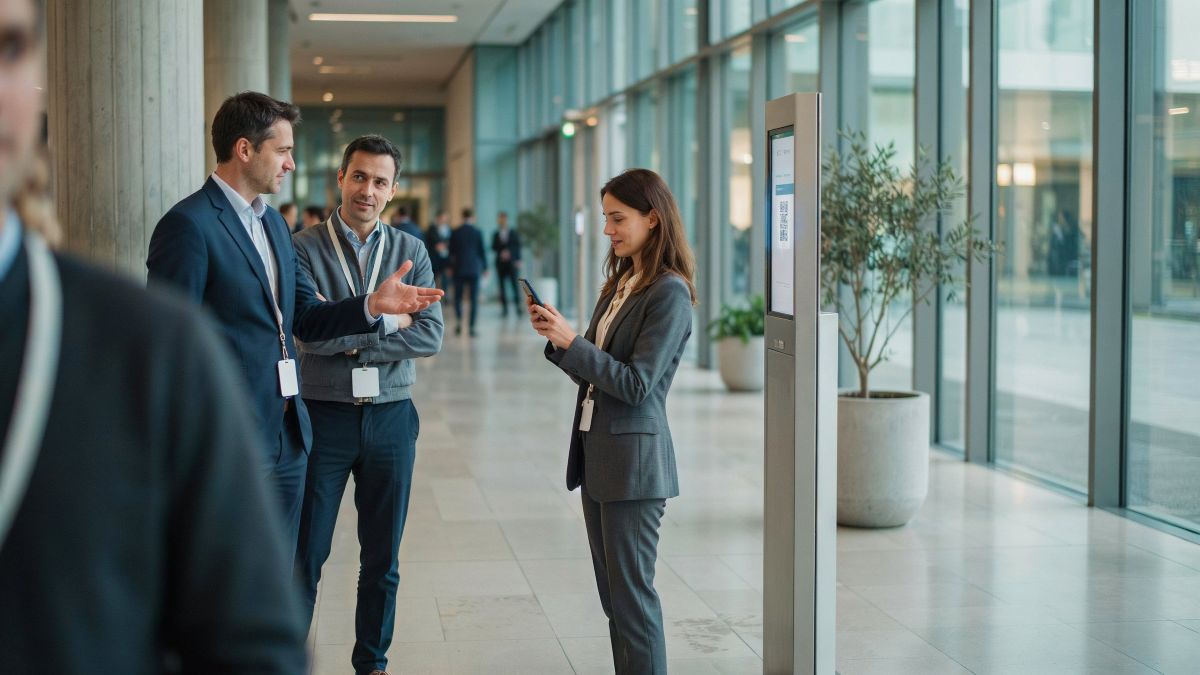
Germany show how the European event experience is evolving in terms of incentives as the organisers try out points, digital badges and challenges to involve delegates in the process. The AIPPI World Congress in Hamburg gave points to attendees for visiting the web pages of the sponsors. Thus, points make the organizers of the exhibition see the sense in providing technologies and attract people to the congress. Points still cannot confirm the fact that the delegates found some useful contacts or check-in procedure became faster. Digital features are used in Europe for different purposes. Some allow people to enter the venues. Other technologies organize meetings, navigate people in the city or give awards for participation. That is why organizers should clarify what every technology is for and calculate its effects. If the incentive promotes communication and improves the visit process, then it brings something useful. Otherwise, the effect will be weak. This case shows how to find out whether conference rewards bring anything to everyone.
Europe’s event story is bigger than a game at the door
Conference check-in can shape a visitor’s first impression. Delegates may need to prove who they are, collect a badge, pass security and find the right hall. At large events, organisers also want people to meet peers, visit exhibitors and explore the host city.
Digital tools now help manage some of those tasks. A QR code may speed up badge collection. A phone pass may open a venue gate. A networking app may help attendees arrange a meeting before they arrive. A points system or scavenger hunt may give them a reason to explore.
These tools can work together, but they do different jobs. A digital pass is not automatically a game. A badge scan for entry is not the same as a scan that shares contact details. A retail discount is a visitor benefit, while an earned prize is a reward. Keeping these differences clear gives readers a more accurate picture of what is changing at European events.
Advertisement
Advertisement
Belgium puts QR badge collection in the 13 October spotlight
The European Week of Regions and Cities took place in Brussels from 12 to 14 October 2026. The European Commission’s Directorate-General for Regional and Urban Policy and the European Committee of the Regions organised the event. Its programme included high-level sessions, partner events and REGIOSTARS pitches.
The event’s arrival guide told attendees to scan a personal QR code at a kiosk to collect their badge. Badge collection at the Jacques Delors Building was scheduled from 08:00 to 18:00 on 13 October. The guide also advised people to arrive at least 45 minutes before their session to allow time for badge collection and security checks.
Advertisement
Advertisement
This is a useful example of digital registration in practice, but it is not evidence of gamified check-in. It also shows that a QR code cannot remove every step. Delegates still need to find the correct kiosk, collect a physical badge and clear security. Any report about queue reduction should seek actual queue-time figures rather than assume the technology made arrival faster.
Germany links sponsor rewards with digital engagement
At the AIPPI World Congress in Hamburg, held from 7 to 10 October 2026, the official sponsorship brochure described a points-based feature in the attendee platform. Delegates could earn points by visiting sponsor pages in the Attendee Hub.
The feature formed part of the congress’s sponsorship packages. It was included in the listed €45,000 Platinum and €30,000 Gold packages, before VAT and other applicable taxes. Those were broader sponsorship offers, not the price of gamification alone. The brochure also listed other benefits, such as app visibility and push notifications.
The approach reveals a commercial reason for adding points to an event app. Organisers and sponsors may want attendees to notice exhibitors they might otherwise miss. But a page visit does not prove a valuable business connection. A strong follow-up report would ask how many attendees used the feature, whether they contacted the sponsors and whether those contacts led to meetings or enquiries.
The Netherlands turns the conference badge into a visitor tool
IBC2026 in Amsterdam offers one of the clearest examples of a conference badge serving purposes beyond entry. The organiser listed seven offsite badge collection points, including hotels and the I amsterdam Store at Amsterdam Central Station.
The badge also included a QR code for GVB trams, buses and metro services. IBC said attendees could use it to move between the RAI convention centre and central Amsterdam. The organiser also offered badge holders a 10% discount on merchandise at the official I amsterdam Store.
Advertisement
Advertisement
These features connect the event with the wider visitor journey. A traveller can collect a badge before reaching the venue, use it for public transport and show it for a local retail offer. That gives the article a strong tourism angle: conference technology can support movement around a destination as well as activity inside an exhibition hall.
The discount was a benefit for badge holders. It was not a prize earned by completing a game. The available information also does not measure how much additional spending or public transport use the scheme generated.
Spain separates the entry pass from the networking badge
MWC Barcelona’s 2026 entry instructions show why organisers need to explain badge technology clearly. Attendees had to register online and complete identity validation before arriving. They then used a Digital Access Pass on their phone for perimeter checks and QR scanning at the venue. On first entry, attendees received a separate networking badge.
The two credentials had different roles. The Digital Access Pass supported entry. The networking badge could support lead retrieval and access to eligible sessions. The organiser said the networking badge could not replace the pass for perimeter access.
This distinction matters for delegates and event teams. A phone pass may be the key to entry, while a physical badge may support professional contact inside. Neither function, by itself, is gamification. Clear instructions can also help reduce confusion at arrival, especially when visitors must manage a phone, an identity check and a second credential.
MWC’s published guidance also raised practical questions about devices. Attendees needed a charged phone to show the pass. The event provided guidance for people who could not access their pass on their usual device, and its instructions noted that a data plan could be needed in some areas.
Advertisement
Advertisement
France puts attendee choice and data sharing on the agenda
VivaTech’s 2026 app supported event planning, interactive maps, networking and meeting appointments. Its terms said users could activate or deactivate the networking feature. Users who enabled it could make parts of their profile visible to other attendees who had also enabled networking.
The terms also described badge scanning as a way to retrieve information about another attendee, including professional details and contact information. That makes it important to explain what a scan does before asking people to take part. A delegate may understand a scan as a simple check-in when it also shares contact details.
The European Commission says that when consent is used as the legal basis for processing personal data, it must be freely given, specific, informed and unambiguous. People must also receive information about how to withdraw it.
For event organisers, the practical question is whether attendees can tell the difference between scanning for entry, sharing a business contact and collecting game points. Clear notices help people make an informed choice and help protect trust.
Greece shows how a conference can reward exploration
The European Academy of Paediatric Societies’ EAPS2026 congress took place in Athens from 24 to 27 September. Its official scavenger-hunt rules described a daily activity for registered participants. Each morning, the organiser would publish a clue through official social media channels. Participants had to find a hidden envelope at the venue and take it to the registration desk to claim the prize.
The congress rules said one winner would be selected each day. The reward was a voucher experience for EAPS2027, subject to the stated conditions. Participation was voluntary, and a person could win only once. The rules also covered the collection of contact details for prize administration and made publicity photos or interviews voluntary.
Advertisement
Advertisement
This is a clear example of a game with a published reward. It gives delegates a reason to explore the venue and follow the event’s updates. It may also encourage interest in the next congress. But the rules do not show that the hunt shortened the first check-in queue or increased return bookings. Those results would need separate evidence.
The United Kingdom takes a conference activity into Edinburgh
The British Council for Offices held its 2026 Annual Conference in Edinburgh and Glasgow on 17 and 18 June. Its programme included a NextGen scavenger hunt in Edinburgh on 16 June. Participants met at Cundall’s office, heard about its workplace design, then explored the city in small teams before regrouping for refreshments and networking.
This example gives the story a city-centre dimension. The activity combined learning, teamwork and professional introductions with time spent in Edinburgh. It was not simply a competition inside a conference hall.
For travel coverage, the key question is whether such activities help delegates experience more of the host destination. The published programme confirms the city-based hunt, but it does not report changes in hotel stays, local spending or visitor numbers. Those outcomes should not be claimed without data.
Not every digital badge is a digital achievement
The European examples use several tools that can sound similar but serve different purposes. A digital admission pass confirms that a person can enter. A QR code at a kiosk can retrieve a registration and issue a badge. A networking badge can support contact exchange. A points feature can encourage an action, such as visiting a sponsor page. A scavenger hunt adds clues and a prize. A transport QR code or shop discount gives a practical visitor benefit.
This distinction matters because calling every digital badge “gamified” may confuse readers. The examples reviewed show QR access in Brussels, Barcelona and Amsterdam; app-based networking in Paris and Amsterdam; points for sponsor-page visits in Hamburg; and venue or city activities with rewards in Athens and Edinburgh. They do not establish a single European scheme of digital achievement badges shared by all seven countries.
Advertisement
Advertisement
What organisers should measure before claiming success
The examples show what organisers offered, but they do not provide a common dataset proving that gamification improved check-in. To test the claim, event teams would need to compare arrival times, queue lengths and badge-collection times before and after introducing a new system.
They should also measure who took part in each activity and how many people completed it. For sponsor rewards, a page view is only a first step. Organisers could also examine meeting requests, qualified leads and later follow-up. For destination benefits, useful evidence could include transport use, retail redemptions and visitor feedback.
These measurements would help show whether a tool made the event easier or more engaging. They would also help distinguish a successful game from one that simply generated app clicks. Without that evidence, organisers can accurately describe the features they introduced, but should avoid claiming proven results.
Europe’s most compelling angle is the complete visitor journey
The shake-up of check-in for the conference in Europe is one example of how digital badges, gaming and rewarding is transforming how delegates are welcomed by the event organiser. The digital tools complement others including QR codes, networking tools and practical local visitor benefits. Each of these tools plays its own role. For instance, passes enable access, badges assist in networking and points help to direct delegates to exhibitors. On the other hand, the prize hunt motivates delegates to move around. In addition, Brussels deployed badge collection through QR code on the 13th of October, while various other events in 2026 tried out different concepts in cities such as Hamburg, Amsterdam, Barcelona, Paris, Athens, and Edinburgh. In essence, all these examples illustrate how the event organisation can link the arrival of delegates to the sessions, meetings, and the host city. Nonetheless, novel technology alone does not mean that lines became shorter or networking was improved. Event organisations need to prove that.
Advertisement
