
Drying Rivers of Europe Are Changing Cruise Travel: 5 River Cruise Lines Taking Travellers Beyond the Danube and Rhine

Published
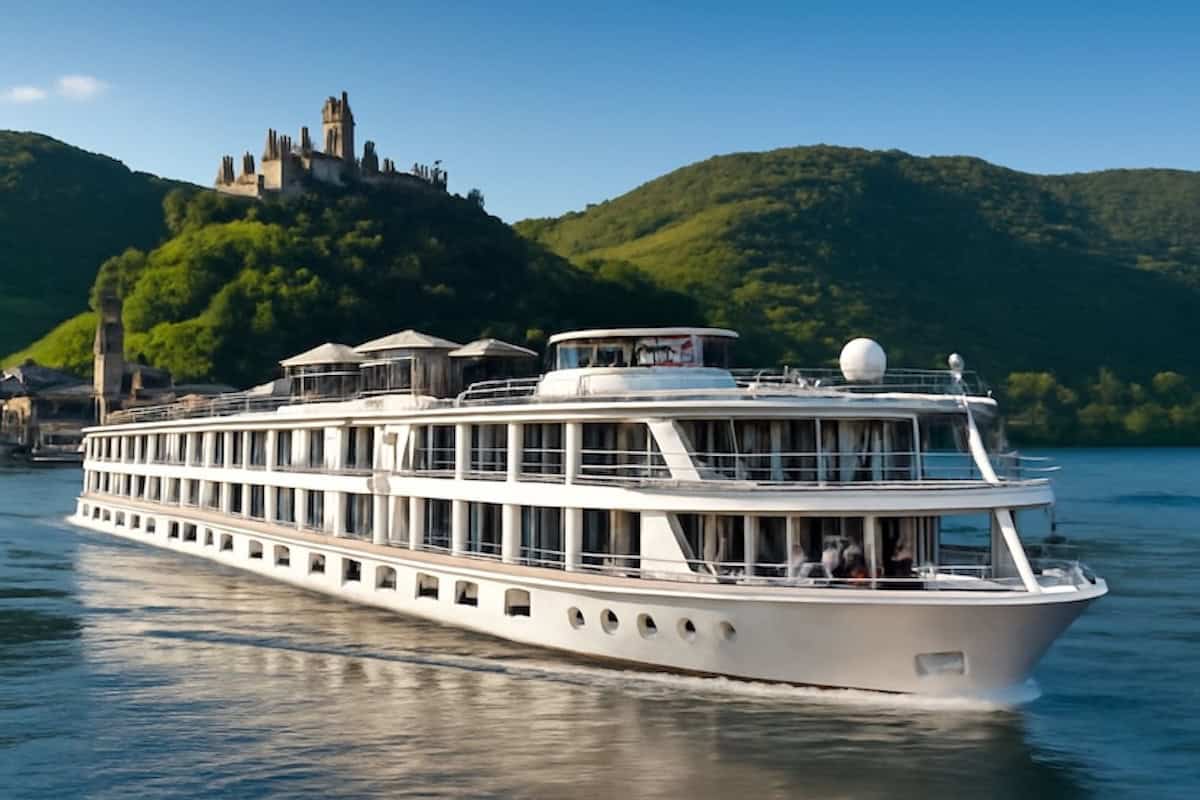
Image generated with Ai
Europe’s drying rivers are changing cruise travel, and travellers are watching the Danube and Rhine closely. As drought, heat and low water levels reshape Europe’s waterways, river cruises face a new challenge. Yet, travellers still have exciting choices beyond these famous European rivers. From alternative European routes to international waterways, five major river cruise lines are opening new possibilities for global explorers. Meanwhile, Travel And Tour World urges readers to look beyond the Danube and Rhine before planning their next river cruise. With thoughtful planning, flexible itineraries and wider destinations, travellers can discover how changing rivers are creating a new era of river cruise travel.
Europe River Cruises Face a New Travel Test as Drought Dries the Danube and Rhine
Europe river cruises are facing an unusually difficult summer as extreme heat and prolonged drought push water levels across major waterways to exceptionally low levels. For international travellers, the issue is not simply whether ships can sail. It is whether the holiday will still resemble the itinerary originally booked.
Advertisement
Advertisement
The European Commission says drought and water scarcity are becoming more frequent and widespread across the European Union. It also warns that worsening water conditions are expected as temperatures continue rising.
Danube Water Levels Create Major Cruise Challenges
The Danube has become one of the clearest examples of the problem. In March 2026, the Danube Commission brought together waterway authorities, European Commission representatives and shipping companies to discuss increasingly prolonged low-water periods and measures for maintaining safe navigation.
Advertisement
Advertisement
By summer, conditions had become considerably more serious. Recent reporting has described record-low sections of the Danube, with cruise operations and sightseeing services affected in parts of Hungary and further downstream.
Advertisement
Advertisement
The situation has also demonstrated that the consequences extend beyond tourism. Romania temporarily shut down reactors at the Cernavoda nuclear power plant because the Danube became too low for normal cooling operations. The facility supplies roughly one-fifth of Romania’s electricity.
For cruise passengers, however, the immediate concern is itinerary disruption.
Why Travellers Could End Up on Coaches
A river cruise requires sufficient navigable depth. When water becomes too shallow, ships may have to reduce operations, change routes, transfer passengers or use alternative transportation.
Advertisement
Advertisement
That can dramatically change the experience.
A passenger expecting several days of uninterrupted sailing could instead spend substantial portions of the journey travelling by coach between destinations. Recent reports have documented passengers on a Danube itinerary facing more than 1,500 kilometres of road travel after drought prevented much of the planned navigation.
Advertisement
Advertisement
For travellers, this is an important distinction. A cruise can technically continue while becoming very different from the product originally imagined.
Rhine Travellers Also Need to Pay Attention
The Rhine is facing similar pressure.
Germany’s Rhine water levels recently reached new lows during the continuing European heatwave. Low water has already affected commercial shipping, particularly along southern sections of the river.
The Dutch authorities have also recorded exceptionally low flows on the Rhine and Meuse during the current dry period.
This matters for tourists because popular Rhine itineraries cross areas where water conditions can vary significantly. A river may remain navigable in one section while restrictions become necessary elsewhere.
Advertisement
Advertisement
Is a River Cruise Still Safe?
Low water does not automatically mean that a river cruise is unsafe.
Navigation authorities and operators monitor waterways and adjust operations when conditions become unsuitable. The Danube Commission is specifically working with national authorities on measures intended to maintain safe and reliable navigation during prolonged low-water periods.
The bigger risk for tourists is therefore disruption rather than danger.
Passengers should check their operator’s policy before departure. They should understand what happens if a ship cannot reach a planned port or complete the advertised sailing.
What Travellers Should Do Before Booking
Travellers planning Europe river cruises should build flexibility into their holiday.
Advertisement
Advertisement
Check the latest water-level information before departure. Ask the cruise company about alternative ships, coach transfers, hotel stays and itinerary changes.
Travel insurance is also increasingly important. Passengers should examine whether their policy covers significant changes caused by weather or natural conditions.
The European Commission’s drought monitoring service reported that drought conditions remained critical across much of Europe in mid-July 2026, with central and western areas worsening.
The Future of European River Cruising
Europe’s river cruises are unlikely to disappear because of one drought. However, increasingly frequent water shortages could make flexibility a permanent part of river travel.
The European Commission already warns that water scarcity and drought are becoming more widespread.
Advertisement
Advertisement
For global travellers, the smartest approach is therefore not to avoid every river cruise. Instead, choose carefully, monitor conditions and understand the disruption policy.
A European river cruise can still offer an exceptional way to experience historic cities, landscapes and cultures. But in today’s changing climate, travellers should remember one crucial fact: the river ultimately controls the journey.
River Cruise Lines Taking Travellers Beyond Europe in 2026
Europe may dominate the river-cruise conversation, especially as drought puts the Danube and Rhine under pressure. However, travellers have far more choices than Europe’s classic waterways.
River cruising now stretches across the Nile, Mekong, Magdalena, Mississippi and major European rivers. The following five operators offer distinctly different ways to explore destinations by water, from ultra-luxury journeys to culturally focused voyages.
River Cruise Lines at a Glance
| Cruise line | Major river regions | Notable 2026 options | Travel style | Particularly suited to |
|---|---|---|---|---|
| Viking | Europe, Egypt, Asia, Mississippi | Danube, Rhine, Nile, Mekong, Mississippi | Destination-focused | First-time and experienced river cruisers |
| AmaWaterways | Europe, Africa, Asia, South America | Danube, Rhine, Nile, Mekong, Magdalena, Chobe | Premium, active and immersive | Couples and active travellers |
| Uniworld | Europe, Egypt, Asia | Danube, Rhine, Mekong and other international routes | Luxury, boutique | Luxury and culture-focused travellers |
| Avalon Waterways | Europe, Asia, Africa, South America | Danube, Rhine and worldwide programmes | Flexible premium cruising | Independent-minded travellers |
| Scenic | Europe, Southeast Asia | Danube, Rhine, Bordeaux, Douro, Mekong | Ultra-luxury, all-inclusive | Luxury travellers seeking highly inclusive holidays |
1. Viking River Cruises
Viking offers one of the broadest geographical portfolios for travellers wanting to move beyond the traditional European river experience. Its official destination programme covers the Danube, Rhine, Seine, Douro and Elbe, while its wider network reaches Egypt, Southeast Asia and the Mississippi in the United States. Viking specifically promotes river journeys through Europe, Asia, Egypt and North America, allowing travellers to choose between historic European capitals, the Nile’s ancient sites, the Mekong’s Southeast Asian landscapes and America’s Mississippi River. In 2026, Viking is also expanding offerings on the Rhine, Danube, Seine and Elbe, while adding two new Nile ships, Viking Ptah and Viking Sekhmet. For travellers concerned about Europe’s low-water conditions, this geographical breadth provides an important alternative: a river holiday does not have to mean the Rhine or Danube. Viking’s Mississippi programme also gives international visitors an opportunity to combine river travel with major American destinations and cultural experiences.
Advertisement
Advertisement
2. AmaWaterways
AmaWaterways has developed a particularly broad international river portfolio, covering classic European waterways alongside destinations in Africa, Asia and South America. Its European programme includes the Danube, Rhine, Rhône, Seine, Douro, Main, Moselle and Dutch and Belgian waterways. Beyond Europe, the company operates journeys on the Nile, Mekong and Magdalena, while its 2026 programme introduces new Africa experiences involving the Chobe River and Victoria Falls. Its Africa expansion from August 2026 includes itineraries connected with Namibia’s NamibRand Nature Reserve, Kenya’s Maasai Mara and the Skeleton Coast, with new journeys combining a three-night Chobe River cruise and three nights at Victoria Falls. That makes AmaWaterways especially interesting for travellers who want a river cruise combined with wildlife and land-based adventure. Its Magdalena programme also brings river cruising into Colombia, creating an alternative for tourists seeking Latin American culture, landscapes and communities rather than Europe’s familiar castle-lined routes.
3. Uniworld Boutique River Cruises
Uniworld Boutique River Cruises occupies the luxury end of the river-cruise market and describes its fleet as destination-inspired floating boutique hotels. Its official website lists 17 individually designed ships, with each vessel created around the destinations it visits. The company’s international portfolio includes European rivers and journeys in Asia and Egypt, while its Danube programme demonstrates the scale of its European offerings. One current 2026 itinerary travels through seven countries—Austria, Croatia, Czech Republic, Germany, Hungary, Serbia and Slovakia—on the Danube. Uniworld is also responding directly to current river conditions: its website currently warns that unusually low water levels on sections of the Rhine, Main and Danube have required operational adjustments on selected sailings. For travellers booking during drought-sensitive periods, that disclosure is particularly useful because it reinforces the need to examine current sailing information before departure.
4. Avalon Waterways
Avalon Waterways provides another broad option for travellers seeking river journeys across multiple continents. The company says its river cruises extend across more than 20 countries in Europe, Asia, Africa and South America. Its European programme includes the Danube, Rhine, Rhône, Seine, Douro and other waterways. The Danube programme follows the river through or along 10 countries and can connect travellers with destinations including Vienna, Budapest and Prague. Avalon also emphasises flexibility on shore. Its European programme offers up to 28 included excursions per cruise, while its Adventure Center provides complimentary bicycles, e-bikes, maps and equipment for guests wanting more independent exploration. This can appeal to travellers who do not want every hour predetermined. Its Rhine programme combines Amsterdam, Germany, the Rhine Valley and Central European cultural destinations, while its wider geographical reach means travellers can look beyond Europe’s drought-affected waterways when planning future journeys.
5. Scenic River Cruises
Scenic is particularly suited to travellers searching for an ultra-luxury and highly inclusive river experience. Its 2026 programme covers Central Europe, France, Portugal and Southeast Asia, including the Mekong. European journeys include the Danube, Rhine, Bordeaux waterways and Douro, while Southeast Asian voyages focus on Vietnam and Cambodia. Scenic’s Mekong vessel, Scenic Spirit, accommodates a maximum of 68 guests and is promoted with an almost one-to-one crew-to-guest ratio. The experience includes multiple dining options, beverages, excursions and distinctive cultural programmes. Its 2026 European programme includes an eight-day Gems of the Danube journey, an 11-day Bordeaux itinerary and a 15-day Jewels of Europe voyage covering the Rhine, Main and Danube. For travellers concerned about drought, Scenic’s published terms are also worth reading carefully: the company states that itineraries are guides and may be amended for operational reasons.
Which River Cruise Line Should Travellers Consider?
The best choice depends on the destination and travel style rather than simply the ship.
Advertisement
Advertisement
Viking offers exceptional geographical variety. AmaWaterways is compelling for travellers combining cruising with wildlife and active experiences. Uniworld focuses strongly on luxury and destination-inspired design. Avalon gives passengers more flexibility during excursions. Scenic targets travellers seeking an ultra-luxury, highly inclusive experience.
Most importantly, today’s river-cruise market gives travellers more alternatives than the Rhine and Danube. As drought and changing river conditions become increasingly important considerations, comparing waterways, seasons, itineraries and disruption policies can help international tourists make a more resilient holiday choice.
Conclusion
Europe’s drying rivers are changing cruise travel, but they are not ending the river-cruise experience. The Danube and Rhine remain iconic routes, yet changing water levels encourage travellers to explore wider possibilities. From the Nile and Mekong to the Magdalena and Mississippi, international river cruise lines offer remarkable alternatives. Therefore, travellers should compare routes, seasonal conditions, sailing policies and alternative arrangements before booking. This changing travel landscape also highlights the value of flexible planning. As Europe’s rivers continue to face pressure, these five river cruise lines show that unforgettable journeys can still flow far beyond the Danube and Rhine.
Advertisement
