
Baltimore Travel Leads New AI Tourism Wave as Personalised Journeys Transform Global Travel

Published
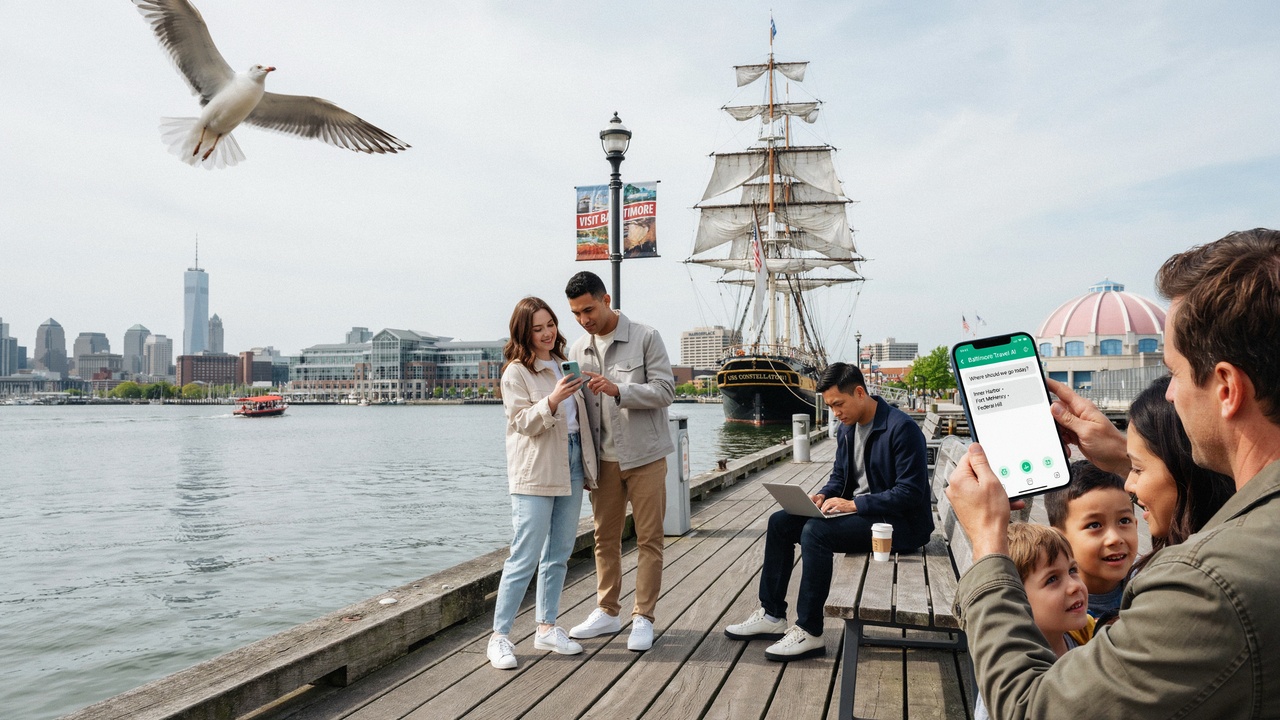
Image generated with Ai
Baltimore Travel is emerging as a striking example of a wider tourism transformation as artificial intelligence, personalised services, wellness and immersive experiences begin changing how travellers discover destinations. Trend Hunter’s latest 2026 travel research identifies personalisation, convenience and premium experiences as major forces reshaping the journey, from AI itinerary tools to smarter hospitality and redesigned airport services. Baltimore offers a useful real-world destination context because Visit Baltimore launched Chessie, an AI travel assistant, in July 2026. At the same time, Maryland’s official tourism platform continues promoting Baltimore’s waterfront, museums, heritage, food and outdoor experiences.
Baltimore Travel Enters the AI-Powered Tourism Era
The travel industry is moving towards a model in which technology accompanies visitors throughout the journey.
Advertisement
Advertisement
Trend Hunter’s August 2026 analysis identifies AI-powered navigation platforms, destination-specific travel assistants and intelligent itinerary tools as part of a broader shift towards connected travel ecosystems.
The September report reinforces the trend, identifying AI travel integrations and athlete-focused real-time city maps among developments designed to make travel more contextual and convenient.
Advertisement
Advertisement
The change is significant.
Instead of simply searching for a hotel or attraction, travellers can increasingly receive recommendations based on their interests, location and circumstances.
Advertisement
Advertisement
For a city such as Baltimore, that could mean helping visitors move from a major attraction to a neighbourhood restaurant, cultural venue or waterfront experience that better matches their interests.
Baltimore’s Chessie Shows How AI Can Change City Discovery
Visit Baltimore announced Chessie, an AI travel assistant developed with GuideGeek, in July 2026.
Advertisement
Advertisement
The development illustrates how destination marketing organisations are beginning to use conversational technology as part of the visitor journey.
Rather than relying only on static brochures or conventional search results, travellers can interact with a digital assistant while planning or exploring a destination.
Baltimore provides a particularly interesting testing ground because the city has a diverse tourism proposition.
Visit Baltimore highlights museums, history, food, outdoor recreation, sports and neighbourhood experiences.
Advertisement
Advertisement
An AI assistant can potentially help visitors connect those individual attractions into a more personalised itinerary.
That is the larger trend Trend Hunter is identifying.
Technology is moving from simply helping travellers book a trip towards helping them experience it.
Baltimore Travel Has Plenty for AI Tools to Connect
The city’s tourism offer provides substantial material for personalised recommendations.
The Inner Harbor remains one of Baltimore’s major visitor areas, with attractions including the National Aquarium, Maryland Science Center and American Visionary Art Museum. Maryland’s official tourism platform also highlights waterfront dining, shopping and water-based experiences.
A traveller interested in marine life could prioritise the National Aquarium.
Advertisement
Advertisement
A history-focused visitor could move towards Fort McHenry.
An art enthusiast could explore Baltimore’s museums and creative districts.
A sports fan could visit Oriole Park at Camden Yards or explore the city’s football culture.
The same city can therefore produce very different itineraries depending on the visitor.
AI travel technology is well suited to this type of destination because the challenge is no longer simply finding attractions.
It is choosing the right combination.
Advertisement
Advertisement
Global Travel Is Becoming More Personalised
Trend Hunter’s August research identifies personalisation as one of the major forces influencing travel in 2026.
The trend extends beyond AI.
Hotels are creating culturally immersive stays.
Resorts are developing destination-specific experiences.
Wellness services are moving directly into guest rooms.
Cruise companies are developing curated itineraries.
Advertisement
Advertisement
Airports are creating new retail and hospitality formats.
The result is a travel industry increasingly designed around specific traveller identities rather than one generic visitor.
A wellness traveller may want a quiet itinerary.
A sports fan may prioritise stadiums.
A family may need child-friendly attractions.
A luxury traveller may prefer private experiences.
Advertisement
Advertisement
The technology is becoming increasingly capable of supporting those distinctions.
Luxury Travel Is Shifting Towards Immersive Experiences
Luxury is also changing.
Trend Hunter’s August research points towards culture-driven luxury resorts, destination festivals, hotel residencies and wellness-focused escapes.
The implication is important.
Luxury is no longer defined only by room size, expensive furnishings or traditional five-star service.
Travellers increasingly want access to experiences that feel connected to the destination.
Advertisement
Advertisement
That could mean local cuisine, cultural programming, art, wellness or exclusive access.
This trend also creates opportunities for destinations with strong cultural identities.
A hotel can become part of the destination story instead of simply providing a place to sleep.
Wellness Travel Becomes More Specialised
Wellness is another major component of the current travel transformation.
Trend Hunter’s September research identifies in-suite wellness experiences, adults-only private islands, luxury pet resorts and expanded cruise spa experiences among emerging travel concepts.
This suggests that wellness tourism is becoming more fragmented and personalised.
Advertisement
Advertisement
Travellers are not necessarily looking for a generic spa weekend.
They may want fitness, relaxation, sleep, mindfulness, nutrition or other specialised experiences.
Hotels can respond by integrating wellness directly into accommodation and daily itineraries.
For destinations, this creates another opportunity to attract visitors outside traditional sightseeing.
Airports Are Becoming Part of the Holiday
One of the more surprising developments identified by Trend Hunter is the changing role of airports.
Its September research highlights airport pop-up activations, grab-and-go lounges, luxury airport boutiques and airport grocery concepts.
Advertisement
Advertisement
Airports have traditionally been transitional spaces.
Travellers passed through them as quickly as possible.
The new approach attempts to make the airport itself part of the experience.
Shopping, food, convenience services and entertainment can turn waiting time into something more productive or enjoyable.
This trend is particularly important as airports compete for passenger spending while also trying to improve the overall travel experience.
Road Travel Returns With a Premium Twist
The technology revolution is not eliminating traditional travel.
Advertisement
Advertisement
Trend Hunter’s 2026 coverage also identifies renewed interest in adventure camper vans, compact recreational vehicles and premium off-grid motorhomes.
The new road trip is increasingly designed around flexibility and comfort.
Travellers want to decide where to stop while still having modern amenities.
This is creating opportunities for destinations outside major cities.
A comfortable camper can take visitors into rural landscapes, national parks and smaller communities that may not have extensive hotel infrastructure.
The road trip is therefore becoming another form of personalised travel.
Advertisement
Advertisement
Sports Tourism Is Becoming a Destination Strategy
Sports are also moving deeper into tourism.
Trend Hunter’s current travel material identifies cross-border sporting events, running festivals, athlete-focused city tools and sports-related travel experiences.
The concept is straightforward.
A sports event creates a reason to travel.
The destination then provides reasons to stay.
A visitor attending a race may add cultural tours.
Advertisement
Advertisement
A football supporter may explore restaurants and museums.
A corporate traveller attending an event may extend the trip into a leisure break.
This creates a wider economic opportunity for host destinations.
Baltimore Already Has the Infrastructure for Experience-Led Tourism
Baltimore’s official tourism resources show how varied a city itinerary can become.
Visitors can explore the Inner Harbor, Fells Point, Mount Vernon, museums, historic sites, sports venues and waterfront attractions.
The city also offers water-based tourism.
Advertisement
Advertisement
Visitors can use water taxis, harbour cruises and kayaking opportunities, while the Baltimore Blueway connects cultural, historic and natural sites through water trails.
That diversity makes Baltimore particularly suitable for personalised travel.
A visitor can combine history and food.
Another can build a waterfront itinerary.
Another can focus on art and culture.
Another can create a family programme.
Advertisement
Advertisement
AI technology can potentially help visitors navigate these choices more efficiently.
Maryland Travel Is Also Promoting Baltimore as a Multi-Day Destination
Maryland’s official tourism platform promotes Baltimore through waterfront attractions, art, heritage, sports and food.
The state’s tourism resources also provide multi-day itineraries combining Baltimore’s major attractions.
One itinerary links the National Museum of Railroad History & Innovation, Inner Harbor, Fort McHenry and the National Aquarium.
Another highlights Baltimore’s Historic Charles Street as a scenic urban route connecting cultural, culinary, historical and recreational experiences.
This approach mirrors the broader trend identified by Trend Hunter.
Advertisement
Advertisement
Travel is increasingly being sold as a connected experience, rather than a collection of isolated attractions.
Technology Could Help Smaller Destinations Compete
The shift towards AI and personalised travel could also benefit destinations without globally famous landmarks.
An intelligent travel assistant can introduce visitors to neighbourhoods and attractions that might otherwise be overlooked.
That could distribute visitor spending more widely.
Instead of every traveller following the same top-five attraction list, technology can encourage different routes.
This creates opportunities for restaurants, independent retailers, local guides, museums and cultural organisations.
Advertisement
Advertisement
For tourism boards, the objective is therefore not simply to create a digital chatbot.
It is to create a digital pathway into the destination’s wider visitor economy.
What the Trend Means for Travellers
For travellers, the emerging model promises greater convenience.
Planning can become faster.
Recommendations can become more relevant.
Hotel experiences can become more personalised.
Advertisement
Advertisement
Airports can become more engaging.
Road trips can become more comfortable.
Sports and cultural events can become gateways to longer holidays.
But technology does not replace the value of local knowledge.
Travellers should still verify opening hours, transport information, ticket requirements and official travel guidance through reliable sources.
AI can help narrow choices.
Advertisement
Advertisement
It should not be treated as the sole authority for time-sensitive travel information.
The Future of Global Travel Is Experience First
The latest Trend Hunter research points towards a powerful conclusion.
The travel industry is moving away from a simple transport-plus-hotel model.
Instead, companies and destinations are building connected ecosystems around the traveller.
AI helps plan.
Hotels personalise.
Advertisement
Advertisement
Airports entertain.
Road vehicles increase flexibility.
Wellness becomes integrated.
Sports create reasons to visit.
Culture provides meaning.
Baltimore’s Chessie is one example of this transformation, while the city’s established waterfront, museums, neighbourhoods and heritage provide the experiences that digital tools can help travellers discover.
Conclusion
Baltimore Travel is becoming a useful window into a much bigger transformation sweeping global tourism as AI assistants, personalised itineraries, immersive hotels, wellness services, smarter airports and experience-led journeys reshape how people travel. Trend Hunter’s 2026 research identifies personalisation, convenience and premium experiences as major forces behind this shift. Baltimore demonstrates how the model can work in practice, with its Chessie AI assistant sitting alongside a tourism proposition built around the Inner Harbor, museums, history, food, sports and waterfront experiences. For travellers, the change is becoming tangible: the future holiday may no longer begin with choosing a destination and end at the hotel. It increasingly runs through a personalised digital journey designed around what each visitor actually wants to experience.
Advertisement
