Image generated with Ai
Romanian tourism has tightened the regulations concerning boating in the Danube Delta, introducing speed and zoning laws to preserve the vulnerable channels in the wetland, and promoting environmentally friendly forms of tourism at the same time. This policy has made it easier for tourists to choose certified electric boats, quiet wildlife safaris, and even community-based fishery experiences. The Danube Delta is one of the most significant wetlands in Europe, but this fact poses a serious challenge since the more tourists come to the delta, the more damage they do to the natural environment. In other words, the focus of the tourism policies here is not on accommodating the greater number of boats, but rather on regulating tourism movement.
The Danube Delta Biosphere Reserve covers a vast network of channels, lakes, reed beds, islands and wetlands where the Danube reaches the Black Sea.
It is internationally recognised for its biodiversity and is home to hundreds of bird species, fish populations and other wetland wildlife.
For tourism, the delta’s waterways are the main transport network.
Advertisement
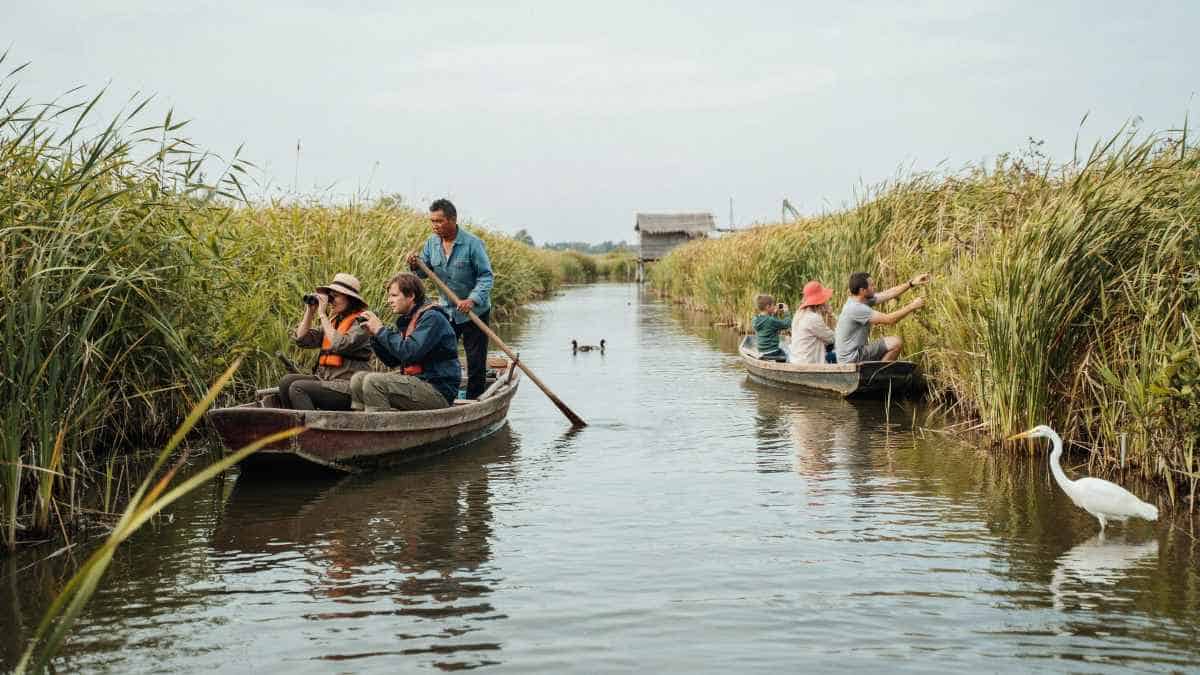
Visitors generally explore by boat, with excursions focusing on birdwatching, photography, fishing, landscapes and village life.
That makes tourism management particularly sensitive.
On a conventional road, traffic can be separated from wildlife habitats. In the delta, boats travel directly through the ecosystems visitors have come to see.
Tighter speed controls are designed to reduce disturbance and protect sensitive wetland channels.
Fast-moving motorboats can create wakes that erode banks, disturb birds and affect aquatic habitats. High speeds can also make encounters with wildlife more intrusive.
Slower boat travel provides a different tourism experience.
Visitors have more time to observe birds, photograph landscapes and navigate narrow channels without rushing from one location to another.
For wildlife tourism, slower can actually be better.
The experience becomes less about covering as much water as possible and more about spending time inside the landscape.
Speed limits are only one part of the carrying-capacity strategy.
Zoning restrictions can determine which channels are available to different types of vessels and which areas require greater protection.
This approach allows tourism activity to continue while limiting pressure on the most sensitive habitats.
For operators, zoning means routes need to be planned carefully.
A boat safari that once relied on unrestricted movement may now need to follow designated channels or observe seasonal and environmental restrictions.
For travellers, that can mean a more structured excursion, but it also helps protect the areas that make the delta worth visiting in the first place.
The push towards low-emission electric boats is another major development.
Electric vessels can significantly reduce engine noise and eliminate direct exhaust emissions while travelling through sensitive wetland environments.
That matters in the Danube Delta because wildlife encounters often depend on quiet movement.
Birdwatchers can approach observation areas with less engine disturbance, while passengers experience a quieter journey through narrow channels.
The technology also aligns with the broader shift towards lower-impact nature tourism.
Electric boats are not simply another piece of transport infrastructure. In the delta, they can become part of the wildlife-watching experience itself.
The Danube Delta is particularly important for birdwatching.
The wetlands provide breeding, feeding and migration habitat for large numbers of birds, creating opportunities to see pelicans, herons, cormorants, egrets and numerous other species.
For specialist birdwatchers, the delta’s ecological diversity makes it one of Romania’s most important nature-tourism destinations.
The move towards slower, lower-emission boats can support this niche by reducing noise and allowing visitors to spend more time observing wildlife.
Photography tourism can benefit from the same approach.
Quiet boats and carefully controlled routes can create better conditions for capturing wildlife without requiring operators to move rapidly between sites.
The conservation strategy is also connected with local communities.
Fishing has long been an important part of life in the Danube Delta, and community-based tourism can provide visitors with opportunities to understand traditional fishing practices, local food and village culture.
Rather than presenting the delta purely as an untouched wilderness, fisheries tourism highlights the relationship between people and the wetland.
Visitors can experience local cuisine, learn about fishing traditions and explore villages that depend on the delta’s natural resources.
This creates another tourism product while helping distribute visitor spending among local businesses.
The wider issue is carrying capacity.
The delta cannot simply absorb unlimited numbers of boats, visitors and tourism businesses without consequences.
Controlling speed, restricting access to sensitive channels and encouraging lower-emission vessels provides a mechanism for managing visitor pressure.
The strategy also changes the definition of a successful tourism season.
Instead of measuring success only through visitor numbers, the focus can shift towards visitor quality, environmental performance and economic benefits reaching local communities.
That is particularly important for a protected wetland where the natural environment is the primary tourism asset.
Tulcea is the main gateway for many Danube Delta journeys, with boat excursions connecting travellers to settlements and waterways deeper inside the reserve.
Popular bases and destinations include Sulina, Crișan, Murighiol and Sfântu Gheorghe, each offering different access points and experiences.
Visitors should use authorised operators familiar with current navigation rules and protected zones.
Wildlife excursions are best approached with patience. Binoculars, long lenses, sun protection and suitable outdoor clothing are useful, while early-morning and evening trips can offer strong wildlife-viewing opportunities.
Travellers should also follow local rules on speed, routes, fishing and access to protected areas.
Main gateway: Tulcea.
Major tourism activities: Wildlife safaris, birdwatching, photography, fishing and community tourism.
Key conservation tools: Boat speed limits and navigation zoning.
Lower-impact transport: Certified electric and low-emission boats.
Main local tourism product: Community-based fisheries and village experiences.
Major destinations: Sulina, Crișan, Murighiol and Sfântu Gheorghe.
Core tourism challenge: Balancing visitor activity with wetland carrying capacity.
1. Why are boat speed limits important in the Danube Delta?
They can reduce wake damage, noise and disturbance to wildlife and sensitive wetland habitats.
2. Are electric boats suitable for Danube Delta safaris?
Yes. Low-emission electric boats provide quieter, lower-impact transportation that can be particularly suitable for wildlife observation.
3. What can visitors do in the Danube Delta?
Popular activities include birdwatching, wildlife photography, boat safaris, fishing experiences and community-based cultural tourism.
Ongoing: ARBDD manages navigation, conservation and protected-area requirements within the Danube Delta Biosphere Reserve.
Current: Tighter boat-speed and zoning measures are supporting carrying-capacity management.
Current: Low-emission electric boats are gaining a stronger role in nature-based tourism.
Ongoing: Community fisheries and village experiences are expanding the local tourism offer.
The tourism in Romania’s Danube Delta is increasingly oriented towards the protection of the natural resources that are attracting tourists. Measures such as speed controls on boats and zoning have helped to cope with the pressure exerted by tourists on the fragile wetlands channels. Electric boats can also be used for quieter wildlife safaris. Community fisheries are yet another component of tourism in the Danube Delta as they help connect the tourists with the locals.
Advertisement
Tags: ARBDD, community tourism Romania, Danube Delta, Danube Delta Biosphere Reserve, Danube Delta birdwatching
Advertisement
Advertisement












Sunday, September 6, 2026
Sunday, September 6, 2026

Sunday, September 6, 2026
Saturday, September 5, 2026
Saturday, September 5, 2026

Sunday, September 6, 2026
Sunday, September 6, 2026