
Paraguay Advances Chaco Highway Connectivity to Open New Tourism Potential in Filadelfia and Carmelo Peralta

Published
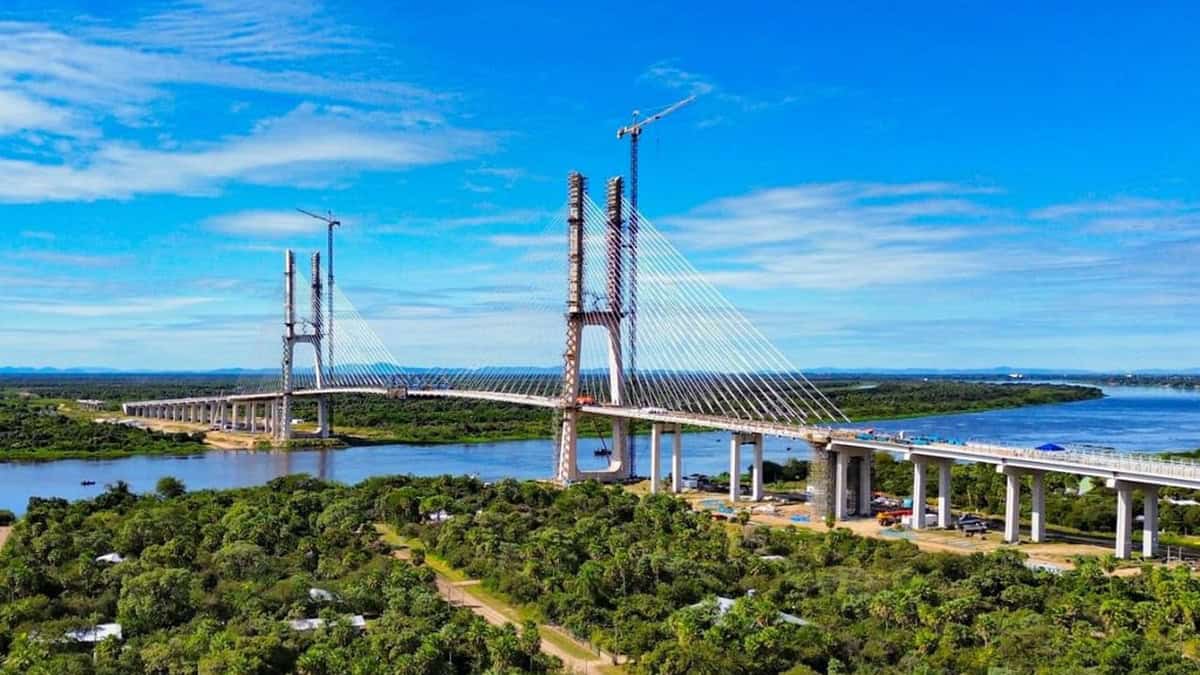
Paraguay is approaching a decisive tourism test in the Gran Chaco. Major road projects are reducing historic access barriers, yet the larger commercial opportunity lies in converting passing vehicles into overnight stays, meals, guiding, heritage visits and local purchases. Filadelfia already has an official tourism-information function, while Carmelo Peralta is being prepared for direct connection with the future Paraguay–Brazil Bioceanic crossing. The next frontier is therefore not merely building roads. It is building a viable tourism economy around the journeys those roads create.
Paraguay’s Gran Chaco Tourism Story Is Shifting From Access to Visitor Spending
Paraguay’s Gran Chaco is entering a different phase of tourism development. For years, remoteness was part of both the region’s appeal and its commercial limitation. Vast distances, weather-sensitive roads and thin visitor infrastructure restricted the ability of conventional tour operators to package independent journeys at scale.
That constraint is beginning to change.
According to Paraguay’s Ministry of Public Works and Communications, works on the access infrastructure linking Carmelo Peralta with the Bioceanic Bridge had reached 23 per cent overall progress by the end of August 2026. The project is intended to link the town directly with the international bridge and the PY15 corridor. The ministry describes the infrastructure as enabling future movement of people, cargo and productive activity between Paraguay and Brazil.
Advertisement
Advertisement
The bridge itself had entered the final stage of construction by 23 September 2026, according to ITAIPU Binacional. It will connect Carmelo Peralta with Porto Murtinho in Brazil. Crucially for travel planning, this should not yet be marketed as an operational tourism crossing until an official opening and operating arrangements are confirmed.
Farther west, the third stage of PY15 covers 224 kilometres between Mariscal Estigarribia and Pozo Hondo, approaching the Argentine border. Lot 3 had reached 40.5 per cent physical progress on 7 September, while paving had begun on the western Lot 4 during August.
Advertisement
Advertisement
The result is an unusual tourism opportunity. Infrastructure primarily conceived around logistics could simultaneously establish the physical spine for one of Paraguay’s most distinctive long-distance touring regions.
The Road Network Creating the New Chaco Tourism Geography
| Infrastructure | Latest verified position | Tourism relevance |
|---|---|---|
| Carmelo Peralta–Loma Plata section | Approximately 275.73 km already completed | Provides the established eastern portion of the Chaco Bioceanic road axis and creates the physical basis for long-distance touring. |
| PY15 Mariscal Estigarribia–Pozo Hondo | 224 km divided into four lots; Lot 3 reached 40.5% physical progress on 7 September 2026 | Gradually improves westward road continuity towards Argentina and potential multi-country overland itineraries. |
| PY15 Lot 4 towards Pozo Hondo | Roughly 52 km; asphalt works commenced in August 2026 | Removes another major infrastructure constraint on the western approach towards Argentina. |
| Bioceanic Bridge at Carmelo Peralta | In final construction stage on 23 September 2026 | Could create a major future road gateway between Paraguay and Brazil once formally operational. |
| Carmelo Peralta bridge approaches | 23% overall progress at end-August | Will connect the town’s urban network directly with the bridge and PY15 system. |
| PY12 Chaco’i–General Bruguez | Approximately 166 km across four construction lots | Improves all-weather connectivity in the Bajo Chaco and expands access to nature and cultural tourism territory closer to Asunción. |
Filadelfia Could Become the Chaco’s Tourism Conversion Hub
Filadelfia deserves particular attention from the travel trade because it already performs a function that road infrastructure alone cannot provide: helping visitors understand what to do after arriving.
Advertisement
Advertisement
SENATUR’s official Visit Paraguay platform identifies the Centro de Interpretación del Gran Chaco Americano, close to Cruce Filadelfia, as a reference point for domestic and international visitors. It incorporates a SENATUR tourist-information post providing assistance with routes, nearby attractions and trip planning. The centre currently operates from Wednesday to Sunday, from 09:00 to 17:00, with free admission.
That gives Filadelfia the ingredients of a future self-drive hub rather than simply another stop on a long highway.
Its value could come from itinerary assembly. Travellers could use the area as a base before visiting historical locations, rural properties, birdwatching areas and other parts of Boquerón, while specialist operators use it for vehicle preparation, guiding and overnight accommodation.
There is also demand evidence behind this opportunity. According to a SENATUR market study prepared with technical support from the Inter-American Development Bank, Paraguay has a potential market of more than 1.5 million people interested in nature and cultural tourism. The study specifically identified Filadelfia and its surroundings among areas capable of supporting greater geographical decentralisation of Paraguay’s tourism economy.
Advertisement
Advertisement
The same research identified infrastructure, basic services, maintenance and signage as obstacles preventing tourism resources from reaching their full potential. That finding is especially significant in the Chaco because it demonstrates that road construction solves only one part of the visitor-economy equation.
Carmelo Peralta Could Become an Arrival Point Rather Than a Place Travellers Simply Pass Through
Carmelo Peralta presents a different tourism proposition.
Its importance comes from geography. The town sits at the Paraguayan end of the Bioceanic Bridge being built across the Paraguay River towards Porto Murtinho in Brazil.
MOPC reported on 29 September that the access project includes work within the urban area as well as connections towards the international bridge. It is therefore reasonable to view Carmelo Peralta as a potential future gateway for road travellers entering or leaving Paraguay, although its eventual tourism role will depend on border procedures, opening arrangements and visitor services that have yet to be fully demonstrated.
This distinction matters commercially.
A border gateway can generate traffic without necessarily generating tourism income. Drivers may refuel, continue towards another destination and leave little expenditure behind.
Advertisement
Advertisement
The higher-value scenario would require reasons to stop: accommodation, food, visitor information, river experiences, locally managed excursions, handicrafts, guides and clearly packaged onward Chaco itineraries.
ITAIPU has already documented expectations among local businesses and micro-enterprises concerning the economic consequences of the bridge. That makes Carmelo Peralta particularly relevant to the tourism sector, because travel businesses can potentially become part of the local service economy created around future cross-border movement.
The Missing Tourism Infrastructure May Be the Roadside Stop
The most revealing official clue about the next stage of Chaco tourism appeared before the latest road milestones.
According to SENATUR, tourism officials and the Boquerón departmental government evaluated in November 2025 the possibility of establishing a Michi No Eki road station in the Chaco, based on the Japanese roadside-station model. The purpose identified by the tourism authority was to stimulate the local economy, encourage domestic tourism and provide higher-quality services to people travelling through the region.
That concept now looks increasingly relevant.
In July 2026, SENATUR and the Touring y Automóvil Club Paraguayo launched the JAPYTA – Las Mejores Paradas en Ruta initiative on PY02. Its focus is improving quality, hospitality and safety at service stations and roadside establishments along an important tourism corridor.
Advertisement
Advertisement
These initiatives provide evidence of a wider Paraguayan policy direction: the journey itself is becoming part of tourism infrastructure.
Why the Road-to-Revenue Gap Is the Chaco’s Most Important Tourism Question
This is where the Chaco opportunity becomes more significant than another road-building story.
The official evidence reviewed for this report does not show a completed, corridor-wide Chaco network of tourism-standard roadside stations comparable with the service-quality model being developed elsewhere in Paraguay. Instead, it shows the pieces developing separately: improved roads, tourism information in Filadelfia, a proposed Chaco roadside-station concept, nature and cultural attractions, and a future international gateway at Carmelo Peralta.
Joining those pieces could change the economics of Chaco tourism.
A traveller covering hundreds of kilometres requires predictable fuel, toilets, food, connectivity, emergency information, vehicle support and safe stopping points. A tourism economy then needs another layer: accommodation, guides, interpretation, local products and bookable experiences.
Every additional stop creates an opportunity for expenditure to remain in the region. Every overnight stay changes a transit journey into tourism. Every packaged detour towards heritage or nature assets gives tour operators something saleable rather than simply scenic mileage.
Advertisement
Advertisement
The Chaco therefore faces a tourism-conversion challenge rather than an attraction shortage.
Paraguay Already Shows That Road Tourism Can Generate Serious Domestic Spending
National data demonstrate why the distinction matters.
During Paraguay’s long Heroes Day holiday from 27 February to 2 March 2026, SENATUR recorded 185,791 cars and pick-ups moving across national routes. MOPC data incorporated into SENATUR’s assessment attributed US$26.29 million in expenditure to that vehicle movement. The wider holiday tourism impact exceeded US$36 million.
During Holy Week, 409,431 people travelled between 1 and 5 April 2026, while domestic tourism generated US$55.48 million, an increase of 36 per cent in economic impact from 2025, according to SENATUR’s Tourism Observatory.
These figures are national and should not be represented as Chaco-specific demand. They nevertheless prove an important commercial point: road mobility already generates substantial tourism expenditure in Paraguay.
| Tourism indicator | Official result | Relevance to a Chaco self-drive strategy |
|---|---|---|
| Potential nature and cultural tourism market | More than 1.5 million people | Suggests a sizeable addressable market for specialised Chaco products. |
| Vehicle movement during Heroes Day holiday | 185,791 cars and pick-ups | Demonstrates the scale of domestic road-based mobility. |
| Spending linked with that vehicle movement | US$26.29 million | Shows that vehicle journeys can translate into measurable tourism expenditure. |
| Holy Week domestic travellers | 409,431 people | Confirms strong domestic movement during concentrated travel periods. |
| Holy Week domestic tourism receipts | US$55.48 million | Illustrates the broader economic value of converting mobility into visitor consumption. |
For the trade, the opportunity is consequently less about reproducing conventional sightseeing tours and more about designing a road product suited to distance.
Advertisement
Advertisement
That could mean two- or three-night regional bases, vehicle-supported birding circuits, Chaco War heritage itineraries, rural gastronomy, specialist naturalist departures and Brazil–Paraguay overland extensions once the new international crossing is formally operational.
Better Highways Do Not Mean Every Chaco Attraction Has Become Easy to Reach
The strongest self-drive proposition will also require careful management of traveller expectations.
The new asphalt network should not be confused with universal paved access across the Chaco.
Paraguay’s Ministry of Environment and Sustainable Development currently describes access towards Médanos del Chaco National Park from Mariscal Estigarribia as heavily dependent on dirt roads and weather conditions. Its visitor information also identifies access controls associated with the protected nature of the area.
MADES temporarily suspended visits to Defensores del Chaco and Teniente Agripino Enciso national parks from 18 December 2025 while visitor infrastructure work was undertaken. Because protected-area status can change independently of highway conditions, operators should verify current access directly with MADES before confirming itineraries rather than assume that improvements to the trunk-road network automatically make every park available.
Weather remains another operational factor. MOPC’s September update on PY15 specifically referred to preparations for heavy rainfall and temporary flooding associated with El Niño conditions.
Advertisement
Advertisement
For adventure-tourism sellers, that makes route design, contingency planning and current road-condition verification part of the product itself.
Sustainable Chaco Tourism Must Protect the Landscape That Makes the Journey Valuable
Improved access can also increase pressure on sensitive ecosystems.
MOPC’s latest environmental update, dated 30 September 2026, confirms that wildlife crossings on the Bioceanic Corridor are being permanently monitored with camera traps. The monitoring has already recorded animals including tapirs and giant armadillos using the structures.
Earlier MOPC project information records 13 wildlife crossings on the completed Carmelo Peralta–Loma Plata section, around 15 proposed crossings for large mammals on the second stage and another 13 planned for the third stage.
This matters directly to tourism. Faster roads can improve access, but higher vehicle volumes also introduce collision, disturbance and habitat-fragmentation risks.
A credible expedition-tourism strategy therefore has to sell the Chaco as a conservation-sensitive landscape, not an unrestricted driving playground.
Advertisement
Advertisement
That principle becomes particularly important near territories associated with Indigenous peoples, including groups living in voluntary isolation. Tourism expansion should remain within authorised routes and formally managed visitor experiences rather than encouraging unsupervised access into sensitive territories.
What Travel Agents and Tour Operators Should Do Before Packaging the Chaco
- Build Filadelfia as a service and orientation hub, rather than treating the Chaco as a single uninterrupted drive. Its official tourism-information facilities already support onward journey planning.
- Do not sell the Carmelo Peralta–Brazil bridge as an operational border crossing yet. The structure was still described officially as being in its final construction stage in late September, while Paraguayan access works stood at 23 per cent.
- Verify protected-area access directly with MADES before departure. Road improvements do not override conservation restrictions, temporary closures or local entry controls.
- Maintain weather contingencies for remote sectors. Dirt-road approaches remain weather-sensitive even while major trunk corridors are being paved.
- Plan fuel, water, food, communications and vehicle support around long distances. The commercial opportunity for Paraguay is precisely the present gap between improved highways and a dense tourism-service network.
- Use locally delivered guiding, accommodation, food and cultural experiences wherever formal products exist. This increases the likelihood that new road traffic produces retained economic value within Chaco communities.
- Integrate wildlife safety into driver briefings. The existence of wildlife crossings and monitoring systems confirms that vehicle–fauna interaction is a material road-management issue.
- Develop itineraries around time spent rather than kilometres covered. Overnight stays and structured excursions create greater tourism value than positioning the Chaco merely as scenery between international borders.
Paraguay’s Next Tourism Frontier Could Be Measured in Stops, Not Traffic
Paraguay is building the physical conditions for a dramatically more connected Gran Chaco. Carmelo Peralta is moving towards a new international role. Filadelfia already functions as an information and interpretation point. PY15 is extending towards Argentina. PY12 is improving all-weather connectivity through the Bajo Chaco.
Yet the decisive tourism metric will not be the number of vehicles that cross these roads.
It will be how many travellers stop.
If passing motorists become overnight guests, heritage visitors, birdwatchers, guided nature travellers and customers of local businesses, road investment could help decentralise Paraguay’s tourism economy into one of South America’s least conventional overland regions.
If service infrastructure and saleable products lag behind connectivity, much of that traffic could simply cross the Chaco without generating significant visitor value.
Advertisement
Advertisement
As of 4 October 2026, that is what makes Paraguay’s Chaco story commercially important. The roads are increasingly visible. The next contest is over the tourism economy that forms beside them.
Advertisement
