
France Follows Spain and Other Destinations as Rural Tourism Surge Redraws Europe’s 2026 Travel Map

Published
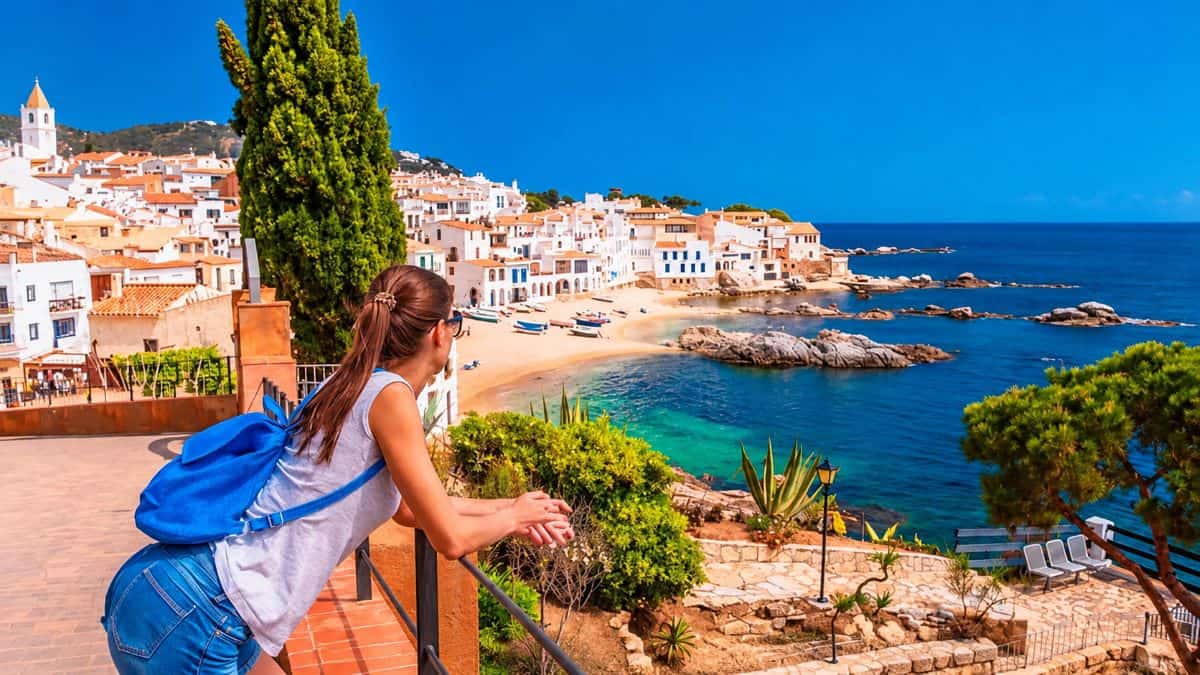
Spain follows France and other destinations as rural tourism surge redraws Europe’s 2026 travel map, reshaping global tourism choices. Europe’s travel map is changing in 2026. The biggest shift is not simply that more people are travelling. It is where those travellers are choosing to stay. Official tourism data from France, Spain, Portugal, Denmark, Norway, Italy and Germany shows growing strength in rural tourism, camping, mountain holidays, holiday homes and alternative accommodation. France offers the clearest example. Rural destinations added 3.7 million overnight stays during summer 2026. Yet France’s total increase was only 2.8 million nights because its densest urban areas lost around 2.5 million.
Spain is showing a similar pattern. Rural accommodation nights increased 3.9% in July 2026, compared with growth of only 0.9% across the wider non-hotel market. For travellers, this matters because Europe’s tourism growth is spreading beyond the familiar city break. Countryside stays, outdoor holidays and smaller destinations are becoming a much bigger part of how Europe travels.
France’s Rural Tourism Boom Is Bigger Than Its Total Summer Gain
France recorded 260.5 million overnight stays in collective tourist accommodation between May and August 2026, according to INSEE.
That was 1.1% higher than summer 2025 and the highest summer level recorded in 15 years.
Advertisement
Advertisement
But the national total hides a much more interesting movement underneath.
| France summer tourism | 2026 performance |
|---|---|
| All collective accommodation | 260.5m nights, +1.1% |
| Rural destinations | +3.2%, +3.7m nights |
| Dense urban areas | -3.9%, -2.5m nights |
| Intermediate urban areas | +2.1% |
| Coastal destinations | 106.3m nights, +1.4% |
| Mountain destinations | 45m nights, +1.3% |
| Campsites | 126.5m nights, +1.1% |
| Hotels | 92m nights, +1.7% |
The standout figure is 3.7 million additional rural nights.
Advertisement
Advertisement
That is roughly 900,000 more nights than France gained nationwide.
This tells travellers something that national arrival totals cannot: growth is being redistributed. More demand is reaching destinations outside the largest urban centres, even while parts of city tourism weaken.
Advertisement
Advertisement
France’s Biggest Cities Lose Nights While Regional Travel Gains Ground
Dense urban destinations in France recorded a 3.9% fall in overnight stays during the summer.
The decline was far greater among international travellers. Non-resident nights in dense urban areas fell 7.7%, while resident demand slipped only 0.7%.
INSEE said repeated heatwaves may have influenced tourism in major cities.
At the same time, several less concentrated travel markets performed strongly.
Advertisement
Advertisement
- Channel-East and North Sea coast: +5.6%
- North Atlantic-Western Channel: +5.0%
- Mountain destinations: +1.3%
- Mediterranean coast: +0.3%
- South Atlantic coast: -2.3%
The South Atlantic weakness coincided with July wildfires, although INSEE noted that the decline had begun beforehand.
For travellers, the useful takeaway is not that French cities are suddenly unpopular. It is that France now offers a wider set of destinations competing successfully for summer demand.
That can influence where accommodation fills first, where seasonal pressure develops and where travellers may find alternatives to the most heavily visited city centres.
Domestic Travellers Are Quietly Powering France’s Tourism Shift
One of the most important forces behind France’s 2026 performance is domestic tourism.
Resident overnight stays increased 1.6% and generated the country’s entire net gain of about 2.8 million nights. Overall international demand was broadly stable.
International hotel demand nevertheless varied sharply by market.
Advertisement
Advertisement
Markets gaining hotel nights:
- Germany: +3.9%
- United Kingdom: +1.2%
- United States: +0.8%
Markets losing hotel nights:
- Spain: -8.5%
- Italy: -3.0%
- China: -9.0%
- Japan: -10.8%
This matters because domestic demand can stabilise destinations when overseas markets move unevenly.
For travellers, it also means popular countryside and camping destinations may face strong competition from residents even when international arrivals look moderate.
Spain Rural Tourism Is Growing Far Faster Than Its Wider Non-Hotel Market
Spain gives the France trend a powerful southern European counterpart.
Spain recorded more than 22.5 million overnight stays in non-hotel accommodation in July 2026, according to INE.
Advertisement
Advertisement
Overall growth was just 0.9%.
Rural tourism accommodation, however, grew 3.9%.
The rural increase came from both Spanish and foreign travellers:
- Domestic rural nights: +4.6%
- International rural nights: +2.7%
- Camping nights: +1.2%
- All domestic non-hotel nights: +4.2%
- All international non-hotel nights: -2.2%
The contrast is difficult to ignore.
Spain’s rural accommodation market expanded more than four times faster than the wider non-hotel category.
That gives travellers another clue about 2026 demand: small towns, countryside accommodation and outdoor stays are becoming increasingly mainstream rather than remaining niche alternatives to city holidays.
Advertisement
Advertisement
Portugal Shows Rural Europe Can Win International Travellers Too
Portugal adds a different dimension.
Rural tourism there is not growing simply because residents are travelling closer to home.
Turismo de Portugal recorded 2,054 rural-tourism and tourism-in-habitation establishments in 2025, up 3.4%, with approximately 35,700 available beds.
The sector welcomed:
- 1.5 million guests: +6.7%
- 3.3 million overnight stays: +6.9%
- International rural nights: +10.3%
Germany alone generated around 300,000 rural overnight stays.
France, Spain, the United States and the Netherlands were also major sources of demand.
Advertisement
Advertisement
The trend remains relevant in 2026. In July, total overnight stays increased 7.5% in Alentejo and 6.3% in Norte, against national growth of 2.1%. (Turismo de Portugal)
Not every stay in those regions is rural. But together, these figures show travellers increasingly looking beyond Portugal’s most established tourism corridors.
Denmark and Norway Put Camping at the Centre of Europe’s Summer Boom
Northern Europe makes the outdoor-tourism shift even harder to dismiss.
Denmark passed 13 million tourist overnight stays in July 2026 for the first time. The country added approximately 690,000 nights year on year.
Where did most of the growth come from?
| Accommodation type | Extra July nights |
|---|---|
| Camping | +270,000 |
| Holiday homes | +235,000 |
| Hotels | +185,000 |
Camping and holiday homes produced roughly 505,000 of Denmark’s 690,000 additional nights.
Advertisement
Advertisement
Norway tells a similar story.
Total July guest nights reached 8.11 million, rising 6%. Camping grew 6.9%, compared with 4.1% for hotels. Domestic camping nights climbed an even stronger 10.2%.
For travellers, camping in Europe can no longer be treated simply as the cheapest accommodation category. It has become a major part of mainstream summer demand.
Italy and Germany Reveal a Longer-Term Change in How Europe Stays
Italy’s second-quarter 2026 tourism data strengthens the same broader pattern.
The country recorded nearly 148 million overnight stays, up 3.9%. Hotel nights grew 2.4%, reaching 77.6 million.
Extra-hotel accommodation grew much faster at 5.6%, reaching around 70.3 million nights.
Advertisement
Advertisement
That category includes apartments and other short-term accommodation, so it should not be described entirely as rural tourism.
But it does reveal a clear traveller preference: growth is spreading across accommodation formats instead of remaining centred on traditional hotels.
Germany demonstrates how durable part of that change has become.
Camping establishments registered 44.7 million overnight stays in 2025, an all-time record.
That was:
- 4.2% above 2024
- 24.9% above 2019
- More than double the level recorded two decades earlier
Germany therefore suggests that outdoor tourism is no temporary travel fashion. It is developing into a structural part of the European visitor economy.
Advertisement
Advertisement
What Europe’s Rural Tourism Surge Means for Your Next Trip
The most useful interpretation for travellers is not that Europe’s cities are losing their appeal.
Paris, Rome, Madrid and other major destinations remain powerful tourism magnets.
What is changing is the number of credible alternatives.
Travellers planning Europe in 2026 increasingly have reasons to consider:
- countryside accommodation outside major gateways;
- camping and cabin stays;
- mountain and nature-focused trips;
- holiday homes for longer stays;
- smaller coastal destinations;
- secondary cities connected to rural regions.
These choices can offer a different experience from the traditional European city break.
But rising demand also creates new planning considerations. Popular rural properties can sell early. Road and rail connections may be less frequent. Extreme heat, wildfire risk and water pressure can affect seasonal travel. A destination that looks quieter on a map may still experience strong domestic demand.
Advertisement
Advertisement
The best strategy is therefore not simply to search for somewhere “less crowded”. It is to compare season, accessibility, accommodation availability and local conditions before booking.
Europe’s 2026 Tourism Story Is Becoming Less About Crowds and More About Choice
France provides the most striking evidence of the change: rural tourism added 3.7 million nights, even though the country gained only 2.8 million overall.
Spain follows with rural accommodation growing far faster than its wider non-hotel sector. Portugal shows international visitors moving into countryside tourism. Denmark and Norway reveal the scale of camping and holiday-home demand. Italy and Germany show that alternative accommodation is becoming embedded in how Europeans travel.
The bigger story is therefore not a simple move away from cities.
It is the expansion of Europe’s usable travel map.
More destinations are becoming meaningful parts of the tourism economy. More accommodation formats are competing for travellers. And more visitors are discovering that a European holiday no longer has to begin and end in the continent’s most famous urban centres.
Advertisement
Advertisement
Spain follows France and other destinations as rural tourism surge redraws Europe’s 2026 travel map by shifting demand beyond major cities.
In conclusion, Spain follows France and other destinations as a rural tourism surge redraws Europe’s 2026 travel map because travellers are spreading beyond major cities into countryside stays, camping, mountains, holiday homes and secondary regions. Official data shows rural and alternative accommodation growing faster than wider tourism segments in several markets. This shift gives travellers more choice while helping tourism spending reach a broader range of destinations. Europe’s 2026 travel pattern is therefore becoming more diverse, decentralised and resilient, with rural tourism emerging as an increasingly important part of the continent’s visitor economy.
Advertisement
