
Riyadh Airport Powers Back After 14 Days Of Closure To Unlock Vital Links and Re-Energize Inbound Tourism & Travel

Published
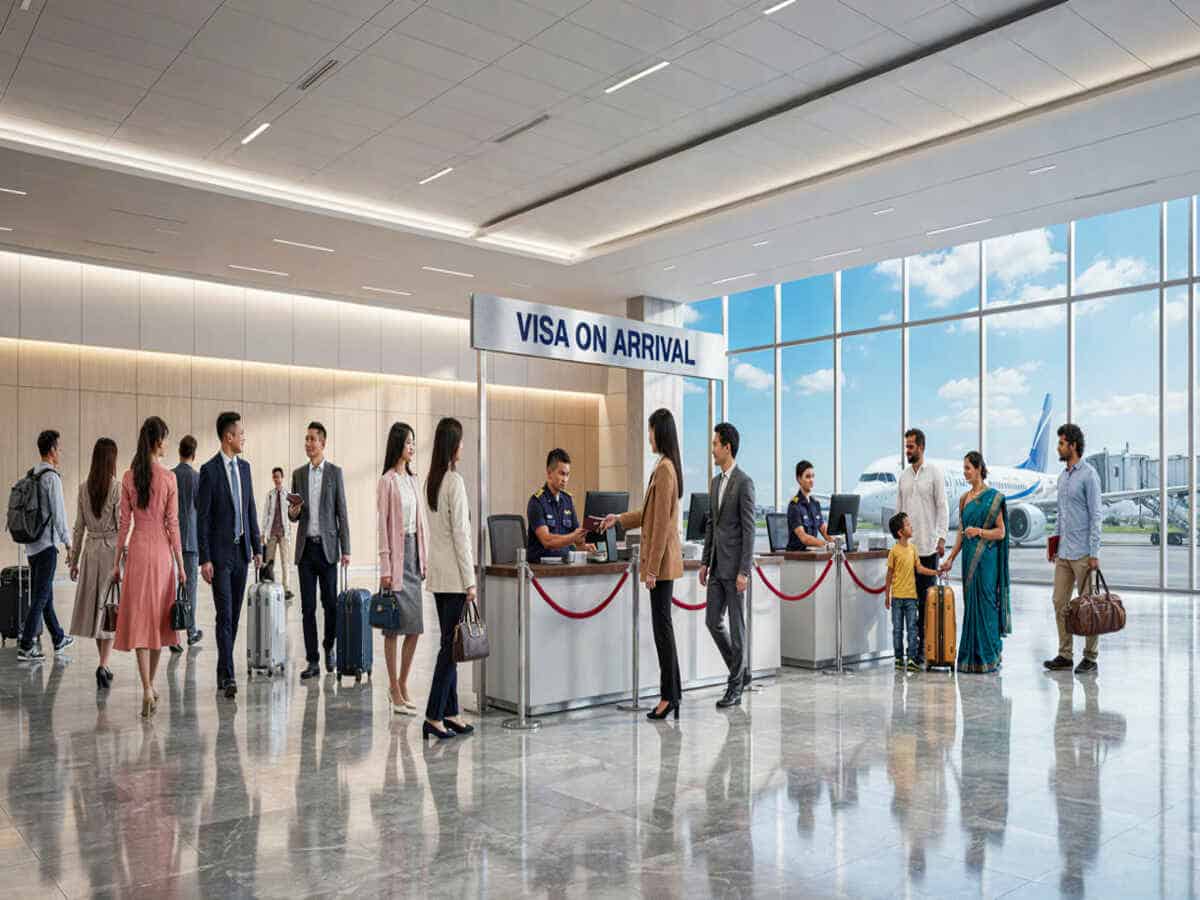
Reopening of Riyadh Airport after fourteen-day closure, restores important connections, and helps Saudi tourism flourish. Finally, the eerie calm that had been hanging above the runways of Saudi Arabia’s capital for over two weeks was disrupted this Sunday. After the airport underwent an unprecedented fourteen-day closure due to threats of deadly security breaches in the region, King Khalid International Airport (RUH) in Riyadh has now turned its engines on to get things up and running again. This is a critical turning point since the restoration of this key transport link not only ensures the continuation of vital logistic supply chains but also helps protect the plan to make the country a world-class aviation and tourist hub.
The Preceding Darkness: Anatomy of a Fourteen-Day Grounding
The two-week standstill was triggered by an assault on October 10, when coordinated Houthi drone and missile strikes struck deep into the central province, claiming thirteen lives and injuring more than three hundred individuals. Marking the deadliest cross-border breach within the Kingdom’s sovereign borders in over a decade, civil aviation and military leadership initiated an immediate, total operational halt to conduct damage containment, reinforce defensive shield parameters, and inspect critical taxiways.
The disruption quickly rippled through international skies:
- Regulatory Tightening: On October 17, the General Authority of Civil Aviation (GACA) mandated specialized ministerial clearance for any aircraft penetrating domestic flight zones.
- Global Precautionary Pullbacks: Heightened risk assessments prompted major foreign carriers—including India’s primary operators Air India and IndiGo, alongside regional Gulf heavyweights—to cancel or extend flight suspensions well into November.
- Persistent Friction: The airport’s eventual reactivation took place amid active defensive alertness, with air defense systems intercepting hostile unmanned aerial craft over the capital’s perimeter just hours before Sunday’s formal clearance.
Calculated Re-Entry: The Segregated Terminal Architecture
To minimize operational exposure while testing renovated perimeter protocols, authorities engineered a tightly managed, phased reopening mechanism. Rather than an indiscriminate resumption across all five terminals, traffic has been compartmentalized to ensure strict control and security vetting.
Advertisement
Advertisement
Passenger Categories and Terminal Access Arrangements
| Passenger Category | Designated Terminal | Airline / Routing Details | Operational Status |
|---|---|---|---|
| Domestic Travellers | Terminal 1 | Unrestricted national routing for domestic passengers | Unrestricted domestic access |
| Flag Carrier Inbound Passengers | Terminal 2 | Exclusively allocated to Saudia and flynas | Airline-specific allocation |
| Foreign Airline Passengers | Terminals 3, 4 & 5 | International carriers operating outside the designated airline allocation | Suspended / Pending Verification |
The designated allocation isolates domestic passenger distribution from cross-border processing, preventing systemic bottlenecks:
- ✦ Terminal 1 (Domestic Pipeline): Dedicated entirely to internal regional traffic, linking capital business districts to provincial capitals and emerging heritage corridors.
- ✦ Terminal 2 (Sovereign Flagships): Operating international routes exclusively for state-backed domestic carriers—chiefly Saudia and budget operator flynas—ensuring direct governmental oversight over passenger screening and manifests.
- ✦ Terminals 3, 4, and 5 (Foreign Carrier Halts): Foreign commercial operators remain subject to safety-audit approvals and route revalidations, maintaining an orderly environment inside the primary passenger buildings.
Disruption Profiles Across the Global Fleet
The abrupt closure caught dozens of international airlines in administrative holding patterns. Bilateral transit agreements were superseded by emergency security reviews, and foreign carriers adjusted their timetables accordingly.
Advertisement
Advertisement
| Airline Entity | Affected Routes to/from RUH | Operational Status | Resumption / Review Window |
| Saudia | Worldwide network & domestic connections | Phased partial reactivation via Terminal 2 | Active as of Sunday |
| flynas | Regional Middle East & domestic network | High-volume shuttle services restored | Active as of Sunday |
| Air India & AI Express | Direct services to Riyadh, Dammam & Jeddah | Full service suspension across central terminals | Review set for November 7 |
| IndiGo | Key subcontinental worker routes | Direct Riyadh services deferred | Mid-November evaluation |
| Regional Gulf Carriers | Feeder shuttles from UAE, Qatar, and Bahrain | Selective, specialized charter-only approvals | Rolling weekly assessment |
Reigniting Vision 2030: Protecting the Aviation Super-Hub
The reactivation of King Khalid International Airport represents far more than an operational victory for air traffic control—it serves as an indispensable firewall protecting the economic transformation championed under Vision 2030. Aviation is the bedrock supporting the Kingdom’s retreat from hydrocarbon dependence.
- Safeguarding the 330-Million Passenger Goal: GACA’s statutory target of lifting national aviation throughput from 140 million passengers up to 330 million annually by the end of the decade depends heavily on capital capacity. A prolonged blackout threatened to stall international slot renewals, dampen passenger transit growth, and jeopardize infrastructure investment returns.
- The Dual-Hub Balance: The operational equilibrium of the Kingdom relies on a deliberate logistical split:
- King Abdulaziz International Airport (JED) in Jeddah: Focuses on religious pilgrimages (Hajj and Umrah) alongside Red Sea luxury escapes.
- King Khalid International Airport (RUH) in Riyadh: Handles multinational corporate corridors, state delegations, and high-margin east-west long-haul transit.
- Runway Clearance for Riyadh Air: With the nascent sovereign carrier Riyadh Air actively preparing to scale its fleet and operations, the underlying ground and tower infrastructure requires proven operational resilience. Sunday’s reactivation validates that Riyadh’s airspace can recover swiftly from unforeseen disruptions.
Rekindling the Inbound Tourism Engine
The revival of flights into Riyadh instantly unblocks tourist routes that branch throughout the country. International visitors landing in the capital supply the domestic flight connections that feed emerging cultural and eco-tourism sites across the Kingdom.
- ❖ Capital Festivities & MICE Travel: The reopening secures attendance for Riyadh Season and large-scale trade symposia, reassuring business travelers and multinational enterprises under the Kingdom’s Regional Headquarters (RHQ) mandate.
- ❖ Domestic Feeders to Heritage Corridors: Travelers bound for the sandstone canyons of AlUla, the mountainous retreats of Asir, or the luxury archipelagos along the Red Sea depend on Riyadh as their primary internal transit bridge. Reopening Terminal 1 repairs this vital internal distribution network.
- ❖ International Visitor Targets: Restoring regular schedules protects progress toward the Kingdom’s goal of drawing 150 million domestic and international tourists annually by 2030, reinforcing traveler trust through proven emergency management.
Securing Airspace Integrity and Future Outlook
While challenges remain—underlined by continuing regional security posturing and extended suspensions among foreign airlines—the resumption of commercial operations at King Khalid International Airport sends an unequivocal signal to global aviation stakeholders. By enforcing strict safety corridors, demonstrating robust multi-layered defensive shields, and instituting an organized, phased terminal structure, Saudi Arabia has demonstrated its capacity to safeguard its critical infrastructure against complex geopolitical challenges.
The airport in Riyadh reopens following a 14-day shutdown to resume important flight connections, as well as reviving Saudi Arabia’s travel dreams.
As regional politics combine with military preparedness to ensure continuous tranquility in the skies, the noise of jets roaring over Riyadh’s runways reconnects the country to its international world, ensuring that the dream to become the center of global tourism will go on as planned.
Advertisement
