
Gyeongju, Jeonju and Suncheon Put South Korea’s Overlooked Korean Cities on the Tourism Map

Published
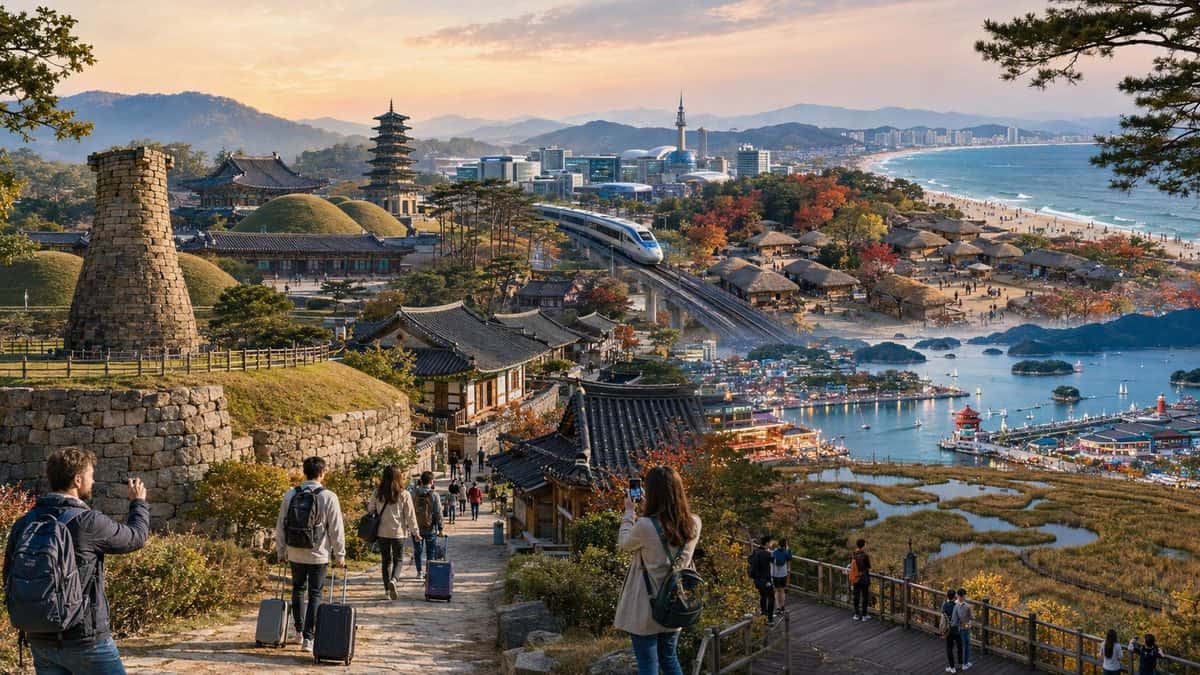
Image generated with Ai
While South Korea’s tourism is in its next phase of expansion and international visitors already totaled 16.37 million in 2024, returning to a pre-pandemic level of 93.5 percent of 2019’s visits, the remainder of the world still sees Korea mainly as Seoul, Busan, and Jeju. The rest of Korea’s cities are still relatively unexplored by international travellers, including Gyeongju, Jeonju, Andong, Tongyeong, Yeosu, Gangneung, Suncheon, and Daejeon. These cities have a vibrant culture and history, as well as great tasty food, beautiful scenery, science, wellness, and a slower-paced lifestyle. These cities show the other side of Korea that a lot of visitors are yet to experience.
Korea’s Tourism Map Is Larger Than Its Global Image
South Korea’s international tourism recovery has been substantial, but recovery does not automatically mean geographic diversification. Seoul remains the country’s dominant gateway and cultural reference point, while Busan and Jeju have developed powerful international identities of their own. For many first-time visitors, the result is a predictable circuit that can compress a geographically diverse country into three familiar stops.
That pattern matters because Korea’s tourism proposition extends far beyond metropolitan shopping districts and headline attractions. The country’s regional cities contain royal-era landscapes, UNESCO heritage, fishing communities, ecological reserves, hot-spring districts, science institutions and distinctive food traditions. The regional layer is where travellers encounter a less packaged version of Korean life.
The government is increasingly recognising that regional tourism can support a broader inbound economy. The Ministry of Culture, Sports and Tourism published its 2025 Regional Tourism Development Index analysis in July 2026, reflecting continued policy attention on tourism development outside the most established gateways.
Advertisement
Advertisement
There is also a practical reason to look beyond the headline destinations. Longer stays create more opportunities for regional excursions, overnight accommodation, restaurants, transport operators and cultural venues to capture international spending. That makes destination dispersal relevant not only to travellers, but also to Korea’s tourism businesses.
Advertisement
Advertisement
The Numbers Behind Korea’s New Tourism Phase
The scale of inbound recovery provides important context. Korea recorded 16.37 million international visitors during 2024, reaching almost pre-pandemic levels. By the first half of 2026, arrivals had risen to 10.71 million, with particularly strong growth from long-haul markets. Visitors from Europe increased 20.2%, while arrivals from the Americas climbed 12.7% year on year.
That shift is important for regional destinations. Visitors from distant markets typically have stronger incentives to build longer itineraries around several regions rather than limiting their trip to one metropolitan area. The emergence of new and expanded direct air services also improves the potential for wider tourism circulation.
Korea’s tourism authorities have therefore been promoting regional experiences alongside the country’s familiar cultural and urban icons. The official tourism platform now features itineraries connecting cities including Andong, Jeonju, Gangneung and Yeosu, demonstrating that these destinations are increasingly being incorporated into structured travel planning.
Advertisement
Advertisement
| Tourism Indicator | Latest Available Figure |
|---|---|
| International visitors, 2024 | 16.37 million |
| Recovery versus 2019 | 93.5% |
| International visitors, Jan–Jun 2026 | 10.71 million |
| H1 2026 year-on-year growth | 21% |
| Americas growth, H1 2026 | 12.7% |
| Europe growth, H1 2026 | 20.2% |
| Oceania and other markets growth | 11% |
The figures suggest that Korea has moved beyond simple post-pandemic recovery. The next tourism challenge is deciding where those visitors travel after they arrive.
Gyeongju Turns Ancient Korea Into A Modern Trip
Gyeongju is perhaps the clearest answer for travellers who want history without spending their entire holiday inside Seoul museums. Once the capital of the Silla kingdom, the city combines archaeological landscapes, Buddhist heritage and traditional architecture within a comparatively compact destination.
Advertisement
Advertisement
Bulguksa Temple and Seokguram Grotto form the centrepiece of its UNESCO-listed heritage. Daereungwon’s royal tombs and the atmospheric Woljeonggyo Bridge add a different dimension after dark. The attraction lies in the unusual relationship between archaeological remains and an active contemporary city.
Gyeongju’s international profile also received a significant boost from the 2025 APEC Summit, which brought heightened global attention to the city. Before the summit, the Korean government and tourism authorities launched the “Smile of Silla” campaign to strengthen hospitality among tourism, accommodation, shopping and food-service providers.
For travellers, Gyeongju works best as an overnight destination rather than a rushed excursion. Two days allow enough time to combine major heritage sites with cafés, local food and evening walks.
Jeonju Makes Food A Cultural Itinerary
Jeonju offers a different proposition. Its strength lies in the convergence of cuisine, traditional architecture, craftsmanship and slower urban exploration.
The Jeonju Hanok Village is the obvious starting point, but stopping there would undersell the city. Travellers can explore traditional houses, local food businesses, cultural workshops and contemporary cafés operating within an increasingly sophisticated heritage environment.
Advertisement
Advertisement
Food is particularly important. Jeonju’s association with bibimbap gives the city an immediately recognisable culinary identity, while the wider Jeolla region is renowned for elaborate food traditions.
That makes Jeonju particularly useful for travellers who want to understand how Korean culture survives through everyday consumption, rather than through monuments alone. A traditional meal, a hanok stay and a walk through older neighbourhoods can create a more intimate experience than a checklist of major attractions.
Andong Offers A Living Heritage Experience
Andong belongs in a different category. Its appeal comes from the preservation of cultural traditions and landscapes associated with Korea’s historical social structure.
Hahoe Folk Village and Byeongsanseowon Confucian Academy are both UNESCO World Heritage sites. Hahoe provides an unusually tangible connection with traditional village architecture, while Andong’s mask-dance traditions offer a performing-arts dimension.
The city is particularly compelling for culturally motivated travellers who want context. Instead of simply photographing historic buildings, visitors can explore the relationship between architecture, ritual, landscape and community.
Advertisement
Advertisement
That distinction matters in an era when heritage tourism increasingly competes with highly commercialised experiences. Andong provides a stronger sense of place because its cultural attractions remain connected to the surrounding landscape.
Tongyeong Reveals Korea’s Maritime Character
Busan dominates the international perception of coastal Korea, but Tongyeong offers a more intimate alternative. The southern port city opens towards a dense archipelago, creating a travel experience shaped by ferries, seafood, harbour views and island landscapes.
Its appeal is strongest for travellers who prefer scenic movement rather than static sightseeing. Coastal viewpoints, boat journeys and local seafood can turn a short stay into a maritime itinerary.
Tongyeong also works well as a slower counterpart to Busan. The two destinations should not be treated as competitors. Busan delivers metropolitan scale, beaches, shopping and major urban attractions, while Tongyeong provides a more concentrated relationship with Korea’s southern coastline.
Yeosu Makes The Coast Come Alive After Dark
Yeosu adds another coastal dimension, particularly through night-time tourism. The city combines ocean views, waterfront attractions, seafood and illuminated landscapes, giving visitors a strong reason to remain outdoors after sunset.
Advertisement
Advertisement
The nearby Suncheon pairing makes the region especially attractive. VisitKorea positions Yeosu and Suncheon together as a combined coastal and ecological journey, with Yeosu providing maritime scenery and Suncheon supplying wetlands and nature.
For couples, photographers and travellers seeking a less conventional urban evening, Yeosu can offer a more atmospheric alternative to Korea’s better-known nightlife centres.
Gangneung Puts Slow Travel On Korea’s East Coast
Gangneung demonstrates how regional tourism can respond to changing travel preferences. The city combines beaches, coffee culture, traditional heritage and the broader landscape of Korea’s east coast.
Its value lies less in one blockbuster attraction than in the rhythm of a day. A traveller can move from a coastal morning to cafés, cultural sites and a relaxed evening without the intensity associated with a major capital.
Gangneung is therefore well suited to travellers extending a Seoul itinerary into the east. It also offers a useful counterpoint to Jeju for visitors seeking coastal scenery without necessarily committing to an island-based trip.
Advertisement
Advertisement
Suncheon Makes Nature A Primary Attraction
Suncheon changes the conversation again by placing ecology at the centre of the itinerary. Suncheon Bay’s wetlands and tidal flats provide an important natural counterweight to Korea’s heavily urbanised tourism image.
The city’s environmental credentials are not merely promotional. Suncheon was designated a UNESCO Biosphere Reserve in 2018, while its tidal flats received UNESCO World Natural Heritage recognition in 2021.
For international visitors, this creates a compelling alternative to the conventional Korean city break. Birdlife, wetlands, reed fields and gardens provide experiences that are difficult to reproduce in Seoul.
Suncheon is particularly relevant to the growth of nature-led travel, where travellers increasingly seek scenery, outdoor activity and lower-intensity itineraries.
Daejeon Proves Korea Is More Than Heritage
Daejeon is perhaps the most unconventional recommendation in the group. Its appeal comes from science, technology, wellness, urban culture and accessibility rather than ancient monuments.
Advertisement
Advertisement
The city is home to the Daedeok Special Research and Development Zone and is recognised nationally as a science and technology centre. Yuseong also adds a long-established hot-spring culture, while nearby Gyeryongsan National Park creates an easy bridge between urban exploration and outdoor recreation.
The National Science Museum gives the destination another family-friendly dimension. Its permanent collections contain approximately 4,200 exhibits across 322 subjects, while educational and experiential programmes broaden the appeal beyond conventional sightseeing.
Daejeon has also been designated a specialised night-time tourism destination. Expo Science Park, cultural streets and evening media displays have helped the city develop an after-dark proposition beyond restaurants and bars.
| City | Distinctive Travel Proposition | Ideal For |
|---|---|---|
| Gyeongju | Silla heritage and archaeology | History travellers |
| Jeonju | Hanok culture and regional cuisine | Food and culture |
| Andong | Living heritage and traditions | Cultural immersion |
| Tongyeong | Islands and maritime landscapes | Coastal exploration |
| Yeosu | Waterfront scenery and night views | Leisure and couples |
| Gangneung | Beaches, coffee and slow travel | Relaxed itineraries |
| Suncheon | Wetlands and ecological tourism | Nature-focused trips |
| Daejeon | Science, wellness and urban culture | Families and repeat visitors |
Why Regional Korea Still Feels Harder To Reach
The principal barrier is not necessarily the absence of attractions. It is travel friction.
International visitors can find Seoul information almost effortlessly. Regional travel demands more planning around rail services, buses, station locations, transfers and language. That difference can discourage visitors who have limited time.
Advertisement
Advertisement
Technology is reducing that barrier. A 2024 government study found that foreign visitors used both Korean and global travel applications while in Korea. Naver Map was used by 56.2% of respondents for transport and route finding, compared with 33.9% for Google Maps. Domestic apps were especially popular among visitors travelling outside the Seoul metropolitan area.
That finding carries an important practical lesson. Travellers heading into regional Korea should prepare with local navigation tools before leaving the major tourist corridors. Checking station names in Korean can also reduce confusion when travelling by rail or bus.
The Right City Depends On The Traveller
The best regional destination is rarely the city with the biggest attraction count. It is the place that matches the traveller’s reason for visiting Korea.
A history enthusiast should prioritise Gyeongju and Andong. A food-focused traveller will find stronger reasons to linger in Jeonju. Nature enthusiasts have Suncheon, while coastal travellers can choose between the distinct experiences offered by Tongyeong, Yeosu and Gangneung.
Repeat visitors should consider Daejeon because it changes the narrative completely. It shows a contemporary Korea shaped by science, research, wellness, cafés and urban recreation.
Advertisement
Advertisement
This approach also creates a more efficient itinerary. Travellers should not attempt all eight cities during one short holiday. Two or three complementary destinations can produce a richer journey than a rushed national checklist.
Regional Travel Could Spread Visitor Spending
The economic case for dispersal is becoming stronger as Korea attracts more international visitors. Recent foreign-card spending data shows how concentrated tourism expenditure remains. Between July 2025 and June 2026, Seoul accounted for 65% of foreign-card sales, followed by Gyeonggi at 11%, Busan at 8% and Jeju at 5%.
That concentration creates both an opportunity and a challenge. Regional destinations do not need to replicate Seoul’s scale. Instead, they can capture spending through accommodation, food, cultural experiences, transport, wellness and specialised tourism.
The medical and wellness sector provides another example. Korea attracted a record 1.17 million foreign patients in 2024, although 85.4% were concentrated in the Seoul metropolitan area. That imbalance highlights the enormous potential for regional destinations with credible wellness, rehabilitation and specialist-care ecosystems.
For tourism operators, the opportunity is therefore not simply to sell another sightseeing tour. It is to build multi-night regional products around food, heritage, nature, wellness and local experiences.
Advertisement
Advertisement
Foreign Residents Offer A Different Tourism Signal
One of the most revealing recent signals comes from foreigners already living in Korea. A joint Ministry of Culture, Sports and Tourism and Korea Tourism Organization survey of 1,000 foreign residents found that 69.1% had taken domestic day trips between November 2024 and October 2025. Another 58.8% had taken overnight domestic trips.
Nature and scenery ranked first among their preferred travel activities at 85.7%, followed by food at 64.2%. Average annual spending on these domestic trips reached KRW 266,000 per person, while 85.9% planned domestic travel within the following year.
The findings reinforce a crucial point for international tourism. Travellers do not necessarily need more mega-attractions. They need accessible nature, distinctive food and authentic regional experiences.
A Smarter Way To Plan Regional Korea
The most efficient strategy is to build a trip around contrasts rather than collecting destinations. Seoul can provide the metropolitan introduction, followed by Gyeongju for history or Jeonju for food and heritage.
Travellers wanting a coastal finale could then continue towards Yeosu or Tongyeong. Those prioritising nature could instead pair Gyeongju with Suncheon, while families and technology enthusiasts could insert Daejeon.
Advertisement
Advertisement
| Travel Priority | Strongest Choice | Suggested Stay |
|---|---|---|
| Ancient history | Gyeongju | 1–2 nights |
| Traditional culture | Andong | 1–2 nights |
| Korean cuisine | Jeonju | 1–2 nights |
| Islands and seafood | Tongyeong | 2 nights |
| Coastal evenings | Yeosu | 1–2 nights |
| Beaches and cafés | Gangneung | 2 nights |
| Ecology and wetlands | Suncheon | 1–2 nights |
| Science and wellness | Daejeon | 1–2 nights |
Exact journey times and transport schedules should be checked before departure because rail, bus and attraction operations can change seasonally.
The Korea Beyond The Familiar Circuit
Seoul, Busan, and Jeju are integral to any visit to South Korea so there is no reason to remove them from the tourist circuit. The real opportunity comes from choosing to reinforce the tourism circuit with greater depth beyond the national core. International arrivals are coming back, and longer distance travel is returning along with the tourism product development of regional offerings. Foreign residents are showing strong demand for nature, food and domestic offerings as well.
The benefits to travellers will be an opportunity to enjoy South Korea’s offerings at their own pace. The history of Gyeongju is a great starting point, as is the food of Jeonju or even Suncheon’s offering’s focused in Ecology. Daejeon is also a solid option that offers South Korea’s Urban and scientific side.
The results are offerings that are more robust. The greatest new travel discovery of South Korea may not be a new attraction, but a different geography.
Advertisement
