
Akasa Air Faces Fresh Boeing 737 MAX Software Glitch Scrutiny as India’s Aviation Safety Comes Under Watch

Published
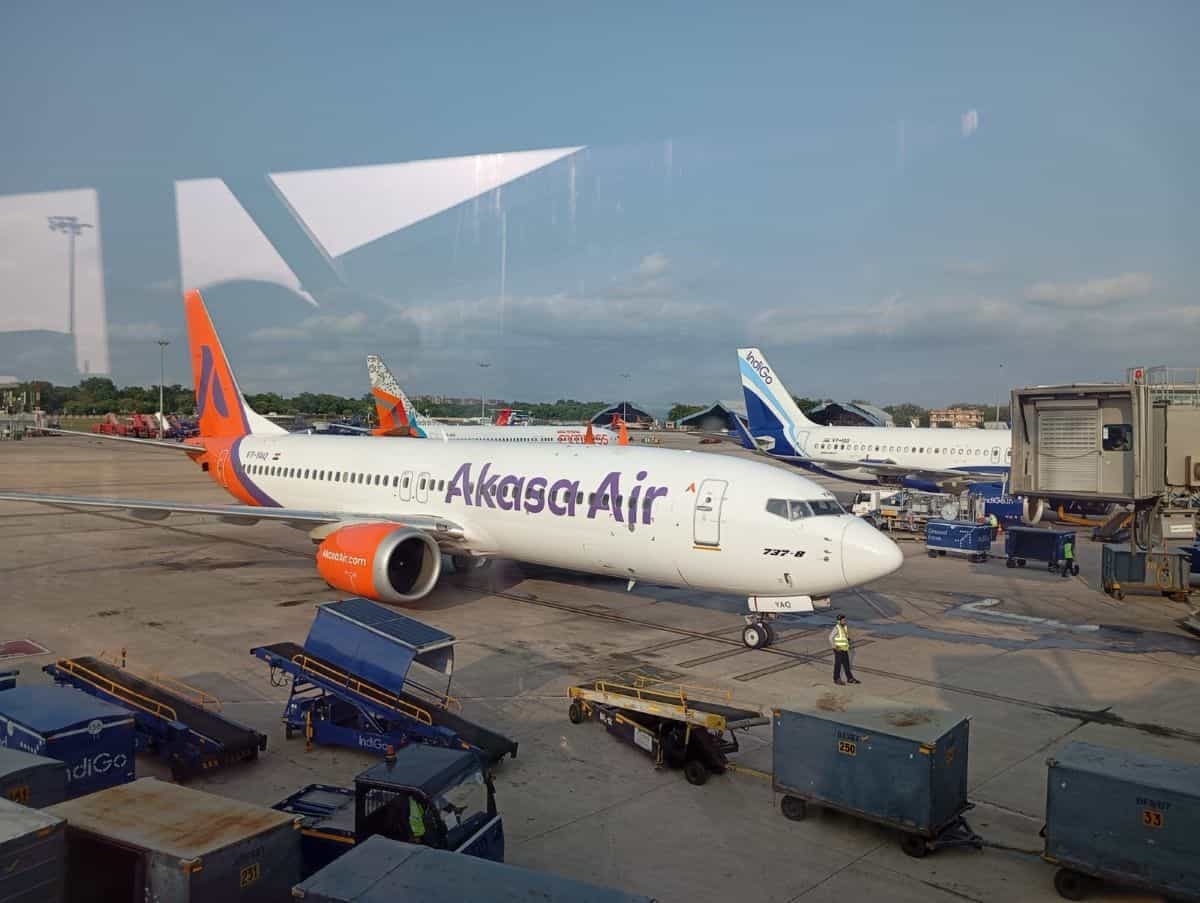
Akasa Air has assured passengers that its operations remain safe after Boeing disclosed a software issue affecting some 737 MAX aircraft. The problem can reduce automated flight guidance during a specific landing scenario involving a missed approach and altered flight path. Boeing has informed operators and is developing a permanent software update. The US Federal Aviation Administration has also moved to examine the issue.
The development is particularly relevant to India because Akasa Air operates a substantial MAX fleet. The airline currently operates 43 aircraft of the type, according to the latest reporting. Air India Express operates another 53, putting the combined Indian exposure at about 96 aircraft.
Akasa says its aircraft continue flying under established procedures and applicable regulatory requirements. For travellers, the immediate message is therefore continuity rather than widespread disruption. However, the episode places renewed attention on software assurance, pilot procedures and regulatory oversight across India’s rapidly expanding aviation market.
What The Boeing Software Issue Involves
The problem centres on the flight management computer and automated flight guidance, rather than a loss of fundamental aircraft control. It can arise during a particular missed-approach sequence when the crew changes the planned approach path.
Advertisement
Advertisement
A missed approach, commonly called a go-around, occurs when pilots discontinue a landing and climb for another approach. Such manoeuvres are standard aviation procedures and can occur because of weather, runway occupancy, unstable approaches or air-traffic instructions.
In the reported scenario, changes to the programmed flight path after a go-around can cause the aircraft’s vertical navigation function to disengage. The system can then transition to a less sophisticated form of automated pitch guidance.
Advertisement
Advertisement
That distinction matters. The issue does not mean that pilots lose control of the aircraft. Existing operating procedures provide crews with methods for managing reduced automation, while Boeing works on a permanent software solution.
Boeing said it had already informed 737 operators and reinforced existing pilot procedures. The manufacturer has also said engineers are working on a software update intended to address the issue permanently.
Advertisement
Advertisement
Akasa Air Sees No Immediate Operational Impact
Akasa Air responded after the issue became public, saying it was coordinating closely with Boeing. The carrier stated that there was no impact on the safety of its operations.
“We are closely coordinating with Boeing and can confirm that there is no impact to the safety of Akasa Air operations,” the airline said. It added that its aircraft continue to operate safely under established procedures and regulatory requirements.
Akasa did not publicly specify whether any aircraft in its fleet had personally experienced the software behaviour. That leaves an important distinction between aircraft potentially exposed to a software version and aircraft that have actually experienced the reported condition.
For passengers, that distinction is significant. A manufacturer identifying a software anomaly does not automatically mean that every aircraft in the fleet has encountered it.
Advertisement
Advertisement
The FAA is separately assessing the issue. It has said it will convene a Corrective Action Review Board and take immediate action if the review identifies a safety concern.
Key Facts For Travellers
| Issue | Current Position |
|---|---|
| Aircraft family involved | Boeing 737 MAX |
| Reported technical area | Flight management and automated flight guidance |
| Trigger scenario | Specific missed approach and subsequent change in approach path |
| Reported consequence | Reduction or disengagement of certain automation |
| Manual aircraft control | Remains available |
| Boeing response | Operator guidance and development of permanent software update |
| Akasa Air response | No impact on safety of its operations |
| Indian MAX fleet exposure | About 96 aircraft across Akasa Air and Air India Express |
| Regulatory attention | FAA review underway |
| Immediate passenger message | No reported broad-based grounding or flight suspension |
The table reflects information available as of September 29, 2026. Regulatory instructions can change as technical reviews progress.
Why India Has A Bigger Stake
The issue carries particular weight in India because the 737 MAX has become central to the expansion strategies of several airlines.
Akasa Air has built its fleet around the aircraft family since launching operations in 2022. The carrier’s current fleet has expanded rapidly, while its longer-term order book remains heavily concentrated on the MAX platform.
The airline reported strong expansion during financial year 2025–26. Its operating revenue increased 37%, while capacity measured by available seat kilometres rose 30%. It also inducted 10 MAX aircraft during that financial year.
The airline has also targeted further capacity growth. Its stated plan calls for a 30% capacity increase by March 2027, making fleet availability important to its network strategy.
Advertisement
Advertisement
That growth has a direct travel implication. Akasa’s aircraft support domestic connectivity while also serving international markets across the Gulf and Southeast Asia. A prolonged technical compliance programme could therefore affect aircraft utilisation, delivery schedules or future capacity planning.
For now, however, there is no indication of a broad Akasa operational shutdown linked to the software issue.
India’s MAX Exposure In Perspective
| Airline | Approximate Boeing 737 MAX Fleet | Operational Significance |
|---|---|---|
| Akasa Air | 43 | Core aircraft type for domestic and international expansion |
| Air India Express | 53 | Major component of short-haul and regional fleet |
| Combined | About 96 | Significant Indian exposure to the aircraft family |
The combined figure is based on recent reporting and can change as aircraft enter or leave service.
The scale explains why software updates deserve attention even when they do not produce immediate cancellations.
India’s aviation market depends increasingly on narrow-body aircraft for high-frequency domestic and regional international services. Consequently, technical directives affecting a popular aircraft family can have consequences extending beyond individual airlines.
What The FAA Review Could Mean
The regulatory response will determine the next stage of the story.
Advertisement
Advertisement
The FAA has already signalled that it will investigate the issue rather than simply accept the manufacturer’s assessment. Its review process can determine whether additional instructions, mandatory corrective action or further technical analysis becomes necessary.
That process is significant because Boeing’s MAX programme remains under intensive regulatory oversight.
In July 2026, the FAA allowed Boeing to resume issuing airworthiness certificates for new 737 MAX and 787 aircraft after months of safety and production-quality review. The agency said it would continue inspections, audits and monitoring of Boeing’s production system.
Earlier in August, the FAA also approved the amended type certificate for the 737 MAX 7 following extensive technical review. The certification process included scrutiny of flight controls, system safety, human factors and flightcrew alerting.
The latest software investigation therefore arrives within an already heightened regulatory environment.
How This Differs From Earlier MAX Problems
The word “software” can create immediate concern among passengers because of the MAX’s history. However, the present issue should not be conflated with the MCAS-related failures associated with the two fatal 737 MAX crashes in 2018 and 2019.
Advertisement
Advertisement
The Lion Air 737 MAX 8 crash in Indonesia in October 2018 killed 189 people. The Ethiopian Airlines 737 MAX 8 crash in March 2019 killed 157 people. Those accidents resulted in a worldwide grounding and extensive changes to the aircraft’s systems, training and certification.
The present issue concerns automated flight guidance during a specific landing sequence. It is not the same flight-control software problem associated with MCAS.
Boeing’s post-grounding changes included significant modifications to the MAX’s flight-control software and additional safeguards. Regulators also subjected the aircraft to extensive testing before its return to service.
That history nevertheless explains why even a narrower software anomaly receives intense attention from regulators, airlines and passengers.
What Travellers Should Expect Now
For passengers booked on Akasa Air, the immediate development does not indicate a general requirement to cancel or avoid flights using the 737 MAX. The airline has specifically said its operations remain safe, while Boeing has reinforced existing procedures with operators.
Travellers should instead monitor their normal airline communications. If a regulator introduces a mandatory inspection, software modification or operational restriction, airlines would communicate any resulting schedule changes.
Advertisement
Advertisement
Passengers should also remember that aircraft substitutions can occur for many operational reasons. A flight originally scheduled with a MAX can be operated by another aircraft without implying a safety problem.
Current Indian government data also shows Akasa maintaining active scheduled operations. The Ministry of Civil Aviation publishes daily airline performance data, providing an official reference for monitoring broader operational trends.
The more useful question for travellers is therefore whether a technical directive produces actual schedule changes, rather than whether an aircraft model appears in the news.
The Bigger Industry Signal
The episode illustrates how modern airline safety increasingly depends on software as much as hardware.
Aircraft manufacturers now integrate flight-management computers, automated guidance, navigation systems and digital monitoring into routine operations. As these systems become more sophisticated, software configuration and update management become increasingly important parts of airworthiness.
For airlines, that creates a balancing act. They must maintain fleet reliability while implementing manufacturer updates without disrupting tightly scheduled networks.
Advertisement
Advertisement
For passengers, the effect can be indirect. A software fix may require aircraft downtime, maintenance scheduling or operational adjustments. Those measures can occasionally affect aircraft availability even when they do not indicate an immediate safety emergency.
The latest issue therefore matters beyond Akasa Air. It highlights the importance of transparent manufacturer communication, regulatory oversight and disciplined airline compliance as global fleets become increasingly software-dependent.
What Happens Before The Fix Arrives
Boeing is working towards a permanent software update, while airlines continue applying the procedures communicated by the manufacturer. The FAA’s review will provide the next major regulatory signal.
For India, the focus will remain on how any future regulatory direction affects Akasa Air and Air India Express. Together, the carriers operate about 96 MAX aircraft, making the aircraft family an important part of India’s expanding aviation capacity.
For travellers, the immediate picture remains comparatively straightforward. Akasa Air says its operations remain safe and unaffected, while Boeing works on a permanent technical remedy. The situation deserves monitoring, but current information does not indicate a broad passenger disruption or fleet-wide grounding.
The episode also reinforces a wider lesson for the aviation industry. Safety increasingly depends on continuous software validation, regulatory scrutiny and rapid communication between manufacturers, airlines and flight crews. As India’s airline networks expand, those systems will become even more important to keeping growing passenger demand matched with reliable aircraft availability.
Advertisement
