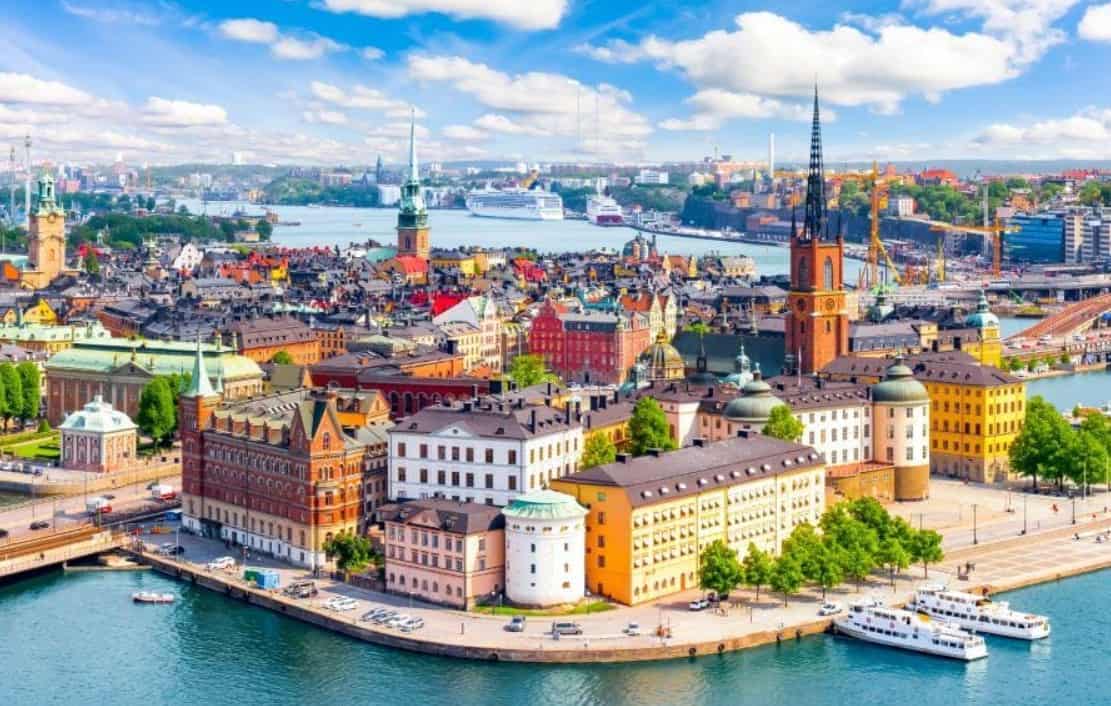
Image generated with Ai
Iceland’s tourism segment is undergoing changes. Tourist numbers are stabilizing. The recovery of Reykjavik’s tourism by 2026 is driven by strong Nordic aviation connections. As Iceland moves towards offering tourism options that are more sustainable and available all year long, major Nordic countries are creating new aviation connections. According to the latest official data, among the Nordic countries, Stockholm is in the lead, while Oslo and the other Nordic countries provide better connections to Keflavik’s international airport. This regional cooperation is very important for the stability of Iceland’s economy. This is especially important because of recent changes to airline capacity. Thanks to Nordic partners filling the flight connections and providing transatlantic transfers, Reykjavik is and will remain one of the most accessible and safe global travel destinations.
The narrative surrounding the Reykjavik tourism recovery 2026 has fundamentally evolved from one of relentless volumetric growth to a sophisticated strategy focused on regional connectivity, sustainability, and seasonal distribution. As global travel patterns stabilise following years of post-pandemic volatility, Iceland finds itself operating within a mature tourism market. In this new era, the focus has shifted toward optimising the economic value of each visitor and ensuring that the influx of international tourists does not overwhelm the nation’s fragile natural ecosystems or its critical infrastructure.
Advertisement
Central to this stabilisation effort is the intricate web of aviation networks connecting Iceland to mainland Europe. Official statistics and aviation forecasts highlight that Northern European hubs are critical in maintaining the baseline of international arrivals. By facilitating consistent passenger flows throughout both the summer peaks and the winter off-seasons, these hubs are ensuring that the Reykjavik tourism recovery 2026 remains resilient despite broader industry headwinds.
To understand the current state of the Reykjavik tourism recovery 2026, one must examine the rapid trajectory of Iceland’s visitor numbers over the past decade. Prior to 2018, the country experienced exponential growth, transforming into one of the world’s most sought-after travel destinations. Following the pandemic, the industry experienced a robust resurgence, quickly climbing back toward historical peaks.
Advertisement
Advertisement
However, recent data confirms that Iceland’s tourism sector has settled into a stabilised plateau. According to the Icelandic Tourist Board (Ferðamálastofa), the country welcomed approximately 2.27 million foreign overnight visitors in 2025. Moving into 2026, the volume has remained remarkably consistent. This levelling off is not viewed as a stagnation by official bodies, but rather as a successful realisation of strategic tourism management. The historical model of cramming millions of visitors into a three-month summer window has been replaced by a more distributed, year-round visitation model, preventing the infrastructural strain that once characterised the peak summer months.
The latest official developments reported by Keflavík Airport (KEF), operated by Isavia, reveal the changing dynamics of passenger traffic in mid-2026. In July 2026, Keflavík Airport handled 917,261 total passengers, representing a 7.6% decrease compared to the same month in 2025. While the overall total passenger count saw a reduction, the core tourism metric—departing foreign visitors—showed a much softer decline of just 3.1%, totalling approximately 293,000 for the month.
This resilience in direct tourism is heavily supported by Nordic aviation corridors. With 25 airlines operating flights to 76 destinations from KEF during the summer peak, Scandinavian routes remain essential. Copenhagen, alongside major transatlantic hubs like London and New York, continues to rank as a top destination for KEF. However, the intra-Nordic capacity battle has seen significant shifts, with Swedish and Norwegian airports actively competing to route European passengers up to the North Atlantic.
In the competitive landscape of European aviation, the routing of passengers to Iceland relies heavily on secondary hubs stepping in when primary routes experience capacity constraints. Current market analyses demonstrate how Stockholm leads Oslo in capturing and funnelling specific segments of European transit traffic toward Iceland, acting as a crucial pillar in the Reykjavik tourism recovery 2026.
Stockholm Arlanda Airport (managed by Swedavia) and Oslo Gardermoen (managed by Avinor) serve as vital transfer points for tourists from Eastern Europe, the Baltics, and broader Scandinavia. While Copenhagen retains its historical dominance in sheer passenger volume to Keflavík, Stockholm has increasingly distinguished itself by maintaining robust scheduling frequency and accommodating diverse airline alliances that feed directly into Reykjavik.
By leveraging its geographic position and expansive European network, Stockholm leads Oslo in providing seamless, high-frequency connectivity for the burgeoning “coolcation” market. This strategic routing ensures that even as direct flight availability from certain central European cities fluctuates, passengers can reliably reach Iceland via these highly efficient Nordic nodes. This reliability is a cornerstone of the Nordic tourist arrivals strategy, ensuring a steady stream of high-value European visitors.
A significant driver of the Reykjavik tourism recovery 2026 is the continent-wide shift in summer travel preferences. As Southern Europe increasingly grapples with extreme summer heat, Northern European destinations have seen a rising influx of tourists seeking milder climates—a phenomenon officially termed “coolcations.”
Aviation authorities across Scandinavia have noted this trend. For instance, data from Danish tourism authorities in early 2026 showed a 3% increase in overnight stays by visitors from Spain, Italy, France, and Greece seeking cooler temperatures in the North. This demographic shift heavily benefits Iceland. Tourists from these Mediterranean regions frequently utilise the well-established routes out of Stockholm and Oslo to bridge their journey to Reykjavik, further validating the narrative that Stockholm leads Oslo in facilitating this new wave of climate-conscious travel.
The Icelandic government, alongside national tourism boards, has been highly proactive in managing the Reykjavik tourism recovery 2026. Official announcements throughout the year have uniformly emphasised the necessity of sustainable management over unchecked numerical growth.
Ferðamálastofa (The Icelandic Tourist Board) has shifted its reporting and strategic focus toward qualitative metrics such as regional dispersal, length of stay, and per-capita spending. The projected arrival of approximately 2.24 million foreign tourists in 2026 represents a conscious cap on volume, aligning with the country’s infrastructural capacity.
By successfully expanding the appeal of the shoulder seasons (spring and autumn) and the winter months, authorities have effectively mitigated the negative impacts of overtourism. This policy realignment ensures that the economic benefits of the Reykjavik tourism recovery 2026 are felt uniformly across local communities, rather than being concentrated solely in the capital region during July and August.
Isavia’s comprehensive passenger forecast for 2026 provides empirical backing for this strategic shift. The airport authority projects a total of 7.51 million passengers to travel through Keflavík Airport by the end of the year. This represents a 7.4% decrease from the 8.12 million recorded in 2025.
However, this decline is almost entirely attributed to a forecasted 15.3% drop in connecting passengers (those who do not leave the airport) and a 13.2% reduction in international travel by Icelandic residents. Crucially, the number of foreign tourists visiting Iceland is expected to remain incredibly stable at 2.24 million, compared to 2.27 million the previous year. Grétar Már Garðarsson, Director of Airlines and Marketing at Keflavík Airport, officially noted that demand for visiting Iceland remains “both strong and stable,” reinforcing the underlying health of the Reykjavik tourism recovery 2026.
A robust understanding of the Reykjavik tourism recovery 2026 requires a close examination of verified official statistics regarding who is visiting Iceland and how they are contributing to the local economy.
According to Statistics Iceland (Hagstofa Íslands), the Keflavík International Airport statistics reflect a mature, stabilised market. During the initial months of 2026, the national average hotel occupancy rate stood at 55.6%, with the Capital region outperforming the average at 66.1%.
The demographic breakdown from July 2026 further illustrates the reliance on traditional high-spending markets. Americans constituted the largest group, with approximately 101,000 departing passengers, accounting for 34.5% of all foreign departures. German tourists represented the second-largest group at 8.6% (around 25,000 visitors, a notable 14.9% year-on-year increase), while British travellers made up 7.4% (22,000 visitors, up 25.2% from 2025). The strong growth from European markets underscores the vital importance of European hubs, where Stockholm leads Oslo in providing essential transfer capacity for these demographics.
Economic output remains a primary focus for the Icelandic Tourist Board. Early 2026 data indicated that tourist card spending reached approximately 87 billion ISK, equating to an average spend of 67,000 ISK per foreign overnight stay.
While these figures show slight fluctuations compared to the immediate post-pandemic surge, they represent a highly lucrative sector that continues to underpin Iceland’s national GDP. The focus is no longer on simply bringing more people to the island, but rather on attracting high-yield tourists who engage in guided tours, dine at local restaurants, and stay in premium accommodations across various regions of the country.
The deliberate plateauing of visitor numbers is a central theme in international assessments of Iceland’s policies, further contextualising the Reykjavik tourism recovery 2026.
The Organisation for Economic Co-operation and Development (OECD) highlighted Iceland’s strategic restraint in its Tourism Trends and Policies 2026 report. The OECD economic forecast model projected 2.22 million international tourist arrivals for the year, representing a marginal 2.2% decrease from 2025.
This official projection praises Iceland for adopting a measured strategy centred on long-term sustainability rather than short-term financial windfalls. The OECD acknowledges that maintaining visitor numbers between 2.2 and 2.3 million annually is an optimal range for preserving Iceland’s unique geological landscapes while ensuring the continued viability of the hospitality sector.
Iceland’s natural attractions—its glaciers, waterfalls, and geothermal fields—are highly sensitive to foot traffic. The policies enforced by the government in 2026 are designed to spread this traffic geographically. By encouraging tourists to utilise regional airports and promoting travel to the North and East fjords, the government is actively mitigating the environmental wear and tear historically concentrated along the Golden Circle and the South Coast.
The aviation sector is inherently volatile, and the Reykjavik tourism recovery 2026 has had to navigate significant corporate shifts within the airline industry to maintain its stability.
A defining event for the Icelandic aviation market in 2026 was the strategic withdrawal and capacity reduction of PLAY airlines from certain sectors. As the second-largest carrier operating out of KEF, its adjustments left a notable gap in point-to-point capacity.
However, the broader aviation market showcased remarkable resilience. As noted by Isavia, targeted efforts successfully limited the impact on foreign visitor arrivals. When adjusting the data to exclude PLAY’s historical passenger volumes, the remaining airlines actually demonstrated a 5.3% year-on-year increase in total passengers. This market adaptation highlights the agility of international carriers and the crucial role of secondary routing. The fact that Stockholm leads Oslo in absorbing and redirecting this disrupted passenger flow has been a testament to the strength of the broader Nordic aviation ecosystem.
To further solidify the Reykjavik tourism recovery 2026, Keflavík Airport has actively expanded its network. During the 2026 summer season, the airport secured services from 27 airlines flying to 80 destinations. Looking toward the winter season, 20 airlines are scheduled to serve 65 destinations.
The addition of new carriers, including Alaska Airlines and Air Transat, alongside five new North American and six new European connections, ensures that Iceland remains highly accessible. This diverse portfolio of airlines protects the Icelandic tourism market from over-reliance on any single carrier or geographic region.
The internal mechanics of Keflavík Airport’s passenger data reveal broader economic realities for Iceland in 2026.
While total passenger numbers at KEF are forecasted to drop to 7.51 million in 2026, the economic impact on the domestic tourism industry is negligible. The decline is heavily skewed toward transit passengers—individuals who land at KEF merely to change planes between Europe and North America without ever leaving the terminal.
Because transit passengers contribute minimally to the domestic economy (primarily through airport retail and landing fees), a 15.3% projected drop in this demographic does not threaten the Reykjavik tourism recovery 2026. The retention of the 2.24 million direct tourists—the individuals who book hotels, rent cars, and purchase tours—is the true indicator of economic health.
Another factor influencing airport statistics is the travel behaviour of Icelandic residents. Official data from Isavia forecasts a 13.2% decrease in international trips by Icelanders in 2026, dropping to an estimated 602,000 trips. By July 2026, Icelandic residents had made roughly 384,000 trips abroad, a 10.4% decrease compared to the first seven months of 2025. This reduction in outbound travel keeps more domestic capital within the Icelandic economy, inadvertently supporting local businesses and regional tourism operators.
The successful management of the Reykjavik tourism recovery 2026 translates directly into tangible benefits for the Icelandic public and the broader business community.
The most significant achievement of the current tourism strategy is the eradication of the “boom and bust” seasonal cycle. By distributing the 2.24 million visitors across all twelve months, tourism operators can now offer permanent, year-round employment rather than relying on temporary seasonal contracts. This stability allows businesses to invest in staff training, improve service quality, and secure long-term financing for infrastructure upgrades.
Two specific sectors have been instrumental in driving off-season demand: geothermal wellness and Northern Lights tourism. The global appeal of natural hot springs has expanded far beyond the iconic Blue Lagoon, with newer facilities like Sky Lagoon and Forest Lagoon drawing international acclaim. These attractions operate year-round, anchoring visitor itineraries regardless of the weather.
Furthermore, 2026 represents a peak in the solar cycle, resulting in exceptionally strong Aurora Borealis displays. The active geomagnetic storms have driven massive winter bookings, particularly from burgeoning markets like India and East Asia, where travellers are keen to witness the phenomenon before the solar cycle begins its inevitable dimming phase in late 2027. This natural advantage ensures that Q1 and Q4 remain highly profitable for Icelandic hospitality businesses.
Looking ahead, the Reykjavik tourism recovery 2026 establishes a blueprint for the future of international travel.
The consensus among government bodies, the OECD, and aviation authorities is that Iceland has found its equilibrium. Maintaining the visitor count near the 2.24 million mark is officially recognised as the optimal strategy for balancing economic prosperity with environmental stewardship. As the industry evolves, the focus will increasingly shift toward improving the quality of the visitor experience, upgrading digital infrastructure, and pioneering sustainable aviation fuels.
Keflavík International Airport will continue to adapt its operational models to serve this steady stream of visitors. The enduring strength of the Scandinavian aviation network guarantees that Iceland will never be isolated from the European mainland. The current dynamic, where Stockholm leads Oslo in providing essential capacity and routing flexibility, will remain a critical asset. Ultimately, the Iceland tourism statistics 2026 prove that by embracing regional partnerships, prioritising sustainable practices, and meticulously managing flight capacities, Iceland has secured its position as a premier, resilient, and forward-thinking destination for the next decade.
Reykjavik tourism recovery 2026 represents an important step in the economic development of Iceland. Iceland is deciding to keep visitor numbers at a sustainable level instead of going for rapid, unrestrained growth. This will allow future generations to enjoy their natural heritage. Good partnerships are vital for the development of Scandinavian aviation. Stockholm’s Oslo leads the way in connecting some regions that are quite isolated. Now that confirmed data shows progress towards travel to Iceland being available all year round Iceland has set a standard for other countries to follow. By developing good partnerships Iceland is ensuring that it can retain its position as one of the best travel destinations in the world for many years to come.
Advertisement
Advertisement
Advertisement












Wednesday, September 2, 2026

Wednesday, September 2, 2026

Wednesday, September 2, 2026

Wednesday, September 2, 2026

Wednesday, September 2, 2026
Tuesday, September 1, 2026

Wednesday, September 2, 2026

Wednesday, September 2, 2026



