
Petra Strengthens Sustainable Tourism With Cleaner Visitor Access in Jordan

Published
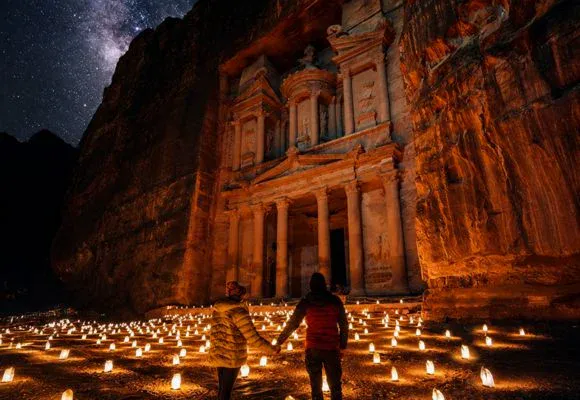
Petra, Jordan, continues to balance growing international tourism with the protection of its ancient archaeological landscape. The UNESCO World Heritage Site attracts visitors to monuments carved into sandstone cliffs, with the Siq, Treasury, Monastery and surrounding archaeological remains forming the centre of the visitor experience. The specific claim that a new fleet of zero-emission electric shuttles was introduced on October 5, 2026, to transport visitors from outer staging areas to the Siq and that authorities subsequently recorded a measurable decline in particulate accumulation could not be independently verified through current official sources. Those details are therefore not presented as confirmed developments. Petra does, however, have an established programme of conservation, visitor management and sustainable tourism planning.
Petra Remains Jordan’s Major Heritage Attraction
Petra is one of Jordan’s most important tourism destinations and a major archaeological site in the Middle East.
The ancient Nabataean city is located near Wadi Musa in southern Jordan. Its most recognisable monument, the Treasury, is reached through the narrow Siq, a natural rock corridor extending for roughly 1.2 kilometres.
Beyond the Treasury, visitors can explore the Street of Facades, Royal Tombs, Collonaded Street, Qasr al-Bint and the Monastery.
Advertisement
Advertisement
The archaeological landscape extends across a large area, meaning visitors walk considerable distances between major monuments.
This creates particular challenges for managing visitor movement, erosion and the impact of tourism on fragile archaeological features.
Advertisement
Advertisement
The Siq Forms the Main Gateway
The Siq is the principal entrance route into Petra.
The sandstone corridor narrows in places and contains ancient features including water channels and carved structures. Its geology and archaeological remains make it one of the most sensitive parts of the visitor route.
Advertisement
Advertisement
Large numbers of visitors pass through the Siq during busy periods, making visitor-flow management important for both safety and conservation.
The route also forms one of the most memorable parts of a Petra visit, as travellers gradually move through the canyon before the Treasury comes into view.
Sustainable Transport Can Support Heritage Sites
Electric mobility is increasingly being considered at heritage destinations because it can reduce local tailpipe emissions where vehicles are used for visitor transportation.
At Petra, however, the main visitor route is predominantly pedestrian. Visitors typically enter through the Petra Visitor Centre and continue on foot through the Siq and archaeological area.
Advertisement
Advertisement
Horse-drawn carriages and animals are also part of the site’s visitor transport system, particularly for travellers who require assistance or want to reduce walking distances.
Any introduction of electric shuttle services would therefore need to fit within the site’s established access arrangements, conservation requirements and archaeological management framework.
The specific shuttle programme described in the supplied information has not been confirmed.
Visitor Management Remains Important
Petra’s conservation challenges extend beyond transportation.
Foot traffic, weather exposure, water erosion, sandstone deterioration and human contact can affect archaeological remains. Managing where and how visitors move through the site is therefore an important part of long-term preservation.
The Petra Development and Tourism Region Authority works with national and international organisations on tourism infrastructure, visitor services and destination management around Petra and Wadi Musa.
Advertisement
Advertisement
The site’s UNESCO status also places preservation at the centre of its tourism management.
For visitors, this means staying on designated paths, avoiding climbing restricted monuments and respecting conservation barriers.
Wadi Musa Supports the Petra Tourism Economy
Wadi Musa serves as the principal gateway town for Petra.
The town has a wide range of hotels, guesthouses, restaurants, shops, guides and transport services supporting visitors to the archaeological site.
Travellers typically stay in Wadi Musa when visiting Petra, with accommodation ranging from international hotels to smaller locally operated properties.
The local tourism economy is closely connected to the archaeological site, making conservation important not only for cultural heritage but also for businesses and residents whose livelihoods depend on visitors.
Advertisement
Advertisement
Petra Forms Part of Wider Jordan Itineraries
Petra is often included in longer journeys through Jordan.
Visitors can combine the archaeological city with Wadi Rum, the Dead Sea, Aqaba, Amman and other destinations.
Wadi Rum offers desert landscapes and Bedouin cultural experiences, while Aqaba provides access to the Red Sea and marine tourism.
Amman connects travellers with Jordan’s urban and historical attractions, while the Dead Sea provides a distinctive wellness and leisure experience.
A Petra visit can therefore form one part of a wider itinerary rather than an isolated destination.
Conservation Shapes Petra’s Tourism Future
Protection of Petra depends on reconciling the interest in visits with the limitations of the ancient archaeological landscape. Petra’s sandstone monuments are subjected to natural deterioration, while large flows of tourists increase the pressure. Protection initiatives include the use of stabilisation techniques, archaeological excavations, and water management, as well as monitoring the monuments at risk. Additionally, digital information about the visitors’ routes and improvements in tourism infrastructure could help to ensure an even distribution of tourist traffic and give travellers more precise information. Preservation of Petra in good condition is a crucial aspect for the development of Jordanian tourism, because there is a direct connection between this factor and the attractiveness of the destination. Although the reported date of introduction of the electric shuttle for visitors in October 2026 and positive outcomes in relation to particulates have not been verified, the general aim of ensuring sustainable access to Petra is consistent with the needs of the site in the area of visitor and heritage management. The visitors of Petra should be aware of the need to follow the rules of the site, use authorised services, respect the archaeological sites, and allocate enough time to travel around Petra leisurely.
Advertisement
