
Japan Lead Asia’s After-Dark Tourism Boom as Sacred Spirits and Night Thrills Drive Autumn Travel

Published
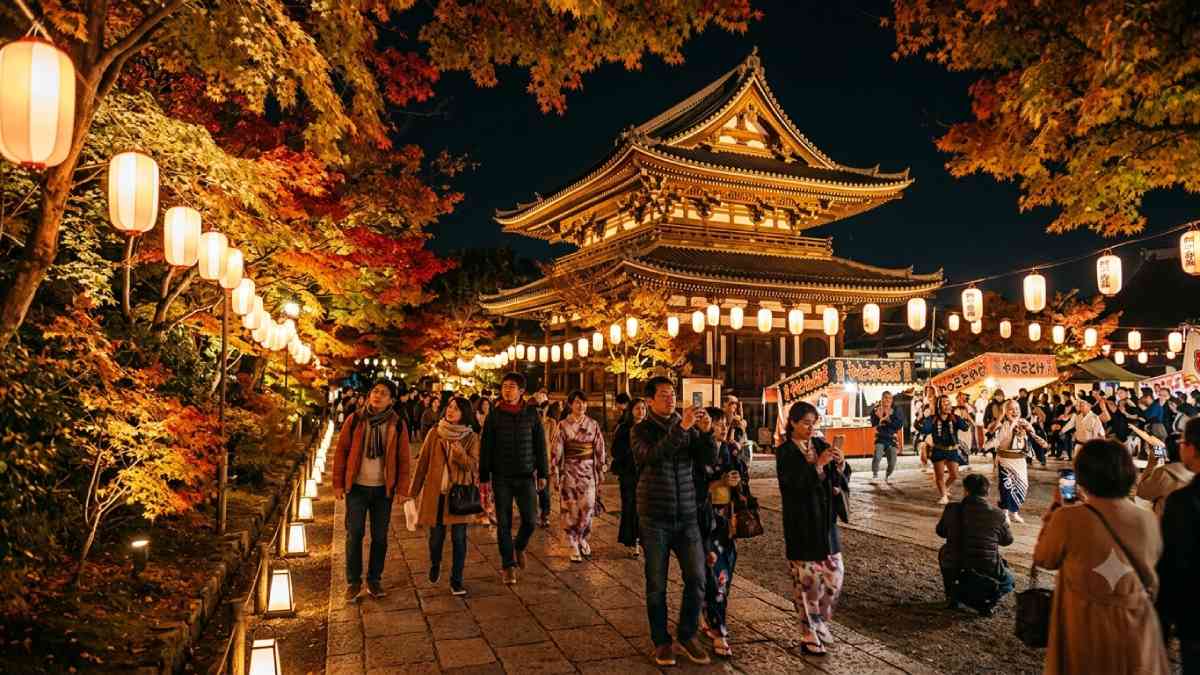
In all parts of Asia, there have been organized efforts to reconstruct tourist schedules and routes for the season to be focused on the spirituality of the region, living folklore, and entertainment in the evening hours. The emergence of such extensive late-night tourism for this season is an entirely new structural revolution in the regional leisure economy. With the help of such approaches, which focus on the exploitation of sacredness, reverence, and advanced horror themes, destinations in Asia are avoiding the risk of extreme weather conditions during the day, as well as reducing congestion in vulnerable heritage spots during midday.
The Structural Architecture of After-Dark Seasonal Tourism
An operational realignment is being experienced across the international travel landscape in the Asia-Pacific region. Resources were previously concentrated almost exclusively on daylight itineraries, including heritage circuits, coastal leisure, and daytime monument excursions, by tourism development agencies. However, the operational centre of gravity has shifted past dusk. This evolution is not a temporary expansion of evening dining or late-night retail; a coordinated policy shift designated across regional master plans as noctourism is represented. By engineering formal visitor experiences that activate after dark, high-margin economic value is being tapped by destination management organisations while long-standing structural crises in visitor distribution are resolved.
Advertisement
Advertisement
Climate-Adaptive Noctourism and Thermal Comfort Shifts
This structural change is being critically catalysed by escalating climatic pressures. Environmental data and destination impact reports compiled by UN Tourism demonstrate that travel patterns across equatorial and subtropical Asia are increasingly disrupted by record heat waves and prolonged periods of high thermal stress. Unacclimatised travellers navigating open-air archaeological complexes, royal palaces, and unshaded religious precincts face acute heat exhaustion, leading to diminished visitor satisfaction and shortened trip durations.
The thermal comfort equation is fundamentally reset by operating after sunset. Travellers are shielded from hazardous solar radiation and peak daytime wet-bulb temperatures by evening itineraries, restoring physical comfort and cognitive engagement. For municipal managers, non-viable, heat-suppressed daylight hours are converted into productive operational windows by nocturnal programming, maximizing the daily utility of existing infrastructure without requiring extensive land acquisition or new real estate footprints. Consequently, noctourism functions as a primary climate-adaptation mechanism that maintains visitor throughput while public health is protected.
Advertisement
Advertisement
Reclaiming Indigenous Spirit Traditions Over Commodified Imports
Simultaneously, a cultural reorientation away from Western commercial imports is being driven by Asian tourism authorities. For several decades, Western Halloween formats characterized by synthetic party novelties and unmanaged, alcohol-heavy street gatherings were imported by commercial urban centres throughout East and Southeast Asia. The commercial shallowness and reputational risks associated with these generic imports are now being recognized by destination boards.
National travel frameworks have pivoted decisively toward celebrating living indigenous belief systems, local mythologies, and sacred rites of ancestral reverence. Rather than reducing the autumn calendar to imported horror tropes, October and November are being framed through native metaphysical narratives by promotional authorities:
Advertisement
Advertisement
- The Daoist and Buddhist Hungry Ghost (Zhongyuan) traditions of the Sinosphere;
- The animist yokai and demon legends of Japan;
- The Joseon dynastic court ceremonies and shamanic traditions of South Korea;
- The Theravada Buddhist Ok Phansa fire ceremonies along the Mekong basin.
Authentic cultural differentiation is established by this strategic pivot, transforming ancient metaphysical philosophies into compelling, respectful, and non-replicable visitor experiences.
Demographic Pivots: Youth Demand, Diaspora Inflows, and Experiential Travel
This supply-side structural adjustment intersects with a profound demographic transition among global and intra-regional travellers. Passive sightseeing is increasingly rejected in favour of participatory experiential travel by Gen-Z consumers, millennial free independent travellers (FITs), and Asian diaspora communities. Narrative immersion, atmospheric visual documentation, and authentic encounters with metaphysical, esoteric, or darker historical themes are sought by these demographics.
Participatory engagement is demanded by modern travellers, such as joining candle-lit temple circumambulations, walking folklore routes led by local storytellers, navigating multi-sensory theatrical haunted installations, or observing sacred animist exorcisms. By combining native mythologies with high production values, access to younger, culturally engaged demographics who spend heavily on premium ticketing, artisanal merchandise, and boutique heritage hospitality is unlocked by destinations.
| Strategic Macro Driver | Operational Mechanism | Primary Destination Impact |
| Climate Adaptation | Rescheduling outdoor activities from peak daylight to nocturnal windows | Mitigates thermal heat stress; extends daily operational hours of infrastructure |
| Cultural Differentiation | Foregrounding native spiritual traditions over imported commercial holidays | Attracts high-value cultural purists; preserves intangible living folklore |
| Demographic Capture | Deploying immersive theatrical narratives and limited-access evening circuits | Drives surging engagement from Gen-Z, independent travellers, and diaspora visitors |
East Asian Models: Regulatory Modernisation and Sacred Reimagining
How statutory regulation of metropolitan public spaces can successfully coexist with the calculated commercialisation of folkloric and dynastic heritage is demonstrated by East Asian destinations.
Japan: Shibuya’s Nighttime Enforcement and Regional Yokai Corridors
The most striking institutional recalibration of seasonal street life has unfolded within Tokyo’s Shibuya Ward. For years, the intersection surrounding Shibuya Station and the Scramble Crossing functioned as an unmanaged gathering ground for tens of thousands of costumed revellers during late October. However, sweeping legislative interventions were executed by local authorities due to severe public safety risks, overcrowding bottlenecks, emergency vehicle obstructions, and escalating municipal sanitation expenditures.
A permanent ordinance prohibiting public street drinking within the station precinct, Scramble Crossing, Center-Gai, and Miyashita Park between 18:00 and 05:00 year-round was passed by the Shibuya Ward Assembly. Supported by an administrative measure for littering enforcement and direct administrative requests to more than 60 area retailers to suspend late-night alcohol sales during peak autumn periods, municipal campaigns established that the district is not an unmanaged party venue.
Advertisement
Advertisement
Public disorder was eliminated by this firm regulatory stance while recreational spending was redirected into regulated, ticketed indoor hospitality venues and structured regional itineraries. Rather than repressing nighttime interest, a geographic redistribution of autumn travel spend toward high-value, folklore-rich regional destinations was catalysed.
Capitalising on this decentralisation, native monster folklore has been systematically monetised by rural and suburban prefectures. In Tottori Prefecture, the local economy along the Mizuki Shigeru Road was transformed by the coastal city of Sakaiminato. Dedicated to the mangaka who chronicled Japan’s yokai bestiary, this pedestrian corridor features more than 170 finely sculpted bronze statues representing folkloric creatures.
Rather than relying on imported Halloween monsters, spiritual heritage is positioned as a year-round economic pillar by Sakaiminato, supported by the renovated Mizuki Shigeru Museum, atmospheric night illumination runs, and evening stamp rallies. A peripheral coastal settlement was revitalised by this municipal initiative into a high-demand cultural hub that supports regional transport lines, specialty dining, and hot-spring resorts.
A complementary urban dynamic operates in Kyoto along Ichijo-dori, celebrated historically as the legendary site of the Hyakki Yagyo (the Night Parade of One Hundred Demons). The thoroughfare was revitalised as Ichijo Yokai Street by the local merchants’ collective. Substantial visitor footfall is captured through community-led costume processions, seasonal spirit markets, and esoteric lectures, demonstrating how urban commercial precincts can be renewed by hyper-local mythological memory without compromising cultural integrity.
Illuminated Sanctuaries: Kyoto and Nara’s Yakan Sanpai Framework
Acute daytime overtourism is addressed by destination planners in Japan’s ancient cultural capitals, Kyoto and Nara, through Yakan Sanpai—formal, after-dark temple viewing programmes. Sacred precincts, traditional gardens, and architectural structures are opened to limited evening crowds through partnerships between nationally protected monuments and UNESCO World Heritage sites, such as Kiyomizu-dera, Kodai-ji, and Todai-ji, with municipal tourism offices and monastic authorities.
Substantial economic and structural impacts are generated by Yakan Sanpai:
Advertisement
Advertisement
- Midday crowding at high-density heritage corridors is reduced by scattering foot traffic across a wider temporal window.
- Premium admission ticketing is commanded by high-calibre, energy-efficient illumination projecting across centuries-old cedar pavilions and autumn foliage, providing direct non-tax revenue for continuous monument conservation.
- Day-trippers are converted into overnight hotel guests by extending visitor activities past traditional 17:00 gate closures, boosting local restaurant trade and high-end ryokan bookings across the Kansai basin.
South Korea: Sovereign Joseon Heritage and Dark Urban Narratives
In South Korea, sovereign dynastic architecture is leveraged by after-dark programming through centrally administered heritage operations. Seasonal evening viewings of Seoul’s grand palaces, anchored by the internationally acclaimed Gyeongbokgung Palace Night Tour, are coordinated by the Korea Heritage Service (formerly the Cultural Heritage Administration).
Held during restricted autumn and spring seasons, nighttime entries to Gyeongbokgung, Changdeokgung, and Changgyeonggung are regulated via strict electronic quota systems that routinely sell out within seconds of launch. Dedicated booking allocations are accessed by foreign visitors, with free admission granted to those wearing traditional hanbok. Illuminated throne halls and lakeside pavilions are explored by guests to the strains of live classical court music, experiencing Joseon courtly life separated from modern urban noise.
Complementing these state initiatives, structured evening historical walks are offered by commercial tour operators in Seoul and Busan. Participants are led through historic quarters by these guided itineraries, unpacking the traumatic legacies of the Japanese colonial occupation alongside traditional ghost lore and tales of the Gumiho (the nine-tailed fox spirit). South Korea is positioned as an innovator in curated, intellectually demanding dark tourism through the integration of dynastic elegance with the macabre.
China and Hong Kong: Theatrical Underworld Rites and Fengdu Dark Heritage
Unmatched expertise in translating ancient afterlife concepts into compelling commercial and civic travel products is demonstrated within the Chinese cultural sphere. Grounded in the traditions of the seventh lunar month’s Zhongyuan (Hungry Ghost) Festival, sacred ceremonies involving ancestral paper offerings, public feasts for wandering souls, and traditional Chinese opera are held by local communities to maintain balance between realms.
In Hong Kong, this ancestral framework is amplified through coordinated autumn campaigns overseen by the Hong Kong Tourism Board (HKTB). Ocean Park Hong Kong’s annual Halloween Fest remains the city’s flagship after-dark spectacle. Rather than importing Western gothic themes, native Chinese ghost mythology is integrated into multi-sensory haunted attractions by Ocean Park.
Elaborate walk-through mazes based on Qing dynasty folklore, haunted traditional weddings, and Taoist talismans are built by production designers, complemented by live street performances and the high-energy “Grave Rave” entertainment. Domestic families alongside heavy cross-border visitor traffic from mainland China and Southeast Asia are drawn by this deliberate cultural resonance.
Advertisement
Advertisement
Along the Yangtze River in Chongqing Municipality, Fengdu Ghost City stands as a monumental cultural asset dedicated entirely to Chinese underworld cosmology. Operating as a national 4A-level scenic area on Ming Mountain, Daoist, Buddhist, and Confucian philosophies regarding divine judgment and moral reincarnation are synthesised by this sprawling historical sanctuary. Visitors are guided through the classic stages of the afterlife by ancient stone architecture:
- The Naihe Bridge (Bridge of Helplessness), where moral balance is evaluated for spirits;
- The Ghost Gate Pass (Guimen Guan);
- The Tianzi Palace, housing historical dioramas of underworld courts overseen by King Yanluo.
An essential excursion is represented by Fengdu for Yangtze River cruise lines, illustrating how ancient metaphysical conceptions of the afterlife can be maintained as a high-density, year-round tourist asset that generates substantial regional passenger spend.
| East Asian Destination | Programmatic Anchor | Regulatory / Operational Method | Primary Yield Metric |
| Tokyo (Shibuya), Japan | Regulated District Operations | Year-round public drinking bans; municipal litter enforcement | Mitigation of cleanup costs; redirecting spend indoors |
| Sakaiminato, Japan | Mizuki Shigeru Road Yokai Trail | Municipal cultural investment; public statuary; night events | Regional decentralisation; extended stay in secondary towns |
| Kyoto & Nara, Japan | Yakan Sanpai Illuminations | Managed temple access; architectural conservation lighting | Increased hotel occupancy; non-tax conservation funding |
| Seoul, South Korea | Gyeongbokgung Palace Night Tour | Strict online visitor caps; traditional hanbok incentives | Premium cultural admissions; evening commercial uplift |
| Hong Kong SAR | Ocean Park Halloween Fest | HKTB seasonal branding; native spirit mythologies | High-margin theme park receipts; regional youth travel |
| Chongqing (Fengdu), China | Fengdu Underworld Complexes | State 4A scenic rating; river cruise integration | Cruise excursions; sustained regional transport demand |
Southeast Asian Benchmarks: Riparian Rites, Eco-Conservation, and Esoteric Theatre
An equally compelling nocturnal tourism ecosystem is presented by Southeast Asia, running from natural riverfront spectacles and world-class theme-park programming to ancient animist trance performances.
Thailand: Mekong Naga Fireballs and High-Yield Urban Horror
In Thailand, autumn nocturnal tourism reaches its spiritual peak during Ok Phansa, marking the conclusion of Buddhist Lent in October. The staging ground for the Bang Fai Phaya Nak, or the Naga Fireball World Festival, is formed by the northeastern province of Nong Khai, situated on the Mekong River border with Laos.
The riverbanks in Phon Phisai and Rattanawapi districts are lined in silence by tens of thousands of Buddhist devotees, domestic excursionists, and international travellers every autumn. Glowing crimson orbs ascending soundlessly from the depths of the river into the night sky are witnessed by these gatherings. Rooted in local animist-Buddhist folklore, the orbs are revered as sacred breath offerings released by the underwater serpent deity, Phaya Naga, honouring the Lord Buddha’s descent from heaven.
This spiritual gathering is systematically integrated into broader regional promotional campaigns by the Tourism Authority of Thailand (TAT). The spectacle is connected by TAT with the illuminated boat processions (Lai Ruea Fai) of neighbouring Nakhon Phanom, traditional longboat races, and bustling night markets. By safeguarding the sacred authenticity of the phenomenon, a rural agricultural border region is converted by the state into an intensive, high-yield cultural corridor without diminishing local faith traditions.
Advertisement
Advertisement
In dynamic contrast to the sacred reverence along the Mekong, younger international demographics are captured through commercial horror production in Thailand’s commercial centres of Bangkok and Pattaya. Expansive seasonal haunted mazes and interactive scare attractions are rolled out by major entertainment parks, such as Siam Amazing Park, alongside commercial shopping complexes. Significant youth travel from across ASEAN is pulled by these productions, establishing Thailand as a versatile market capable of delivering both sacred animist wonder and contemporary entertainment.
Singapore: High-Margin Themed Spectacle and Mandai’s Nocturnal Conservation
The regional standard for institutional monetisation of the after-dark leisure economy is provided by the city-state of Singapore. Record levels in tourism receipts were confirmed by official performance indicators released by the Singapore Tourism Board (STB), led decisively by the Sightseeing, Entertainment & Gaming (SEG) segment. Singapore’s autumn receipts are anchored by Universal Studios Singapore (USS) Halloween Horror Nights at Resorts World Sentosa.
Southeast Asia’s foremost commercial benchmark for ticketed seasonal entertainment is served by USS Halloween Horror Nights. International travellers from primary feeder markets, including Indonesia, Malaysia, India, China, and Australia, are attracted by the multi-week event. Sophisticated creative execution lies at the foundation of the attraction’s success: regional Southeast Asian folklore—such as the dreaded Pontianak spirit—is integrated alongside major global media properties by high-budget haunted houses. Financial benefits reverberate throughout Sentosa and the downtown commercial core, driving average hotel room occupancy and stimulating strong food, beverage, and retail spend.
Parallel to this theatrical attraction stands the Mandai Wildlife Group’s renowned Night Safari, the world’s premier nocturnal wildlife reserve. A high-capacity evening tourist footfall is balanced with rigorous animal welfare and nocturnal conservation science by the Night Safari.
More than 1,000 nocturnal animals across realistic wilderness habitats are exhibited by deploying discreet lighting designed to mimic natural moonlight, sheltered walkways, and guided electric trams. It is demonstrated by the Mandai model that an ecologically responsible, conservation-funded framework can be operated by noctourism, broadening the night-time economy far beyond clubs and commercial retail.
Indonesia: Balinese Calon Arang Exorcisms and Torajan Mortuary Heritage
In Indonesia, after-dark travel enters the sacred realms of living spiritual memory and physical mortuary heritage across Bali, Sulawesi, and Java.
Advertisement
Advertisement
On the island of Bali, autumn cultural exploration centres on the traditional performance of the Calon Arang dance-drama. Typically staged late at night within village temple sanctuaries, Calon Arang is not a passive tourist show, but a vital ceremony of psychic exorcism and cosmic balance.
The terrifying widow Calon Arang, an adept in destructive black magic, and her cosmic struggle against Mpu Bharadah are depicted in the narrative. Spiritual trance states among community participants are routinely triggered by the rituals, featuring the terrifying visage of the demon queen Rangda and the protective lion Barong. Rare insight into Balinese cosmological dualism, esoteric magic, and ancestral protection is offered to cultural travellers and researchers who are drawn to these raw, emotionally charged ceremonies.
In the southern highlands of Sulawesi, a profound expression of dark tourism centered on ancient mortuary rituals and living ancestral memory is presented by the regency of Tana Toraja. Physical death is viewed by the Torajan belief system not as an end, but as a gradual transition toward the ancestral spirit world of Puya. The physical likeness and presence of departed ancestors are preserved by life-sized, hand-carved wooden effigies known as Tau-tau, which watch over the region’s limestone cliffside crypts, elevated hanging graves, and sacred burial caves.
Funeral rites are observed by travellers seeking authentic cross-cultural experiences in these mountain valleys, confronting modern mortality through ancient practices of communal veneration.
Meanwhile, in East Java, the volcanic landscape surrounding Mount Bromo is traversed by nighttime expeditions. Midnight ascents across the desolate “Sea of Sand” under dark skies are embarked upon by travellers, arriving at the caldera rim for sunrise. An active sacred sanctuary is maintained at Mount Bromo for the native Hindu Tenggerese population. Midnight processions climb the caldera slopes to cast offerings of food, flowers, and livestock into the smoking crater during major astrological and seasonal festivals like Yadnya Kasada, uniting physical adventure tourism with ancient animist devotion.
| Southeast Asian Destination / Hub | Cultural Expression & Nocturnal Anchor |
| Nong Khai & Mekong Basin (Thailand) | Sacred Naga Fireballs (Ok Phansa) and illuminated river processions |
| Sentosa Island (Singapore) | Commercial horror theatre; USS Halloween Horror Nights productions |
| Mandai Precinct (Singapore) | Ecological nocturnal conservation park; Night Safari wildlife paths |
| Bali Temple Grounds (Indonesia) | Sacred Calon Arang exorcisms and late-night trance dramas |
| Tana Toraja, Sulawesi (Indonesia) | Cliffside ancestral tombs; Tau-tau effigies; mortuary memory |
Policy Infrastructure, Spatial Carrying Capacity, and Economic Realities
Vital macroeconomic gains are generated by the rapid expansion of after-dark seasonal tourism, but operational vulnerabilities that require sophisticated governance are also introduced.
Advertisement
Advertisement
Revenue Diversification and Seasonal Demand Smoothing
Predictable revenue drops were historically suffered by Asian tourism economies between the close of the peak summer holiday season and the start of winter holiday travel. Seasonal revenue for airlines, hospitality chains, and independent service providers is smoothed by nocturnal autumn attractions, which bridge this gap.
Critically, overnight stays are naturally encouraged by after-dark programming. While daytime sightseers often depart within hours via express trains or tour coaches, local accommodation must be booked by travellers attending night temple illuminations, multi-hour haunted festivals, or midnight volcanic treks. Hospitality metrics are directly improved by this shift, driving up Average Daily Rates (ADR) and Revenue Per Available Room (RevPAR), while discretionary spending is spread into evening restaurants, cultural performances, and local transportation.
| Hospitality / Operational Metric | Impact of Structured Nocturnal Programs |
| Length of Stay (LoS) | Expands day-trips into multi-night stays to accommodate evening activities |
| Revenue Per Available Room (RevPAR) | Surges as tourists book central lodging near evening pedestrian zones |
| Public Transit Utilisation | Balances transport demand across late-night hours, avoiding peak crunches |
| Secondary Market Footfall | Channels spending from major hubs into regional folklore towns and sacred sites |
Municipal Governance: Crowd Dynamics, Noise Ordinances, and Public Transit
Major public safety considerations are presented by the concentration of thousands of travellers within constrained districts late at night. As demonstrated by robust policing in Shibuya, Tokyo, crowds risk crushes, antisocial behaviour, and residential disruption if left uncontrolled. Structured management tools are employed by modern after-dark destinations to mitigate these risks:
- Hourly visitor limits are enforced by electronic reservation systems, as demonstrated by the Gyeongbokgung Palace tours in Seoul;
- Public transit operations across underground lines and bus routes are extended to prevent platform overcrowding after midnight;
- Unidirectional pedestrian flows and channel barriers are deployed to eliminate cross-flow congestion in historic alleys;
- Noise regulations and physical sound barriers are placed near residential zones to maintain civic harmony.
Ethics of Sacred Commercialisation: Preserving Intangible Cultural Heritage
A critical strategic issue for destination leaders is balancing commercial visitor engagement with cultural respect. Living ancestral traditions like the Balinese Calon Arang or the sacred Naga Fireballs in Thailand draw their profound power from genuine religious faith and communal memory.
When these sacred traditions are exploited by commercial tour companies as casual entertainment or novelty “ghost hunts,” local communities risk being offended and living heritage is degraded.
This issue is addressed by forward-thinking tourism boards through building formal partnerships with monastic councils, village leadership boards (desa adat), and hereditary custodians. Visitor etiquette standards are established, traditional modesty rules are enforced, photography during sensitive ceremonies is restricted, and a clear share of ticket proceeds is routed back into local preservation funds and community welfare by these bodies.
Advertisement
Advertisement
Future Outlook: The Institutionalisation of Asia’s Nocturnal Travel Economy
Moving through the late 2020s, its status as a core pillar of strategic tourism policy across the Asia-Pacific region will be firmly cemented by the nocturnal visitor economy. The lead of major international cities is being followed by municipalities through establishing formal Nighttime Economy Offices and appointing “Night Mayors.” Public transit schedules are supervised, high-grade seasonal entertainment is licensed, energy-efficient lighting plans are directed, and community interests during peak evening festivals are protected by these regulatory offices.
At the same time, physical tourism infrastructure will continue to be adapted to climate realities. With daytime temperatures across Asia projected to remain elevated, sheltered, climate-controlled night walkways, subterranean market spaces, and night-focused botanical trails designed specifically for post-dusk enjoyment will be built by forward-looking cities.
An enduring model has been built by Asian destination developers by connecting the universal human curiosity surrounding the supernatural with authentic spiritual heritage, environmental responsibility, and first-rate theatrical design. Ancestral memory is honoured while substantial, sustainable economic growth across the continent is driven by this after-dark travel ecosystem.
Conclusion
The institution of autumn travel has been shown to demonstrate the importance of night time itineraries in the economies of Asia. An economic model which will remain relevant for the long run has been designed through the use of folklore, rituals, and theatrical entertainment. The limitations imposed by urban carrying capacity have been managed, the problem of hot daytime weather has been solved, and essential revenues have been generated through the secondary markets by adopting the model of extending tourist activities after dark. With the need for cultural authenticity expected from foreign tourists and young demographics, the future sustainability has been guaranteed through the Asian programs conducted after the sun goes down.
Advertisement
