
Poland Border Controls Extended to 2027, Putting Cross-Border European Travel on Alert

Published
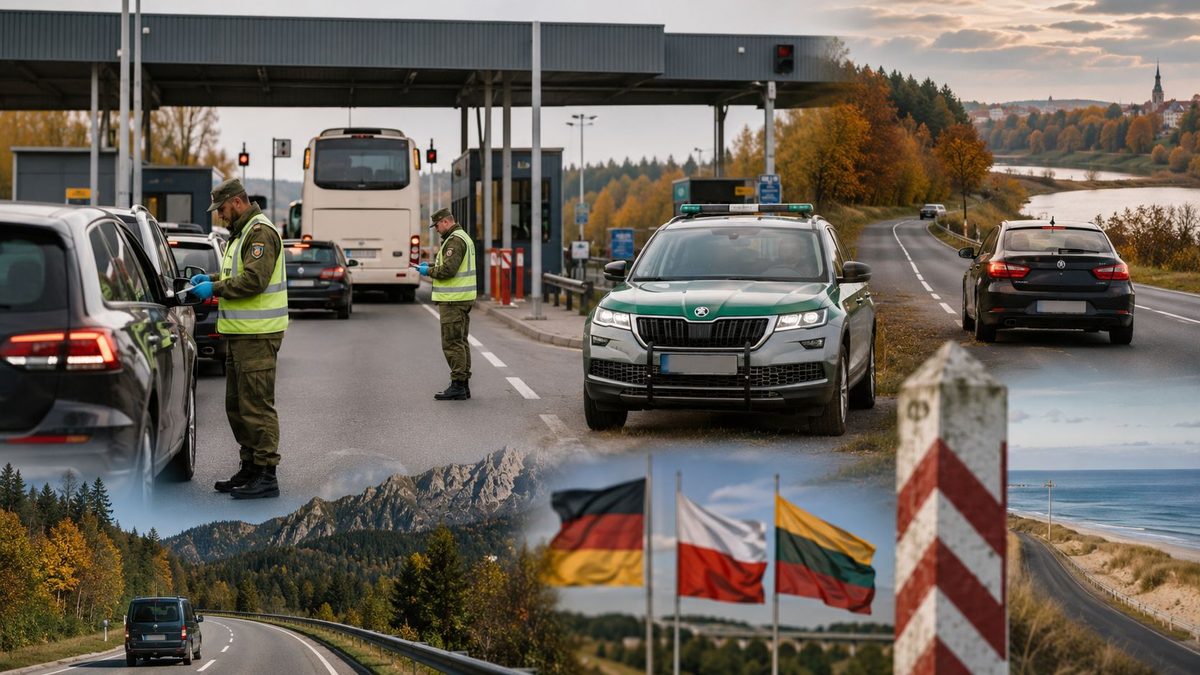
Poland plans to extend temporary border controls with Germany and Lithuania for another six months, until 30 March 2027. The move comes as authorities continue to monitor migration routes running through the Baltic states and Poland to western Europe. The European Commission’s latest notification confirms the envisaged six-month period and refers to sustained migratory pressure on both frontiers. The decision means that trips across these normally open Schengen borders will still involve selective document checks for travellers. The measures could therefore have an impact on road trips, coach services, rail journeys and cross-border tourism, particularly around busy crossing points. But Poland says controls could be eased early if conditions improve.
Poland Extends Controls Into Spring 2027
Poland first reinstated temporary checks at its German and Lithuanian borders on 7 July 2025. The government introduced them amid concerns about irregular migration and what it described as pressure generated by Belarus-linked migration routes.
The measure has since been repeatedly extended. The latest confirmed European Commission notification covers 2 October 2026 through 30 March 2027. It applies to Poland’s land borders with Germany and Lithuania.
That timing is significant for the travel industry. The extension covers the autumn, Christmas and winter travel periods. It also runs through much of the early spring season.
Advertisement
Advertisement
Poland’s policy does not mean that Schengen travel has been suspended. Instead, authorities have temporarily reinstated checks at internal borders under the Schengen Borders Code.
The European Commission describes such measures as exceptional and temporary. Member states must justify them on security grounds and apply principles of necessity and proportionality.
Advertisement
Advertisement
For travellers, that distinction matters. A border crossing remains possible, but passengers may be required to present valid identity or travel documents.
The Migration Route Has Changed Direction
The rationale behind the extension has evolved alongside migration patterns.
Advertisement
Advertisement
Poland initially highlighted pressure along its border with Belarus. However, the government has increasingly focused on secondary movements through Lithuania and Poland towards Western Europe.
This creates a complicated geography for European travel. A migrant route can begin outside Poland, pass through the Baltic region and eventually reach Germany.
The Polish-Lithuanian border therefore remains strategically important. So does the Polish-German frontier, which represents a potential onward route into Western Europe.
Poland’s April 2026 government update showed the scale of enforcement. More than 3 million people and over 1.5 million vehicles had been checked since controls began.
Advertisement
Advertisement
The same government data showed around 700 people refused entry from Lithuania. More than 270 foreign nationals attempting illegal crossings had also been detained.
On the German frontier, authorities reported roughly 550 refusals of entry. They also detained more than 190 foreign nationals attempting illegal crossings.
These figures illustrate why Warsaw continues to regard the controls as a security instrument rather than a routine tourism measure.
Poland’s Border Control Record
| Measure | Latest official figure available |
|---|---|
| People checked since July 2025 | More than 3 million |
| Vehicles checked | More than 1.5 million |
| Refusals at Lithuanian border | About 700 |
| Illegal-crossing detainees linked to Lithuanian border | More than 270 |
| Smugglers arrested at Lithuanian border | More than 50 |
| Refusals at German border | About 550 |
| Illegal-crossing detainees at German border | More than 190 |
| Smugglers detained at German border | Around 40 |
| Current extension | 2 October 2026–30 March 2027 |
What Travellers Should Expect
For most holidaymakers, the practical impact should remain limited.
Poland has repeatedly stated that controls are intended to be selective and proportionate. Officials have also stressed the need to minimise disruption for local residents, EU citizens and freight operators.
Nevertheless, travellers should expect a different experience from a completely unchecked Schengen crossing.
Advertisement
Advertisement
Drivers may encounter officers at designated crossing points. Some vehicles can be waved through without further inspection. Others may face document checks.
This is particularly relevant for travellers using busy road corridors between Poland and Germany. It also matters for visitors driving from Lithuania into north-eastern Poland.
Public transport passengers should likewise carry appropriate documentation. A passport or national identity card should be readily accessible where applicable.
Travellers should not assume that a previous trip without inspection guarantees the same experience on their next journey.
Border enforcement can change according to operational requirements. Officers can also redirect checks towards specific routes or locations.
Traveller Impact at a Glance
| Traveller type | Likely consideration | Sensible preparation |
|---|---|---|
| EU citizens | Possible selective identity checks | Carry valid ID or passport |
| Non-EU visitors | Possible document checks | Carry passport and relevant Schengen documents |
| Self-drive tourists | Potential roadside checks | Allow additional journey time |
| Coach passengers | Possible passenger checks | Keep documents accessible |
| Rail passengers | Checks can occur around border movements | Follow operator instructions |
| Freight operators | Potential operational delays | Build flexibility into schedules |
| Cross-border residents | Repeated checks may affect commuting | Carry required identification consistently |
Germany Already Has Its Own Controls
Poland’s decision cannot be viewed in isolation.
Advertisement
Advertisement
Germany has also maintained temporary internal border controls. The European Commission lists German controls from 16 March 2026 to 15 September 2026, including the land border with Poland.
The German government has cited irregular migration, migrant smuggling and pressure on its asylum system.
That creates an unusual situation within Schengen. Several countries have reinstated internal checks while still maintaining the broader principle of free movement.
For travel businesses, this produces operational uncertainty rather than a complete breakdown in cross-border mobility.
A journey from Poland into Germany can therefore involve controls on either side. However, that does not mean every passenger will undergo a lengthy inspection.
The wider European picture is also important. Austria, France, Italy, the Netherlands and several other Schengen countries have used temporary controls during 2026 for different security or migration-related reasons.
Advertisement
Advertisement
The pattern shows that temporary internal controls have become a recurring feature of European border management.
Schengen Free Movement Faces New Pressure
The development is particularly notable because Poland and Germany are both members of the Schengen Area.
Schengen normally allows travellers to cross internal borders without routine passport checks. Yet the legal framework permits temporary controls when governments identify serious threats to public policy or internal security.
The European Commission stresses that reinstating controls should remain a last-resort measure. Their scope and duration should remain limited to what authorities consider necessary.
Poland’s repeated extensions therefore demonstrate how migration concerns can have a direct operational impact on European tourism.
For airlines, the effect is relatively limited because these measures concern land borders. However, the impact can be more visible for road transport and international rail services.
Advertisement
Advertisement
Coach operators may need to account for possible inspections. Tour operators using multi-country itineraries also need to build flexibility into schedules.
The issue becomes particularly relevant for itineraries combining Poland, Germany and Lithuania.
Border Checks Meet Europe’s Digital Shift
Another important development is occurring simultaneously at Europe’s external borders.
The Entry/Exit System (EES) became fully operational across the Schengen Area on 10 April 2026. The system records biometric and travel-document information for eligible non-EU short-stay travellers crossing external Schengen borders.
The EES does not replace Poland’s temporary internal border controls.
Instead, the two measures operate in different parts of the border-management system. EES applies at external Schengen borders, while Poland’s temporary checks concern selected internal borders.
Advertisement
Advertisement
That distinction is essential for international visitors.
A traveller arriving in Poland from outside Schengen may face EES procedures at the external border. A subsequent road journey from Poland into Germany or Lithuania could then involve a separate temporary internal check.
This makes documentation more important throughout a multi-country itinerary.
Poland’s Border Policy Has Evolved
The current extension represents the latest stage of a policy that began in July 2025.
Initially, Poland announced a 30-day temporary reinstatement of checks at the German and Lithuanian borders. The government said the controls responded to changing migration conditions and Germany’s restrictive border approach.
The policy was subsequently extended to October 2025.
Advertisement
Advertisement
Another extension then kept controls in place until April 2026.
In April, Poland extended the measures again until 1 October 2026. At that point, official figures showed more than three million people and 1.5 million vehicles had already been checked.
The latest notification now takes the policy beyond a full year of operation.
How The Policy Has Developed
| Period | Development | Significance |
|---|---|---|
| 7 July 2025 | Controls reinstated | Initial response to migration pressure |
| August 2025 | Controls extended | Continued pressure justified continuation |
| October 2025 | Extended to April 2026 | Policy became longer-term |
| April 2026 | Extended to 1 October 2026 | More than three million people already checked |
| 2 October 2026 | Latest extension begins | Controls continue into 2027 |
| 30 March 2027 | Current notified end date | Earlier termination remains possible |
The European Commission confirms the latest notified period as 2 October 2026 to 30 March 2027.
Why The Tourism Industry Is Watching
The immediate tourism effect is unlikely to resemble a widespread travel shutdown.
Instead, the industry faces a friction problem.
Advertisement
Advertisement
European travel increasingly depends on predictable cross-border movement. Coach operators, self-drive itineraries and regional tourism businesses rely on relatively seamless journeys.
Even short checks can become consequential during peak travel periods.
A five-minute inspection may have little impact on an individual motorist. For a scheduled coach carrying dozens of passengers, however, delays can affect onward connections and driver schedules.
Rail operators face similar considerations where border checks occur around international services.
The Polish government has previously stated that checks should minimise disruption to freight and European travellers.
That approach will remain important if the controls continue through the busy winter and spring travel periods.
Advertisement
Advertisement
For destination managers, the broader challenge is communication.
Visitors need clear information about where checks may occur. They also need practical guidance on acceptable documents and potential journey-time variability.
Practical Advice Before Crossing Poland
Travellers planning cross-border journeys should treat the extension as a reason for better preparation, not alarm.
First, keep your passport or national identity document accessible throughout the journey. Do not pack essential travel documents in checked luggage or an inaccessible suitcase.
Second, allow some additional time for international road journeys. The risk of delay can vary according to traffic and enforcement activity.
Third, travellers using coaches should avoid scheduling tight onward connections immediately after crossing the border.
Advertisement
Advertisement
Fourth, non-EU visitors should verify that their passport, visa or residence documentation remains valid for their itinerary.
Finally, travellers should monitor official announcements before departure. Border arrangements can change when governments reassess security conditions.
The Polish government has also indicated that controls could end before the notified date if the border situation improves.
That caveat is important. 30 March 2027 is the current notified end date, not necessarily a guaranteed operational endpoint.
For official travel information, travellers can consult the Polish Ministry of the Interior and Administration and the European Commission’s Schengen border-control information.
What This Means For European Trips
The extension makes European travel planning even more complicated.
Advertisement
Advertisement
But it does not prevent tourists from flowing between Poland, Germany and Lithuania.
The key change is the return of uncertainty at borders that travellers usually expect to cross freely.
Tourism businesses should therefore prioritise operational resilience. That is about allowing more time, communicating clearly and keeping documentation requirements visible.
The message for individual travellers is more simple.
Be ready to show the right documents and for possible checks and avoid tight connections.
The broader significance is not just for Poland. In Europe, migration, security concerns and national border policies are creating sustained pressure on the Schengen system. Poland’s latest extension shows that internal border controls can last much longer than originally intended. For travellers, frictionless European road travel can no longer be taken entirely for granted.
Advertisement
