
Why Is Vietnam Tourism Skyrocketing As Millions Of Passionate Travelers Fly Out From Russia? Here’s The Latest Update

Published
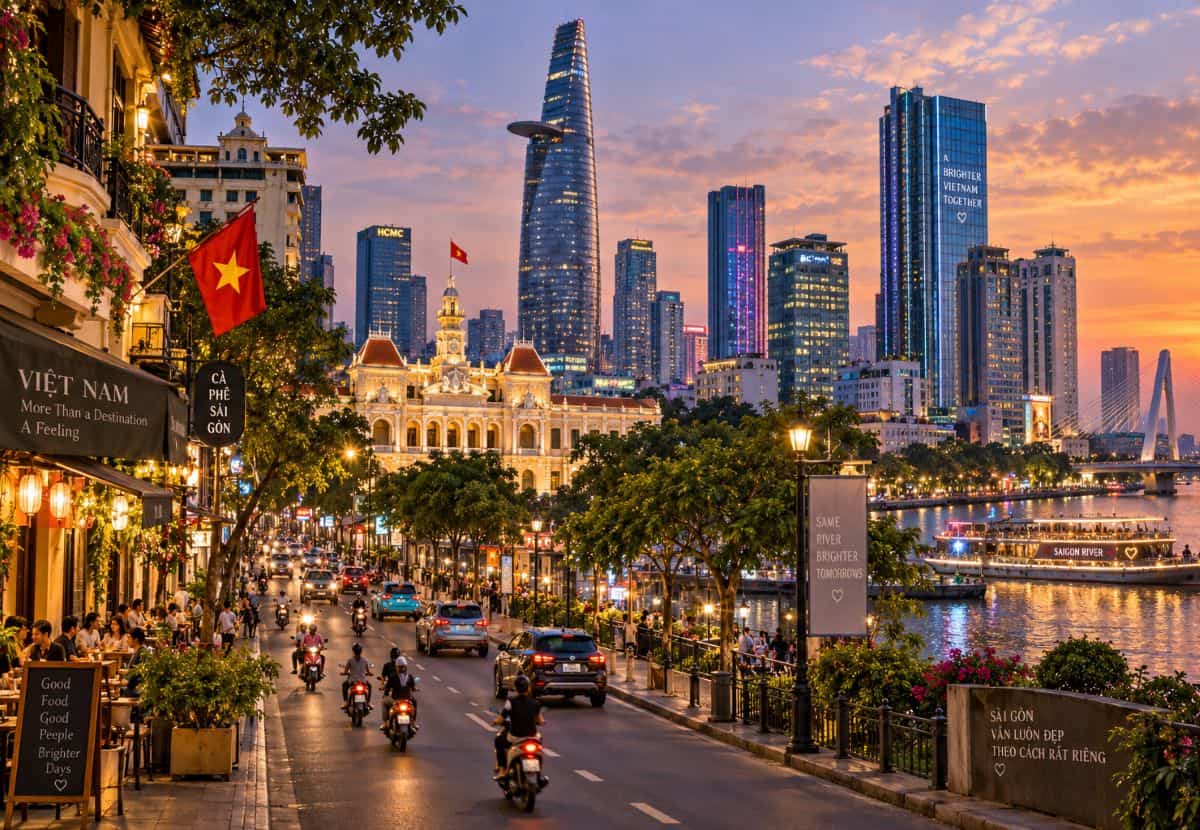
Image generated with Ai
Some magic is happening on Vietnam’s coasts right now. That magic is named 2026. 2026 will forever change Vietnam’s coasts for the better. In just eight months of this year, Vietnam recorded the visits of approximately one million Russian tourists. This number is almost three times of the total tourists Vietnam recorded for 2025 (363,000). This means Russia is currently the third most important travel market for Vietnam. Now, all the things that used to sustain the coastal tourism of Vietnam are back in business. Because of the sudden boom in tourism, facilities that once relied on tourism are now operational. The Russian market has revived the coastal tourism of Vietnam. This achievement is purely because of the close proximity direct international flights to Vietnam. This is a win for all those who believed that no amount of social distancing could stop the will to travel of people.
Rapid Expansion in Inbound Visitor Numbers and Accelerated Economic Recovery Across Major Regional Destinations
The remarkable speed with which visitor figures surpassed expected targets highlights a major shift in long-haul vacation preferences across northern Eurasia. Over 1 million individual journeys were logged within the first 8 months of 2026, completely altering regional baseline projections for the year. This 165.7% year-on-year increase solidifies Russia’s position as Vietnam’s 3rd largest overseas feeder market, proving that regional travel demand remains exceptionally resilient when direct aviation links and hospitable entry conditions are maintained.
Local economies in major coastal cities like Nha Trang, Phu Quoc, and Da Nang are experiencing the direct benefits of this rapid expansion. Long-term visitors routinely book extended hotel stays, sample local dining options, and utilize regional ground transportation, creating sustained cash flows for small business owners and commercial vendors alike. The sudden surge in demand has encouraged regional authorities to fast-track infrastructure upgrades, expand terminal services at local airports, and introduce multi-language directional signage across tourist districts.
Advertisement
Advertisement
Furthermore, commercial operators are reallocating marketing budgets to capitalize on this high-value visitor segment. Because these long-haul travelers typically plan extended stays that exceed standard short-term weekend trips, their presence yields higher average revenue per user for coastal resorts and urban boutique hotels. Consequently, hospitality firms are investing heavily in service training programs, expanding specialized culinary offerings, and developing multi-week activity packages designed specifically to cater to extended-stay guests.
Transforming Coastal Destinations, Cultural Tours, and Multi-Day Travel Itineraries Across Historical Urban Centers
Advertisement
Advertisement
The operational influence of this international arrival surge extends deep into Vietnam’s central coastal provinces, historic metropolitan centers, and multi-province tour networks. Coastal holiday havens such as Nha Trang, Phu Quoc, and Da Nang are recording record occupancy rates for beachfront suites, private villas, and long-term residential rentals. Simultaneously, tour operators offering multi-day travel itineraries report a steep increase in bookings for comprehensive packages that combine tropical coastal leisure with immersive inland cultural excursions.
Beyond sunny beachfront destinations, long-stay international guests are traveling inland to visit historical landmarks across urban hubs such as Hanoi, Hue, and Hoi An. This broader geographic distribution of tourists provides direct economic support to traditional artisans, local heritage sites, performance venues, and regional culinary establishments. Furthermore, service operators are fine-tuning their daily offerings by providing tailored amenities, multilingual guiding services, and curated heritage itineraries that appeal to families and mature travelers alike.
Advertisement
Advertisement
Hospitality businesses are actively restructuring their seasonal booking calendars to match the extended length of stay preferred by long-haul travelers. As comprehensive travel itineraries become the new market standard, regional transit providers are expanding intercity bus routes, private shuttle services, and domestic flight connections to link coastal resort zones with inland historical points of interest.
Global Effects on International Travelers, Competitive Aviation Networks, and Broader Tourism Strategies
Looking at the broader international landscape, this dramatic increase in long-haul passenger movements is creating visible shifts across global aviation corridors and regional travel networks. As major air carriers adjust fleet allocations and add scheduled flights toward major hubs in Vietnam, overall seat availability on surrounding international routes is shifting accordingly. Consequently, travelers departing from traditional markets in Western Europe, North America, and East Asia may encounter shifting airfare pricing structures, modified connecting schedules, and increased competition for premium room inventory in popular coastal destinations.
Moreover, the massive return of long-haul Eurasian travelers to Southeast Asia illustrates a fundamental realignment of global vacation flows and flight transit patterns. As international holidaymakers prioritize warm-weather destinations offering straightforward visa frameworks, reliable direct flights, and comprehensive resort infrastructure, Vietnam has emerged as a preferred holiday hub. This trend is prompting neighboring Southeast Asian nations to re-examine their own entry requirements, airport operations, and international promotional campaigns to remain competitive in capturing high-spending overseas visitors.
Advertisement
Advertisement
Ultimately, international tourism boards and global travel analysts are studying this swift recovery as a prime example of resilient market dynamics. The steady inflow of high-spending, extended-stay holidaymakers reinforces Vietnam’s role as a pivotal driver of regional tourism expansion across the Asia-Pacific territory. As global air connectivity expands further through the remainder of 2026, this strong alignment between international flight capacity and domestic hospitality services will continue to propel long-term growth across the entire tourism sector.
Expansion of Direct Aviation Networks and Charter Flight Schedules Across Regional Airport Gateways
In the initial 8 months of 2026, non-stop aviation connectivity between primary departure hubs and Vietnam’s coastal gateways underwent an unprecedented expansion. Direct flight frequencies surged by over 140% year-on-year, driven by increased schedule density connecting major metropolitan centers like Moscow and Vladivostok with key coastal transportation hubs. Specialized entry points, including Cam Ranh International Airport in Khanh Hoa province and Da Nang International Airport, received the majority of these long-haul air arrivals.
Simultaneously, the regional charter flight sector expanded significantly across Southeast Asian travel routes. Charter flight schedules captured a 7.8% market share of total outbound long-haul flight packages, clearly outperforming rival regional flight routes to Thailand at 4.7% and China at 4.3%. Overall, commercial and charter air travel accounted for 82.8% of all foreign inbound entries into Vietnam during the first 8 months of 2026, underscoring the critical role of robust aviation links in driving international visitor volumes.
Macroeconomic Financial Revenue Contributions and Extended Hospitality Length-of-Stay Metrics
The economic impact of long-haul arrivals is significantly amplified by the extended duration of their stays across major coastal resort regions. Throughout 2026, the average length-of-stay for these visitors stretched from traditional 7 to 10 day itineraries to multi-week vacations spanning 14 to 21 nights per visit. This extended presence provided continuous financial support to hospitality operators, food service establishments, and local leisure vendors across popular coastal destinations like Nha Trang, Mui Ne, and Phu Quoc.
Advertisement
Advertisement
Financially, average per-traveler expenditure reached $1,500 to $1,800 USD across these multi-week itineraries. This elevated spending pattern injected vital foreign currency directly into localized service economies and regional supply chains. These strong financial contributions directly supported Vietnam’s broader national objective of welcoming 25 million total foreign visitor arrivals by the conclusion of 2026, demonstrating the immense value of extended-stay tourist demographics.
Competitive Market Realignment Across Southeast Asia and Shifting Regional Traveler Share
Competitive pricing structures and direct transit options have led to a notable shift in market share across major Asian holiday destinations. By offering affordable luxury resort stays and direct air corridors, Vietnam outpaced Thailand’s package-tour growth rate within long-haul markets, securing a 3.2 percentage point market share increase. Vacation packages in coastal provinces were positioned as budget-friendly alternatives, with luxury resort pricing running 20% to 30% lower than comparable destinations in the Mediterranean or the Middle East.
This steady influx propelled Russia into Vietnam’s top 3 source markets for international arrivals in 2026, behind China with 3.54 million visitors and South Korea with 2.76 million visitors. Surpassing the 1 million visitor threshold months ahead of schedule demonstrated how competitive hospitality pricing and accessible entry requirements can reconfigure regional tourist flows away from traditional hubs in Thailand, Türkiye, and the United Arab Emirates.
Regional Employment Generation and Localized Infrastructure Investment in Khanh Hoa and Quang Ninh
The rapid expansion of inbound long-haul travel created immediate employment opportunities and catalyzed localized infrastructure developments in key coastal provinces. Across regions like Khanh Hoa and Quang Ninh, the local hospitality and service sector generated over 45,000 direct and indirect regional jobs during the first 8 months of 2026. Local businesses expanded their operational teams to manage higher occupancy rates and meet the specific service needs of international guests.
Advertisement
Advertisement
Furthermore, international travel agencies reported an extraordinary 231% year-on-year increase in tour package sales across these provinces. This heightened demand led to an 80% rise in demand for certified multilingual tour guides throughout Khanh Hoa and neighboring areas. Consequently, educational institutions and vocational training centers scaled up professional development programs to maintain high standards of hospitality management.
Emerging Domestic Travel Corridors Connecting Coastal Gateways with Inland Cultural Destinations
Rather than remaining confined to single coastal resorts, international visitors increasingly explored multi-province travel itineraries throughout 2026. Approximately 35% of long-stay guests booked secondary domestic flights or regional rail transit within Vietnam. This mobility created vibrant interior travel corridors linking primary beach destinations like Phu Quoc and Da Nang with renowned historical cities like Hanoi, Hue, and Hoi An.
This trend significantly boosted cultural tourism metrics across the central and northern provinces. Cultural heritage site visitation in Hue and Hoi An by long-haul travelers expanded by 53.4% compared to the prior year. In response to this demand, tour operators successfully transformed standard single-city beach stays into comprehensive 3-city itineraries, distributing visitor expenditure more evenly across urban and rural communities.
Evolving Hospitality Infrastructure and Surging Luxury Resort Occupancy Rates in Phu Quoc
To accommodate sustained influxes of extended-stay travelers, luxury hospitality infrastructure across major island destinations underwent significant operational adjustments. Beachfront 4-star and 5-star resort occupancy rates reached 85% to 92% during peak travel months in Phu Quoc and Nha Trang. Property managers adapted booking policies to prioritize multi-week stays, ensuring high room utilization rates throughout the season.
Advertisement
Advertisement
At the same time, the residential rental market experienced rapid expansion to meet demand for long-term accommodations. Extended-stay serviced apartment and private villa rentals saw a 110% growth in multi-week leases. This strong demand contributed to total national foreign visitor arrivals reaching nearly 16 million in the first 8 months of 2026, successfully fulfilling 63.6% of the full-year national target.
Policy Frameworks, Streamlined Electronic Visas, and Extended Stay Allowances
Strategic government border policies and modernized customs procedures played a crucial role in enabling this rapid market recovery. Airport immigration authorities streamlined customs processing workflows, successfully reducing border check-in times to under 15 minutes per passenger at major international terminals. This operational efficiency minimized terminal congestion and improved the overall travel experience for arriving passengers.
Furthermore, policy revisions that extended electronic visa validity periods up to 90 days with multiple-entry allowances provided travelers with unprecedented flexibility. These flexible entry requirements served as a primary catalyst for long-stay vacations, supporting an overall 14.4% year-on-year national tourism growth rate across all global source markets in 2026.
Long-Term Strategic Sustainability and the Mitigation of Seasonal Off-Peak Downturns
The steady arrival of long-haul visitors provided economic stability during periods that historically experienced lower tourist activity. During August 2026 traditionally considered a low season month for foreign arrivals in Vietnam international visitor numbers reached nearly 2 million, representing an 18.4% year-on-year increase. This off-peak demand helped maintain steady commercial revenue for local businesses year-round.
Advertisement
Advertisement
This year-round visitation pattern significantly stabilized the regional labor market, reducing seasonal hospitality layoff rates by 40% in coastal resort zones. Based on these sustained multi-season arrival trends, national tourism authorities updated full-year arrival projections upward, targeting 1.5 million market-specific long-haul visitors by the conclusion of 2026.
The Final Verdict
Numbers are rough estimates. They give us a glimpse of hope. Entertainment with this hope will help protect the local way of life. This can be seen in the reopening of Vietnam’s beaches, and the lively nights of Nha Trang and Phu Quoc. Travel is about the people you will meet, and the memories you will make and will never come back. By 2026, there will be approximately 1 million return travelers. Return travelers will bring back artisans and hotel workers. With travelers returning, it’s not just the history of the place that will be preserved. A place is preserved by the relationships built there. Returning to travel in Vietnam resonates this. Returning travel to Vietnam will increase the potential of neighboring markets and opportunities for new policies, but will ultimately be the trade of Staff and the hospitality travelers experience will entice their return. Travel will make previously remote and isolated places accessible. By 2026, Vietnam will have a revitalized coast line to return vibrancy back to the desolate areas.
Advertisement
