
NGK Ceramics Begin Operating at New Jersey Direct Air Capture Facility

Published
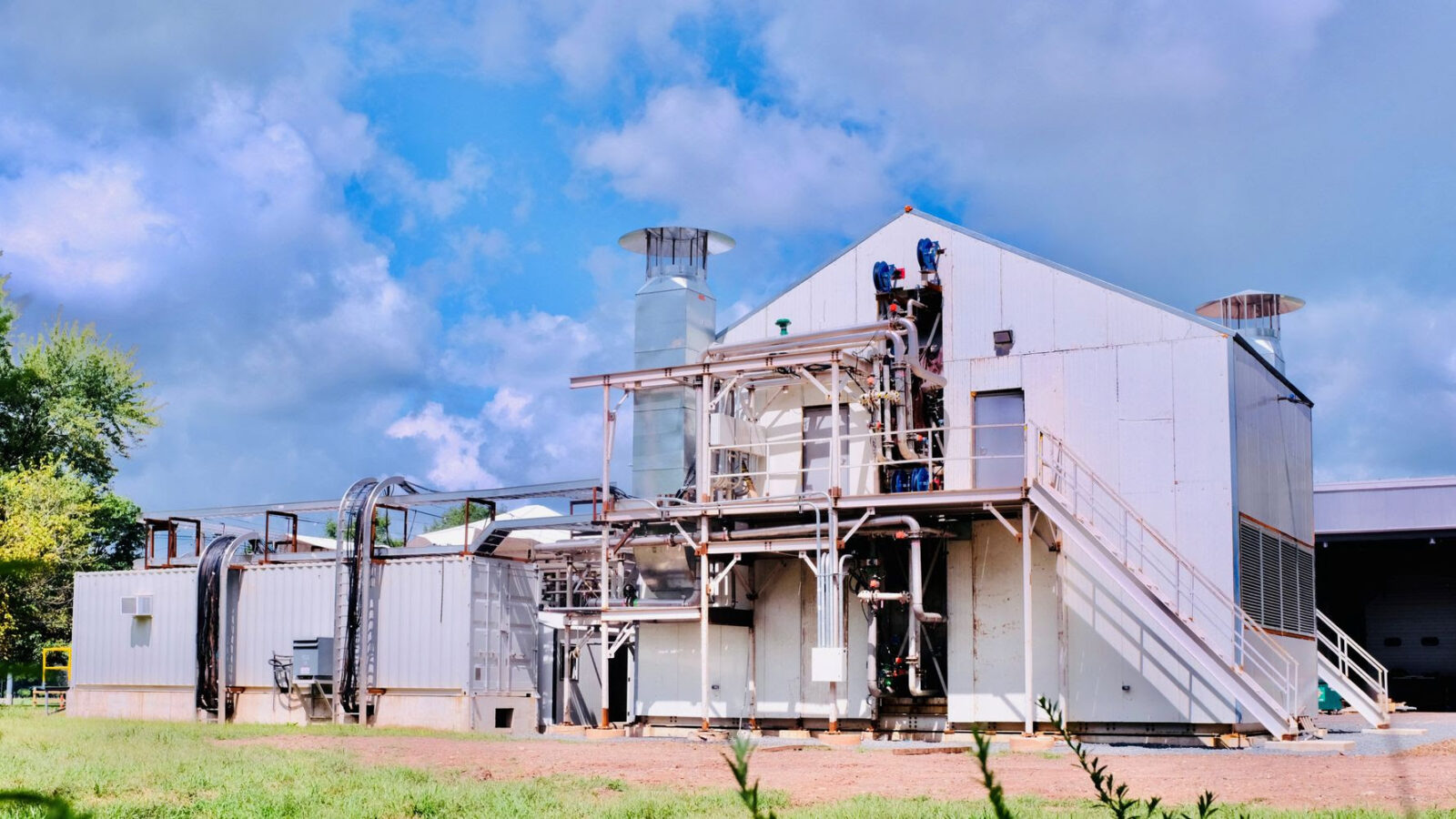
NGK Corporation has deployed its honeycomb structure ceramics at Avnos’ Project Brighton direct air capture facility in Bridgewater, New Jersey. The operating installation gives both companies real-world data on carbon removal technology, water production and potential sustainable aviation fuel pathways, linking industrial innovation with aviation’s long-term decarbonisation challenge.
NGK Corporation has announced that its honeycomb structure ceramics are now operating inside Avnos Inc.’s Project Brighton direct air capture, or DAC, system in Bridgewater, New Jersey. The installation marks a move from development-stage testing to active use in a commercial-scale operating environment.
Advertisement
Advertisement
For the travel and aviation industries, the development matters because Project Brighton is also evaluating whether captured atmospheric carbon dioxide can become a feedstock for sustainable aviation fuel, widely known as SAF. Aviation remains difficult to decarbonise on long-haul and high-demand routes, where aircraft still depend heavily on energy-dense liquid fuels.
Direct air capture refers to technology designed to remove carbon dioxide directly from ambient air. The captured carbon can then be permanently stored or used as an input for industrial processes. In Project Brighton’s case, Avnos is examining a route that could connect carbon removal, water recovery and future low-carbon fuel production.
Advertisement
Advertisement
Project Brighton brings DAC technology into live operation
Project Brighton is based at Avnos’ Technology Development Center in Bridgewater. According to the companies, it is Avnos’ largest operating Hybrid Direct Air Capture deployment. The facility is designed to capture up to 450 tonnes of carbon dioxide from the atmosphere each year and produce about 475,000 gallons of clean water annually.
Those figures should be understood as facility design targets rather than verified annual output figures. The significance of the project lies in its ability to generate operational evidence. Carbon-removal systems must show that they can operate reliably over time, manage energy use, withstand changing weather conditions and deliver predictable performance before wider deployment can be considered.
Advertisement
Advertisement
For airlines, airports, fuel suppliers and destinations pursuing climate targets, the practical performance of such systems is more important than laboratory potential alone. Future SAF supply will require credible sources of carbon, renewable energy and large-scale processing capacity. Technologies that can provide atmospheric carbon dioxide could support some synthetic fuel pathways, although commercial availability will depend on cost, energy supply, regulation and infrastructure.
Honeycomb structure aims to improve air flow
NGK’s ceramic technology is based on honeycomb structures originally developed for automotive emissions-control applications, including its HONEYCERAM™ technology. The structure contains straight channels, creating a large internal surface area within a compact component.
In a DAC system, this design can allow air to pass through the structure while coming into contact with sorbent materials that capture carbon dioxide. NGK says the approach is intended to process high volumes of air while reducing pressure drop compared with conventional pellet-based configurations.
Pressure drop is an important engineering consideration. If a system needs more energy to push air through its components, operating costs can increase. Lower resistance could reduce the electricity required for blowers, although the overall energy performance of a DAC plant depends on several factors, including heat requirements, sorbent chemistry, local climate and system design.
The Project Brighton deployment will allow NGK and Avnos to collect information on the ceramic components’ durability and performance during continuous operation. This data can help determine how the material performs outside controlled development settings and where further improvements are needed.
Aviation watches carbon capture and SAF pathways
The travel sector is increasingly focused on how aviation can reduce emissions without limiting connectivity. Fleet renewal, improved operations, air traffic management and SAF are central parts of current airline decarbonisation strategies. Yet supplies of sustainable aviation fuel remain limited and typically cost more than conventional jet fuel.
Advertisement
Advertisement
Synthetic aviation fuel, sometimes called e-fuel, can be made by combining captured carbon dioxide with renewable hydrogen. When the carbon comes from the atmosphere, the process has the potential to reduce lifecycle emissions compared with fossil jet fuel, depending on the source of electricity, hydrogen production and fuel-processing methods.
Project Brighton does not itself establish a commercial SAF production facility. Its role is to evaluate whether the atmospheric carbon dioxide it captures could be used in such a pathway. That distinction is important. The project represents an operational technology demonstration and development step, rather than a guarantee of airline fuel supply.
Still, the link is strategically relevant. Airlines face growing pressure from governments, investors and travellers to demonstrate credible climate action. Projects that broaden the potential supply base for lower-carbon fuel feedstocks could become increasingly valuable if they prove technically and economically viable at scale.
Global manufacturing could support future scale-up
NGK says it has 11 production locations across eight countries for its honeycomb ceramics. The company believes this manufacturing network could provide a foundation for larger deployment if demand for DAC systems grows.
Scale remains the central challenge for direct air capture. Capturing meaningful volumes of atmospheric carbon dioxide requires substantial capital, energy and equipment. It also requires careful planning to ensure that electricity used by the technology is low-carbon; otherwise, the climate benefits can be weakened.
However, the sector is moving beyond isolated research programmes. Governments, corporations and aviation stakeholders are increasingly examining carbon removal as one element of a wider climate strategy. It is not a substitute for reducing emissions at source, but it may play a role in addressing residual emissions that are difficult to eliminate.
Advertisement
Advertisement
NGK and Avnos began their collaboration through a joint development programme focused on applying ceramic honeycomb technology to solid-sorbent DAC systems. Their work included refining specifications to suit Avnos’ process before the equipment was incorporated into Project Brighton.
“Progress in direct air capture is encouraging for a travel industry seeking credible routes towards lower-carbon aviation. Project Brighton shows why practical trials matter: they turn climate ambition into measurable learning, while helping industry assess whether new technologies can support cleaner fuel production and more responsible global connectivity.”— Anup Kumar Keshan, Founder and Editor-in-Chief, Travel And Tour World
What comes next
NGK plans to use findings from the New Jersey project to improve its ceramic structures and pursue future DAC opportunities. Avnos will continue operating its hybrid system and assessing possible follow-on developments.
The next test will be whether real-world operating data can support lower costs, stronger durability and repeatable performance. For travel and aviation, the value of the project will ultimately depend on whether captured atmospheric carbon can help create reliable, scalable and genuinely lower-carbon fuel options.
NGK’s deployment at Project Brighton offers a practical test for technology that could support future carbon removal and sustainable aviation fuel systems. The New Jersey facility will now provide operating evidence, not just development claims. Its wider travel relevance depends on whether the technology can become affordable, durable and scalable worldwide.
Advertisement
