 Samadrita Mukherjee Samadrita Mukherjee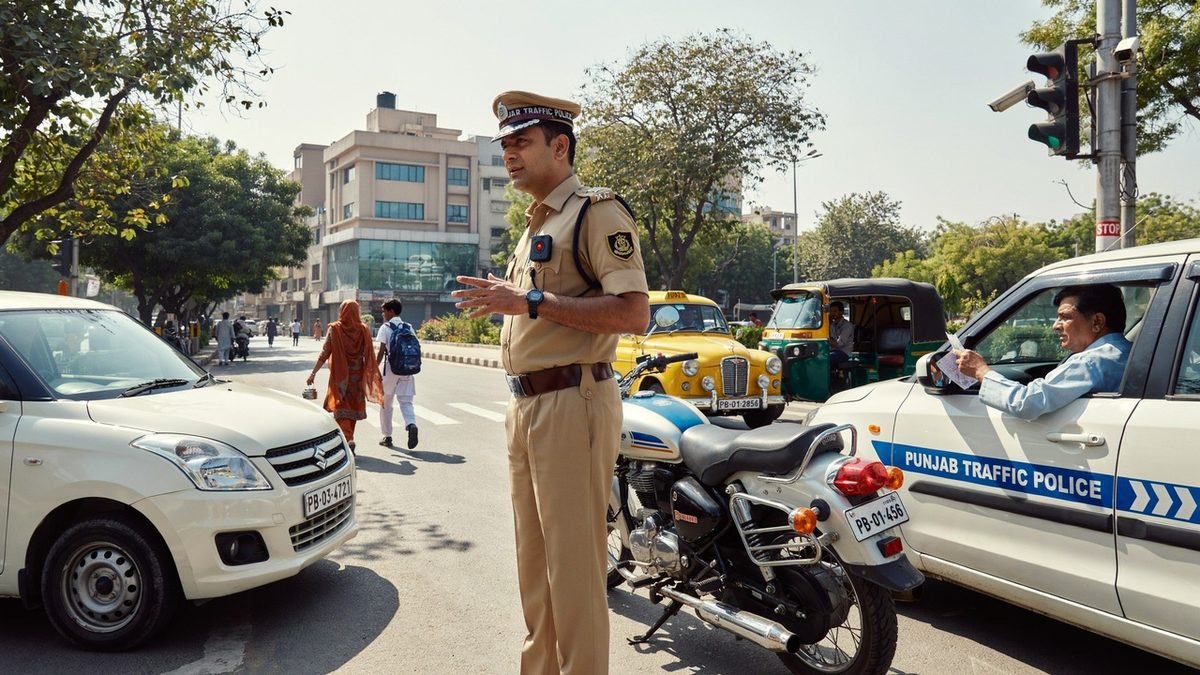
Image generated with Ai
Body-worn cameras have been provided to Traffic Police in Punjab, India, in a significant step taken with the intention of ensuring transparency and accountability in roadside checks for the benefit of commuters, travelers, and commercial travelers. The Traffic Police from Jalandhar Commissionerate have received body cameras which would help in recording any interaction with motorists on roadside checking, challan processes and other such police enforcement activities. This is a step initiated in September 2026, with the intention of creating an independent record of roadside incidences, lowering disputes and ensuring professionalism on the part of the traffic police. In this regard, 20 cameras have been given and 100 such cameras would be provided in the future in the city.
The provision of body cameras by Traffic Police shows the shift to technology policing in Jalandhar, an important urban city of Punjab.
Advertisement
The Jalandhar Commissionerate Police has started providing body-worn cameras to traffic police personnel who conduct daily enforcement activities across the city.
The cameras will remain with officers during their duties and will record interactions with drivers, passengers and other road users during traffic checks.
Advertisement
The system is expected to improve documentation of roadside procedures and create a more transparent process for handling traffic-related disputes.
The move is intended to protect both commuters and police officers by ensuring that traffic enforcement activities can be reviewed objectively when questions arise.
For people travelling through Jalandhar, including tourists, business visitors, interstate commuters and commercial vehicle operators, interactions with traffic authorities are an important part of road travel.
Traffic checks, document verification and challan procedures can sometimes become stressful situations, especially when disagreements occur between drivers and enforcement officials. The introduction of body cameras aims to bring greater clarity to these interactions.
Advertisement
Advertisement
The initiative could be particularly useful for travellers unfamiliar with local traffic rules, as video records can provide a clearer understanding of events if disputes occur.
The decision comes amid growing focus on improving accountability and professionalism during public interactions.
Traffic enforcement involves thousands of daily interactions between officers and road users. Authorities believe recorded evidence can help address complaints while also protecting officers from inaccurate allegations.
Traffic officials have also raised concerns that some traffic violators attempt to contact senior officers or use personal connections to avoid enforcement action. The camera system is expected to create a documented record for both sides.
The cameras will be used by traffic personnel of different ranks and deployed at important traffic locations throughout the city.
The initial deployment focuses on areas where traffic movement is high and where enforcement activity is frequent.
| Category | Details |
|---|---|
| Police department | Jalandhar Commissionerate Police |
| Unit using cameras | Traffic Police |
| Initial cameras provided | 20 |
| Officers covered | Traffic personnel of all ranks |
| Deployment areas | Busy and sensitive intersections |
| Future target | 100 body cameras |
| Long-term objective | Majority of traffic officers equipped with cameras |
Authorities are working towards wider deployment so that more officers can use the technology during daily duties.
The body camera rollout followed a recent incident involving a traffic officer and a truck operator near the Cantonment area of Jalandhar.
According to police officials, the incident occurred during a vehicle checking process. The truck driver was reportedly showing his driving licence to traffic personnel through a mobile phone. A disagreement allegedly developed when the driver attempted to take back his phone from the officer.
The situation escalated, leading to an allegation that the traffic official slapped the truck operator.
The incident highlighted the importance of having reliable records during public interactions between enforcement officials and citizens.
The introduction of body cameras does not change existing traffic regulations. Drivers and visitors must continue following all road safety rules and carrying required documents.
However, the system changes how enforcement interactions are recorded and reviewed.
The new technology is designed to improve transparency rather than replace standard traffic enforcement procedures.
The adoption of body cameras reflects a wider trend of using digital technology to modernise public safety systems.
Police departments across India are increasingly exploring technology solutions to improve evidence collection, accountability and citizen services.
For travellers, technology-driven policing can create a more predictable and transparent road experience, especially in busy urban areas.
The initial deployment of 20 cameras is only the first stage of the project.
The Jalandhar traffic department plans to increase coverage by acquiring around 100 body cameras, allowing a larger number of officers to use recording equipment during duty.
A wider rollout could make body cameras a regular part of traffic management in the city.
Jalandhar Traffic Police introduced body cameras to improve accountability, record interactions with motorists and make traffic enforcement more transparent.
The department has initially distributed 20 body cameras and plans to increase deployment to 100 cameras.
The cameras are designed to record interactions between traffic personnel and road users during enforcement activities, including checking procedures.
They will provide an objective record during disputes related to challans, police behaviour or roadside interactions.
Yes. Visitors and non-local travellers may benefit from clearer procedures and recorded evidence during traffic checks.
The move by Jalandhar to adopt body camera technology for its traffic policemen is a major step toward using technological measures in managing the city’s roads. The objective of the plan is to enhance the transparency and public trust in the dealings between traffic police and road users.
By increasing the current twenty cameras to a hundred units, this scheme may become one of the great examples of smart police technology, which can contribute to enhancing the travel experience. For the residents of Jalandhar, visitors, and other travelers, this technology can ensure more documented dealings.
Advertisement
Tags: India road safety, Jalandhar Traffic Police, Punjab travel update, smart policing technology, traffic enforcement
Advertisement
Advertisement













Sunday, September 6, 2026

Sunday, September 6, 2026

Sunday, September 6, 2026

Sunday, September 6, 2026

Saturday, September 5, 2026

Saturday, September 5, 2026

Sunday, September 6, 2026

Sunday, September 6, 2026



