
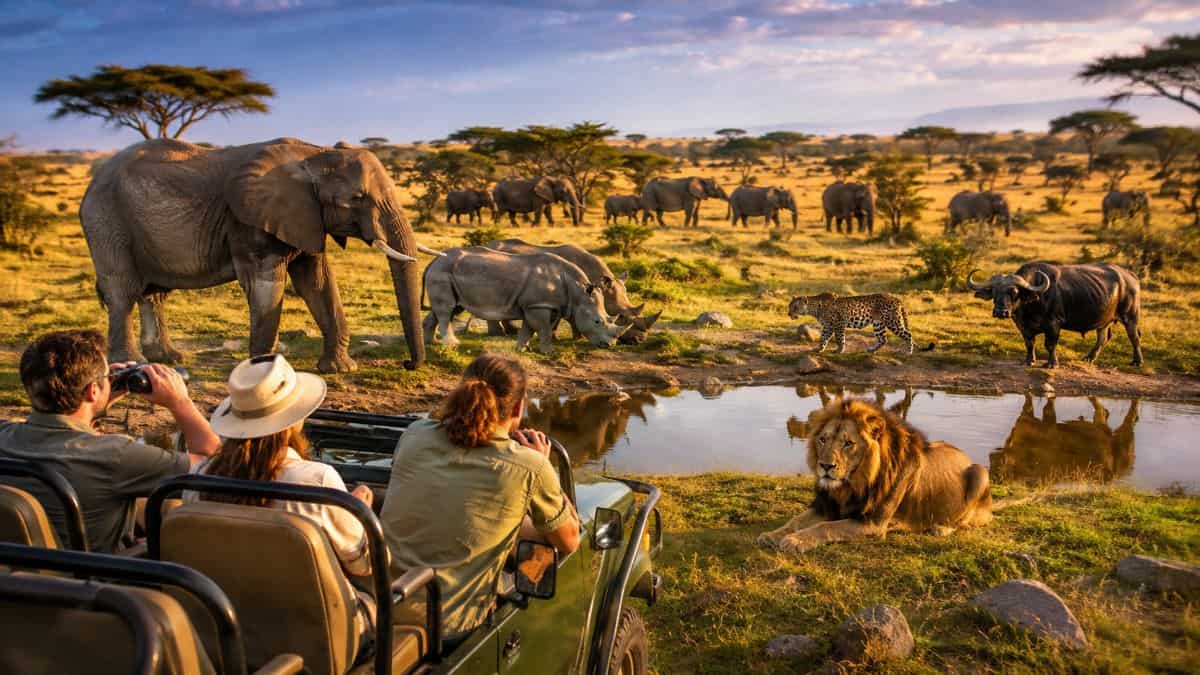
Image generated with Ai
Tanzania joins Kenya and South Africa in offering the hunt for Africa’s legendary Big Five. More visitors are eager to try out a jungle safari in Africa. Successful conservation, types of natural views, and wildlife-spotting tours are creating more scope for visitors to watch lions, leopards, elephants, rhinos, and Cape buffalo. This is the habitat of iconic wildlife and an alternative type of safari tourism. From the vast plains of the Serengeti and Maasai Mara. To the blended ecosystems of Kruger and Addo.From the vast open plains of the Serengeti and Maasai Mara, to the mixed ecosystems of Kruger and Addo.
The Big Five remains one of the most iconic ideas in African travel, although it is not necessarily a promise to see all five. The term comes from the days of big-game hunting, when it was used to describe animals that were especially difficult and dangerous to hunt on foot. Today’s safari tourism has reversed that legacy, with travellers now seeking responsible encounters via guided game drives, conservation-led experiences, self-drive routes and longer stays. Some of the best opportunities to see the whole group and explore very different landscapes, cultures and conservation stories are available in seven parks and reserves in Tanzania, Kenya, South Africa, Rwanda, Malawi and Zimbabwe.
Advertisement
The Big Five consist of the African lion, leopard, African elephant, rhinoceros and Cape buffalo. Their popularity has made them a major part of safari marketing, but experienced travellers understand that wildlife does not operate according to an itinerary.
Elephants and buffalo may be relatively conspicuous in some environments, while lions can often be located through their social behaviour and preference for open habitats. Leopards are considerably more elusive, frequently resting in trees or dense vegetation. Rhinos can also require patience, careful tracking and knowledgeable guiding.
Advertisement
For this reason, choosing a park with established populations of all five is only the beginning. Season, rainfall, habitat, water availability, length of stay and the expertise of local guides can all influence what visitors encounter.Safari destination Big Five presence Distinctive travel experience Serengeti National Park, Tanzania All five Vast plains and migration landscapes Maasai Mara National Reserve, Kenya All five Predator-rich grasslands and migration season Kruger National Park, South Africa All five Guided and self-drive safari options Akagera National Park, Rwanda All five Wetlands, lakes and conservation recovery Majete Wildlife Reserve, Malawi All five Wildlife restoration and quieter safari routes Gonarezhou National Park, Zimbabwe All five Remote wilderness and dramatic scenery Addo Elephant National Park, South Africa All five Elephant viewing and coastal wildlife opportunities
Tanzania’s Serengeti National Park remains one of the strongest choices for travellers seeking a traditional East African safari. Covering an enormous area of grassland, woodland and riverine habitat, the park supports a broad range of wildlife and provides space for animals to move naturally.
Lions are frequently associated with the open plains, while elephants and buffalo can be encountered in woodland and near water. Leopards are more difficult to locate because they favour cover and elevated resting places. Rhinos are generally the most challenging member of the group to find, making patience and additional time particularly valuable.
The Serengeti’s attraction extends far beyond the Big Five. Giraffes, zebras, wildebeest, gazelles, hyenas and hundreds of bird species contribute to a much broader wildlife experience. During migration periods, huge concentrations of herbivores can also transform the character of the landscape.
Advertisement
Advertisement
For visitors, this means the Serengeti works best as more than a checklist destination. Its enormous scale rewards travellers who allow several days for game viewing and remain open to unexpected encounters.
Kenya’s Maasai Mara National Reserve provides another compelling setting for Big Five travel. Its grasslands, river corridors and wooded areas support lions, elephants, buffalo, leopards and black rhinos alongside an extensive range of other species.
The reserve is particularly celebrated for predator sightings and its connection to the annual movement of wildebeest and zebras. Between roughly July and October, migration activity can bring extraordinary concentrations of animals into the wider Mara ecosystem, although conditions vary from year to year.
Travellers should not assume that migration automatically means better Big Five sightings. The five species live in the Mara beyond the migration season, and the quality of a safari depends on habitat, guiding and time spent in the reserve.
The Mara also offers opportunities to connect wildlife travel with local cultural experiences, making it possible to create an itinerary that goes beyond game drives and includes a wider understanding of the destination.
South Africa’s Kruger National Park stands out because it can accommodate several different styles of safari travel. Visitors can join guided game drives or explore substantial sections of the park independently, creating options for travellers with different budgets, experience levels and expectations.
The park’s immense size means wildlife distribution varies between areas. Water sources, vegetation and seasonal conditions can influence where animals congregate, making accommodation location an important consideration when planning a trip.
Early morning and late afternoon drives can be particularly productive because wildlife activity often changes as temperatures become cooler. A longer stay also increases the opportunity to explore different habitats rather than relying on a single game-drive route.
Kruger is therefore especially suitable for travellers who want a combination of iconic wildlife, independent exploration and professionally guided experiences.
Rwanda’s Akagera National Park offers a different perspective on Big Five travel because its wildlife story is closely connected to long-term restoration.
The park has witnessed the return of major species through conservation programmes, including lions and black rhinos, while southern white rhinos have also been introduced. Further rhino translocations have strengthened the population and reinforced Akagera’s significance as a conservation destination.
Its landscape differs from the classic image of endless East African plains. Savanna, woodland, lakes and wetlands create a varied environment in which wildlife viewing can take several forms.
A game drive can be followed by a boat excursion on Lake Ihema, where travellers may encounter hippos, crocodiles and numerous waterbirds. This combination makes Akagera attractive for visitors who want their safari to include both terrestrial and aquatic wildlife experiences.
Malawi’s Majete Wildlife Reserve is another example of how conservation investment can reshape a destination. Following years of wildlife decline, extensive restoration programmes helped rebuild animal populations and re-establish species that had disappeared from the reserve.
The return of black rhinos, elephants, leopards, lions and buffalo has given Majete full Big Five status while creating a quieter alternative to some of Africa’s better-known safari destinations.
The reserve combines woodland, open areas and riverine habitats, meaning wildlife can appear suddenly and disappear just as quickly. Travellers who prefer less crowded safari environments may find this particularly appealing.
Majete can also form part of a broader Malawi journey, allowing visitors to combine wildlife with other experiences around the country, including time near Lake Malawi.
Zimbabwe’s Gonarezhou National Park offers a more rugged safari experience. The return of black rhinos in 2021 restored the park’s full Big Five status after decades without the species.
The landscape is known for large elephant populations, remote roads and striking scenery, including the Chilojo Cliffs. Compared with some heavily visited safari destinations, Gonarezhou can feel more secluded, making it appealing to experienced travellers looking for wilderness rather than highly structured tourism.
Road conditions and distances mean visitors should plan carefully and use suitable vehicles when travelling independently. The experience is less about rushing between sightings and more about understanding tracks, habitats and animal behaviour.
South Africa’s Addo Elephant National Park provides a particularly accessible Big Five experience while offering the possibility of combining wildlife with a coastal itinerary.
As its name suggests, elephants are a major attraction, with large numbers living within the park. Buffalo and rhinos are also present, while lions and leopards complete the traditional five. Leopard sightings can be difficult, so travellers hoping to see every species should allow enough time rather than treating Addo as a brief stop.
Its position in the Eastern Cape also makes it possible to combine a safari with nearby coastal attractions and experiences around Gqeberha. The wider region is associated with marine wildlife as well, creating opportunities for travellers to broaden a conventional safari holiday into a more varied nature-focused trip.
A successful Big Five holiday should not be measured solely by how many animals appear on a camera. Responsible wildlife tourism supports protected areas, local employment and conservation initiatives while encouraging visitors to appreciate animals within their natural environments.
Travellers should choose reputable operators, follow guide instructions, maintain appropriate distances from wildlife and avoid experiences that encourage harmful interactions. Spending more time in a destination can also reduce the pressure to rush between sightings.
The strongest safari experiences often come when expectations remain flexible. A leopard hidden in foliage, a herd of elephants crossing a track or a distant rhino can become more memorable than simply completing a predetermined list.
The beauty of these seven places is in their contrasts as much as in their common fauna. Serengeti has good scenery. Kruger very flexible. Masai mara wildlife Migration destination includes Akagera and Majete are instances of how precise conservation can restore ecosystems, Gonarezhou offers a far flung and remote wilderness experience, and Addo is a blend of safari tourism and the coastal Eastern Cape of South Africa.
Ultimately, the decision of where to go on an African safari will depend on what you are looking for in terms of experience, the time of year, how much time you have available and how much uncertainty you can handle. The thrill is in finding all five animals but the real prize is in the slow pace and soaking up the landscapes and conservation stories of Africa.
What are Africa’s Big Five?
The Big Five are the African lion, leopard, African elephant, rhinoceros and Cape buffalo.
Why are they called the Big Five?
The term originated during the big-game hunting era and referred to five animals considered particularly difficult and dangerous to hunt on foot.
Which African safari destination is best for seeing the Big Five?
There is no single best destination. The Serengeti, Maasai Mara, Kruger, Akagera, Majete, Gonarezhou and Addo all offer opportunities to encounter the five.
Can visitors see all five animals during one safari?
Yes, but sightings are never guaranteed. Rhinos and leopards can be particularly difficult to locate, so longer stays generally provide more opportunities.
When is a good time to visit the Serengeti?
The best period depends on the type of experience desired. Migration activity can be a major attraction, while wildlife remains present throughout the year.
Is Kruger suitable for first-time safari travellers?
Yes. Kruger offers guided safari experiences as well as self-drive opportunities, making it suitable for different levels of experience.
What makes Akagera different from other Big Five destinations?
Akagera combines savanna, woodland, wetlands and lakes with a major conservation restoration story, giving visitors a varied safari experience.
Is Majete Wildlife Reserve worth visiting?
Majete is particularly appealing to travellers interested in conservation, quieter wildlife experiences and destinations beyond Africa’s most heavily visited safari parks.
Can a safari include more than wildlife viewing?
Yes. Depending on the destination, travellers can combine game drives with boat excursions, cultural experiences, coastal travel and other nature-based activities.
What should travellers remember when planning a Big Five safari?
Travellers should choose a reputable operator, allow sufficient time, respect wildlife guidelines and remember that a safari is a natural experience where sightings cannot be guaranteed.
Advertisement
Tags: Addo Elephant National Park, African Safari, Akagera National Park, Big Five safari, Gonarezhou National Park
Advertisement
Advertisement













Sunday, September 6, 2026
Sunday, September 6, 2026

Sunday, September 6, 2026

Sunday, September 6, 2026

Sunday, September 6, 2026

Saturday, September 5, 2026
Sunday, September 6, 2026
Sunday, September 6, 2026



