
Salem Stands With New Orleans, Gettysburg and More US Halloween Hotspots as 2026 Tourism Surge Tightens Entry Rules

Published
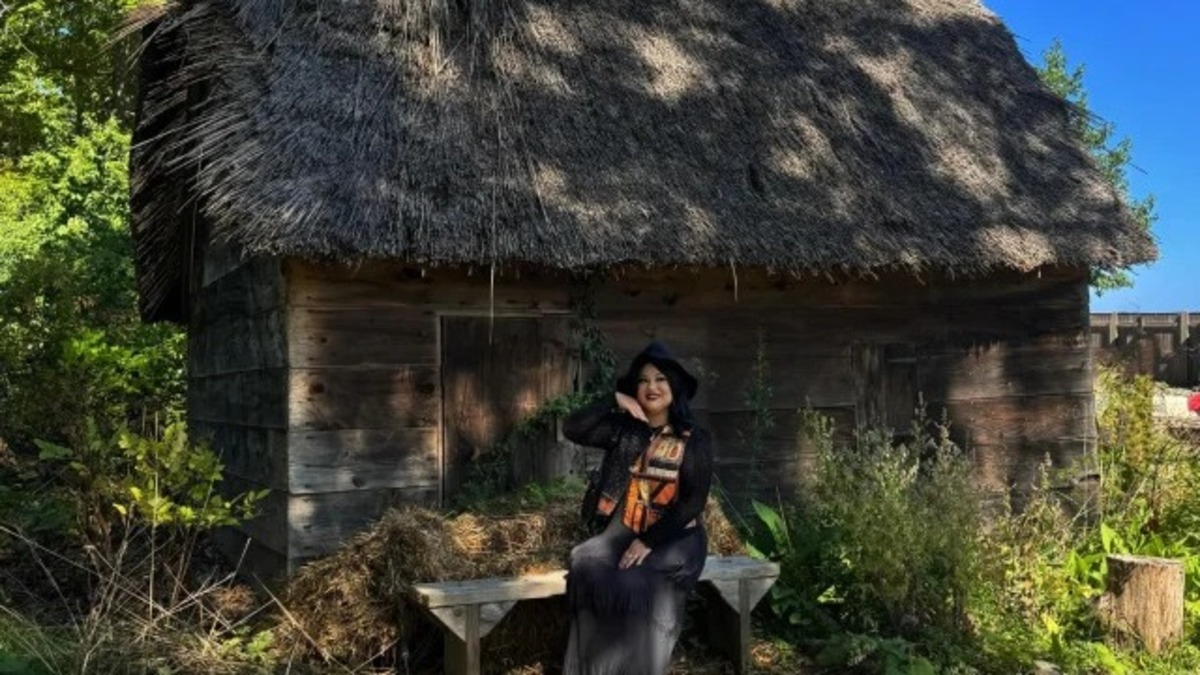
Salem, New Orleans, Gettysburg, Savannah, Charleston, Portland, Washington, D.C., and St. Augustine are drawing travellers into one of America’s strongest autumn tourism niches this October: historically rooted Halloween travel. Yet visitors arriving in 2026 face a markedly different experience from the free-wandering ghost tourism of previous decades. Salem is managing enormous October crowds and warning visitors against driving downtown, New Orleans controls entry to its best-known historic cemetery, Savannah limits cemetery access after hours, Gettysburg closes battlefield roads shortly after sunset, Charleston’s Old City Jail has emerged from a multimillion-dollar restoration, and St. Augustine channels night-time curiosity into bookable heritage experiences. For travellers, Halloween tourism is increasingly becoming a journey requiring reservations, transport planning and respect for protected historic places rather than simply an evening ghost hunt.
The change is significant for the US tourism industry. The strongest destinations in this market do not depend on temporary Halloween installations. Their appeal comes from Civil War battlefields, centuries-old cemeteries, colonial forts, former prisons, historic houses and neighbourhoods linked to genuine episodes of conflict, disease, death and social upheaval. The supernatural stories may attract the initial click or booking. The historic landscape is what gives these destinations longevity. For travel operators, destination marketers and travellers, however, 2026 brings an equally important message: authenticity increasingly comes with controlled access.
Salem Faces Extraordinary October Demand as More Than One Million Visitors Reshape Halloween Travel
Nowhere demonstrates the scale of American Halloween tourism more clearly than Salem, Massachusetts. The city remains inseparable from the 1692 Salem Witch Trials, one of the most infamous episodes in colonial American history. Historic buildings, burial grounds, memorials, museums and walking routes have turned that history into an internationally recognised October travel product.
But Salem‘s biggest challenge today is no longer convincing tourists to visit. It is moving enormous numbers of people through a compact historic city safely. City records presented in 2026 state that Salem received approximately 1.1 million visitors during October, alongside about $822,000 in direct revenue associated with its seasonal operations. The same city presentation recorded roughly $735,000 in direct costs, while indirect quarterly revenue associated with meals and lodging taxes was around $1.8 million.
Advertisement
Advertisement
That scale changes the visitor experience dramatically. Salem has explicitly told October travellers not to plan on driving into downtown, particularly at weekends. Police can close streets whenever crowd conditions make intervention necessary, while 2026 safety planning includes harder barriers, extensive police deployment and other crowd-management measures.
The city’s parking strategy has changed too. Temporary seasonal resident controls run from 15 September through 1 November 2026, and city garage, lot and meter rates can change during October weekends and holidays. Most significantly for repeat visitors, Salem’s city-operated October weekend shuttle is not running in 2026. Limited free parking remains available at 108 Jefferson Avenue on October weekends and Indigenous Peoples’ Day, but there is no shuttle connecting that lot with downtown.
Advertisement
Advertisement
What Salem travellers need to know
- Avoid relying on a car for central Salem during peak October weekends.
- Reserve major ticketed attractions well before travel.
- Build additional time around crowded streets and temporary closures.
- Check train and ferry schedules before leaving Boston.
- Do not assume previous years’ shuttle arrangements still apply in 2026.
Salem’s success has effectively transformed Halloween from a weekend festival into a major month-long tourism season.
New Orleans Puts Preservation Ahead of Free Access at St Louis Cemetery No. 1
New Orleans, Louisiana, delivers perhaps America’s most distinctive combination of burial culture, architecture, folklore and supernatural storytelling. Its historic cemeteries immediately set the city apart. High water tables and local burial traditions helped create rows of above-ground tombs, wall vaults and family structures that have become central to the city’s visual identity. Among them, St. Louis Cemetery No. 1 holds exceptional visitor interest.
Advertisement
Advertisement
Established in 1789, the cemetery contains the burial place associated with famed Voodoo practitioner Marie Laveau as well as other prominent New Orleanians. Yet travellers cannot simply enter independently. Under the present managed-visitation system, visitors must be accompanied by an authorised guide. Official small-group tours currently depart every 15 minutes between 9am and 3.45pm, with controlled access designed to protect what tourism authorities describe as a fragile, active historic burial site.
That is one of the most consequential practical changes for travellers building a New Orleans ghost itinerary. Another famous address requires an even clearer distinction between tourism interest and public access. The LaLaurie Mansion on Royal Street remains deeply embedded in French Quarter ghost-tour storytelling. Its reputation originates in the documented abuse of enslaved people associated with Delphine LaLaurie during the nineteenth century, subsequently surrounded by layers of paranormal lore.
Gettysburg Offers Powerful Ghost Lore but the Battlefield Has a Firm Sunset Rule
The stories attached to Gettysburg, Pennsylvania, differ fundamentally from New Orleans or Salem. Here, the landscape itself is the principal monument. The three-day Battle of Gettysburg in July 1863 became one of the defining confrontations of the American Civil War and produced devastating casualties. More than a century and a half later, the preserved battlefield carries a sombre atmosphere even before ghost stories enter the narrative.
Reports of phantom soldiers, distant gunfire, footsteps and unexplained voices have become part of Gettysburg’s tourism folklore. Commercial ghost walks have consequently become a familiar feature of the town. However, travellers must distinguish between ghost-tour businesses in Gettysburg and access to Gettysburg National Military Park.
Advertisement
Advertisement
The National Park Service states that battlefield roads, park grounds and Gettysburg National Cemetery are open from 30 minutes before sunrise until 30 minutes after sunset. Independent late-night exploration of the protected battlefield is therefore not a standard visitor option. From 1 March through 30 November, the Museum and Visitor Center operates daily from 8am to 5pm. Entrance to the park, National Cemetery and park buildings is free, while the museum, film and Cyclorama experience carry separate charges.
Savannah Balances Ghost Tourism With Cemetery Protection and Residential Life
Few American destinations photograph more naturally for autumn than Savannah, Georgia. Its squares, historic houses, live oaks and Spanish moss already create the Southern Gothic setting that other destinations might attempt to manufacture for Halloween. The history beneath that atmosphere is considerably more serious. Savannah endured repeated yellow fever outbreaks, military occupation and conflict during the Civil War era, destructive fires and generations of urban change. Those histories have become intertwined with supernatural stories throughout the Historic District. Colonial Park Cemetery remains one of the most prominent burial grounds for travellers staying downtown.
Further east, Bonaventure Cemetery extends across more than 100 acres on the site of the former Bonaventure Plantation overlooking the Wilmington River. The city states that the site became a private cemetery in 1846 and a public cemetery in 1907, and its landscape, sculpture, burials and folklore have made it a tourism destination for more than 150 years. But Halloween travellers need to watch the clock.
Bonaventure is generally open 8am to 5pm daily, and ordinary visitors cannot remain inside after the gates close. Savannah’s municipal rules specifically prohibit trespassing after hours. Permitted activities can operate under separate rules. Organised groups and commercial cemetery tours must register, while approved after-hours activities can be requested for periods between 5pm and 8pm. No approved cemetery activity is permitted between 8pm and 6am, and Colonial Park Cemetery does not permit after-hours activities.
Savannah also regulates walking-tour pressure in residential areas. Official city information lists 30 guests as the maximum for a walking tour, prohibits voice-amplification systems and requires tours to avoid blocking pavements or entering private property. The city has also examined additional restrictions because of late-night noise and residential concerns.
Charleston’s Famous Old City Jail Has Entered a New Tourism Era After Major Restoration
Charleston, South Carolina, brings another layer of American history into the Halloween market. Founded in 1670, the city carries histories involving colonial settlement, maritime commerce, slavery, piracy, war and centuries of architectural development. Among the sites most closely associated with Charleston’s ghost-tour industry is the Old City Jail at 21 Magazine Street. The property dates to the early nineteenth century and operated as a jail until the twentieth century. After decades of deterioration, the building underwent a dramatic rehabilitation.
Advertisement
Advertisement
Independent project reporting places the value of the rehabilitation at approximately $15 million, with work completed in January 2024. Official City of Charleston records confirm extensive renovation of the property, while the Preservation Society of Charleston now describes the former jail as the site of a dramatic transformation and recognised preservation project. The building’s prison history remains central to Charleston’s dark-tourism appeal, and commercial access to historic parts of the former jail continues through specific organised experiences rather than unrestricted walk-in entry.
Elsewhere, the Dock Street Theatre and Poogan’s Porch appear frequently in Charleston ghost lore. Stories associated with Poogan’s Porch include reported sightings of a former resident and tales of the restaurant’s namesake dog. These accounts belong to local folklore rather than verifiable evidence of paranormal events, an increasingly important distinction for heritage-based operators seeking historical credibility.
Portland’s Shanghai Tunnels Show Why Ghost Tourism Is Rewriting Its Own Legends
No destination in this group offers a more revealing collision between folklore and modern historical scrutiny than Portland, Oregon. For decades, stories have circulated about the so-called Shanghai Tunnels beneath Old Town Chinatown. According to popular versions of the legend, men were drugged or dropped through trapdoors into underground passages before being transported to ships and forced into maritime labour. The reality is more complicated.
The Oregon Encyclopedia notes that underground spaces and passages did exist for purposes including moving merchandise between basements and providing access connected with gambling and other businesses. However, researchers have not established that a citywide tunnel system routinely transported kidnapped sailors to ships. Today’s so-called tunnel visitors frequently enter historic basement spaces rather than a verified secret transportation network.
Evening tours of underground spaces generally require specialised bookings, and some products may apply age restrictions. Travellers should check individual operators rather than assuming every tunnel-branded experience offers identical access. Other Portland locations associated with supernatural storytelling include Witch’s Castle in Forest Park, Pittock Mansion and Lone Fir Cemetery, which contains tens of thousands of burials and provides another window into the city’s nineteenth-century development.
Washington D.C. Turns Political History Into an Unexpected Halloween Travel Route
Washington, D.C. rarely competes with Salem or New Orleans in conventional Halloween marketing, yet the US capital has one of America’s richest foundations for historical ghost tourism. More than two centuries of political turmoil, warfare, assassinations, disease outbreaks and national tragedy have generated extensive supernatural folklore.
Advertisement
Advertisement
The Octagon House is among the best-known stops. The building served as a temporary home for James and Dolley Madison after British forces burned the White House in 1814. Over time, stories emerged involving phantom footsteps, unexplained bells and unusual lights. Elsewhere, Ford’s Theatre offers a far more firmly documented connection with tragedy as the site where President Abraham Lincoln was shot in April 1865. Lafayette Square, Congressional Cemetery and historic areas around Capitol Hill can extend the theme into a broader heritage itinerary.
St. Augustine Turns After-Dark Curiosity Into Structured Ticketed Experiences
In St. Augustine, Florida, Halloween tourism reaches much further back into colonial history. The city is recognised as the oldest continuously occupied European-established settlement in the continental United States, and centuries of colonial competition, warfare, maritime activity and disease have produced an unusually dense historic environment.
At the centre stands Castillo de San Marcos National Monument. Travellers should understand the separation between access to the fort itself and its surrounding grounds. The National Park Service currently opens the fort structure from 9am until 5.15pm daily, while the surrounding monument grounds remain open from 6am to midnight. Standard admission to the fort is $15 for visitors aged 16 and above, valid for seven consecutive days. Children aged 15 and under enter free when accompanied by an adult. The site operates cashlessly, accepting credit and debit cards.
The strongest after-dark tourism product lies across the city at the St. Augustine Lighthouse & Maritime Museum. Its Dark of the Moon Ghost Experience combines historical interpretation, investigation time and — weather permitting — a climb of the lighthouse after dark. Visitors can also explore the Lightkeepers’ House and grounds using minimal lighting. The museum offers separate investigation-focused products and Lighthouse Ghost Tales for travellers primarily interested in historical stories.
What Travellers Need to Know Across America’s Leading Historic Halloween Destinations
| Destination | Historical foundation | Major Halloween draw | Critical 2026 visitor information |
|---|---|---|---|
| Salem, Massachusetts | 1692 witch trials | Witch-trial sites, museums, cemetery history | About 1.1 million October visitors reported; avoid driving downtown; no city weekend shuttle in 2026 |
| New Orleans, Louisiana | Colonial history, burial culture, Voodoo traditions | St. Louis Cemetery No. 1, French Quarter lore | Cemetery entry requires managed guided access; advance reservations recommended |
| Gettysburg, Pennsylvania | 1863 Battle of Gettysburg | Battlefield stories and ghost walks | Park roads and grounds open only until 30 minutes after sunset |
| Savannah, Georgia | Epidemics, Civil War history, historic cemeteries | Colonial Park and Bonaventure | Bonaventure generally closes at 5pm; after-hours visits require approval |
| Charleston, South Carolina | Colonial, maritime and prison history | Old City Jail, Dock Street Theatre | Former jail extensively restored; interior access is controlled |
| Portland, Oregon | Nineteenth-century maritime trade | Shanghai Tunnels folklore | Historical evidence does not support the legendary citywide kidnapping tunnel network |
| Washington, D.C. | Political, military and national history | Octagon House, Ford’s Theatre and cemetery lore | Works best as part of a wider heritage itinerary |
| St. Augustine, Florida | Spanish colonial and maritime history | Castillo and lighthouse ghost experiences | Fort admission $15 for adults; official ticketed lighthouse night experiences available |
Historic Halloween Travel Is Becoming a Reservation-First Tourism Market
The common thread linking these destinations in 2026 is not simply ghosts. It is management. The country’s most powerful Halloween tourism assets are genuine historic resources, and protecting them increasingly means limiting spontaneous access. Salem must manage streets carrying exceptional October pedestrian volumes. New Orleans has moved one of its most sensitive cemeteries towards controlled entry. Savannah regulates commercial tours while restricting access to active burial grounds. Gettysburg prevents uncontrolled night-time use of a nationally significant battlefield.
Charleston has preserved a deteriorating former prison through adaptive reuse. Portland is separating documented maritime history from decades of embellished folklore. St. Augustine is converting after-dark demand into supervised, ticketed heritage experiences. For tour operators and travel sellers, these developments make advance information more valuable than ever. A traveller who arrives without understanding access rules may discover that a cemetery has closed, a road has been blocked, a tour has sold out or a famous landmark is only viewable from outside.
Advertisement
Advertisement
Before travelling for Halloween in 2026, visitors should:
- Book popular walking and ghost tours before reaching the destination.
- Check official operating hours on the day of travel.
- Never assume cemeteries remain open after sunset.
- Use public transport where destination authorities advise against driving.
- Confirm whether a famous haunted property permits interior entry.
- Distinguish private commercial ghost tours from access to protected public heritage sites.
- Treat paranormal accounts as folklore unless supported by historical evidence.
- Allow extra time during peak October weekends.
- Follow cemetery, battlefield and historic-site preservation rules.
- Recheck schedules because seasonal operating arrangements can change.
Authentic History Is Now the Strongest Asset Behind US Halloween Tourism
The evolution of these destinations reveals something important about the future of Halloween travel. The most enduring products do not need artificial horror. Gettysburg already contains the landscape where thousands fought and died. Salem possesses physical connections to an episode that remains embedded in the American historical consciousness. New Orleans has burial architecture found almost nowhere else in the country.
Savannah and Charleston preserve urban environments spanning centuries. Portland provides a rare opportunity to explore how folklore itself develops. Washington contains national sites shaped by assassination, war and political crisis. St. Augustine layers colonial history, fortifications and maritime heritage into a destination more than four centuries in the making.
For travellers heading to Salem, New Orleans, Gettysburg, Savannah, Charleston, Portland, Washington, D.C., and St. Augustine in October 2026, the strongest itinerary therefore begins before arrival. Reserve first. Check transport. Confirm opening hours. Understand what can be entered and what can only be viewed. Separate verified history from local legend.
Advertisement
