
Wizz Air Delays Six Abu Dhabi Routes to January 2027 as EASA Security Guidance Disrupts Middle East Return

Published
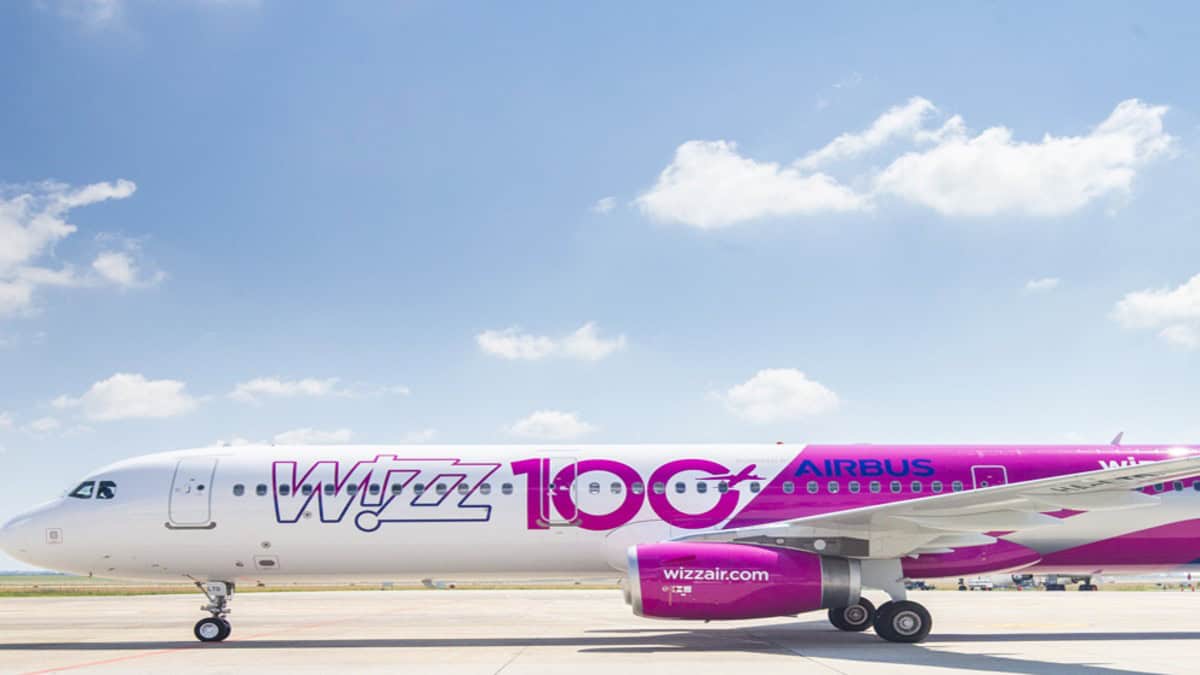
Image credit – Wizz Air
Wizz Air has postponed the restart of six Abu Dhabi flights from Central and Eastern Europe until 10 January 2027, disrupting a return that had been scheduled for late October 2026. The airline linked the decision to updated European aviation security guidance and the continuing need to avoid Iraqi airspace. That restriction forces longer routings and, on affected Airbus A321neo operations, can require technical refuelling stops. Wizz Air says the additional distance, fuel requirements and current fuel prices make the planned services commercially unviable for now. Passengers booked on the affected routes are being contacted directly about their options.
Advertisement
Advertisement
The decision changes a Middle East restoration programme that Wizz Air announced only weeks earlier. On 10 September, the low-cost carrier said it intended to progressively bring back 12 routes and 49 weekly flights linking nine European cities with Abu Dhabi, Dubai, Jeddah and Amman during the winter season. At that time, Wizz Air said the programme would provide about 470,000 seats.
The latest adjustment shows how volatile Middle East aviation planning remains. Airlines may place flights on sale months in advance, but security assessments, airspace availability and aircraft-range economics can still force significant timetable changes before departure.
Advertisement
Advertisement
Which Wizz Air Abu Dhabi Flights Have Been Delayed?
Six planned Abu Dhabi routes are affected by the postponement.
Wizz Air confirmed that services from Budapest, Katowice, Kraków, Sofia, Cluj-Napoca and Larnaca will now begin on 10 January 2027, rather than on their previously announced October dates.
Advertisement
Advertisement
Confirmed changes to the Abu Dhabi schedule
| European city | Country | Original restart | Previously announced weekly frequency | Revised start |
|---|---|---|---|---|
| Budapest | Hungary | 25 October 2026 | 4 | 10 January 2027 |
| Katowice | Poland | 25 October 2026 | 5 | 10 January 2027 |
| Kraków | Poland | 27 October 2026 | 3 | 10 January 2027 |
| Sofia | Bulgaria | 27 October 2026 | 3 | 10 January 2027 |
| Cluj-Napoca | Romania | 27 October 2026 | 2 | 10 January 2027 |
| Larnaca | Cyprus | 27 October 2026 | 3 | 10 January 2027 |
The original timetable came directly from Wizz Air’s 10 September winter restoration announcement. The airline was therefore planning 20 weekly flights across these six Abu Dhabi routes before the postponement.
Travellers should treat 10 January as the airline’s current planned launch date, not an unconditional guarantee. Wizz Air has said it will continue monitoring operational and security conditions.
Why Has Wizz Air Delayed Its Abu Dhabi Return?
The central problem is routing.
European Union Aviation Safety Agency guidance currently tells affected operators not to operate within Iraqi airspace, FIR Baghdad, at any altitude or flight level. EASA’s latest Iraq bulletin was revised on 30 September and remains valid until 16 November 2026 unless reviewed earlier.
The agency says Iraqi airspace continues to face high risks linked to the regional military situation, including drone and ballistic missile activity, air-defence operations and armed non-state groups.
For an airline, avoiding a large block of airspace does not necessarily make a flight impossible. It can, however, change its economics dramatically.
Advertisement
Advertisement
Wizz Air told The National that continuing Iraqi airspace restrictions require longer routes and technical refuelling stops for A321neo aircraft assigned to the affected services. Combined with fuel prices, the airline said those conditions make the routes commercially unviable at present.
That distinction matters. The postponement does not mean Abu Dhabi airport itself is closed, nor does EASA’s Iraq bulletin prohibit flights to the UAE. The issue is that avoiding restricted or high-risk airspace can significantly lengthen the journey between Central Europe and the Gulf.
Why Does Avoiding Iraq Matter So Much for an A321neo?
Wizz Air’s business model depends heavily on efficient utilisation of Airbus narrowbody aircraft.
Its A321neo can operate relatively long sectors, but airline range calculations are far more complex than a manufacturer’s published maximum range. Winds, payload, reserves, alternate airports, operating rules, diversion requirements and routing restrictions all influence how far an aircraft can fly economically on a given day.
When a direct or efficient track across Iraq becomes unavailable, a flight may need to detour around restricted airspace.
That can mean:
Advertisement
Advertisement
- more flying time;
- higher fuel burn;
- greater crew-time requirements;
- reduced aircraft utilisation;
- possible payload limitations;
- additional contingency fuel; and
- a technical stop for refuelling on some sectors.
For a low-cost airline selling seats at relatively low fares, these extra costs can undermine the economics of a route much faster than on a higher-yield long-haul service.
This helps explain why Wizz Air has postponed rather than simply operated every flight on a lengthy diversion.
What Did Wizz Air Originally Plan for the Middle East?
The Abu Dhabi routes formed part of a much larger winter comeback.
On 10 September 2026, Wizz Air announced a progressive restoration covering 12 routes, 49 weekly flights and 470,000 seats across the winter season. The plan involved four Middle Eastern destinations: Abu Dhabi, Dubai, Jeddah and Amman.
Wizz Air’s September restoration plan
The published schedule included:
- Larnaca–Abu Dhabi
- Sofia–Abu Dhabi
- Budapest–Abu Dhabi
- Cluj-Napoca–Abu Dhabi
- Kraków–Abu Dhabi
- Katowice–Abu Dhabi
- Budapest–Dubai
- Bucharest–Dubai
- Budapest–Jeddah
- Rome–Jeddah
- Milan–Jeddah
- Budapest–Amman
The airline had promoted the programme as a significant return to Gulf and Middle Eastern leisure markets after earlier disruptions.
Advertisement
Advertisement
However, the October postponement means the original winter plan can no longer be read as the schedule actually operating in full. The 470,000-seat figure was the capacity Wizz Air announced for the planned restoration, not a confirmed number of seats that will necessarily operate after subsequent suspensions and delays.
What Is Happening to Wizz Air’s Amman Flights?
Jordan has also been affected by the changing security picture.
EASA revised its Jordan Conflict Zone Information Bulletin on 30 September 2026, after renewed military activity. The agency advised operators not to fly within Jordan’s Amman Flight Information Region at any altitude or flight level.
EASA said renewed attacks in September indicated a deterioration in conditions and highlighted risks involving missile activity, drones, air-defence systems, interception and falling debris.
Following that change, Wizz Air said its Jordan operations were suspended until 25 October 2026.
The airline had only recently restored its Budapest–Amman service as part of the wider regional restart.
Advertisement
Advertisement
Again, the announced date represents the airline’s current intention. Aviation security guidance can change quickly if authorities reassess the threat level.
What Does EASA Actually Do With Conflict-Zone Advisories?
EASA uses Conflict Zone Information Bulletins, or CZIBs, to communicate aviation risks in areas identified as high risk.
The agency says these bulletins are produced using information considered necessary to help protect flights operating around conflict zones. They are relevant to operators subject to EU aviation rules and certain third-country operators flying under EASA authorisation.
As of early October, EASA’s active conflict-zone list includes advisories covering Iraq, Iran, Lebanon, Jordan, Saudi Arabia and the Persian Gulf and Gulf of Oman, among other areas globally.
The guidance is not static.
For example, EASA replaced a broader Middle East and Persian Gulf bulletin in July after assessing reduced short-term tensions. It then continued issuing individual advisories for areas where higher risks remained.
Advertisement
Advertisement
That dynamic approach explains why airline timetables can change even after a carrier has announced a restart.
Is Abu Dhabi Considered Unsafe for Flights?
The Wizz Air postponement should not be interpreted as an EASA ban on Abu Dhabi.
The airline’s explanation centres on the route required to reach the UAE, particularly avoidance of Iraqi airspace, rather than an announcement that Abu Dhabi International operations cannot take place.
This is an important distinction for travellers.
Other carriers may use different aircraft, departure airports or flight paths. They may also have different operating economics and security assessments.
A Wizz Air decision to delay a service therefore does not automatically mean every airline flying between Europe and Abu Dhabi must make the same decision.
Advertisement
Advertisement
What it does show is that conflict-zone restrictions can affect routes far beyond the country whose airspace is restricted.
How Does This Connect With Wizz Air Abu Dhabi’s Closure?
The delay comes after a major change in Wizz Air’s presence in the UAE.
Wizz Air Abu Dhabi, the locally based joint-venture airline, ended its operations on 1 September 2025 after around five years in the UAE capital.
The closure meant Wizz Air’s future Abu Dhabi connectivity would depend largely on services operated from its European network rather than aircraft permanently based in the emirate.
That makes the delayed European routes particularly significant.
The September 2026 announcement had represented an important step in rebuilding Wizz Air’s connection with Abu Dhabi after the closure of its local subsidiary.
Advertisement
Advertisement
Now, that return has been pushed into 2027 for the six affected markets.
Why Is Wizz Air Still Important for Abu Dhabi Travellers?
Wizz Air’s role differs from that of full-service carriers operating long-haul connections through the UAE.
The airline has traditionally focused on lower-cost, point-to-point connectivity from European cities, including markets that may not support daily widebody flights.
For passengers in Poland, Hungary, Romania, Bulgaria and Cyprus, direct Wizz Air services can remove the need for a connection at another European or Middle Eastern hub.
That can be attractive to leisure travellers, visiting friends and relatives, expatriate communities and cost-conscious passengers.
The postponed routes would also have provided Abu Dhabi with additional direct links into Central and Eastern Europe.
Advertisement
Advertisement
Their absence through the final months of 2026 means travellers may need to compare connecting alternatives or flights operated by other airlines.
Are the Dubai and Jeddah Services Also Delayed?
The confirmed 10 January postponement applies to the six named Abu Dhabi routes.
Wizz Air’s original September announcement also included Dubai and Jeddah flights. Some Jeddah services had already restarted earlier in September, while Budapest–Dubai and Bucharest–Dubai were listed for 25 October in the original schedule.
Travellers should not automatically assume that every route in the original 12-route package has moved to January.
Each route may face a different operating environment based on its origin, aircraft utilisation, airspace requirements and the latest security assessment.
Passengers should therefore check their exact flight number and booking rather than relying on the status of another Wizz Air Middle East route.
Advertisement
Advertisement
Why This Matters
The Wizz Air delay matters beyond six individual routes because it demonstrates how regional airspace restrictions are reshaping European connectivity to the Gulf.
A flight does not have to be travelling to Iraq to be affected by restrictions over Iraq.
Airlines design schedules around efficient corridors. When those corridors become unavailable, flights can become longer, use more fuel and require different operational planning.
For Wizz Air, the combination of detours, A321neo operating requirements and fuel costs has crossed the point at which these six Abu Dhabi services are commercially workable under present conditions.
For travellers, the immediate impact is simpler: journeys booked for late October, November or December may no longer operate as planned.
For Abu Dhabi, the delay temporarily slows the rebuilding of Wizz Air connectivity following the closure of Wizz Air Abu Dhabi in 2025.
Advertisement
Advertisement
The wider aviation significance is equally important. Airspace disruptions can undermine airline schedules even when origin and destination airports remain fully operational.
What Should Affected Wizz Air Passengers Do?
Wizz Air says customers affected by the changes will be informed directly about their available options.
Passengers should check communication from the airline and verify the status of their booking through Wizz Air’s official website or app.
Before Booking or Travelling
- Check whether your exact route has been postponed.
- Do not rely on the original September restart timetable.
- Confirm your latest departure date directly with Wizz Air.
- Review rebooking or refund options provided for a cancelled flight.
- Check onward hotels, transfers and separate-ticket flights before accepting a new itinerary.
- Avoid making non-refundable arrangements until your flight is confirmed.
- Monitor EASA and airline updates if travelling through the region.
- Remember that 10 January 2027 remains a planned restart date and could change if conditions change.
Passengers with separate connecting tickets should pay particular attention. If one booking changes, another airline or hotel may not automatically offer protection.
Could the January 2027 Restart Change Again?
Yes.
The revised start date is an announced plan based on the situation as it stands in early October 2026.
Advertisement
Advertisement
EASA says its Iraq bulletin remains valid until 16 November 2026 unless reviewed earlier. That does not mean Iraqi airspace will automatically become suitable for all relevant European operators on 17 November. A new assessment could extend, modify or withdraw the existing recommendation.
Wizz Air has also said it will continue monitoring conditions before the revised launch date.
The January timetable therefore depends on future security assessments, available routing, fuel economics and operational feasibility.
Travellers should treat the new date as the airline’s current schedule rather than an irreversible commitment.
Frequently Asked Questions
When will Wizz Air restart its delayed Abu Dhabi flights?
The six affected routes are currently scheduled to start on 10 January 2027. They were previously due to begin on 25 or 27 October 2026.
Which Wizz Air Abu Dhabi routes have been postponed?
The affected routes connect Abu Dhabi with Budapest, Katowice, Kraków, Sofia, Cluj-Napoca and Larnaca.
Advertisement
Advertisement
Why has Wizz Air postponed the flights?
Wizz Air says continued avoidance of Iraqi airspace creates longer routings and technical refuelling requirements for the A321neo. Together with current fuel prices, this makes the services commercially unviable under present conditions.
Is Abu Dhabi airspace closed?
The postponement is not based on an announced closure of Abu Dhabi itself. Wizz Air specifically cited the operational consequences of avoiding Iraqi airspace and updated EASA security guidance.
What should passengers with bookings do?
Wizz Air says affected customers will be contacted directly with their options. Passengers should also check their booking through official Wizz Air channels before making related travel commitments.
Wizz Air’s Abu Dhabi Comeback Is Delayed but Not Abandoned
Wizz Air’s return to Abu Dhabi has not been cancelled outright. It has been moved from the beginning of the northern winter season to 10 January 2027 for six European routes.
The reason illustrates the complicated reality facing airlines in the current Middle East operating environment.
Iraqi airspace restrictions do not simply create a line on a map that carriers can fly around without consequence. Detours consume fuel and time. Aircraft rotations change. Crew planning becomes harder. On a narrowbody operation built around low fares and high utilisation, those costs can determine whether a route remains viable.
Advertisement
Advertisement
The airline’s September plan was ambitious: 12 restored routes, 49 weekly flights and 470,000 winter seats across four Middle Eastern destinations. Weeks later, fresh EASA assessments forced part of that plan to change.
For passengers, that is the most useful lesson. In a region affected by rapidly changing airspace restrictions, an announced route is not the same as a guaranteed operating flight.
Wizz Air intends to restore the six Abu Dhabi links in January. Whether all of them return exactly as currently scheduled will depend on security guidance and operating conditions over the coming months.
Until then, travellers between Abu Dhabi and Budapest, Katowice, Kraków, Sofia, Cluj-Napoca and Larnaca should keep checking the airline’s latest timetable and avoid relying on the earlier October launch dates.
Advertisement
