
Why Are Budget Backpackers And Luxury Seekers In Cape Verde Transforming Global Travel Trends And Redefining Island Tourism Economics?

Published
Credit Image capeverde.com
New opportunities are in store for your country. You are presently part of Cape Verde, and soon your nation will develop and expand as a territory in its own right. Currently, the culture of your country is largely unknown. This will change as visitors will start to arrive and explore your shores. Visitors will stay on private, gated resorts and, unfortunately, not experience the real Cape Verde. It is forecast that from approximately 2024 to 2025, more developments will occur within your economy. Along with these developments, inequality within Cape Verde will also increase.
After these developments, the ‘arm’s length’ economy will also increase. Some visitors to Cape Verde will attempt to go beyond the gated resorts. Some will attempt to explore the country on a limited budget. Supporting and using the local and family owned means of transport will not only help tourists get around Cape Verde, but also provide positive impact tourism. Of course, tourists are always free to ignore these opportunities. Tourists can gain a positive impact on a culture and economy, or choose to ignore and be willfully blind to other cultures and economies.
An Introduction To The Evolving Island Landscape And Tourism Metrics
Advertisement
Advertisement
The picturesque West African archipelago experienced an unprecedented influx of international vacationers in recent years, propelling substantial national infrastructure growth. Comprehensive economic reports verified that overall hospitality activities directly and indirectly contributed up to 44.9% of GDP for the island state. Official records highlighted that 87.1% of foreign visits were arranged through external package providers, recording an average length of stay equal to 8.7 days along with daily expenditure levels averaging 9,014 escudos (approximately €82). Furthermore, long-term strategic projections set a target of 3.15 million arrivals by 2030, which authority figures expect will unlock over 30,000 jobs alongside CVE 4.4 billion (nearly $47 million) in state tax revenues.
However, global industry analysts noted that impressive arrival totals frequently obscure serious internal imbalances. Although top-line macroeconomic numbers expanded rapidly, direct financial participation across resident communities remained surprisingly constrained. Holidaymakers opting for all-inclusive arrangements seldom ventured outside gated environments to support local commercial markets. Consequently, international hospitality strategists began questioning whether massive volume strategies truly ensure long-term stability for vulnerable island territories. Travelers around the world are currently re-assessing their personal environmental footprints, increasingly favoring regional business ecosystems that directly empower local neighborhoods.
Advertisement
Advertisement
Examining High Economic Leakage And Policy Transformations
Industry studies demonstrated that relying almost exclusively on outsourced holiday arrangements leads to heavy financial leakage away from resident islanders. Because external corporate entities control the vast majority of all-inclusive package bookings, a substantial portion of customer expenditure never reaches the domestic economy. In response to this outflow, policy advisors stressed that future operating permits must be legally contingent upon mandatory local food procurement, domestic employment quotas, and strict freshwater management protocols. Without rigorous statutory directives, national economic figures will continue to showcase artificially inflated output totals while local residents derive negligible monetary benefits.
This economic reality serves as an urgent wake-up call for international travel planners and regional tourism boards globally. Travelers from Europe and North America increasingly demand ethical vacation spots that enforce equitable labor standards and active ecological conservation. As local regulatory bodies mandate strict sustainability guidelines, global resort chains must restructure their logistical pipelines to incorporate domestic agricultural suppliers and municipal artisans. As a result, international visitors enjoy authentic cultural immersion while host communities establish enduring, self-sustaining financial stability.
Comparing Independent Backpackers With High-End Resort Seekers
The volcanic territory exhibits a distinct dichotomy between two separate consumer categories functioning simultaneously across its regions. Along the sandy stretches of Sal and Boa Vista, expansive private resort complexes accommodate vast numbers of sunseekers seeking pre-arranged leisure packages. These vacationers predominantly remain within self-contained corporate grounds, spending minimal money inside nearby municipal districts. Consequently, even though these two specific islands handle the vast majority of overall tourist traffic, local merchants, artisans, and transport operators receive little direct income from the arriving crowds.
Conversely, budget-conscious independent explorers travelling through Santo Antão, São Vicente, and Santiago supply immediate financial support directly to neighborhood families. These self-directed travelers prioritize staying in family-run guesthouses, dining at indigenous eateries, and utilizing public island ferries or local minibuses. By selecting these decentralized options, independent visitors ensure their financial outlays remain firmly within the local economy. This sharp divergence proves how individual consumer decisions directly determine the financial health of developing island communities.
Advertisement
Advertisement
Cape Verde’s Dual Tourism Economy: Budget Backpackers vs Luxury Seekers
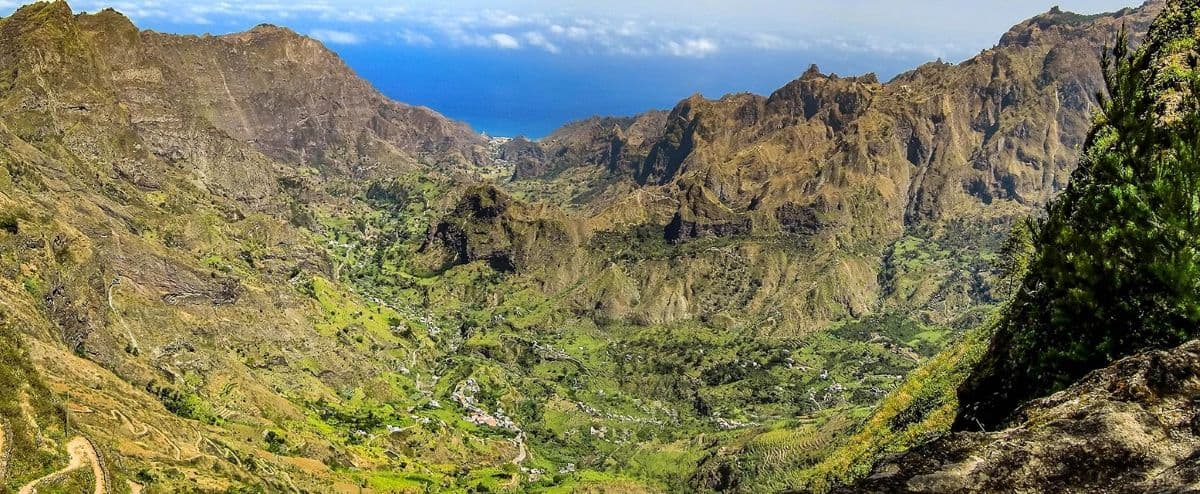
The profound operational division separating budget backpackers from luxury resort patrons shapes the overarching economic architecture across the island group. The sun-drenched terrains of Sal and neighboring Boa Vista function as high-density commercial engines, managing high volumes of leisure guests through standardized, package-based itineraries. In contrast, the mountainous topography of Santo Antão, the cultural hub of São Vicente, and the historically rich island of Santiago draw independent travelers eager to experience authentic heritage and natural terrain. This two-tier system effectively creates two parallel economic paradigms operating within one developing nation.
In the end, this dual model offers critical insights for the broader international travel sector as global consumer preferences transform. Destination managers must carefully balance large-scale commercial development against authentic, community-focused tourism initiatives. As modern travelers demand increasingly responsible and culturally enriching itineraries, island destinations worldwide must update their regulatory frameworks to safeguard native resources. By enforcing local corporate accountability while fostering independent exploration, the global travel industry can transform into a powerful engine for genuine community enrichment.
Analyzing Geographic Inequities Across The Primary Island Destinations
The physical footprint of visitor activity across the archipelago displays a profound geographic concentration. Official metrics reveal that Sal absorbs a massive 62% of all international arrivals, while neighboring Boa Vista captures 18%. Together, these two coastal powerhouses monopolize an astonishing 80% of total countrywide tourism. This structural centralization leaves secondary and rural islands—including Santo Antão, São Vicente, Santiago, and Fogo—sharing a mere 20% of total visitor traffic combined.
This extreme geographical skew creates sharp disparities in hospitality performance across regions. Commercial bed occupancy rates during peak travel seasons remain solid at 52% to 72% nationally, but these figures are heavily tilted toward full capacity on Sal and Boa Vista. Conversely, rural accommodations on peripheral islands struggle with occupancy rates dropping below 30%. Consequently, regional development remains heavily lopsided across the island nation.
Advertisement
Advertisement
Evaluating Source Market Concentrations And International Travel Behavior
The economic vulnerability of the domestic market is further amplified by a heavy reliance on a narrow geographic pool of inbound visitors. Outbound holidaymakers from the United Kingdom constitute the largest single source market, generating over 25% of all incoming international arrivals. When combined with neighboring European nations—namely Portugal, Germany, the Netherlands, and France—Western European markets collectively account for more than 85% of total tourist entries.
In addition to source market concentration, trip motivations remain remarkably uniform across arriving demographics. Fully 95% of all international guests report traveling exclusively for traditional sun-and-sand holidays. This high concentration underscores a critical absence of market diversification into corporate conferences, eco-educational programs, or specialized cultural heritage circuits, leaving the island economy exposed to changing European holiday preferences.
Navigating Domestic Transportation Deficits And Regional Isolation
Internal transit friction presents a major obstacle to spreading tourist expenditure beyond primary resort gateways. Domestic ferry linkages and inter-island air routes face recurring scheduling interruptions, technical delays, and strict passenger capacity limits. These infrastructural bottlenecks actively restrict the movement of independent travelers attempting to venture toward outer regions.
Furthermore, the high financial cost of internal transfers deters budget-conscious travelers and short-stay vacationers alike. Inter-island transit fees frequently range from €150 to €300 per passenger, adding prohibitive costs to multi-island itineraries. While the national average length of stay sits at 8.7 days, package resort guests typically remain entirely static on one single island, whereas independent travelers average visits to 3 to 4 islands per journey.
Advertisement
Advertisement
Assessing Ecological Pressures On Local Utility Infrastructure
The resource intensity of large-scale resort complexes imposes substantial ecological demands on vulnerable island ecosystems. On arid islands such as Sal, over 85% of municipal drinking water supply relies on energy-intensive reverse osmosis desalination facilities. This creates high operational costs and heavy fossil-fuel reliance to satisfy expanding tourist demands.
A stark operational contrast exists between large commercial hotels and smaller independent lodgings. High-end all-inclusive resort properties consume between 300 and 500 liters of water per guest daily, whereas independent travelers staying at local guesthouses or eco-lodges utilize a modest 70 to 100 liters per day. Additionally, high-density resort zones draw heavily on regional power grids and backup diesel generators, placing upward pressure on electricity tariffs for resident households.
Examining Labor Market Realities Within The Regional Hospitality Sector
While official projections target the creation of over 30,000 hospitality jobs by 2030, the quality and income potential of these roles remain a subject of ongoing debate. The vast majority of employment positions created by large resort developments consist of low-wage operational roles, such as housekeeping, groundskeeping, and basic security staff.
This employment pattern intersects with broader demographic challenges across the country. Overall national unemployment oscillates between 6.2% and 8.0%, but youth unemployment across non-tourist islands stays elevated, driving internal migration toward the hotel hubs of Sal. Furthermore, managerial and executive tiers within international resort properties are overwhelmingly staffed by foreign expatriates, limiting local career advancement to lower wage brackets.
Advertisement
Advertisement
Understanding State Revenue Collection And National Debt Reduction
Tax collections from tourism expansion serve as a vital fiscal pillar for the national government, with annual state tax revenue projections targeting CVE 4.4 billion (approximately $47 million). These inflows have assisted in stabilizing macroeconomic metrics, supporting a decline in net general government debt from over 120% of GDP in 2020 to between 75% and 84%.
Despite these fiscal gains, local reinvestment mechanisms remain noticeably constrained. Public records indicate that less than 15% of state-collected eco-taxes and tourism levies are directly re-allocated toward municipal infrastructure, historic preservation, or community development on non-resort islands. As a result, outer rural communities experience few tangible civic upgrades from national tourism expansion.
Quantifying Supply Chain Leakage And Agricultural Opportunities
A central structural issue in the island economy is the high rate of supply chain leakage associated with foreign resort operations. Industry data indicates that over 80% of food, beverages, and operational supplies consumed within major resort enclaves are imported via ocean freight rather than sourced from domestic producers.
This heavy import reliance directly impacts agricultural centers like Santiago and Santo Antão, which lose significant potential revenue due to corporate procurement preferences for standardized foreign imports. From an economic multiplier perspective, every €100 spent by an independent traveler generates approximately €60 to €70 in retained local income, whereas €100 spent on an all-inclusive package yields under €15 to €20 in direct domestic retention.
Advertisement
Advertisement
Balancing Cultural Authenticity Against Mass Commercialization
The rapid expansion of self-contained resort enclaves has created a growing divide between institutional tourism and the local cultural economy. Standard operational estimates show that less than 5% of all-inclusive package guests participate in off-site cultural activities, such as visiting municipal music venues, attending local craft workshops, or exploring historic sites.
Conversely, demand for authentic cultural experiences is driving steady expansion in the independent lodging sector. Family-run guesthouses and bed-and-breakfast establishments in cultural centers like São Vicente have expanded by 12% annually. Currently, local micro-enterprises—such as independent tour guides, family taxi operators, and traditional eateries—receive under 2% of their total annual revenues from resort-managed excursion packages, highlighting the need for greater integration between mass hospitality operations and local small businesses.
The Final Verdict
It can be understood that some view traveling as fleeing from day to day responsibilities. Instead it is of great importance to accept that with traveling we learn new things in different locations. There is always new things to learn as a traveler and new things to teach as a host.
Although Cape Verde is a highly developed country and a popular tourist destination, there are other countries which are less developed and also do not have popular tourist destinations. Decaying infrastructures in such countries are a clear indication that there is no effort to welcome tourists. It is very important to understand that living standards in less developed countries will be improved if travelers visit and spend their money there. Of course there are only a small number of people who have the moral courage and the strength to achieve what a good and noble man would not do. For example a good man will not find the moral courage to spend the night in the hotel of a less developed country. Having meal in a restaurant of a less developed country is not a moral act either.
Advertisement
