
India Pairs with China to accelerate a regional tourism transformation as Nepal’s domestic travel sector becomes a Four hundred billion rupees powerhouse, fuelled by youth travel expansion, household spending growth, and stronger domestic mobility

Published
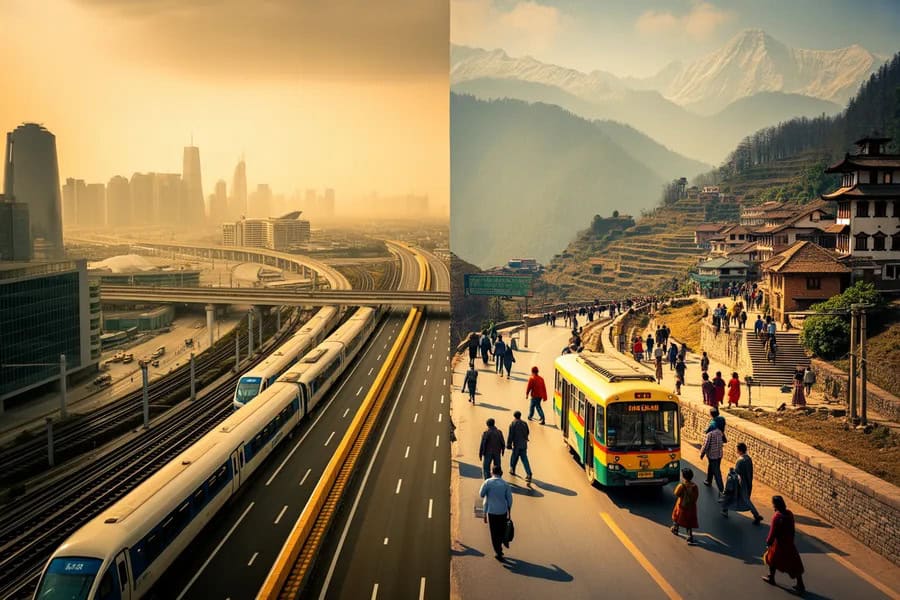
Image generated with Ai
India Pairs with China as regional tourism dynamics enter a new phase of acceleration, driven by strengthened travel connectivity, rising passenger demand, and expanding cross-border mobility frameworks that are reshaping Asia’s broader tourism flow patterns. This strategic alignment is amplifying outbound and inbound travel momentum across neighbouring destinations, supported by infrastructure upgrades, digital travel facilitation, and growing middle-class mobility across both markets. In parallel, Nepal is witnessing a powerful domestic tourism surge, with its internal travel economy scaling into a four hundred billion rupees powerhouse, underpinned by strong youth participation in leisure travel, rising household spending on experiences, and improved domestic connectivity that is making remote and urban destinations more accessible than ever before. Together, these shifts are redefining the regional tourism map into a more interconnected, demand-driven ecosystem powered by demographic strength and sustained travel expansion.
Nepal’s domestic tourism industry has evolved into a major economic driver, reshaping how citizens travel, spend, and engage with their own geography. What began as a post-disaster recovery response after the 2015 earthquake has matured into a structured, data-backed economic pillar. Today, domestic travel stands at the centre of Nepal’s tourism economy, contributing significantly to national GDP and influencing mobility patterns across generations.
Advertisement
Advertisement
The transformation is not isolated. It sits within a broader South Asian and Asian tourism context where regional connectivity, cross-border movement, and shifting travel behaviour between countries such as India and wider Asia continue to shape demand flows. Against this backdrop, Nepal’s domestic tourism sector has expanded into a four hundred billion rupees economic powerhouse.
Post-Disaster Recovery Strategy That Redefined Domestic Travel
Nepal launched the Ghumphir Barsha (Travel Year) initiative in 2016, one year after the devastating earthquake disrupted infrastructure and severely damaged international tourism inflows. The objective was clear: revive tourism demand by redirecting attention toward domestic travel.
Advertisement
Advertisement
The campaign marked a structural turning point. Instead of depending solely on foreign arrivals, Nepal actively promoted internal travel as an economic stabiliser. This shift encouraged citizens to rediscover their own country and reactivated dormant tourism circuits.
Advertisement
Advertisement
As mobility improved, domestic tourism moved beyond a temporary recovery measure and evolved into a sustained behavioural change across society.
Expansion of Travel Networks and Emerging Destinations
Domestic tourism rapidly expanded beyond traditional destinations such as Pokhara and Chitwan. Travellers began exploring remote regions, mountain corridors, and religious destinations that were previously under-visited.
Motorcycle and road-based travel increased significantly after connectivity improvements along routes such as Beni to Jomsom. This development opened access to high-altitude tourism zones and strengthened adventure travel culture.
Key destinations that gained strong domestic traction include:
- Lumbini, a major religious and cultural site
- Rara Lake, a remote natural attraction
- Mustang region, known for high-altitude landscapes
- Kathmandu Valley circuit destinations
- Chitwan national tourism zones
- Pokhara leisure corridor
Youth travellers became the primary drivers of this expansion. Travel behaviour shifted from occasional movement to frequent exploration, particularly among younger generations.
Advertisement
Advertisement
Domestic Tourism as a Four Hundred Billion Rupees Economic Engine
According to Nepal’s first National Domestic Tourism Survey conducted by the National Statistics Office, domestic tourism now contributes 2.65 percent to national GDP.
Total tourism-related expenditure by Nepali residents, including domestic and outbound travel, reached approximately four hundred fifty-nine point five billion rupees during fiscal year 2024–25.
Domestic tourism alone accounts for approximately three hundred ninety-five point four two billion rupees, making it the dominant component of Nepal’s travel economy.
Spending breakdown includes:
- Same-day domestic travel: ninety point nine eight billion rupees
- Overnight domestic travel: three hundred four point four four billion rupees
Overnight tourism dominates spending patterns, generating more than three times the economic value of day trips.
Advertisement
Advertisement
This reflects a clear shift toward longer stays, deeper regional exploration, and higher tourism consumption per trip.
Outbound Travel and Cross-Border Mobility Trends
Outbound tourism contributes a smaller but significant share to total travel expenditure, recorded at sixty-three point six four billion rupees.
This includes:
- Overnight international travel: forty-seven point nine seven billion rupees
- Same-day cross-border travel: fifteen point six seven billion rupees
A major portion of same-day outbound travel is directed toward India, driven by:
- Cross-border shopping
- Family visits
- Religious movement
- Short-distance mobility enabled by open border access
India remains the primary external travel destination influencing Nepal’s outbound travel behaviour.
Advertisement
Advertisement
Country-Level Travel Context
The tourism system involving Nepal is shaped by limited but important cross-border linkages.
Countries involved in the travel ecosystem:
- Nepal – Core domestic tourism economy and primary data source
- India – Main cross-border destination for same-day and short-term outbound travel, especially for shopping and family visits
These two countries form the central axis of Nepal’s travel economy dynamics, particularly in terms of mobility, expenditure flow, and seasonal travel peaks.
Who Travels: Generational Shift in Mobility
Nepal’s travel behaviour is strongly shaped by generational patterns. Younger populations dominate tourism participation, reflecting lifestyle-driven mobility and higher travel frequency.
Key generational breakdown:
- Gen Z represents the largest share of travellers
- Gen Alpha contributes a significant portion of family-based travel
- Gen Y remains active but comparatively less frequent
- Older generations show declining travel participation
Travel frequency decreases steadily with age, confirming that youth mobility is the strongest driver of domestic tourism expansion.
Advertisement
Advertisement
Household Participation and National Travel Penetration
Out of approximately 6.91 million households, around 3.62 million households participated in domestic tourism activities.
This represents 52.4 percent of total households, indicating that more than half the country engages in tourism-related travel annually.
Household travel behaviour includes:
- One overnight trip per year: around one-third of households
- Two overnight trips: around one-third
- Three or more trips: remaining households
This distribution shows balanced but active participation across income groups and regions.
Purpose-Driven Travel Economy
Travel in Nepal is driven by multiple purposes, each contributing differently to overall expenditure patterns.
Advertisement
Advertisement
Same-day travel is dominated by:
- Shopping as the leading purpose
- Healthcare visits
- Social visits to friends and relatives
Overnight travel is primarily driven by:
- Visiting friends and relatives (dominant purpose)
- Leisure and holiday travel
- Religious tourism
- Education and training
- Business travel
Cross-border travel into India is heavily influenced by shopping activity, while overnight international travel is more diversified across social, health, and religious purposes.
Seasonal and Regional Travel Patterns
Travel activity peaks between September and November, aligning with major festivals and favourable weather conditions.
This period accounts for:
Advertisement
Advertisement
- Over half of same-day outbound trips
- One-third of overnight outbound trips
Regional variation is significant:
- Some provinces record long average stays exceeding eight days
- Others average just over three days per trip
- Gandaki leads in travel frequency
- Remote provinces show lower mobility rates
The national average overnight trip duration stands at just over five days.
Spending Behaviour and Transport Systems
Health-related travel generates the highest expenditure share across all categories. Shopping follows closely, while adventure tourism remains minimal in total spending.
Transport usage patterns include:
- Public transport: dominant mode across nearly 70 percent of trips
- Air transport: used primarily for business and education travel
- Private vehicles: preferred for health and religious journeys
Health travel also records the highest per-trip spending, followed by religious travel.
Advertisement
Advertisement
Key Domestic Tourism Destinations
The most visited districts in Nepal include:
- Kathmandu: leading for business, healthcare, and education travel
- Chitwan: major leisure and wildlife tourism hub
- Kaski (Pokhara): primary destination for holidays and recreation
These destinations form the backbone of Nepal’s domestic tourism ecosystem.
Nepal’s domestic tourism industry has transitioned from a post-earthquake recovery initiative into a long-term economic engine. It now operates as a four hundred billion rupees powerhouse, shaping household spending patterns, strengthening regional economies, and redefining national mobility behaviour.
India pairs with China as improved connectivity, rising cross-border mobility, and expanding middle-class travel demand begin reshaping Asia’s tourism flows into a more integrated regional network, while Nepal simultaneously transforms its domestic travel sector into a four hundred billion rupees economy driven by youth travel growth, higher household spending, and stronger internal mobility, together accelerating a broader regional tourism shift powered by demand expansion and infrastructure-led accessibility.
The rise of youth-driven travel, combined with strong household participation and improved connectivity, has permanently embedded domestic tourism into Nepal’s economic structure.
Advertisement
