
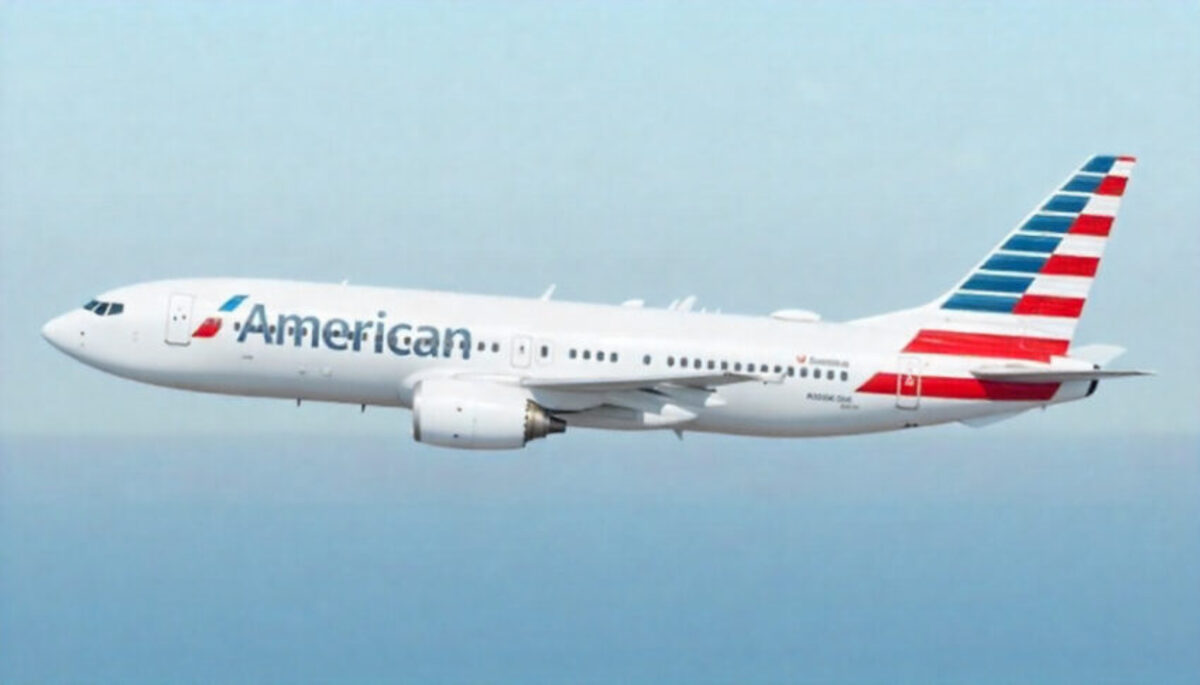
American Airlines and other carriers test a new smart AI flight routes to reduce the climate warming effect of contrails. Modern aviation is under increasing scrutiny, so airlines rush to use advanced technology to neutralize non-CO2 climate warming. American Airlines and other carriers test smart AI flight routes to cut climate-warming contrails across skies, using predictive algorithms to bypass ice supersaturated moisture pockets successfully.
American Airlines and other carriers test a new smart AI flight routes to reduce the climate warming effect of contrails because condensation trails trap a significant amount of upper-atmosphere heat. Artificial intelligence models now predict those hazardous atmospheric humidity zones with pinpoint accuracy before takeoff. Flight dispatchers readily incorporate these predictive software tools into their daily operational workflow to protect the environment. Thus, commercial aviation is now quickly transforming pilots’ navigating delicate high-altitude airspaces globally.
Advertisement
Airlines and aviation authorities are actively operationalizing algorithmic contrail mitigation and climate-optimized flight routing to target non-CO2 warming effects, utilizing real-time high-altitude weather models and minor altitude adjustments of 1,000 to 2,000 feet to avoid ice-supersaturated air masses before departure.
Condensation trails form when hot and humid jet exhaust mixes with cold air containing ice-supersaturated regions in the upper atmosphere. Water vapor immediately freezes around microscopic soot particles to create persistent artificial cirrus clouds that trap outgoing longwave radiation overnight. Without proactive mitigation from flight dispatchers, these trapped thermal blankets account for roughly one-third of the total climate impact generated by commercial aviation. Subsequent academic studies confirm that this specific warming effect roughly matches the total historical carbon dioxide emissions produced by the global aviation sector over decades. Aviation researchers emphasize that addressing these non-CO2 drivers represents the fastest route to mitigating the industry’s near-term climate footprint significantly.
Advertisement
Advertisement
“This brilliant technological leap proves that modern aviation does not need to wait decades for revolutionary propulsion systems to make a profound environmental difference. By simply tweaking flight altitudes and leveraging cutting-edge predictive artificial intelligence, airlines are successfully dissolving one-third of their invisible climate footprint overnight. It is a stunning masterclass in operational efficiency that demonstrates how minor, intelligent adjustments can yield monumental victories for our fragile upper atmosphere.”
— Anup Kumar Keshan, Founder and Editor-in-Chief, Travel And Tour World
Modern flight operations integrate sophisticated meteorological software that ingests real-time satellite data and numerical weather prediction models to map atmospheric humidity profiles accurately. Flight dispatchers identify vulnerable high-altitude corridors where ice-supersaturated conditions permit persistent contrail formation to threaten the local thermal balance during cruise phases. Armed with these precise forecasts, operations teams subtly modify pre-flight routing plans to route aircraft around these invisible atmospheric traps horizontally. Automated machine learning algorithms continuously refine these predictive maps to ensure commercial flights bypass hazardous moisture pockets without causing severe navigational delays.
Altering a commercial jetliner’s cruising altitude by just one or two thousand feet can entirely prevent a persistent contrail from forming in the upper troposphere. Because ice-supersaturated regions are often confined to very narrow vertical bands, minor nudges upwards or downwards place the aircraft into dry air masses. This tactical vertical shift ensures that engine exhaust dissipates harmlessly instead of crystallizing into persistent warming cirrus formations that trap planetary heat. Airlines find this approach highly attractive because it avoids the massive fuel burn penalties associated with completely redesigning traditional horizontal airways.
Advertisement
Advertisement
Diverting aircraft or modifying optimal flight levels occasionally introduces minor operational hurdles that slightly increase total fuel consumption on specific long-haul sectors. Comprehensive climate economics demonstrate that the radiative forcing avoided by preventing a single persistent contrail overwhelmingly outweighs the carbon cost of extra fuel. Airlines typically accept a tiny one to two percent fuel penalty on treated routes because the net climate benefit remains orders of magnitude greater. Researchers continue to optimize these routing algorithms to ensure that fuel efficiency and climate mitigation complement one another seamlessly across global networks.
For detailed regulatory standards and scientific frameworks on aviation emissions and contrail mitigation, you can review official guidance provided by the UK Government Aviation Publications.
The United States has integrated contrail-avoidance prediction indexes directly into the operational workflows of major commercial network carriers and domestic flight dispatchers. France and other European nations deploy experimental routing algorithms through regional Air Navigation Service Providers to minimize high-altitude climate forcing across congested airspace. Meanwhile, Japan and Germany collaborate through specialized research bodies to pioneer satellite-tracked ice-supersaturated region mapping that guides real-time flight path modifications. These coordinated international efforts prove that algorithmic mitigation can transition smoothly from experimental academic studies into daily commercial air traffic management.
Scaling algorithmic contrail mitigation across international air corridors offers a revolutionary pathway to slash near-term aviation warming nearly in half over the next twenty-five years. Regulatory bodies and environmental watchdogs now view these operational software updates as a vital complement to long-term technological transitions like sustainable aviation fuels. As artificial intelligence models become increasingly sophisticated, airlines will soon execute automated contrail avoidance on virtually every commercial flight worldwide. This quiet digital transformation inside airline dispatch offices proves that smarter routing is just as important as cleaner propulsion for protecting our atmosphere.Country / Region Key Organisation / Partners Primary Focus of Initiative Operational Approach United Kingdom Google UK, NATS, Met Office, Imperial College London, Contrails.org Operation Blue Skies: Oceanic airspace-scale contrail mitigation across the Shanwick corridor. Coordinating ~10,000 flights annually using AI forecasting and minor altitude adjustments (approx. 2,000 ft). United States Major Network Carriers (e.g., American Airlines), MIT, Flight Planning Providers Commercial dispatch workflow integration and tactical flight-level optimization. Integrating predictive contrail-avoidance indexes directly into long-haul flight planning software. France National ANSPs, Regional Airlines, Aerospace Technology firms (Thales) Experimental routing algorithms for dense European air corridors. Deploying dynamic air traffic management trials to minimize high-altitude climate forcing. Germany Aviation Research Bodies, Academic Institutions Satellite-tracked ice-supersaturated region (ISSR) mapping. Developing high-resolution atmospheric models to guide real-time flight path modifications. Japan National Airlines, National Research Agencies North Pacific meteorological avoidance trials. Testing cross-oceanic routing alternatives to prevent persistent cirrus cloud formation.
American Airlines and other companies are testing smart AI flight routes to reduce climate-warming contrails across skies. Recent trials across the Atlantic show that large-scale reductions in the amount of cirrus clouds are possible through making minor altitudinal adjustments in order to avoid excessive fuel consumption. Because of this, global regulators understand that routing algorithms represent an absolutely essential and cheap addition to any strategy of sustainable future development. In the end, smart digital solutions facilitate near-term climate goals, making possible for industry to comply with fast approaching deadlines for emissions reductions without waiting for new aircraft engines to be developed. American Airlines and other carriers test smart AI flight routes to cut climate-warming contrails across skies because engine exhaust soot freezes inside humid upper atmosphere pockets to trap thermal radiation, which the industry answers through using machine learning prediction tools which allow them to maneuver around such moisture traps. The main reason behind this is that minor adjustments of plane trajectory can prevent up to sixty percent of warming contrails, which is immediately conducive towards sustainability goals without incurring any massive costs, as a result of which operators opt for smart routing.
Advertisement
Tags: AI aviation, climate change, contrails, Flight routing, Net Zero
Advertisement
Advertisement













Sunday, September 6, 2026

Sunday, September 6, 2026

Sunday, September 6, 2026

Sunday, September 6, 2026

Saturday, September 5, 2026

Saturday, September 5, 2026

Sunday, September 6, 2026

Saturday, September 5, 2026



