
Rwanda Turns Cycling Races into Community Rides and Lake Kivu Adventures

Updated
Published
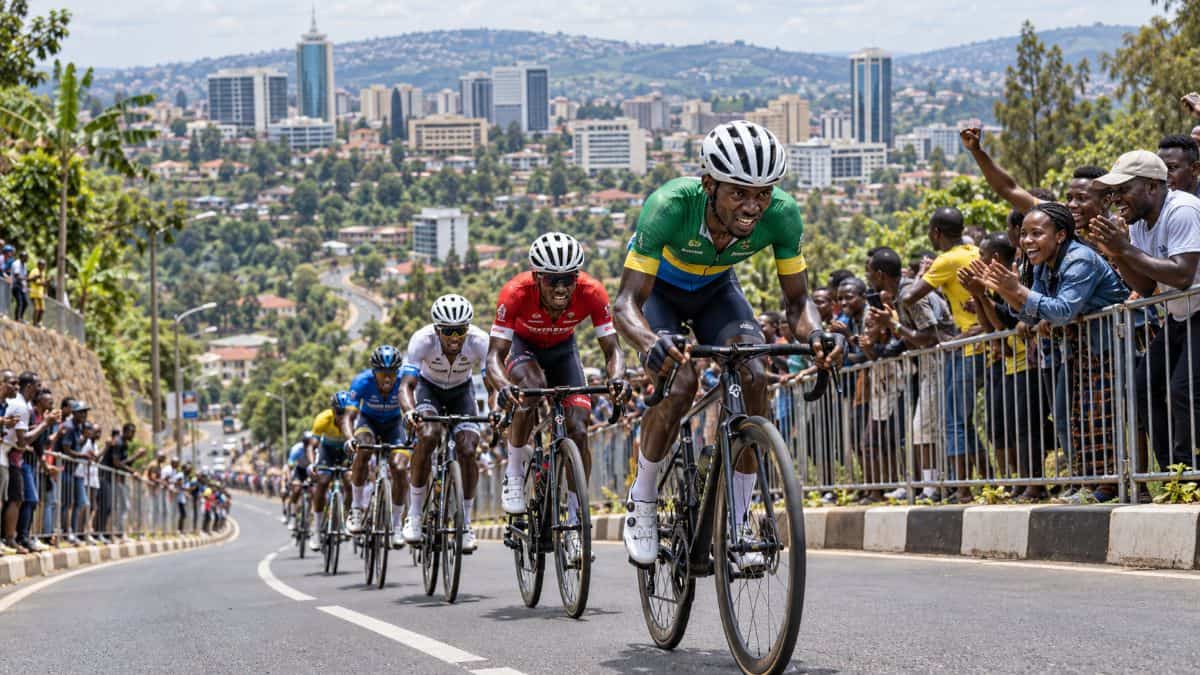
Image generated with Ai
Cycling races in Rwanda have been made into community races and Lake Kivu explorations through the inclusion of travelers in activities beyond the professional race route. For instance, during the 2026 Tour du Rwanda, public races were arranged in Kigali and Rubavu to bring people closer to the event. Rwanda also encourages travelers to use the 227 km Congo Nile Trail which is next to the Lake Kivu for riding either a specific segment or a longer distance. The two examples demonstrate how sport can be combined with exploration in Rwanda. Travellers are however advised to check relevant guidelines before embarking on such a trip along the border of the Democratic Republic of Congo, specifically the Rusizi District.
Why the Cape Epic announcement matters now
The latest Cape Epic news is more than a date for a future race. The event organiser announced a new route for 2027 and an extension of Absa’s title partnership through 2032. The race is scheduled to run from 21 to 28 March 2027. It will pass through the Western Cape, including Ceres, Tulbagh and Wellington.
Advertisement
Advertisement
That gives tourism businesses time to plan around future editions. Accommodation providers, restaurants, bike services and local guides could explore ways to welcome riders and their supporters. But the announcement does not prove that bookings or jobs have already increased. Those results would need separate evidence.
The route also gives the story a wider map. Instead of focusing only on a starting line or finish, it can look at the communities along the way. The event organiser says local communities, landowners and trail builders help make the route possible. Their role points to a valuable question: how much of the visitor spending reaches the places hosting the race?
Advertisement
Advertisement
Cape Town shows how participation can attract visitors
South Africa’s Cape Town Cycle Tour offers another example of the draw of mass participation. Before the 2026 event, the City of Cape Town said it expected about 30,000 cyclists. Around 10,000 were expected to travel from outside the city. In 2025, 10,091 travelling cyclists came from more than 60 countries.
These figures help show the event’s reach. They also need careful wording. The 2026 figure was an estimate, not a final count. And “from outside Cape Town” includes South African visitors as well as international travellers. It does not mean 10,000 overseas tourists.
Advertisement
Advertisement
Still, a large travelling field gives the city a clear opportunity. Cyclists may need places to stay, meals, bicycle repairs and transport. Family members or friends may seek other activities while riders prepare or compete. These are practical ways an event can connect to tourism. To show the full impact, a report would need data on visitor origins, nights stayed and spending.
The Cape’s routes can keep the journey moving
A cycling holiday need not end when a race finishes. The Western Cape’s official tourism agency promotes routes that let visitors explore beyond the event circuit.
Its Cross Cape Cycle Route runs from Plettenberg Bay to Stellenbosch. Riders can choose how much of the route to cover. The journey takes in coastal towns, mountain passes, inland villages and places to stay along the way.
The agency also promotes Cycle Tour 364 around the Cape Peninsula. Its route description includes places such as Hout Bay, Simon’s Town and Noordhoek, alongside coastal roads and familiar landmarks.
These routes support a broader tourism story. A visitor who comes for an event might add a few days to explore the region. That possibility should not be reported as a proven trend without booking data. But the routes give travellers a practical starting point for planning more than a race weekend.
Public rides helped make Rwanda’s 2026 Tour more accessible
Rwanda’s 2026 Tour du Rwanda offered opportunities for people to ride as well as watch. The organisers advertised a non-competitive community ride in Rubavu on 26 February. The route was expected to cover 15 to 20 kilometres near Lake Kivu. The event was open to the public, and bicycle rentals were expected at the start.
Advertisement
Advertisement
Kigali’s final-day programme also included a public ride. Organisers listed an indicative distance of 10 to 15 kilometres. They described it as a non-competitive event for the public, with no racing licence required. The day also included youth racing and the professional final stage.
This format offers a useful way to connect a major race with local participation. A visitor could join a short ride before watching the professionals. Residents could take part without entering an elite competition. However, the published programme does not establish how many people joined or how much they spent. Those details would show whether the idea produced a wider tourism benefit.
Rwanda’s cycling story stretches beyond the capital
Rwanda’s appeal for cyclists does not begin and end in Kigali. Visit Rwanda promotes the 227-kilometre Congo Nile Trail, which runs between Rubavu and Rusizi along the eastern side of Lake Kivu. The tourism agency says the journey takes about five days, while visitors with less time can ride individual stages.
That format may suit travellers who want a slower trip. A multi-day route can create reasons to stay overnight and visit more than one place. The key questions for local tourism are practical: where do riders sleep, who guides them, and how can they move their bags or bicycles between stages?
The official route information confirms that Rwanda promotes this experience. It does not tell us how many tourists complete the trail, how much money stays in nearby communities or how many people return. Those are important gaps. The article should present the trail as an established tourism offer, then seek local evidence about who benefits from it.
Kigali’s championship legacy includes sport development
Rwanda’s 2025 UCI Road World Championships created a major moment for African cycling. It was the first time the Road World Championships had been held on the continent. The event also formed part of a wider effort to develop cycling in Rwanda and across the region.
Advertisement
Advertisement
The UCI’s account of its partnership with Rwanda’s cycling federation identifies specific examples of that work. It says the programme supported youth development, coach training, race timing and communication systems. It also reports that riders from 36 African countries took part in the Kigali championships. They made up 33.64 per cent of participants.
These details offer a stronger way to discuss legacy than relying only on a slogan. The article can examine how a major event may leave behind skills and systems that help future races. It should keep those sporting outcomes separate from tourism income. Better coaching is valuable, but it does not by itself prove that visitor spending has risen.
Local benefits need evidence beyond big promises
Event organisers and public bodies often describe the value of sport in broad terms. Rwanda’s Ministry of Sports said communities lined the roads during the 2026 Tour du Rwanda and that businesses thrived along the route. The statement does not provide a spending total or measure how the money was shared.
Cape Town’s official events platform projected an economic impact of around R500 million for the 2026 Cycle Tour. This should be identified as a projection, not as an audited figure or confirmed tourism revenue.
A careful article can still explain why these events matter. Riders and spectators may spend on accommodation, meals, transport and equipment. Host towns may gain attention from images and broadcasts. But the scale and reach of those benefits depend on evidence. Useful data would show visitor spending, length of stay, business participation and the share reaching smaller communities.
A cycling event also depends on transport and access
Getting to a race is part of the visitor experience. For the 2026 Cape Town Cycle Tour, South Africa’s government described special train services and listed return fares of R50 for cyclists and R20 for spectators. It also provided park-and-ride information for several stations.
Advertisement
Advertisement
This matters because major cycling events can bring road closures and heavy traffic. Public transport gives some visitors another way to reach the course. It also helps explain how event organisers and local authorities manage a busy race day.
However, cycling should not automatically be labelled a low-carbon holiday. A complete environmental assessment would need to account for how visitors travel to the country, as well as accommodation, support vehicles and event operations. Transport planning is one part of the picture, not proof of the total environmental impact.
Travel advice matters for Rwanda’s Lake Kivu route
The Congo Nile Trail provides an important link between Rwanda’s cycling offer and its countryside. But the trail’s southern endpoint requires careful checking. As of 5 October 2026, the UK Foreign, Commonwealth & Development Office advises against all but essential travel to parts of Rusizi District within 10 kilometres of the Democratic Republic of Congo border. The advice includes Rwandan islands in Lake Kivu and Kamembe Airport. It warns that border crossings may close at short notice.
That is a specific regional warning. It should not be presented as applying to all of Rwanda. It does mean that a visitor considering the trail should check the latest official advice and confirm local conditions before setting out.
This detail also strengthens the travel reporting. A useful article should describe the route and its appeal while making clear that conditions can change. It should not recommend the full trail without addressing current travel guidance.
Africa’s cycling tourism case is promising but still needs proof
Tourism by cycle is promoted in South Africa and Rwanda because races attract visitors and encourage them to discover more outside of their race courses. The Cape Epic obtains sponsorship until 2032 whereas its 2027 course will pass through various spots in the Western Cape province. In addition, in Rwanda, professional races will go hand in hand with a recreational cycle ride and an extensive cycling trail. This case indicates that there may be an interesting story about tourism by cycle, but no proof that money from tourists goes to the local economy.
Advertisement
