
Netherlands and France Face Airline Scrutiny as US Fines Four Hundred Twenty Five Thousand Dollars Over Iraq Airspace Breaches

Published
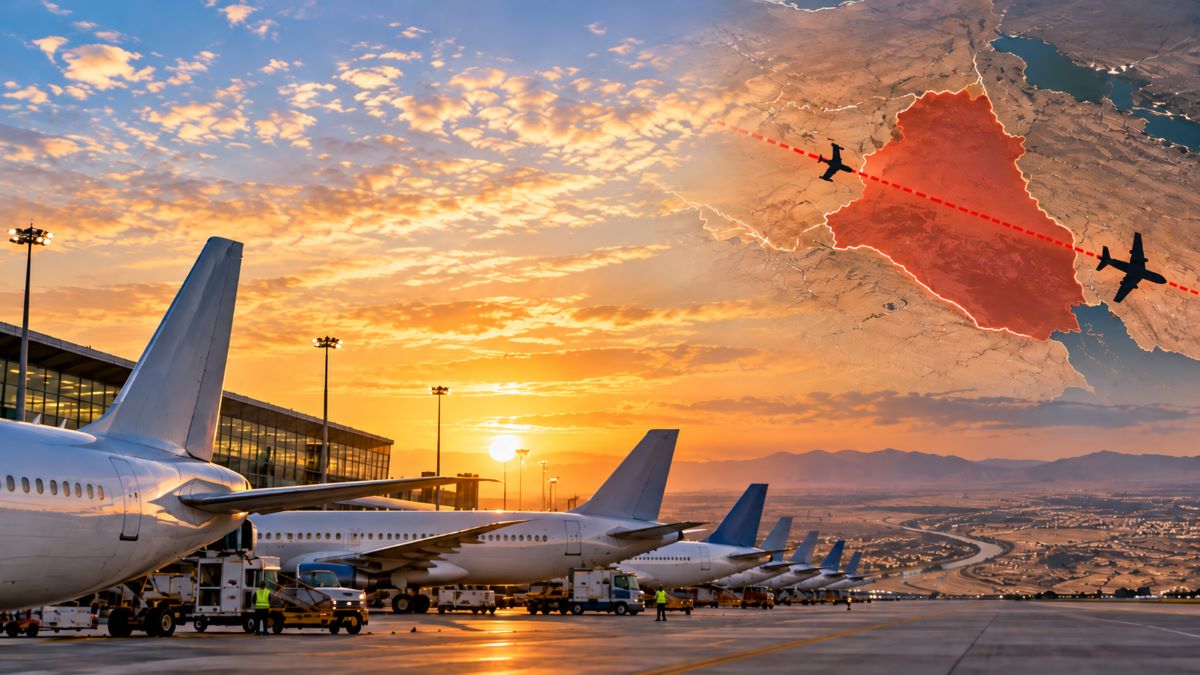
Netherlands and France face airline scrutiny as the US assesses fines totalling four hundred twenty five thousand dollars ($425,000) over Iraq airspace breaches involving KLM and Air France. Announced on 23 October 2026, the action concerns Delta-coded flights through FAA-prohibited airspace below Flight Level 320 during 2022–2025. These operations breached conditions attached to the airlines’ US codeshare permissions. For travellers, the case highlights why identifying the operating airline matters—and why penalties against a carrier must be considered separately from passengers’ refund rights.
Air France and KLM Fines: The Numbers That Matter
DOT’s Office of Aviation Consumer Protection investigated flights through the Baghdad Flight Information Region, identified as ORBB. The records show different operating periods and financial consequences for each carrier.
Advertisement
Advertisement
| Case detail | Air France | KLM |
|---|---|---|
| Flights identified | More than 30 | More than 100 |
| Operating period | April 2022–November 2025 | January 2022–May 2025 |
| Assessed penalty | $105,000 | $320,000 |
| Payable within 60 days | $65,000 | $200,000 |
| Conditional balance | $40,000 | $120,000 |
The published figures establish more than 130 flights combined. DOT ordered both carriers to stop further violations.
Together, $265,000 is due within 60 days of issuance. The remaining $160,000 is conditional: each airline’s balance becomes payable if it breaches its own order’s payment or cease-and-desist provisions within one year. Payments go to the US Treasury.
Advertisement
Advertisement
This payment structure also addresses future conduct: subsequent compliance determines whether the conditional balances become payable.
Why a Delta Flight Code Changes the Regulatory Picture
A codeshare lets one airline market a flight that another operates. DOT requires authorisation for such services. It also requires the US partner to audit its foreign partner’s safety standards and submit the findings for Federal Aviation Administration (FAA) review before codeshared operations begin.
Advertisement
Advertisement
Air France and KLM carried Delta’s DL code under authorisations that required compliance with relevant FAA airspace prohibitions. DOT found that breaching those conditions amounted to unauthorised foreign air transportation under 49 USC §41301.
The passenger takeaway is that the marketing name and operating airline tell you different things. Read both when checking an itinerary.
Advertisement
Advertisement
The Critical Finding Concerns Planning Before Take-Off
Both airlines said they planned the flights above Flight Level 320, but controllers ordered descents or refused climbs because of conflicting traffic. They said crews followed instructions and climbed when cleared. Both reported no adverse effects on passengers or crew and argued that an emergency exception applied.
DOT focused on the repeated failure to prevent foreseeable breaches. It said earlier incidents should have prompted measures such as rerouting or removing Delta’s code. The department expressly distinguished this planning failure from pilots following instructions while airborne.
The deeper lesson concerns how airlines prepare for conditions they can reasonably anticipate. Passengers should not need to second-guess cockpit decisions to understand that distinction.
Iraq Airspace Rules: FAA Restrictions and EASA Advice Compared
The US enforcement case and guidance from the European Union Aviation Safety Agency (EASA) address different obligations.
Advertisement
Advertisement
| Official instrument | What it says | Published expiry |
|---|---|---|
| FAA SFAR 77, 14 CFR §91.1605 | Prohibits covered Baghdad FIR operations below FL320, with specified exceptions | 26 October 2027, unless changed |
| EASA CZIB-2026-05-R2 | Recommends avoiding Iraqi airspace at all altitudes and flight levels for operators within its scope | 16 November 2026, unless reviewed earlier |
The FAA rule directly covers US airlines and specified other operators and airmen. EASA’s bulletin remained active when checked; its 30 September 2026 revision extended validity without changing the recommendations.
FL320 corresponds to 32,000 feet using the standard pressure setting.
EASA identifies risks involving missiles, drones, air defence activity and armed groups. Its bulletin is a safety recommendation rather than a worldwide legal closure.
The practical implication is that satisfying one altitude limit cannot establish that every current safety requirement has been met.
A Previous $1.8 Million Penalty Shows the Wider Stakes
On 13 June 2024, DOT assessed $1.8 million against Emirates over JetBlue-coded flights through prohibited Iraqi airspace below FL320. The operations ran from December 2021 to August 2022.
That case also involved breaching an earlier cease-and-desist order. Its different circumstances mean the penalty amounts cannot provide a straightforward comparison of the airlines’ conduct.
Advertisement
Advertisement
The precedent shows that obligations attached to US codeshare permissions have an established enforcement history. The relevant question is how airlines manage those obligations across repeated operations.
What This Means for Your Air France or KLM Booking
Start with the “operated by” line for each segment. US rules require prominent operator disclosure in covered search results and booking confirmations.
The published orders do not provide complete flight lists, passenger totals or passenger nationalities. They cannot confirm whether an individual reader’s previous booking was involved.
Use the evidence that matches your situation:
| Your situation | Useful next step |
|---|---|
| Your upcoming flight is operating as booked | Check live status and current airline notices before making changes |
| You travelled during an investigated period | Keep your confirmation and ask the airline about the specific flight |
| Your flight is cancelled or significantly changed | Compare replacement travel with your refund rights before accepting an offer |
A finding about past operations does not establish a change to your current itinerary.
Passenger Refund Rights: Check the Disruption First
For flights to, from or within the United States, qualifying cancellations or significant changes can trigger refunds when passengers decline replacement travel and do not accept alternative compensation. The penalties themselves do not create an automatic passenger payout.
Advertisement
Advertisement
DOT’s significant-change criteria include:
- Departure brought forward or arrival delayed by six hours or more internationally.
- Equivalent changes of three hours or more domestically.
- A different origin or destination airport, additional connections or a cabin downgrade.
The processing deadline is seven business days for credit-card payments or 20 calendar days for other payment methods, counted from when the refund becomes due.
EU protections generally cover departures from the EU on any airline and arrivals from outside it operated by an EU airline, subject to applicable conditions.
Booked Through an Agent? Check Who Took Payment
Under DOT rules, a travel agent that is the merchant of record must provide applicable ticket refunds. This is the business identified on the financial statement for your purchase. Checking that detail helps you direct a refund enquiry to the responsible seller.
Before cancelling voluntarily, check your fare conditions. DOT says a non-refundable ticket generally does not qualify for a refund when the passenger chooses not to travel and the flight operates as scheduled.
Match your next step to a confirmed change, the correct service provider and an available remedy. Keep confirmation of any change and your chosen remedy in writing.
| Booking situation | What US DOT rules mean | What travellers should do |
|---|---|---|
| Travel agent took payment | The agent must issue an eligible refund if it is the merchant of record. | Check your payment statement and contact the agent. |
| Airline took payment | The airline is responsible for applicable ticket refunds. | Request the refund directly from the airline. |
| Flight cancelled or significantly changed | A refund may be due if you reject alternative travel. | Check eligibility before accepting another option. |
| You voluntarily cancel a non-refundable ticket | A refund is generally not required if the flight operates as scheduled. | Review fare conditions before cancelling. |
| Refund dispute or uncertainty | Payment records help establish the responsible seller. | Keep receipts, flight notices and written correspondence. |
In conclusion, the assessed fines of four hundred twenty five thousand dollars explain why the Netherlands and France face airline scrutiny over Iraq airspace breaches. Delta-coded flights entered prohibited airspace over the course of 2022-2025, which KLM and Air France failed to meet US codeshare conditions for. The takeaway for travellers is simple: know which airline you’re flying on, and adhere to advice and check the refunds before making changes. Such penalties reflect an awareness of the airlines’ accountability and individual remedies will vary according to the conditions of any particular flight.
Advertisement
