
France Leads Spain, Germany, Italy, Greece, Türkiye and the Balkans into Europe’s Powerful #thinkNetwork Aviation Delays Drive as Record-Breaking Summer Flights, Severe Weather, Air Traffic Control Capacity Strains and Restricted Airspace Intensify Bottlenecks, Delays and Operational Pressure Across the Continent

Published
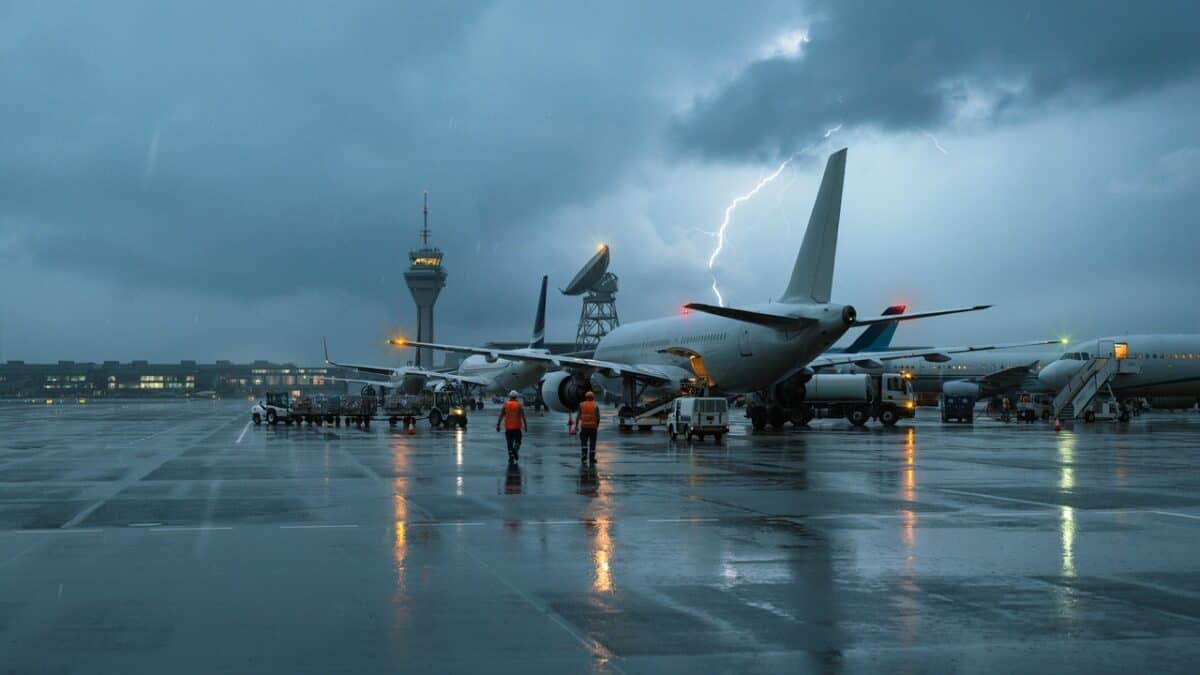
Europe’s aviation network has been placed under exceptional pressure as record summer traffic, severe weather, air traffic control shortages, capacity constraints and restricted airspace have combined to intensify aviation delays. France, Spain, Germany, Italy, Greece, Türkiye and the Balkans have been drawn into EUROCONTROL’s #thinkNetwork campaign, through which network-wide decisions are being promoted across airlines, airports, control centres, dispatch teams, pilots and meteorological services. Average European traffic growth of two per cent has been forecast against summer 2025, while increases reaching 5.1 per cent have been projected during several peak weeks. A 2026 high of 37,165 daily flights was recorded on 26 June, exceeding the 2025 peak and approaching Europe’s historic record. Operational pressure has been increased by thunderstorms, controller shortages, saturated sectors and longer routings caused by Middle Eastern and Ukrainian airspace restrictions. Under #thinkNetwork, first rotations, realistic schedules, weather coordination, flight-plan accuracy and collaborative recovery measures are being prioritised. Although punctuality improvements have been recorded, thousands of flights continue to be constrained daily, leaving Europe exposed to cascading disruption throughout the summer peak.

Record-Breaking Flight Volumes Are Stretching Europe’s Available Capacity
A structural capacity problem has been exposed by Europe’s accelerating summer traffic. An average of 35,562 daily flights was handled between 22 and 28 June 2026. A yearly high of 37,165 flights was then recorded on 26 June. The figure exceeded the 2025 peak of 37,034 flights and remained only 63 flights below the historic European record established in 2019. Across the first four monitored weeks of summer 2026, traffic was increased by 1.6 per cent compared with the corresponding period in 2025. Arrival punctuality was improved by 1.2 percentage points, while overall air traffic flow management delay was reduced by 13 per cent. However, those improvements were quickly weakened when thunderstorms and other disruptive weather systems affected congested sectors. During Week 26, arrival punctuality was reduced to 71 per cent, while average ATFM delay was raised by 29 per cent week on week to 3.67 minutes per flight. En-route restrictions accounted for 3.04 minutes, while airport restrictions generated another 0.63 minutes. Across the week, 53,940 flights were affected by ATFM restrictions. Approximately 7,706 flights were constrained each day, representing 22 per cent of all European operations. During the following week, fewer severe weather events were recorded, but 51,747 flights were still affected by restrictions. The scale of these figures has shown that aviation delays are no longer being created solely by individual airport problems. Pressure is being transmitted across borders, air traffic control sectors and airline networks.
Advertisement
Advertisement

#thinkNetwork Is Being Used to Prevent Local Disruption from Spreading Across Europe
A coordinated operational response has been introduced through the #thinkNetwork 2026 programme. Updated guidance has been issued for pilots, airline dispatchers, airports, air traffic controllers, flow-management positions and meteorological providers. For the first time, weather specialists have been formally included within the campaign. Every operational decision is being assessed against its potential effect on the wider European network. Protection of the first daily flight rotation has been prioritised because an early departure delay can be carried into several later services, airports and countries. Accurate flight plans, achievable schedules, realistic turnaround times and timely operational information are also being promoted. Weather coordination has been strengthened after adverse-condition delays increased by 48 per cent between summer 2023 and summer 2024. Over the same period, capacity-related delays were increased by 91 per cent. Additional pressure has been created by closed and restricted airspace around Ukraine and parts of the Middle East. Flights that would ordinarily have been spread across direct routes have been redirected through fewer available corridors. Heavy traffic concentrations have consequently been created over France, Spain, Germany, Italy, Greece, Türkiye and the Balkans. Longer flight paths, greater fuel requirements and additional controller workloads have also been produced. Although immediate capacity cannot always be created, existing resources are being protected through early coordination, improved sequencing and network-wide planning. Europe’s 2026 summer season is therefore being treated as a decisive test of whether cooperative intervention can prevent local bottlenecks from becoming continent-wide aviation delays.

France, Spain and Greece Are Being Identified as Europe’s Principal Delay Hotspots
France has been identified as the largest source of en-route aviation delays during the opening phase of summer 2026. By the end of Week 26, 29 per cent of the network’s accumulated en-route delay had been generated within French airspace. Reims Area Control Centre had contributed ten per cent, Marseille six per cent and Brest five per cent. The pressure had been attributed to limited sector capacity, controller shortages and transitional difficulties linked to the implementation of France’s 4-FLIGHT air traffic management system. In Week 25 alone, 31 per cent of all European en-route ATFM delay had been associated with France. Severe weather had been responsible for much of the disruption across Reims, Marseille, Brest, Bordeaux and Paris control sectors. Spain had generated 21 per cent of accumulated en-route delay by Week 26. Barcelona had accounted for 12 per cent, Madrid five per cent and Seville three per cent. Capacity constraints, staffing limitations and sustained traffic growth had been cited as the dominant causes. Greece had contributed another 13 per cent, with nine per cent linked to Athens and four per cent to Makedonia. Greek airspace had been burdened by staffing pressure and additional traffic redirected from unavailable Middle Eastern routes. These three countries had therefore been identified as Europe’s most consequential operational hotspots, although disruption had continued to spread into Germany, Italy, Türkiye and the Balkans.
Advertisement
Advertisement

Country-by-Country Pressure Has Been Created by Different Operational Causes
| Country or region | Principal operational pressure | Officially recorded network effect |
|---|---|---|
| France | Controller shortages, sector capacity, severe weather and the 4-FLIGHT transition | 29 per cent of accumulated en-route delay by Week 26 |
| Spain | High traffic growth, staffing pressure, thunderstorms and constrained control sectors | 21 per cent of accumulated en-route delay by Week 26 |
| Germany | Thunderstorms, weather disruption and structural pressure in upper airspace | 19 per cent of Week 25 en-route delay |
| Italy | Heavy Mediterranean traffic and exposure to rerouted north-south and east-west flows | Increased pressure across southern European corridors |
| Greece | Staffing limitations and additional traffic linked to Middle Eastern airspace restrictions | 13 per cent of accumulated en-route delay by Week 26 |
| Türkiye | Lower traffic on some Middle Eastern flows but continuing gateway demand between Europe and Asia | Uneven traffic distribution and shifting sector workloads |
| Balkans | Rerouted traffic, thunderstorms and concentrated overflight demand | Higher traffic in several western Balkan states |

Germany and Italy Are Being Pressured While Türkiye and the Balkans Absorb Shifting Traffic
Germany’s disruption has been driven most strongly by weather. During Week 25, 19 per cent of all European en-route ATFM delays had been attributed to German airspace. Karlsruhe Upper Area Control Centre had generated 13.4 percentage points of that total, with severe weather responsible for most of its contribution. Munich, Langen and Bremen had also been affected. In Week 27, weather was still responsible for 51 per cent of Europe’s en-route delay, with Germany, France, Austria, Switzerland and Serbia-Montenegro being identified as the principal affected areas. Italy had not been ranked among the three largest accumulated delay generators, but its airspace had remained operationally important because Mediterranean flows, holiday demand and redirected traffic had been channelled through surrounding sectors. Pressure had therefore been transmitted towards northern Italian gateways and southern routes serving Greece, Türkiye and the eastern Mediterranean. Türkiye had experienced lower traffic on some flows because of continuing Middle Eastern instability, yet its broader role as a bridge between Europe, Asia and the eastern Mediterranean had been retained. An uneven traffic pattern had consequently been produced rather than a uniform reduction in workload. Lower traffic had been recorded across Bulgaria, Hungary, Romania and Türkiye, while higher volumes had been registered in Albania, Croatia, Cyprus, Greece, Montenegro, North Macedonia, Serbia and Slovenia. Capacity had been tested particularly where redirected overflights had been added to strong seasonal demand.
The Balkans Are Being Turned into a Strategic Pressure Zone
The operational consequences across South-Eastern Europe have been shaped by four connected developments:
Advertisement
Advertisement
- Traffic redistribution has been intensified: Flights displaced by restrictions over conflict-affected airspace have been routed through fewer European and Mediterranean corridors.
- Western Balkan states have received additional demand: Albania, Croatia, Montenegro, North Macedonia, Serbia and Slovenia have been required to manage higher traffic volumes.
- Weather exposure has been increased: Thunderstorms over Serbia-Montenegro and neighbouring sectors have reduced available capacity during already congested operating periods.
- Network disruption has been carried westward: Restrictions in South-Eastern Europe have affected flight sequencing, aircraft rotations and arrival times across Italy, Germany, France and Spain.
Local Capacity Failures Are Being Converted into Continent-Wide Aviation Delays
Aviation disruption has been magnified because Europe’s major control centres are connected through tightly scheduled traffic flows. When capacity has been reduced over Reims, Barcelona, Athens, Karlsruhe or Belgrade, aircraft have been held on the ground, redirected through alternative sectors or assigned later departure slots. Delays created in one state have then been carried into subsequent rotations serving several other countries. During Week 27, an average of 97,996 minutes of en-route ATFM delay per day was recorded, despite a nine per cent improvement from the previous week. Weather generated 51 per cent of that delay, while air traffic control capacity and staffing produced 45 per cent. France, Greece and Spain were most heavily affected by capacity and staffing limitations. Network arrival punctuality was recorded at 71 per cent, while 3.37 minutes of ATFM delay per flight was produced. These figures demonstrated that a local response could no longer be considered sufficient. Under #thinkNetwork, national control centres, airlines, airports and meteorological providers are being required to share operational information earlier. Routes, departure times and sector demand are being coordinated before bottlenecks become unmanageable. However, as peak holiday demand moves deeper into July and August, the effectiveness of that coordination will be tested by the combined force of record flight numbers, extreme weather and restricted airspace.
Europe’s #thinkNetwork Strategy Is Being Built Around Six Operational Priorities
The #thinkNetwork 2026 strategy has been expanded to prevent avoidable disruption from being added to Europe’s existing capacity, weather and airspace problems. Six priorities have been established by EUROCONTROL: first rotations must be protected, flight plans must be executed with discipline, agreed air traffic control capacity must be delivered, schedules and turnaround times must be made realistic, capacity and weather-based operations must be coordinated, and technological modernisation must be managed without unnecessary network disruption. These measures have been directed towards dispatchers, pilots, tower controllers, area control centres, flow-management positions, airports and meteorological providers. Decisions that appear beneficial at one airport can create congestion elsewhere when their wider consequences are not assessed. A late schedule change, inaccurate departure estimate or uncoordinated rerouting can cause scarce capacity to be reserved but left unused. Other aircraft can consequently be delayed even when they could have been accommodated. Under the programme, information is expected to be shared with the Network Manager Operations Centre before local difficulties develop into continent-wide aviation delays. Airlines and airports have also been encouraged to build schedules around resources that can realistically be provided. Unrealistic turnaround assumptions, congested departure banks and insufficient recovery time are being treated as network risks rather than isolated commercial decisions.
Category-Wise #thinkNetwork Measures for Summer Aviation Delays
| Operational category | Action being prioritised | Expected network benefit |
|---|---|---|
| First flight rotation | Early departures are being protected from preventable delay | Disruption is prevented from spreading through later aircraft rotations |
| Flight-plan execution | Departure times, routes and requested flight levels are being kept accurate | Unused capacity and unnecessary restrictions are reduced |
| Declared capacity | Agreed sector, runway and staffing capacity is being delivered | Planned traffic demand can be managed more predictably |
| Airline scheduling | Timetables and turnaround periods are being based on available resources | Repeated late departures and missed slots are limited |
| Weather management | Forecasts are being shared and assessed at European network level | Thunderstorm restrictions and rerouting decisions can be prepared earlier |
| Technology deployment | System upgrades and datalink changes are being coordinated operationally | Transition-related disruption is prevented from amplifying existing pressure |
Airlines, Airports and Controllers Are Being Required to Protect Every Available Minute
Operational discipline has been placed at the centre of the campaign because additional physical capacity cannot be created quickly during the summer peak. Dispatchers have been asked to keep estimated off-block times updated and to respect airport arrival slots. Flight plans are expected to be validated before submission, while inefficient vertical profiles, sharp turns and unnecessary route changes are being discouraged. Requested cruising levels must also be optimised so that constrained upper-airspace capacity can be used efficiently. Where a calculated take-off time cannot be improved, repeated speculative requests are being discouraged because additional workloads can be created for controllers and network staff. Pilots are being required to operate as closely as possible to accepted flight plans and assigned departure times. Tower controllers and area control centres are being asked to deliver the capacity already declared through the Network Operations Plan. Flow managers are being expected to monitor developing demand, identify overloaded sectors and coordinate revised restrictions before severe congestion emerges. Airports are being required to provide updated runway, stand, terminal and local weather information. More than 1,000 airport information providers can exchange operational data through EUROCONTROL’s Airport Corner platform. This shared information is used by the Network Manager to establish a more accurate understanding of local constraints. When capacity reductions are communicated late, aircraft can already have been scheduled towards an airport or sector that can no longer handle them. Departure slots must then be imposed across several countries. By contrast, early notification allows demand to be redistributed before lengthy aviation delays are produced.
Weather Providers Are Being Integrated Directly into European Traffic Management
For the first time, meteorological providers have been formally included within the #thinkNetwork guide, reflecting the growing influence of thunderstorms, high winds and rapidly changing weather on European aviation. Weather expertise has been embedded within the Network Manager Operations Centre since summer 2025. Disruptive conditions are now assessed from a European perspective instead of being examined only through individual national forecasts. Network Weather Assessments and meteorological headline information are published several times each day through the Network Operations Portal. Local forecasting organisations are expected to share updated information so that the latest knowledge can be included within network-level decisions. Two-way communication between local forecasters and NMOC weather specialists is also being promoted. Cross-border convection forecasts are being used because thunderstorms rarely respect national airspace boundaries. A storm affecting France, Germany or the Alps can force aircraft towards Spain, Italy, Switzerland or Balkan corridors, where existing traffic demand can then be intensified. Earlier forecasting cannot remove the weather threat, but additional time can be provided for capacity reductions, alternative routes and revised departure sequences to be prepared.
Five Actions Are Being Used to Stop Local Problems from Becoming Network Crises
- Early information is being demanded: Capacity reductions, airport limitations and deteriorating weather must be reported before traffic is committed to affected sectors.
- First rotations are being protected: Morning delays are being minimised so that aircraft, passengers and crews remain aligned during later services.
- Schedules are being tested against reality: Published frequencies and turnaround periods must reflect available aircraft, ground staff, controllers and airport infrastructure.
- Cross-border weather planning is being strengthened: Thunderstorm forecasts are being combined so that network-wide rerouting can be prepared.
- Technology transitions are being coordinated: New air traffic management systems must be introduced without allowing implementation problems to consume essential summer capacity.
Collaboration Is Being Treated as Europe’s Most Immediate Source of Capacity
No single measure is expected to eliminate European aviation delays during summer 2026. Runway expansion, controller recruitment and major airspace reform require long planning periods. Immediate resilience is therefore being sought through the more efficient use of existing capacity. When an accurate departure time is submitted, an unused slot can be released. When a realistic schedule is constructed, repeated delays can be prevented. When a thunderstorm forecast is shared early, traffic can be redirected before an overloaded sector is closed. These small operational decisions are being multiplied across tens of thousands of daily flights. The success of #thinkNetwork will therefore be determined by consistent participation across France, Spain, Germany, Italy, Greece, Türkiye and the Balkans. If local priorities are allowed to override network requirements, delays can be transferred rather than resolved. If shared procedures are followed, disruption can be contained even when traffic records are approached. Europe’s most powerful short-term defence against congestion is consequently being found not in additional airspace, but in coordinated decisions across the airspace that remains available.
Europe’s Latest Traffic Data Shows Improvement but the Summer Threat Has Not Been Removed
A stronger performance was recorded across the European aviation network between 6 and 12 July 2026, but the underlying threat from aviation delays was not removed. Average traffic reached 36,380 daily flights, representing a 0.9 per cent increase from the previous week and a 2.3 per cent rise against the corresponding week of 2025. Arrival punctuality was raised to 74 per cent, while departure punctuality was improved by 3.9 percentage points to 68 per cent. Average ATFM delay was reduced to 2.66 minutes per flight, comprising 2.10 minutes of en-route delay and 0.56 minutes of airport delay. Across the period from 1 June to 12 July, traffic was increased by two per cent year on year, while ATFM delays were reduced by 23 per cent and arrival punctuality was improved by 1.8 percentage points.
Advertisement
Advertisement
These results indicated that improved coordination and stronger delivery by air navigation service providers had produced measurable benefits. However, traffic distribution was still being distorted by Middle Eastern airspace restrictions. Lower volumes continued to be observed in Bulgaria, Hungary, Romania and Türkiye, while substantial increases were being absorbed by Albania, Croatia, Cyprus, Greece, Montenegro, North Macedonia, Serbia and Slovenia. Pressure was also being sustained across South-Western Europe. Reims, Brest, Marseille, Barcelona, Athens, Makedonia, Bordeaux, Munich and Budapest remained among the locations associated with operational penalties for major airlines. The summer network was therefore being stabilised, but it was not being freed from congestion. A single period of widespread thunderstorms, reduced staffing or technical disruption could still reverse the recorded improvement.
Passengers and Tourism Businesses Are Being Exposed to Cascading Operational Consequences
The impact of network congestion is being felt beyond the original delayed flight. When a departure slot is missed, an aircraft can arrive late for its next service, cabin and flight crews can approach legal working-time limits, airport stands can remain occupied and connecting passengers can be stranded. Hotels, cruise operators, tour companies, airport-transfer providers and destination-management businesses can then be affected by disrupted arrival patterns. Travellers using busy hubs in France, Spain, Germany and Italy are being exposed to missed connections when short transfer times are selected. Holiday traffic through Greece, Türkiye and the Balkans is also being affected by the concentration of flights during narrow morning and evening operating windows. Travellers are therefore being encouraged to monitor airline notifications, confirm flight status before leaving for the airport and allow sufficient time for connections. Essential medicines, travel documents and basic overnight items should be carried in cabin baggage where permitted.
Separate tickets create greater exposure because onward carriers may not be required to protect passengers when an earlier independently booked flight is delayed. Under European passenger-protection rules, assistance can be required when qualifying delays occur. Meals, refreshments, communication facilities, accommodation and transport between an airport and hotel may be provided according to the length and circumstances of the disruption. Reimbursement or rerouting can also be offered when flights are cancelled. Compensation may apply when arrival is delayed by at least three hours or when cancellation occurs within the applicable period, although payment can be excluded when extraordinary circumstances, including certain severe weather or air traffic management restrictions, are proven. Even where compensation is not payable, duties involving care, reimbursement or rerouting can remain applicable. Passengers should therefore retain boarding passes, receipts and written disruption notices. Claims should be submitted directly to the operating airline before third-party claims companies are considered.
#thinkNetwork Is Becoming Europe’s Critical Defence Against a Saturated Aviation System
The success of Europe’s summer 2026 aviation season will be determined by whether national and commercial priorities can continue to be aligned with network-wide requirements. France has remained the most influential delay hotspot because of the scale and geographical position of its airspace. Spain has been challenged by rapidly growing traffic and persistent pressure around Barcelona, Madrid and Seville. Germany has been repeatedly exposed to thunderstorms and constraints around Karlsruhe and Munich. Italy has been positioned between heavily used western, Mediterranean and South-Eastern European flows. Greece has been required to manage intense tourism demand alongside rerouted Middle Eastern traffic, while Türkiye and the Balkans have been affected by an uneven redistribution of flights across the region. These pressures cannot be eliminated through a single campaign. Nevertheless, avoidable disruption can be reduced when first rotations are protected, flight plans are kept accurate, agreed control capacity is delivered, schedules are made realistic and weather information is shared before restrictions become unavoidable. The European Network Operations Plan is being updated every week to provide an eight-week view of expected demand and available capacity.
Constraints can consequently be identified before airlines and airports enter the most congested operating periods. The latest figures have shown that this approach can produce results, with summer-to-date delay being reduced even while traffic has increased. Yet the network remains saturated and highly sensitive to sudden shocks. Restricted airspace continues to remove routing flexibility. Controller shortages cannot be resolved immediately. Severe convective weather can close or weaken several connected sectors within minutes. Europe’s #thinkNetwork aviation drive must therefore be understood as an operational necessity rather than a promotional initiative. Every local decision can influence flights hundreds of kilometres away. When information is delayed, capacity is overstated or schedules are made without sufficient resilience, disruption is multiplied across the continent. When cooperation is maintained, the available network can be used more effectively. Record summer traffic may still be handled, but reliable journeys will depend on France, Spain, Germany, Italy, Greece, Türkiye and the Balkans acting as parts of one European system. Through that collective discipline, the most severe aviation delays can be contained, passenger disruption can be limited and Europe’s crucial summer travel economy can be protected.
Advertisement
