

United States TSA PreCheck Travel Gets Major Boost as Seven Airports Target Faster Security Checks

Published
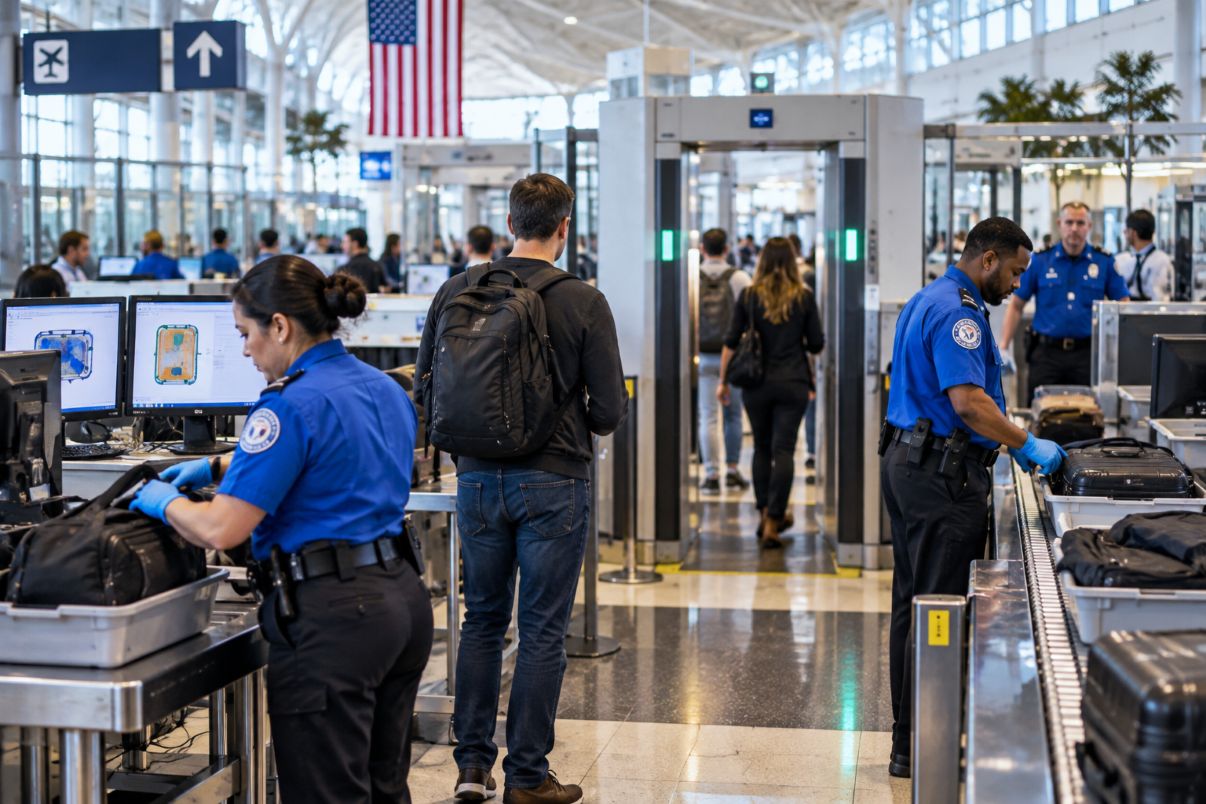
United States airports are preparing for a potentially significant transformation in passenger security as the Transportation Security Administration develops faster TSA PreCheck screening using automated identity verification, advanced body scanners and artificial intelligence-supported baggage checks. TSA Administrator David Cummins outlined the initiative on 6 October 2026 during an aviation security conference in Arlington, Virginia. The agency aims to introduce upgraded screening configurations at seven airports, potentially doubling passenger processing capacity at participating checkpoints. For millions of Americans navigating busy terminals, the development could eventually mean shorter queues and a smoother airport experience. However, the improvements remain in development, and existing security requirements continue to apply.
TSA PreCheck Travel Enters a New Era of Automated Airport Security
The Transportation Security Administration is preparing to introduce an upgraded checkpoint configuration known as the PreCheck mod set.
Advertisement
Advertisement
The proposed system combines several technologies intended to improve screening efficiency.
Electronic gates would support automated identity verification, while advanced imaging equipment would make passenger body screening more efficient.
Advertisement
Advertisement
Artificial intelligence-supported baggage screening would help security officers identify potentially suspicious items more quickly.
Rather than relying on one entirely new machine, TSA intends to integrate technologies that have already undergone development or testing.
Advertisement
Advertisement
According to Administrator David Cummins, the combined configuration could substantially increase the number of passengers processed through security checkpoints.
The initiative forms part of the agency’s broader effort to modernise airport security while maintaining aviation safety standards.
Advertisement
Advertisement
Seven US Airports Targeted for Initial TSA PreCheck Rollout
TSA plans to introduce the upgraded configuration at seven airports over approximately six weeks following the 6 October announcement.
However, the agency had not publicly identified all seven airports in the reporting available at the time.
The programme forms part of a wider modernisation strategy known as Horizon 25.
The strategy is expected to receive a formal launch around TSA’s 25th anniversary in November 2026.
Advertisement
Advertisement
Its priorities include modern screening technology, improved passenger experiences and stronger protection against emerging aviation security threats.
The initial rollout is intended to demonstrate how the upgraded systems perform in operational airport environments.
Travellers should not assume that every TSA PreCheck checkpoint will immediately receive the same equipment.
TSA Targets Dramatic Increase in Airport Passenger Processing
One of the most significant claims surrounding the new technology concerns passenger throughput.
Cummins indicated that the proposed screening configuration could double the number of passengers processed through upgraded PreCheck lanes.
However, this projection does not guarantee that every traveller will experience a 50% reduction in waiting time.
Advertisement
Advertisement
Actual security queues depend on airport traffic, staffing levels, operating lanes and passenger arrival patterns.
The agency also expects the improvements could encourage approximately 20 million additional people to enrol in TSA PreCheck over three years.
Cummins indicated that roughly 50 million people were already enrolled.
The projected increase reflects TSA’s ambition to expand trusted-traveller participation while improving airport processing capacity.
Advanced Body Scanners Could Make TSA Security Checks More Comfortable
One of the most noticeable changes for passengers may involve body-scanning technology.
The proposed Advanced Imaging Technology systems would allow travellers to stand briefly with their arms lowered.
Advertisement
Advertisement
This differs from older screening systems that require passengers to raise their arms during scanning.
The revised procedure could improve comfort while reducing the time required for individual checks.
Electronic gates may also streamline identity verification by reducing manual processing steps.
Meanwhile, AI-supported baggage systems could assist officers in identifying unusual items in carry-on luggage.
These technologies are intended to improve efficiency rather than eliminate security oversight.
TSA officers would continue to conduct additional checks when necessary and respond to screening alarms.
Advertisement
Advertisement
Artificial Intelligence Could Transform Carry-On Baggage Screening
Artificial intelligence is expected to become an increasingly important component of airport security operations.
The proposed baggage-screening technology would help identify potentially suspicious objects within carry-on luggage.
Automated image analysis could reduce the time required to recognise items that need further inspection.
However, the system would not remove the responsibility of TSA officers to make security decisions.
Passengers would remain subject to existing screening requirements.
The technology also does not automatically permit travellers to carry additional liquids, restricted items or prohibited objects.
Advertisement
Advertisement
Although Cummins suggested that future screening improvements might allow additional items through checkpoints, no specific changes to the prohibited-items list were announced.
Travellers should continue following the official TSA carry-on baggage rules.
TSA PreCheck Introduces New Touchless Identity Verification Opportunities
TSA has also been developing improvements to digital identity verification.
Federal regulatory documentation published during 2026 outlined optional enhancements involving digital membership information, customer service systems and touchless identification capabilities.
Eligible passengers could eventually use supported mobile credentials to complete certain identity-verification steps.
The federal Office of Management and Budget approved a related information-collection revision on 31 August 2026.
Advertisement
Advertisement
These enhancements are voluntary and do not change a traveller’s existing TSA PreCheck membership status.
The digital identity programme complements TSA’s broader screening modernisation plans.
However, it should not be confused with the newly proposed PreCheck mod set.
Both initiatives involve technology improvements, but they address different aspects of the passenger screening experience.
Gateside by TSA PreCheck Expands Airport Access for Eligible Visitors
Another development involves Gateside by TSA PreCheck, a separate programme allowing approved members to enter secure airport terminal areas without travelling on a flight.
The initiative enables eligible participants to accompany family members to departure gates, welcome arriving passengers or visit airport restaurants and shops.
Advertisement
Advertisement
A TSA announcement dated 9 September 2026 identified participating airports including Los Angeles, Detroit, Dallas Fort Worth, Las Vegas and Salt Lake City.
Eligible participants must request approval, provide their Known Traveler Number and present acceptable identification.
All visitors remain subject to security screening.
Gateside does not eliminate normal airport security procedures and should not be confused with the faster PreCheck screening configuration.
Will TSA PreCheck Modernisation Affect Airport Security Jobs?
The introduction of automated technology could change staffing requirements at certain checkpoints.
Cummins indicated that electronic identity verification and AI-assisted baggage screening may reduce the number of officers needed for some processing tasks.
Advertisement
Advertisement
However, he stated that TSA does not plan layoffs as part of the modernisation initiative.
Instead, the agency expects to manage staffing changes through employee attrition and by not replacing every departing officer.
The administrator also discussed efforts to strengthen customer service and improve interactions between TSA personnel and travellers.
These measures reflect an operational strategy focused on increasing efficiency while maintaining aviation security.
The ultimate staffing impact will depend on how the technology performs during deployment.
What Should Travellers Know Before Using TSA PreCheck?
Passengers should continue following existing TSA PreCheck procedures until specific changes are introduced at their departure airport.
Advertisement
Advertisement
Eligible travellers should ensure that their Known Traveler Number is included in their airline reservation and that the TSA PreCheck indicator appears on their boarding pass.
Acceptable identification remains necessary, and passengers must comply with applicable carry-on baggage restrictions.
The proposed upgrades do not guarantee that every airport will immediately offer automated gates, new scanners or AI-assisted baggage screening.
Travellers should also continue allowing sufficient time before departure.
Official programme information is available through the TSA PreCheck website.
Why TSA PreCheck Improvements Matter for US Aviation
The proposed modernisation could represent an important development for American aviation security.
Advertisement
Advertisement
By combining electronic identity verification, advanced body scanners and AI-supported baggage screening, TSA aims to process passengers more efficiently.
The agency believes the technology could increase checkpoint capacity while making PreCheck membership more attractive.
However, the projected benefits remain dependent on successful deployment, airport participation and operational performance.
The initial seven-airport rollout will therefore be an important stage in determining how effectively the configuration performs.
For travellers, the distinction remains clear: TSA has announced a significant modernisation programme, but nationwide implementation has not yet been completed.
Conclusion
United States airports are approaching an important turning point as TSA prepares to modernise PreCheck screening through automated gates, advanced body scanners and artificial intelligence. The proposed improvements could increase passenger processing capacity and eventually reduce the time travellers spend navigating security checkpoints. With seven airports targeted for early deployment and a wider strategy taking shape, the programme offers a glimpse of how airport screening may evolve. However, passengers should continue following existing baggage, identification and security requirements until official changes take effect. For TSA PreCheck travel, the central ambition is faster, more comfortable screening without compromising aviation security.
Advertisement
