
Uruguay Unlocks New Canyon Ecotourism in Remote Interior

Published
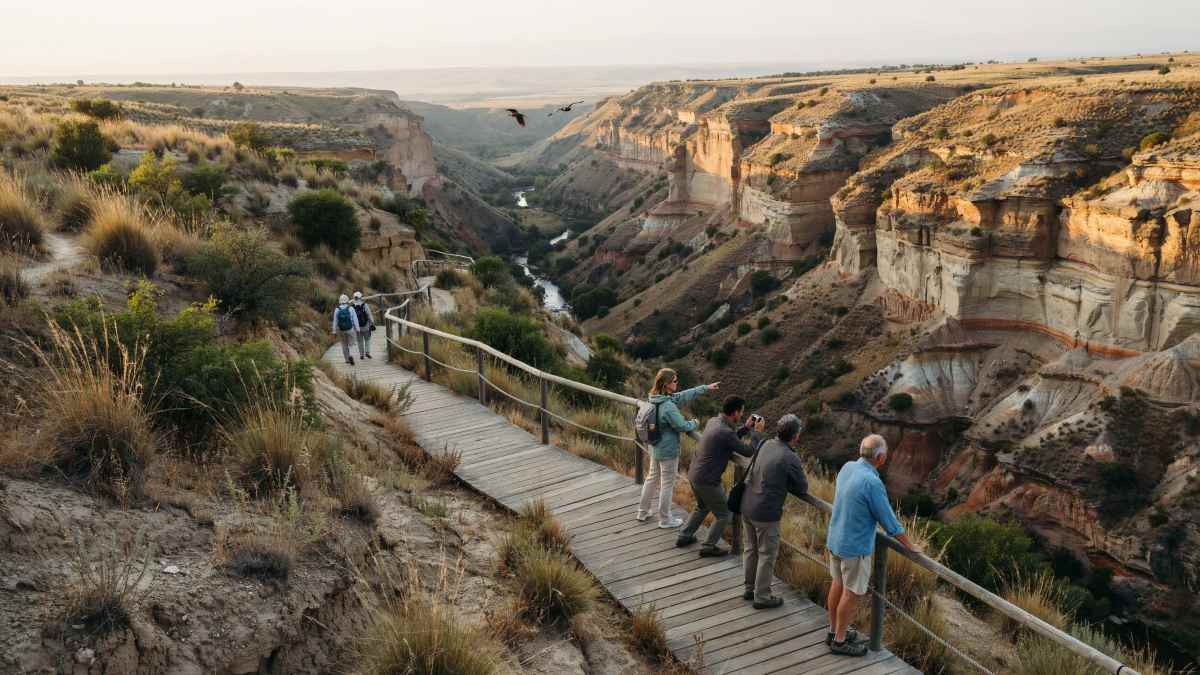
Image generated with Ai
The South American country of Uruguay is diversifying its tourism products beyond its renowned beaches along the coast of the Atlantic Ocean to ecotourism facilities in the Quebrada de los Cuervos area in the department of Treinta y Tres. The area of Quebrada de los Cuervos, which is considered the first protected landscape in Uruguay, presents a completely different tourism product from Uruguay’s beach holiday destinations. Hiking, horse treks and nature stays are among the emerging possibilities in the scenic and rustic setting of Quebrada de los Cuervos while preserving its local agricultural activity and biological diversity. The diversification of Uruguay’s tourism industry is carried out through the National System of Protected Areas in Uruguay, referred to as SNAP.
A Canyon Landscape Built for Nature Travel
At the heart of the destination is a roughly 4,000-hectare micro-reserve shaped by the Yerbal Chico stream. The watercourse cuts through a steep canyon reaching around 100 metres in depth, creating a landscape that contrasts sharply with the open pampas surrounding it.
Advertisement
Advertisement
The canyon supports rare subtropical cloud-forest flora alongside habitats used by black vultures. This combination of dramatic geology, native vegetation and birdlife gives visitors a chance to experience an ecosystem that is distinctly different from Uruguay’s better-known coastal environments.
The landscape is particularly suited to small-scale adventure tourism. Rather than relying on intensive visitor infrastructure, the emerging network centres on trails and experiences that allow travellers to explore the terrain at a slower pace.
Advertisement
Advertisement
Community Trails Expand Rural Experiences
New and improved eco-trails are bringing together several forms of low-impact travel. Canyon boardwalks provide access through sensitive areas, while horse-trekking routes connect visitors with the surrounding rural landscape.
Small solar-powered eco-lodges are also adding overnight capacity without creating the scale of development associated with conventional resort destinations. The approach gives travellers the opportunity to spend more time within the protected landscape while maintaining a lighter tourism footprint.
Advertisement
Advertisement
Local rural landholders are part of this model, helping integrate tourism with existing agricultural activity rather than replacing it. This creates a destination where hiking, horseback exploration, nature observation and rural life can coexist.
For visitors travelling through eastern Uruguay, the development also adds a stronger inland dimension to regional itineraries. Treinta y Tres can increasingly serve as a gateway to landscape-based experiences rather than functioning only as a route towards Uruguay’s coast.
Advertisement
Advertisement
Tourism Revenue Supports Rewilding
An important feature of the emerging tourism model is the connection between visitor spending and conservation. Entry fees are directed towards native tree reforestation and grassland biodiversity research.
Local agricultural schools are involved in research activities, creating a practical link between tourism, environmental education and the rural economy. This helps turn the protected landscape into an outdoor learning environment while supporting research into the biodiversity of the surrounding grasslands and forest habitats.
The model also gives travellers a more direct connection between tourism and conservation. Spending at the destination can contribute to maintaining native ecosystems rather than simply funding visitor infrastructure.
A New Adventure Corridor for Uruguay
Quebrada de los Cuervos is one example of how inland Uruguay can create a tourism identity through agricultural processes that is different from the tourism identity created through the beach tourism experience of the country. The emphasis on the community management approach, small lodging, walking trails and horse trekking makes it a unique destination for travel through the landscape rather than mass tourism. In addition, it is a way of making money for the countryside through tourism, while maintaining agricultural activities and conservation of the environment. The development of protected areas and ecotourism in Uruguay will ensure that places such as Quebrada de los Cuervos become increasingly popular for tourism in the coming days due to hiking, wildlife, countryside and regenerative tourism opportunities in this area. The subtropical forest, grasslands, rugged terrain and community conservation approaches make Treinta y Tres an inland tourism area of Uruguay.
Advertisement
