

Dubrovnik Teams Up With Zagreb, Rijeka, Split And More As Croatia Records Steady Tourism Growth Driven By UK, US And Strong Travel Demand Across Key Destinations

Published
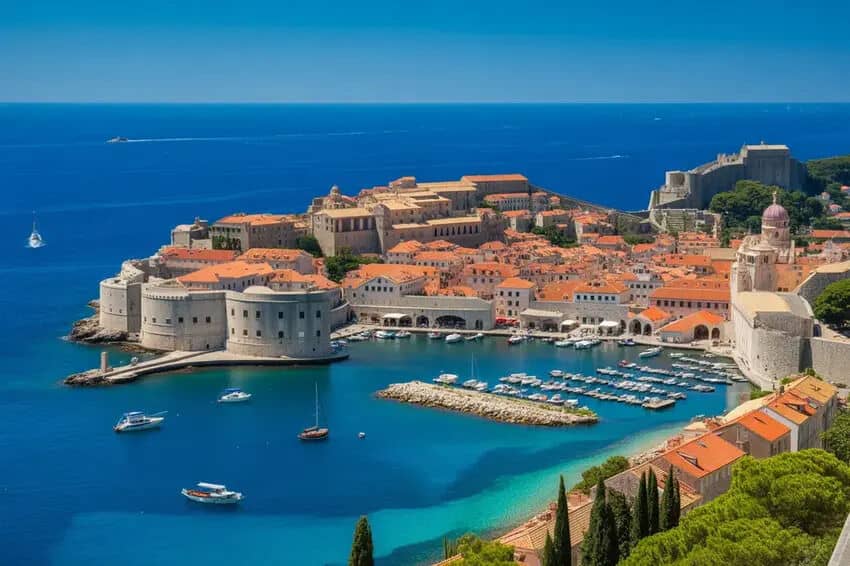
Dubrovnik Teams Up With Zagreb, Rijeka, Split And More as Croatia’s tourism sector records steady and balanced growth in early 2026, supported by sustained international demand and rising domestic travel activity across key destinations. In Dubrovnik, visitor arrivals and overnight stays have been registered at a modest one percent year-on-year increase, reflecting stable inbound performance driven primarily by the United Kingdom and the United States, alongside strong European feeder markets. At the same time, parallel growth across Zagreb, Split, Rijeka, and other Croatian destinations has strengthened internal tourism flows, creating a more distributed national travel pattern. This combined performance has positioned Croatia as a resilient Mediterranean destination where both international long-haul tourism and domestic mobility are jointly sustaining overall sector growth.
Tourism performance across Croatia has been recorded as broadly stable in early 2026, with a modest but consistent upward trajectory being observed in key coastal and urban destinations. In particular, Dubrovnik has been positioned as one of the leading indicators of international travel demand into the Adriatic region, as steady growth has been registered in both visitor arrivals and overnight stays. According to the latest available eVisitor system data, tourism flows into the city have been shaped strongly by established long-haul and European markets, with the United Kingdom and the United States continuing to dominate inbound activity. At the same time, domestic tourism movements across Croatia have also been gradually expanding, with multiple destinations including Zagreb, Split, Rijeka, and surrounding coastal regions contributing to a more balanced national tourism structure. Overall, Croatia’s tourism landscape has been characterised by stability rather than volatility in the early part of the year.
Advertisement
Advertisement
Steady Growth Recorded in Dubrovnik’s Tourism Performance
A stable upward trend has been registered in Dubrovnik, where visitor numbers have been recorded at 487,673 between 1 January and 22 June 2026. This performance has reflected a one percent increase compared with the same period in the previous year. During the same timeframe, overnight stays have been recorded at 1,468,008, also reflecting a one percent year-on-year rise.
This pattern has indicated that tourism demand has remained resilient despite seasonal fluctuations and broader European travel market pressures. Growth has been supported by sustained international arrivals, particularly from long-haul markets, alongside stable European feeder markets. The city’s tourism ecosystem has continued to be shaped by high-value leisure travel, with extended stays contributing significantly to overall overnight performance.
Advertisement
Advertisement
Although growth has been modest, the continuation of upward movement has been interpreted as a sign of sustained destination competitiveness within the Adriatic tourism corridor.
International Markets Continue to Anchor Visitor Demand
Inbound tourism into Dubrovnik has remained heavily dependent on a concentrated set of international source markets. The United Kingdom has continued to hold the position of the largest inbound market, followed closely by the United States. These two markets have been consistently responsible for a significant share of both arrivals and overnight stays.
Advertisement
Advertisement
In addition, strong contributions have been recorded from Germany, Poland, France, Ireland, Canada, Spain, and Australia. These markets have collectively supported a diversified but stable visitor base, ensuring that demand has not been overly reliant on a single geographic region.
On a daily operational level, tourism activity recorded on 22 June 2026 showed 5,845 arrivals and 20,693 overnight stays. While a slight decline was observed compared to the same date in the previous year, the overall structure of demand remained consistent. The United Kingdom and the United States were again positioned at the top of the daily source markets, followed by France, Spain, Poland, Ireland, Germany, Sweden, Australia, and Croatia.
This distribution has reinforced the city’s reliance on both transatlantic and European travel corridors.
Short-Term Daily Fluctuations Reflect Seasonal Travel Adjustments
Despite the overall positive annual trend, short-term fluctuations in daily arrivals have been recorded. On 22 June, arrivals were noted to be nine percent lower than the previous year’s equivalent date, while overnight stays were recorded at four percent lower.
Such variations have been interpreted as part of normal seasonal redistribution in Mediterranean tourism markets, where travel patterns are influenced by pricing cycles, airline capacity adjustments, and shifting holiday calendars across source markets.
However, the broader trend has not indicated any structural decline. Instead, tourism demand has remained within a stable band, suggesting that Dubrovnik continues to function as a high-demand destination within the regional tourism hierarchy.
Advertisement
Advertisement
Domestic Tourism Growth Expands Across Croatia’s Key Destinations
Alongside international performance, domestic tourism activity across Croatia has been gradually expanding. A more distributed pattern of internal travel has been observed, with multiple destinations benefiting from increased movement of Croatian residents within the country.
In addition to Dubrovnik, major urban and coastal destinations have been contributing to this domestic expansion. In Zagreb, consistent city-break demand has continued to support year-round occupancy, driven by cultural tourism, events, and administrative travel. In Split, strong coastal demand has been sustained through a combination of leisure tourism and island connectivity, particularly during shoulder and peak summer periods.
Similarly, Rijeka has maintained its role as a key northern Adriatic hub, supporting both transit tourism and regional leisure travel. Coastal and resort-heavy regions have also experienced steady domestic visitation, particularly in areas characterised by beach tourism, wellness stays, and short holiday breaks.
This diversification of domestic demand has contributed to a more balanced tourism structure across the country, reducing reliance on international arrivals during certain seasonal periods.
Balanced National Tourism Structure Emerging in 2026
The combined performance of international and domestic tourism has indicated the emergence of a more balanced national tourism framework in Croatia. While Dubrovnik has remained a flagship destination for global travellers, other cities and regions have increasingly contributed to overall tourism stability.
The integration of coastal destinations such as Dubrovnik and Split with inland and urban centres such as Zagreb has helped distribute tourism flows more evenly across the national territory. This redistribution has been particularly significant during peak travel periods, where congestion in traditional hotspots has been partially offset by rising interest in alternative destinations.
Advertisement
Advertisement
At the same time, the continued strength of international markets, particularly the United Kingdom and the United States, has ensured that Croatia remains firmly positioned within the global leisure tourism circuit.
TTW Founder and Editor-in-Chief, Mr. Anup Kumar Keshan shares: “Croatia’s tourism performance in early 2026 reflects a clear signal of stability and balanced demand, where destinations such as Dubrovnik, Zagreb, Split, and Rijeka are collectively strengthening the country’s position as a resilient Mediterranean hub, driven by sustained interest from the United Kingdom, the United States, and key European markets, alongside growing domestic travel flows.”
Outlook for Croatia’s Tourism Performance
Looking ahead, Croatia’s tourism outlook is expected to remain stable, with moderate growth likely to continue across key destinations. Dubrovnik is expected to maintain its position as a leading international gateway, supported by sustained demand from long-haul and European markets.
Domestic tourism is also expected to play a more significant role in shaping seasonal demand patterns, particularly in urban centres and coastal resort regions. The continued expansion of travel infrastructure, combined with diversified source markets, is likely to support resilience across the sector.
Dubrovnik Teams Up With Zagreb, Rijeka, Split And More as Croatia records steady tourism growth in 2026, driven by consistent visitor demand from the United Kingdom, United States, and strong domestic travel flows across key coastal and urban destinations.
Overall, tourism performance in early 2026 has reflected a stable and structured growth environment, with no major disruptions recorded. Instead, gradual expansion has been observed across both international and domestic segments, reinforcing Croatia’s position as one of the most consistently performing tourism destinations in the Adriatic region.
Advertisement
