
Hong Kong Business Travel Gains Fresh Momentum as AI Deals Push Fundraising to Record Levels

Published
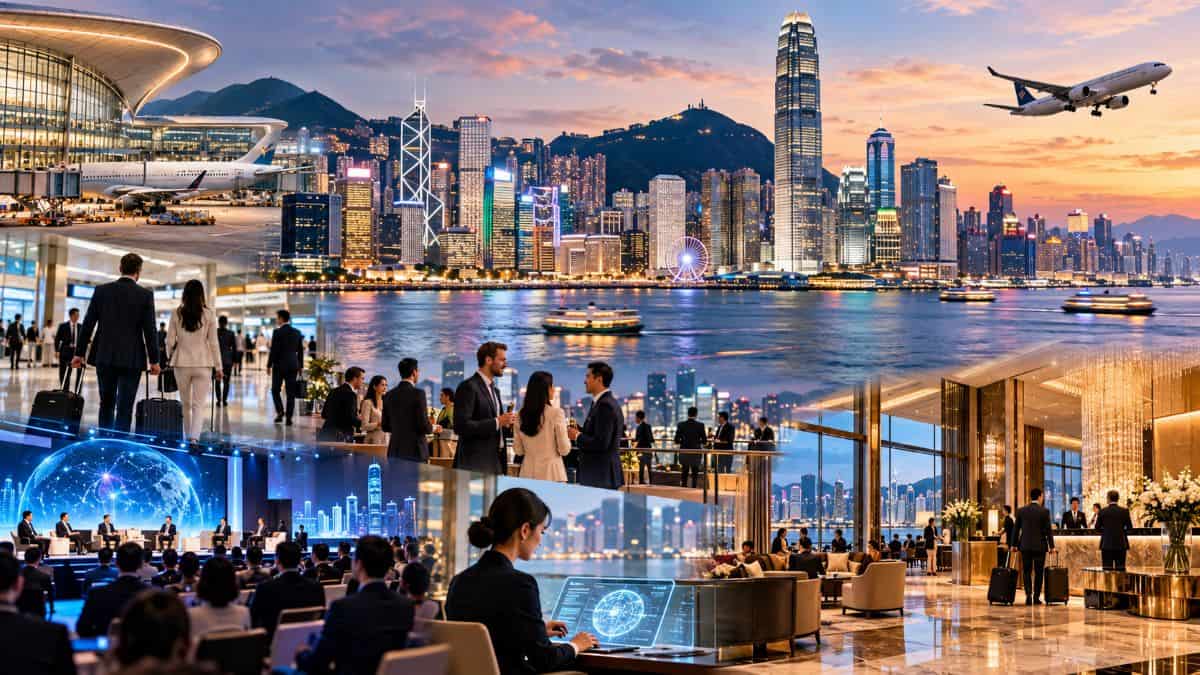
Image generated with Ai
Hong Kong’s record capital-raising surge is creating a powerful new opportunity for business travel and MICE tourism, as artificial intelligence companies, investors and financial institutions intensify activity across the city. Share sales reached US$47.5 billion during July-September, the largest third-quarter haul on record. Hong Kong’s fundraising total has now exceeded US$92 billion in 2026, moving closer to its 2021 annual record of US$112.5 billion. The financial boom arrives as tourism also accelerates, with 36.67 million visitor arrivals in the first eight months. For hotels, airlines, restaurants and conference venues, the convergence of capital and tourism could create another lucrative wave of high-value visitors.
AI Capital Is Changing Hong Kong’s Travel Economy
The latest fundraising figures reveal more than renewed appetite for Hong Kong equities. They point towards a broader acceleration in corporate activity involving technology companies, investment banks, institutional investors and professional-services firms.
Artificial intelligence sits at the centre of this revival. Chinese technology companies have increasingly returned to Hong Kong’s capital markets to finance expansion, creating a dense ecosystem of meetings, investor presentations and corporate negotiations.
That activity matters to travel because financial transactions generate physical mobility. Senior executives, bankers, advisers, analysts and investors frequently need to meet clients in person before major transactions close.
Advertisement
Advertisement
Hong Kong therefore has an unusual advantage. Its financial district sits within a compact urban environment supported by an international airport, extensive hotel inventory, sophisticated conference facilities and dense transport connections.
The opportunity becomes even more significant when financial travel overlaps with MICE activity. A corporate visitor attending an investment conference can add meetings, dining, shopping and leisure to the same trip.
Advertisement
Advertisement
| Indicator | Latest figure | Travel significance |
|---|---|---|
| Hong Kong fundraising in Q3 2026 | US$47.5bn | Supports intense corporate activity |
| 2026 fundraising so far | Above US$92bn | Sustains financial travel demand |
| 2021 annual fundraising record | US$112.5bn | Shows the scale of the current revival |
| Visitor arrivals, Jan-Aug 2026 | 36.67m | Indicates a strengthening tourism base |
| August 2026 arrivals | 5.46m | Highest monthly level since the pandemic |
| 2025 MICE visitors | 2.51m | Demonstrates strong business-tourism demand |
| 2025 overnight MICE visitors | 1.43m | Supports hotels and longer stays |
| 2025 MICE visitor spending | HK$10.7bn | Highlights high-value tourism potential |
Tourism Is Already Gathering Momentum
The financial boom arrives at a favourable moment for Hong Kong’s wider visitor economy. The city recorded 5.46 million visitor arrivals in August 2026, according to the Hong Kong Tourism Board.
That represented a 6 per cent year-on-year increase and the highest monthly figure since the pandemic. The first eight months produced approximately 36.67 million arrivals, up 11 per cent year on year.
The pattern is particularly relevant for travel businesses. Hong Kong is not relying exclusively on leisure travellers to rebuild demand.
MICE events are becoming an important part of the recovery. The government reported 2.51 million MICE visitors in 2025, including 1.43 million overnight visitors.
Those overnight visitors generated approximately HK$10.7 billion in spending. That makes corporate tourism especially valuable for hotels, restaurants, transport operators, retailers and attractions.
The government has also highlighted the unusually strong spending profile of international exhibition visitors. In 2024, international exhibition visitors spent more than HK$9,300 per trip on average.
Advertisement
Advertisement
That figure was approximately 70 per cent higher than the average overnight tourist. Consequently, attracting corporate travellers can generate disproportionate economic value compared with simply increasing arrival volumes.
Hong Kong’s Airport Is Ready for Growth
The aviation infrastructure strengthens the argument for a renewed business-travel cycle. Hong Kong International Airport handled 32.8 million passengers during the first half of 2026, an 11.7 per cent increase year on year.
Flight movements reached 200,685 during the same period, representing growth of 4.4 per cent. On a rolling 12-month basis, passenger traffic reached 64.4 million.
The airport’s recovery therefore extends beyond tourism alone. Strong transfer and transit traffic reinforces Hong Kong’s role as a regional gateway for international business.
For corporate travellers, connectivity can influence destination selection almost as much as hotel quality. A financial centre becomes more attractive when executives can reach it efficiently from multiple Asian and long-haul markets.
The airport’s cargo strength also matters. AI hardware, electronics, semiconductor components and other technology products depend on reliable logistics networks.
Advertisement
Advertisement
This creates an important distinction for Hong Kong. Its aviation proposition serves both people and high-value goods, strengthening its position within the technology economy.
MICE Could Become the Bridge
The strongest travel opportunity may sit between Wall Street-style finance and conventional tourism. Hong Kong can increasingly package the two through MICE activity.
Government data show that the Hong Kong Convention and Exhibition Centre and AsiaWorld-Expo hosted more than 360 major events in 2025. Those events attracted more than nine million participants.
The economic value extends well beyond exhibition halls. Business visitors require accommodation, restaurants, airport transfers, meeting rooms, entertainment and retail services.
That creates a multiplier effect for the travel sector. A conference delegate can become a leisure traveller during the same visit.
Hong Kong has already begun adapting its tourism infrastructure around this behaviour. In February 2026, the Hong Kong Tourism Board opened a dedicated visitor centre for MICE travellers at the Hong Kong Convention and Exhibition Centre.
Advertisement
Advertisement
The initiative recognises a crucial change in traveller behaviour. Business visitors increasingly want to combine professional commitments with authentic destination experiences.
AI Could Bring Higher-Value Visitors
The AI boom could also alter the profile of corporate tourism. Technology executives tend to travel with different requirements from mass-market leisure visitors.
They may require premium accommodation, private meeting facilities, executive transport, high-speed connectivity and flexible dining arrangements. They can also extend trips around major conferences or investment events.
Hong Kong’s existing ecosystem is well suited to that demand. The city combines financial services, technology companies, universities, start-ups and international professional-services firms.
Government figures show that Hong Kong had 5,221 start-ups in 2025, while companies with overseas or Mainland parent companies reached 11,070.
The city is also deliberately expanding its technology infrastructure. Hong Kong’s latest five-year economic plan identifies AI as a core industry and proposes additional support for artificial intelligence, robotics and other strategic sectors.
Advertisement
Advertisement
That policy direction could deepen the connection between technology investment and business travel.
| Business development | Potential travel effect |
|---|---|
| AI fundraising | More investor and executive visits |
| New technology listings | Increased roadshows and corporate meetings |
| Venture investment | More start-up and investor networking |
| MICE expansion | Higher conference and exhibition demand |
| International finance | Greater premium corporate travel |
| Technology events | More specialist business visitors |
| Cross-border investment | More Greater Bay Area business movement |
Hotels Could See a Different Demand Pattern
The implications for accommodation are more nuanced than a simple increase in occupancy. Financial and technology travellers can create demand during weekdays, shoulder periods and major conference dates.
That can help hotels diversify beyond traditional holiday peaks. It can also support premium room categories, meeting facilities, executive lounges and business-oriented hospitality services.
The opportunity becomes particularly attractive when business travellers extend their stays. A two-day investment meeting can become a four-day trip when visitors add dining, shopping, cultural attractions or nearby leisure experiences.
Hong Kong’s tourism authorities are already seeking more high-value overnight visitors. The city’s current strategy therefore fits naturally with the spending profile associated with finance and technology.
However, hotels should not assume that every fundraising cycle translates directly into room demand. Deal activity can occur remotely, while financial-market volatility can rapidly change corporate travel budgets.
Advertisement
Advertisement
The more sustainable opportunity lies in building a broader ecosystem around financial events, technology conferences and investment gatherings.
Travellers Should Watch Event Calendars
For leisure travellers, the financial boom has a practical implication. Major conferences and investment events can increase demand for flights and hotel rooms, particularly around Central, Wan Chai and convention districts.
Travellers planning short visits should therefore check Hong Kong’s major events calendar before booking. Corporate-heavy periods can produce tighter premium-room availability and stronger weekday demand.
The same dynamic can work in reverse. Travellers can use major business events as a reason to explore Hong Kong when international professionals are already arriving.
Upcoming conventions and exhibitions cover technology, finance, culture, design and professional services. That provides opportunities for bleisure travellers who want to add leisure experiences around professional schedules.
| Traveller type | Likely opportunity | Practical consideration |
|---|---|---|
| Corporate executive | Meetings and investment activity | Book close to business districts |
| Conference delegate | MICE and networking | Check venue transport |
| Bleisure traveller | Business plus leisure | Add one or two extra nights |
| Luxury traveller | Premium hospitality and dining | Expect event-related demand |
| Tech professional | AI and innovation events | Monitor conference calendars |
| Leisure traveller | City attractions and events | Avoid peak conference dates if seeking value |
A New Chapter for Hong Kong Travel
Hong Kong’s fundraising surge should not be interpreted as a guaranteed tourism boom. Financial markets remain sensitive to interest rates, valuations and investor sentiment.
Advertisement
Advertisement
Nevertheless, the overlap between capital markets and travel is increasingly difficult to ignore. US$47.5 billion raised in one quarter creates a powerful backdrop for corporate mobility, particularly when AI remains a strategic investment priority.
The tourism sector already has strong momentum. Visitor arrivals are rising, airport traffic is expanding and MICE tourism is producing substantial spending.
The city therefore enters the final months of 2026 with two engines operating simultaneously. Tourism brings visitors into Hong Kong, while finance and technology provide additional reasons for high-value professionals to arrive.
For travel businesses, that combination may prove more important than the fundraising headline itself. Hong Kong’s next opportunity could be turning the AI capital boom into longer stays, stronger MICE demand and higher-value visitor spending.
Traveller Takeaway
Hong Kong is increasingly positioning itself where finance, technology and tourism intersect. The current AI fundraising surge could reinforce that positioning by bringing more executives, investors and technology professionals into the city.
For travellers, the most visible impact may come through stronger demand around conferences, financial events and technology gatherings. For hotels, airlines and destination businesses, the opportunity lies in capturing the spending that follows those visits.
Advertisement
Advertisement
The broader signal is equally important. Hong Kong is not simply rebuilding visitor numbers after the pandemic. It is attempting to attract higher-value travellers with stronger reasons to stay longer.
If AI investment continues driving capital-market activity, business travel could become an increasingly important pillar of Hong Kong’s tourism economy.
Frequently Asked Questions
Why Is Hong Kong Business Travel Growing in 2026?
Hong Kong business travel is gaining momentum as AI investment, financial activity and corporate events increase across the city. The surge is creating more demand from executives, investors, bankers, technology professionals and conference delegates.
How Is AI Investment Affecting Hong Kong Tourism?
AI investment is bringing more international professionals to Hong Kong for meetings, fundraising, conferences and investor engagements. These visitors can also extend their trips for dining, shopping, cultural experiences and leisure activities.
How Much Did Hong Kong Raise in the Third Quarter of 2026?
Hong Kong’s share sales, including IPOs, placements and block trades, raised US$47.5 billion between July and September 2026. That was the strongest third-quarter fundraising performance on record.
How Much Has Hong Kong Raised in 2026?
Hong Kong’s total fundraising had exceeded US$92 billion by early October 2026. That puts the market within reach of its US$112.5 billion record set in 2021.
Advertisement
Advertisement
What Does the Fundraising Boom Mean for MICE Tourism?
The fundraising boom could strengthen MICE tourism by generating more corporate meetings, investor events, technology conferences and professional gatherings. These visitors typically create demand for hotels, restaurants, transport and meeting facilities.
Is Hong Kong International Airport Benefiting From the Business Boom?
Yes. Hong Kong International Airport handled 32.8 million passengers during the first half of 2026, representing an 11.7% year-on-year increase. Strong connectivity supports both corporate travel and international tourism.
Why Are Business Travellers Valuable to Hong Kong?
Business travellers can generate substantially higher spending than many leisure visitors. Exhibition and MICE visitors also require accommodation, dining, transportation, meeting facilities and other business services.
Can Business Travellers Combine Work and Leisure in Hong Kong?
Yes. Hong Kong’s compact geography makes it particularly suitable for bleisure travel. Visitors can combine meetings in Central or Wan Chai with Victoria Harbour, cultural attractions, dining, shopping and short excursions.
Could the AI Boom Increase Hotel Demand in Hong Kong?
It could, particularly around major conferences, investment events and technology gatherings. Premium hotels may benefit from demand for executive rooms, meeting spaces, private dining and longer corporate stays.
What Should Travellers Know Before Visiting Hong Kong During Major Events?
Travellers should check major conference and exhibition dates before booking flights or accommodation. Large events can increase weekday hotel demand and reduce availability around major MICE venues.
Advertisement
