
Japan Teams Up With UAE and Other Countries To Build The Future Of Autonomous AI Travel Agents And Global Logistics Networks

Published
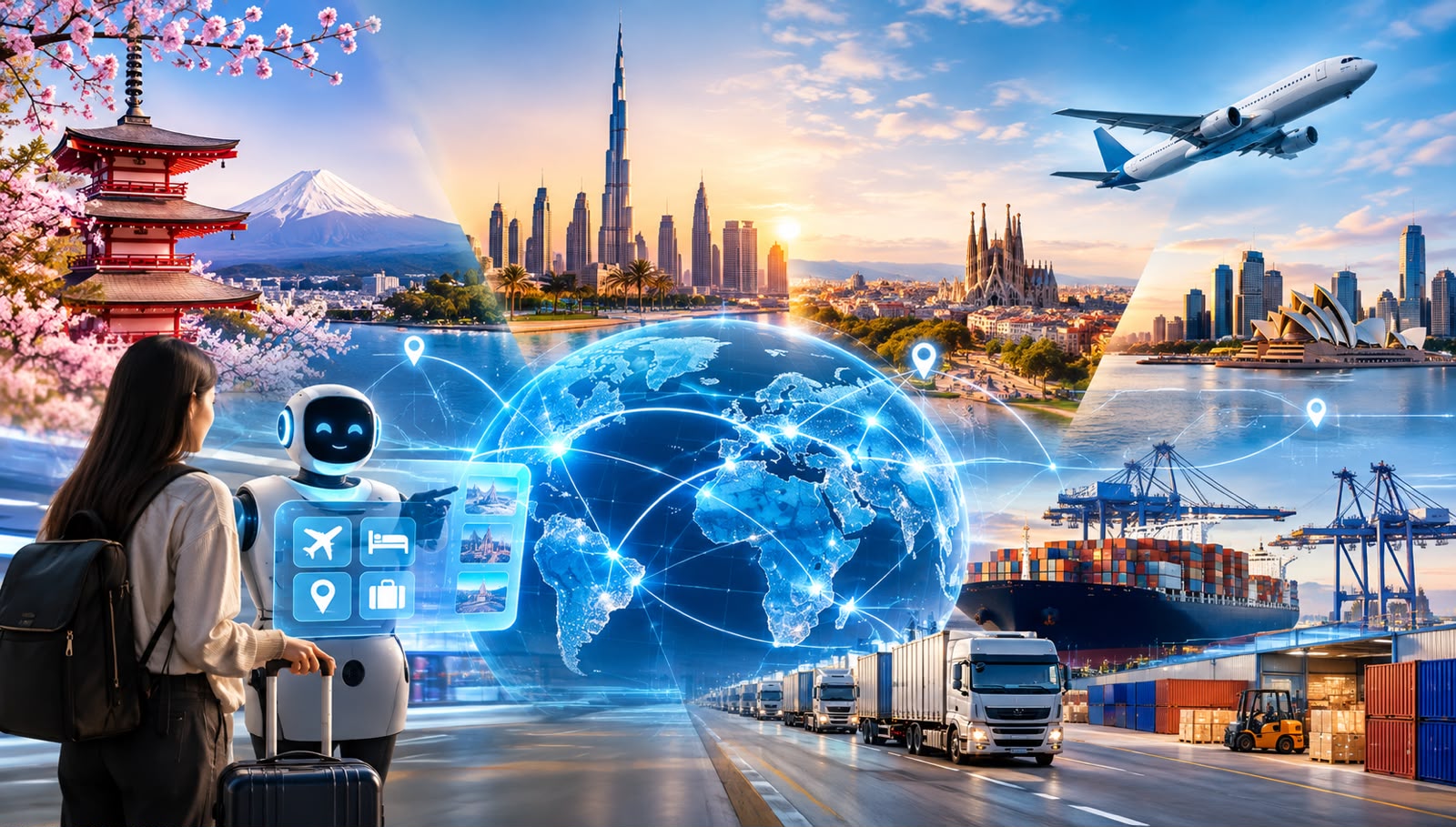
Image generated with Ai
As the world evolves into a space of constant innovation, Japan joins in on the growing collaboration between the UAE and other nations to design the autonomous AI travel agents and networks of the future. These international alliances are working tirelessly to bring a new era to tourism, one where the chaos of multiple-venue planning is transformed into a single automated software process. Governments and companies are implementing intelligent systems that allow the booking, securing, and transportation of orders with immediate ease and high efficiency. As a result, traditional methods of vacation planning are vanishing at an exponential rate.
Agentic AI is transforming the travel industry by shifting from passive text recommendations to autonomous, end-to-end itinerary execution, handling multi-site bookings, secure transactions, and real-time disruptions without human micro-management.
Advertisement
Advertisement
How Are US Tech Giants Revolutionizing Secure Autonomous Payments?
United States financial heavyweights are rapidly integrating advanced agentic payment frameworks to empower autonomous travel software. These robust systems utilize tokenised credentials that let intelligent software check out securely on behalf of users. Traditional checkout methods create massive friction because they require manual CAPTCHAs and one-time SMS passcodes. However, secure delegation tokens allow an AI agent to operate smoothly within strict budget caps. This technological leap enables software to lock down volatile flight prices instantly without exposing primary credit card details. Major financial networks are thus positioning themselves as the ultimate command layer for modern digital commerce.
Why Are UK Millennials Abandoning Traditional Search Engines?
Consumer behavior across the United Kingdom shows a massive shift as younger demographics abandon traditional search engines for agent-first planning. Gen Z and Millennial travelers increasingly prefer goal-oriented conversational interfaces over browsing through hundreds of fragmented browser tabs. This behavioral transition proves that brand trust is rapidly becoming an algorithmically computable metric. If hospitality brands maintain outdated or machine-unreadable digital platforms, they risk complete invisibility before any human consumer views their offers. Consequently, travel planning has transformed from an exhausting manual chore into an automated lifestyle choice.
Advertisement
Advertisement
“This groundbreaking cross-border collaboration proves that the travel sector is entering a definitive new era. By uniting international digital strategies, nations are successfully replacing legacy booking hassles with intelligent, self-executing software agents. Travelers no longer need to juggle dozens of open tabs, risk payment delays, or navigate overcrowded tourist hotspots manually. Instead, sophisticated artificial intelligence manages complex itineraries from start to finish with absolute precision. As global tech giants and governments establish these unified logistics frameworks, seamless and stress-free global mobility is finally becoming an everyday reality for everyone.”
— Anup Kumar Keshan, Founder and Editor-in-Chief, Travel And Tour World
Advertisement
Advertisement
How Does Japan Combat Overtourism Through Hyper-Customized AI Networks?
Japanese destination management organizations are coupling agentic systems with automated real-time translation networks to address surging inbound tourism pressures. Autonomous multi-agent platforms actively reroute incoming travelers away from overcrowded cultural hotspots like Kyoto towards serene regional prefectures. By analyzing live crowd density metrics and local transit schedules, these smart agents distribute economic benefits evenly across secondary locations. Furthermore, they instantly coordinate regional Shinkansen bookings and luggage forwarding services to elevate the visitor experience. This sophisticated digital orchestration protects fragile heritage sites while maintaining high satisfaction levels for international tourists.
You can access and interlink government services through the National Portal of India or the Integrated Government Online Directory (IGOD).
Advertisement
Advertisement
Why Are UAE Travelers Embracing Fully Automated Concierge Planning Agents?
The United Arab Emirates showcases exceptional digital maturity and ubiquitous high-speed connectivity that drives rapid adoption of autonomous luxury planning. High-net-worth consumers across the region demand high-velocity concierge services capable of managing complex elite itineraries effortlessly. Intelligent agents bridge fragmented luxury sectors including private aviation, yacht charters, and VIP desert excursions with remarkable precision. When unexpected disruptions occur, these self-contained systems instantly coordinate alternative schedules across enterprise-grade productivity suites. Ultimately, this autonomous reliability redefines modern luxury travel through seamless operational execution and uncompromised convenience.
| Market & Country | Primary Driver & Technology Layer | Operational Focus & Consumer Impact |
| United States | Tokenised payment frameworks, secure delegation tokens, and automated checkout architectures via Visa, Mastercard, and Google. | Eliminating transaction friction, instantly locking volatile fares, and authorizing autonomous software to handle end-to-end purchasing. |
| United Kingdom | Conversational agent-first interfaces replacing legacy metadata filtering and search engine keyword crawling. | Gen Z and Millennial adoption of goal-oriented trip planning, shifting digital brand discoverability to algorithmic machine-readability. |
| Japan | Real-time crowd density data feeds, Shinkansen booking APIs, and automated linguistic translation routing networks. | Mitigating overtourism in hotspots like Kyoto by dynamically rerouting inbound travelers to regional prefectures and rural hubs. |
| United Arab Emirates | High-velocity luxury integration layers connecting private aviation, VIP excursions, and automated self-healing itineraries. | Meeting the high-touch demands of frequent flyers and high-net-worth travelers with zero-latency operational adjustments. |
The combination of autonomous software, secure payments, and international cooperation will permanently change the tourism industry for the better. By linking together information systems, the process becomes much easier for the consumer. People get more out-of-the-box suggestions, disruptions are dealt with faster, and natural balance is restored in popular destinations. The entire field will see a sustainable increase in productivity and accessibility through a combination of systems from around the world.
Travel logistics before were fragmented, difficult to pay for, and caused over-crowding in popular destinations. The best way to solve this issue is to implement new cutting-edge software that uses a secure token-based system and digital treaties between countries. The reason that this method works much better is that it allows AI to plan multi-step processes, analyze patterns, and complete financial transactions with greater speed and security than ever before.
Advertisement
