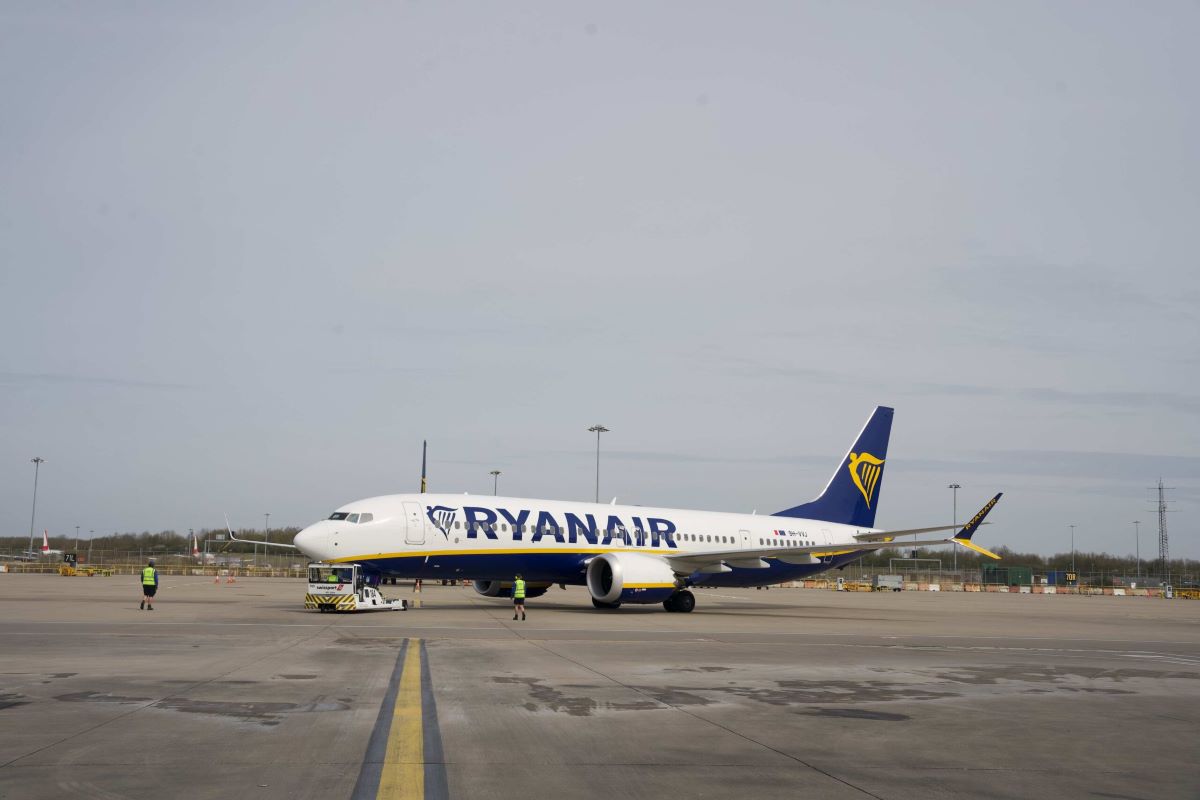
Ryanair is telling travelers that a harder winter is coming because choices about how seats to offer across its network in Europe are making ticket prices more expensive. The airline has said it will reduce flights at some airports while still growing its network. Costs like airport fees, taxes on flying and the money it takes to run the airline are very important in these decisions. For people who want to fly there might be seats on certain routes, which could make tickets more expensive if lots of people want to travel.. Ryanair isn’t just getting smaller. Its Winter 2026 plan has about 80 million seats 1,700 routes and more, than 140 new routes. The outcome is a different European flight map, where ticket prices and how connected airports are can change a lot from one place to another.
The latest Ryanair developments show a more complicated picture than a simple reduction in flights.
Advertisement
The airline has announced a large Winter 2026 schedule across Europe. According to its official corporate announcement, the programme includes around 80 million seats, approximately 1,700 routes across 35 countries and more than 140 new routes.
That is a major network. It also shows why the current changes need to be viewed at airport and route level.
Advertisement
Ryanair can reduce flights at one airport while adding aircraft, routes or seats elsewhere. For travellers, this means the overall size of the airline does not necessarily determine how easy or expensive a particular journey will be.
A passenger flying from an airport where Ryanair has reduced capacity could face fewer departure times. Another passenger travelling from an airport where the airline is expanding could see more choice and stronger competition.
This is becoming an important feature of Europe’s low-cost aviation market.
Ryanair’s business model depends heavily on keeping operating costs low. Airport charges are therefore a major factor when the airline decides where to base aircraft.
Advertisement
Advertisement
The airline has repeatedly argued that high airport charges and aviation taxes can make some European airports less attractive for low-cost operations.
Its official announcements provide several examples from 2026.
Berlin is one of the most significant.
In April 2026, Ryanair announced that it planned to close its seven-aircraft base at Berlin Brandenburg Airport from 24 October 2026. The airline said the decision followed another 10% increase in airport fees, after what it described as a 50% increase in Berlin airport fees since 2019.
The move is important because an aircraft base normally supports multiple routes. Removing aircraft from a base can therefore affect several destinations rather than just one city pair.
Ryanair said its winter flying from Berlin would be reduced substantially. The airline’s announcement linked the decision directly to the airport’s cost structure.
For travellers, the practical issue is straightforward.
When fewer aircraft are available at an airport, there may be fewer flights and fewer seats. If demand remains high, the reduced supply can create upward pressure on fares.
Berlin has a large population, a major international airport and an established tourism market.
Ryanair’s decision to close its base there therefore carries wider significance for passengers and businesses.
The airline has argued that high airport costs make Germany less competitive for low-cost aviation. Its March 2026 announcement on the German market also reported a reduction of around 150,000 seats in Berlin, equivalent to approximately 5%, and a reduction of around 70,000 seats in Hamburg, or 20%, in its Summer 2026 programme.
These figures show that the issue did not suddenly appear with the winter schedule.
Ryanair has been adjusting its German network for some time.
The airline’s position is that aviation taxes and airport charges affect the cost of operating flights. When those costs rise, airlines must decide whether the market can support the additional expense through fares or whether aircraft should be deployed elsewhere.
That decision can affect passengers in several ways.
The first is frequency.
A route that once operated several times a week may operate less frequently. That can make weekend breaks, business trips and connecting journeys less convenient.
The second is competition.
If one carrier reduces capacity, other airlines may have an opportunity to increase their presence. However, that does not automatically mean replacement capacity will appear at the same scale.
The third is pricing.
A route with fewer available seats can become more expensive during periods of strong demand.
That does not mean every Ryanair fare will rise. Prices are dynamic and can change according to demand, booking time, competition and available inventory.
But the relationship between supply and fares matters.
Germany is not the only market where Ryanair flight cuts are affecting the winter schedule.
Greece has also become a major part of the airline’s cost argument.
In May 2026, Ryanair announced the closure of its three-aircraft base at Thessaloniki for Winter 2026. The airline said the decision would cut 700,000 seats and remove 12 routes. It also announced the closure of operations at two Greek airports.
Ryanair attributed the decision to airport charges and its disagreement with the approach taken by Fraport Greece and Athens International Airport. Those claims represent the airline’s position and should be distinguished from independently established government findings.
Nevertheless, the announced capacity reduction is significant for the affected airports.
Greece depends heavily on international tourism.
Although winter travel is smaller than summer demand in many Greek destinations, air connectivity remains important for residents, businesses, tourism operators and visitors.
A reduction in low-cost seats can affect the ability of travellers to reach a destination directly.
It can also change the competitive landscape.
The number of seats removed from a schedule is not the same as the number of passengers who would have travelled.
An empty seat is not lost tourism spending.
However, scheduled capacity provides an important measure of potential connectivity. A reduction of 700,000 seats means fewer opportunities for passengers to book those flights.
That can be particularly relevant on routes where alternatives are limited.
If another airline does not replace the capacity, travellers may have to choose a different airport, travel on another day or pay more for the remaining flights.
The impact can extend beyond the passenger.
Hotels, restaurants, car rental companies, attractions and other tourism businesses depend on visitors being able to reach a destination.
Despite the cuts, it would be misleading to describe Ryanair as a shrinking airline.
Its official Winter 2026 announcement points in the opposite direction in several markets.
The airline has planned more than 140 new routes within its wider European winter programme. It is also continuing to announce new services and capacity increases in selected markets.
This supports a key point in understanding the current strategy.
Ryanair is not necessarily reducing its entire European footprint.
Instead, it is seeking to place aircraft where it believes the economics are stronger.
This approach can create winners and losers among airports.
Airports offering competitive charges can become more attractive to airlines. Airports with higher costs may face pressure to justify those charges if airlines reduce capacity.
That dynamic is especially important for regional airports.
Many smaller airports rely heavily on low-cost carriers. A single airline can account for a large share of their passenger traffic.
When that airline reduces operations, replacing the lost capacity can be difficult.
The wider European aviation industry operates under a complex mix of airport charges, passenger taxes, environmental requirements and other costs.
The European Commission maintains an official framework covering airport charges and air transport regulation. EU rules also govern passenger rights when flights are cancelled, delayed or disrupted.
For airlines, airport charges are one part of a broader operating-cost structure.
For airports, those charges help fund infrastructure and services.
That creates a difficult policy balance.
Airports need revenue to maintain facilities, improve capacity and support safe operations. Airlines, particularly low-cost carriers, want competitive costs so they can offer lower fares and operate high aircraft utilisation.
The conflict is therefore not simply about whether charges are high or low.
It is about how airport pricing affects connectivity.
An airport can collect more revenue per passenger through higher charges. But if those charges discourage airlines from adding flights, the airport could potentially lose passenger volumes.
Ryanair has made this argument repeatedly in its corporate announcements.
Its public statements should be understood as the position of the airline rather than as independent economic findings.
The German market illustrates how aviation taxes and airport charges can influence airline decisions.
Ryanair’s 2026 announcements have repeatedly highlighted Germany as a high-cost market.
In March, the airline said Berlin and Hamburg would lose capacity from its Summer 2026 schedule.
In April, it announced the planned closure of its Berlin base for the winter.
The pattern matters because Germany is one of Europe’s largest economies.
Air connectivity supports more than tourism.
It also supports business travel, labour mobility, international trade and access to European destinations.
A reduction in low-cost capacity can therefore have consequences beyond holidaymakers.
Business travellers may have fewer direct options.
Workers may face higher travel costs.
Families visiting relatives may have fewer convenient flights.
Tourism businesses may need to adapt to changes in visitor flows.
Ryanair’s dispute over airport costs extends to Spain.
In October 2025, the airline announced a reduction of 1.2 million seats from its Summer 2026 schedule in regional Spain. It also announced that it would stop flights to and from Asturias Airport.
The airline attributed the decision to what it described as high airport fees and its disagreement with Aena’s airport pricing.
Again, the figures are significant because regional airports can depend on airlines such as Ryanair to generate passenger volumes.
The Spanish case also highlights a broader question for European aviation policy.
How should airports balance the need to recover infrastructure costs with the need to attract airlines and passengers?
The answer can have a direct impact on regional connectivity.
Belgium is another example of how taxation can influence airline capacity.
In December 2025, Ryanair announced plans to cut 1 million seats, five based aircraft and 20 routes from its Brussels Winter 2026/27 schedule. The airline linked the decision to planned increases in aviation taxation and a proposed passenger.
This is important because taxes and airport charges do not operate in isolation.
An airline evaluates the total cost of operating a route.
That includes airport charges, passenger taxes, fuel, labour, aircraft costs, navigation charges and other expenses.
When several costs rise at the same time, a previously attractive route can become less profitable.
The airline then has several choices.
It can increase fares.
Or it can withdraw from the route.
The effect on travellers depends on which option the airline chooses.
The experience of Sweden offers a useful contrast.
In March 2026, Ryanair announced a record Summer 2026 schedule for Sweden, with more than 4.4 million passengers per year, eight based aircraft and 83 routes across six airports. The airline connected this expansion with the Swedish government’s decision to abolish the aviation tax from 1 July 2025.
This example demonstrates why taxation can become such a central issue in airline network planning.
Ryanair’s position is that lower aviation costs can support additional capacity.
Sweden therefore provides a counterpoint to markets where the airline has announced cuts.
However, each country’s aviation market has its own conditions.
Passenger demand differs.
Airport infrastructure differs.
Competition differs.
Taxes differ.
And airlines make their own commercial decisions.
The Swedish example should therefore not be interpreted as proof that removing a tax automatically guarantees a specific increase in passenger numbers.
It does, however, demonstrate the kind of policy environment Ryanair says can encourage network growth.
The biggest concern for passengers is simple: will Ryanair flights become more expensive?
The answer will vary by route.
Airline fares are not fixed across an entire network.
They change according to demand, competition, booking patterns, remaining seats and the timing of the journey.
If capacity is reduced on a popular route while demand remains stable or increases, the remaining seats can become more valuable.
That can push prices higher.
But if Ryanair adds capacity on another route, competition may keep fares lower.
This is why passengers should not assume that every Ryanair ticket will become more expensive during Winter 2026.
Instead, the likely impact will be uneven.
Passengers can reduce the effect of capacity changes by comparing nearby airports.
For some destinations, a flight from a regional airport may be cheaper than a flight from a major city airport.
The reverse can also happen.
Travellers should compare:
A low headline fare does not always produce the lowest total journey cost.
The airline’s financial results also provide useful context.
For its 2025/26 financial year, Ryanair reported €15.54 billion in group revenue. Scheduled revenue rose 14% to €10.56 billion, while passenger traffic increased 4% and fares were 10% higher.
Those figures show that the airline entered the 2026/27 period from a position of substantial scale.
The increase in fares also matters.
Ryanair reported that fares had recovered after a decline in the previous year. The company’s results therefore provide evidence that the pricing environment had already changed before the latest winter capacity decisions.
At the same time, the airline’s overall traffic continued to grow.
This reinforces the idea that the current strategy is not simply about cutting flights.
It is about balancing passenger growth, fares, operating costs and aircraft deployment.
Aircraft availability is another factor in airline capacity planning.
Ryanair reported in May 2026 that all 210 Boeing 737-8200 Game changer aircraft had been delivered.
That gives the airline a substantial fleet base for its European network.
The aircraft are designed to support the airline’s high-density, low-cost operating model.
Fleet availability gives Ryanair flexibility to move capacity between markets.
If one airport becomes too expensive, aircraft can potentially be redeployed elsewhere.
This is one reason airport-level decisions can have wider consequences.
A route cut does not necessarily mean that the aircraft disappears from the network.
It may simply appear somewhere else.
The latest decisions put pressure on airports as well as airlines.
For airports, attracting a major low-cost carrier can generate large passenger volumes.
Those passengers can support:
When an airline removes aircraft, the potential loss extends beyond ticket sales.
However, airports also need to fund infrastructure and services.
That creates a long-term policy challenge.
If charges are too high, airlines may reduce capacity.
If charges are too low, airports may struggle to fund investment.
The correct balance depends on local market conditions.
Tourism destinations with strong seasonal demand may feel capacity changes differently from large cities.
A destination that depends heavily on winter visitors could be more sensitive to a reduction in direct flights.
A major city with several competing airlines and airports may have more alternatives.
This means the effect of Ryanair flight cuts cannot be measured only by the number of routes removed.
The importance of each route matters.
A single daily service can be more valuable to a small destination than several services in a large competitive market.
Tourism authorities and airport operators therefore need to look beyond headline passenger numbers.
They need to examine where visitors come from, how long they stay and how much they spend.
The European air travel market is highly competitive.
Passengers can choose between traditional network airlines, low-cost carriers, regional airlines and rail services on some routes.
That competition creates pressure on airlines to maintain attractive fares.
But airlines also face rising operating requirements.
The EU is implementing environmental policies affecting aviation, including ReFuelEU Aviation, which requires the gradual increase of sustainable aviation fuel use at EU airports. The European Commission says more than 95% of air transport departing from EU airports will be covered by the regulation.
Environmental requirements are part of the industry’s longer-term cost structure.
Airlines therefore have to balance affordability, connectivity, profitability and environmental obligations.
That makes network planning increasingly complex.
Winter is traditionally different from the peak European summer season.
Demand patterns change.
Some leisure destinations become less popular.
Business travel can become more important on certain routes.
Airlines also adjust aircraft utilisation and schedules according to seasonal demand.
Ryanair‘s Winter 2026 programme therefore needs to be viewed within this broader seasonal context.
The airline is maintaining a very large network while selectively reducing capacity in markets where it says costs are too high.
That approach could continue to reshape Europe’s aviation map.
Airports that offer competitive operating conditions may attract additional aircraft.
Airports with higher charges may face pressure to demonstrate that those costs are justified by infrastructure, services or market demand.
The most important question is where Ryanair will place the aircraft affected by the cuts.
The airline has repeatedly demonstrated that it is willing to shift capacity between European markets.
Its record Winter 2026 schedule shows that expansion remains part of the strategy.
This could create new opportunities for airports seeking additional connectivity.
It could also intensify competition between European airports.
For travellers, the result may be a more fragmented low-cost network.
Some cities could gain new routes.
Others could lose them.
Some airports could see more flights.
Others could see fewer.
And fares could differ sharply depending on the balance between supply and demand.
The current Ryanair dispute highlights a broader issue facing European aviation.
Air connectivity has a cost.
Airports need money to operate.
Governments collect taxes.
Airlines pay for fuel, labour, aircraft, maintenance and air navigation services.
Environmental rules add another layer.
Passengers ultimately pay part of these costs through fares and additional charges.
The policy challenge is finding a balance that keeps aviation financially sustainable while maintaining affordable connectivity.
Ryanair’s announcements have made that debate highly visible.
The airline’s commercial decisions show how quickly capacity can move when operating conditions change.
For governments and airports, that creates a clear incentive to examine how pricing decisions affect connectivity.
For travellers, it means that the cheapest flight today may not remain available tomorrow.
There is no single fare outcome for all Ryanair passengers.
A traveller flying from an airport gaining capacity could benefit from more choice.
A traveller flying from an airport losing aircraft could face fewer options.
A route with several competing airlines may remain competitive.
A route dominated by one low-cost carrier could become more sensitive to capacity reductions.
That makes route-level analysis more useful than broad predictions about the entire airline.
The official data from Eurostat provides monthly air transport statistics by airport and type of transport, allowing changes in European airport activity to be tracked over time.
Those statistics can help distinguish announced capacity from actual passenger traffic.
That distinction matters.
A schedule change tells us what an airline plans to operate.
Passenger data shows what travellers actually use.
The emerging picture is clear.
Ryanair is not abandoning European growth.
It is becoming more selective about where that growth takes place.
The airline’s Winter 2026 programme remains enormous, but its base closures and capacity reductions show that airport economics can change its decisions quickly.
Berlin and Thessaloniki are among the strongest examples.
Spain and Belgium provide further evidence of the same broader tension.
Sweden provides a contrasting example where Ryanair says lower aviation costs have supported network expansion.
For European travellers, the message is not that every Ryanair fare will rise.
The more important message is that capacity is becoming increasingly dependent on local operating costs.
Where aircraft are available and competition remains strong, low fares may continue.
Where capacity is reduced and demand stays high, passengers could face higher prices and fewer convenient choices.
The winter schedule will therefore be closely watched by travellers, airports, tourism businesses and policymakers across Europe.
Ryanair is preparing for Winter 2026 with a network across Europe but its decisions about how much capacity to offer show that airport costs, taxes and the conditions at each airport can have a big impact on where the planes go. Berlin and Thessaloniki are facing cuts while other places are getting more routes and more seats. For people who are travelling the effect will be different depending on which airport they are at and which route they are taking. Fewer seats can lead to prices when there is still a lot of demand but new seats can keep competition and choices strong in other areas. Ryanair’s plan shows that the European aviation map is changing, not just getting smaller. Airports, governments and businesses, in tourism will need to keep an eye on capacity, costs and how many people are travelling.
[Source:- Financial Times]
Image Caption:- Ryanair
Advertisement
Advertisement
Advertisement












Wednesday, September 2, 2026

Wednesday, September 2, 2026

Wednesday, September 2, 2026

Wednesday, September 2, 2026

Wednesday, September 2, 2026

Tuesday, September 1, 2026

Wednesday, September 2, 2026

Wednesday, September 2, 2026



