
Madeira Aligns With Edinburgh as Europe’s New Year Celebrations Put Hotel Prices, Flight Demand and Winter Tourism Under the Spotlight

Published
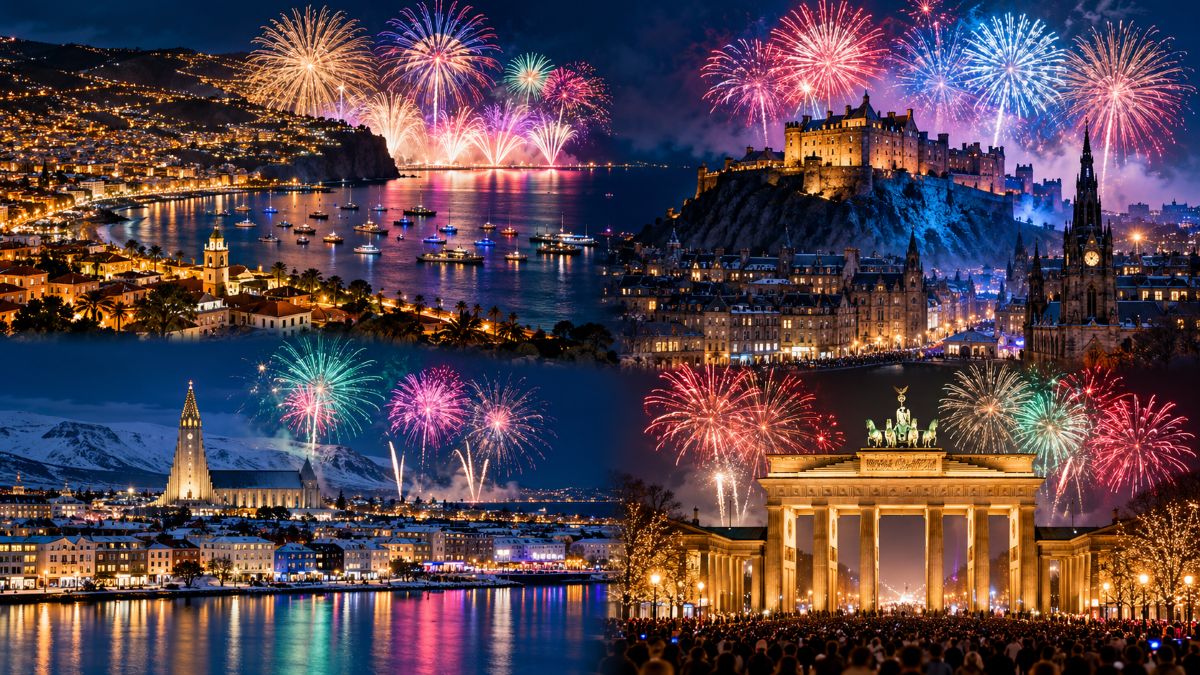
Europe’s New Year celebrations are testing four different models of winter tourism as Madeira, Edinburgh, Reykjavík and Berlin prepare to welcome 2027. Madeira recorded more than 12.9 million accommodation overnight stays in 2025, while Edinburgh’s Hogmanay festival will run for four days from 29 December 2026. Reykjavík offers a decentralised celebration shaped by Icelandic traditions, whereas Berlin is preparing another major gathering at the Brandenburg Gate. Yet spectacular countdowns do not automatically translate into longer holidays or sustained hotel demand. The decisive questions concern room prices, flight capacity, minimum-stay rules and visitor spending after 1 January. For travellers and tourism businesses, the real contest is whether event-driven demand extends the winter season or concentrates bookings into a few expensive nights.
Four Celebrations, Four Distinct Tourism Models
New Year’s Eve remains one of Europe’s most visible winter travel occasions. However, its commercial value varies according to the event’s format, destination accessibility and surrounding attractions. Comparing these factors reveals why visitor numbers alone cannot establish which celebration delivers the strongest tourism benefits.
Madeira builds its appeal around Funchal’s spectacular fireworks and the island’s mild Atlantic winter. Edinburgh combines its midnight festivities with a wider programme of music, performances and Scottish cultural traditions. Reykjavík offers bonfires and community celebrations alongside Iceland’s winter landscapes. Berlin, meanwhile, draws visitors through a metropolitan mix of public festivities, nightlife, museums and cultural attractions.
The distinction matters because event attendance, hotel occupancy and overnight stays measure different outcomes. A large crowd might include local residents, day visitors and tourists who would have visited regardless. Conversely, a smaller ticketed event could generate substantial accommodation revenue if visitors arrive early and extend their holidays.
Advertisement
Advertisement
The most useful comparison therefore examines how each destination converts a celebration into paid nights, transport demand and wider visitor spending.
Madeira’s Fireworks Meet a Record-Breaking Accommodation Market
Madeira enters the 2026–27 festive season with substantial tourism growth behind it. The Regional Directorate of Statistics recorded more than 12.9 million overnight stays across all tourist accommodation in 2025, representing a 7.9% annual increase. Collective tourist accommodation recorded 2.4 million guest arrivals and 12.7 million overnight stays.
Advertisement
Advertisement
The island’s accommodation indicators also point to mounting revenue and pricing pressure. Its reported average daily rate reached €123.86 in 2025, while revenue per available room, or RevPAR, reached €97.03. Both measures increased year on year, by 13.3% and 16.2% respectively. These are annual regional indicators, not New Year’s Eve prices, but they provide essential context for travellers assessing the cost of a winter break.
| Madeira accommodation indicator, 2025 | Reported figure |
|---|---|
| Overnight stays across all tourist accommodation | More than 12.9 million |
| Annual growth in all accommodation overnight stays | 7.9% |
| Average length of stay in tourist accommodation | 4.70 nights |
| Average daily rate (ADR) | €123.86 |
| Revenue per available room (RevPAR) | €97.03 |
| Total accommodation revenue, defined statistical coverage | €887.1 million |
The average stay of 4.70 nights is particularly relevant. It suggests that the island’s wider accommodation market supports multi-night visits, although it does not reveal how long New Year’s visitors stay specifically. The distinction matters because the fireworks could act as a booking trigger for a holiday that also includes coastal villages, mountain scenery and walking routes.
Advertisement
Advertisement
Madeira’s challenge is to capture more value from those additional nights. Travellers should compare accommodation in Funchal with options elsewhere on the island, while allowing for transport costs and the time required to reach the main celebration. A lower nightly rate outside the capital does not automatically produce a cheaper or more convenient festive break.
The evidence also reveals a broader industry development. Local accommodation recorded 18.7% growth in overnight stays during 2025, reaching approximately 3.8 million nights. That increase outpaced the wider collective accommodation market, suggesting that the distribution of demand across property types deserves attention.
However, the island’s annual growth cannot be credited to the fireworks alone. A robust assessment needs December and January occupancy, event-specific visitor research and matched room prices. Without those measures, Madeira’s figures establish a strong tourism backdrop rather than a quantified New Year’s effect.
Edinburgh Extends the Celebration Beyond Midnight
Edinburgh offers a different proposition: a structured festival that gives visitors reasons to arrive before 31 December and remain into January. The official 2026–27 programme is scheduled to run from 29 December 2026 to 1 January 2027, beginning with the Torchlight Procession. The celebrated Street Party is planned for 31 December, with capacity for approximately 45,000 revellers.
Advertisement
Advertisement
The first day of January also features cultural activities, including the First Footin’ trail and family-oriented events. This programme creates opportunities to spread visitor spending across restaurants, accommodation, entertainment venues and attractions. It also provides a practical reason to book a longer stay rather than treating the countdown as a standalone evening.
The previous festival provides useful evidence of scale. VisitScotland reported that the 2025–26 Torchlight Procession involved more than 15,000 torchbearers and 10,000 spectators. The event also raised more than £40,000 for local charities, illustrating how a major festival can deliver community benefits beyond hotel revenue.
Nevertheless, crowd capacity is not the same as tourist demand. Some attendees live locally, while others may visit Edinburgh without staying overnight. To measure the festival’s commercial impact, researchers need to compare hotel occupancy and visitor spending across the full programme, including the nights before and after the main event.
Edinburgh’s booking arrangements also deserve closer scrutiny. An official Hogmanay travel package advertises a minimum two-night accommodation stay, with opportunities to extend the visit. This is a package-specific condition, not a universal rule imposed on every Edinburgh hotel.
For visitors, that distinction can materially affect budgeting. Travellers should check whether a minimum stay comes from the hotel itself, a bundled travel package or a particular event offer. They should also confirm that tickets cover the intended event: access to the Gardens concert does not automatically include entry to the Street Party.
The wider lesson for tourism operators is that a multi-day programme can create a broader commercial window. Yet the benefit depends on actual room-night demand, not simply the number of events on the calendar. Daily occupancy and length-of-stay data would show whether Edinburgh successfully converts festival attendance into extended city breaks.
Advertisement
Advertisement
Reykjavík’s Winter Appeal Faces a Demand Test
Reykjavík’s New Year’s Eve differs from a single, centrally ticketed spectacle. Its celebrations include community bonfires, private fireworks and neighbourhood gatherings, creating a more dispersed pattern of activity. In December 2025, the city listed 10 New Year’s bonfires, with individual locations and scheduled lighting times. Weather conditions can affect whether fires proceed.
This decentralised format makes simple attendance comparisons difficult. A central event’s ticket allocation provides a defined capacity measure, whereas Reykjavík’s wider festivities involve multiple locations and private celebrations. Consequently, the city needs visitor surveys and accommodation data to quantify the event’s tourism contribution.
The latest available hotel figures also challenge assumptions about winter demand. Statistics Iceland reported nearly 300,000 hotel overnight stays nationally in December 2025, down 11.4% from approximately 339,000 a year earlier. The capital region experienced a 16.4% decline, accounting for much of the national reduction.
These figures do not mean that Reykjavík’s New Year’s celebrations failed. They cover the entire month, and the city’s event could still have generated a concentrated peak. However, they demonstrate that a famous winter celebration does not guarantee growth across the wider accommodation market.
| Iceland hotel indicator | December 2025 | Change from December 2024 |
|---|---|---|
| National overnight stays | Nearly 300,000 | −11.4% |
| Capital-region overnight stays | Not stated in the cited summary | −16.4% |
| National hotel-room occupancy rate | Not stated in the cited summary | −6.8 percentage points |
| Hotels operating nationally | 166 | 163 in December 2024 |
| Hotel rooms available nationally | 11,773 | Supply increased by 1.5% |
The data also highlight a distinction between room supply and demand. Iceland had more hotels and hotel rooms operating in December 2025, yet overnight stays and occupancy declined. A destination’s accommodation performance therefore depends on the balance between available inventory and actual demand, not simply on its international profile.
For travellers, Reykjavík can be a gateway to a wider winter itinerary. Geothermal bathing, Northern Lights excursions and journeys beyond the capital may justify several nights. However, travellers should treat weather-dependent excursions as uncertain and avoid assuming that every winter attraction will operate as planned.
Advertisement
Advertisement
There is also a practical consideration often omitted from festive travel coverage. Reykjavík’s official measurements recorded severe fireworks-related particulate pollution during the opening hours of 2026. At the Grensás monitoring station, hourly PM10 reached 1,043.4 micrograms per cubic metre at 2am on 1 January. The city advised people, particularly those vulnerable to respiratory problems, to take precautions.
For visitors, this adds an important dimension to the celebration experience. Outdoor festivities can be memorable, but local safety advice, weather forecasts and air-quality updates deserve attention alongside restaurant reservations and excursion bookings.
Berlin’s Countdown Tests the Limits of Event-Led Demand
Berlin combines a prominent public celebration with a large, diversified city-break economy. The Brandenburg Gate event scheduled for 31 December 2026 will feature live music and DJ performances, although the full programme remains under development. Visitors should therefore verify ticket arrangements and event details before committing to non-refundable travel.
The city’s latest annual figures underline the scale of its wider tourism market. Berlin recorded 29.4 million overnight stays by approximately 12.4 million guests in 2025, according to the Berlin-Brandenburg statistical authority. International visitors accounted for around 41% of overnight stays, with the United States, United Kingdom and Netherlands among the leading foreign source markets.
Those totals provide a useful baseline, but they cannot establish how many visitors travelled specifically for New Year’s Eve. Berlin’s cultural attractions, nightlife, museums and business events generate demand throughout the year. Researchers must therefore distinguish festive travel from the city’s existing visitor economy.
A further complication is the changing format of the Brandenburg Gate celebration. The 2025–26 event followed the cancellation of a traditional privately organised show and was replaced by a publicly planned celebration with around 20,000 free tickets. The change illustrates how funding decisions and event organisation can alter capacity and visitor arrangements from one year to another.
Advertisement
Advertisement
For the upcoming celebration, the most revealing indicators will be daily hotel occupancy, comparable room prices and the share of visitors staying beyond New Year’s Eve. If room demand remains elevated through the first weekend of January, the event may help support a longer city break. If the peak quickly recedes, the commercial benefit may be more concentrated.
Berlin’s broad accommodation and attraction base could help visitors extend their trips without relying on the countdown alone. However, that remains a proposition to test against daily tourism data rather than an established outcome.
Flights and Room Rates Need a Fair Comparison
Flight availability and hotel pricing can shape a festive trip as much as the event itself. Yet the evidence assembled for this comparison does not establish a verified ranking of 2026–27 airfares, airline seat capacity or New Year’s room prices across the four destinations. Publishing such a ranking without matched observations would risk misleading readers.
A meaningful airfare comparison should use equivalent travel dates, booking windows, baggage allowances and connection conditions. Scheduled seats and flight frequency can reveal the transport capacity offered, while fare snapshots show what travellers actually encounter when searching. Neither measure alone proves that an aircraft is full or that the celebration caused a price increase.
Hotel rates require similar discipline. The table below sets out the comparison readers should expect from a fully matched price survey, rather than presenting unverified prices as established facts.
| Travel measure | Comparison required | Value to readers |
|---|---|---|
| Airfare | Equivalent return journeys and booking dates | Reveals transport-cost differences |
| Flight frequency | Scheduled services during the festive period | Shows flexibility and route availability |
| Hotel rates | Identical room type and cancellation terms | Makes accommodation costs comparable |
| Minimum stay | Verified property or package conditions | Identifies booking restrictions |
| Post-event pricing | Rates for 1–3 January and later dates | Shows whether premiums persist |
The central calculation is the event-date premium: the percentage difference between a room’s price on a festive date and its price on a comparable non-event date. A consistent comparison should also consider the full cost of a three- or four-night trip, including transport, transfers, meals and event tickets.
Advertisement
Advertisement
Travellers should book around their actual itinerary rather than assuming every destination requires the same arrival date. They should also check cancellation conditions and minimum-night requirements before purchasing flights. Where schedules or event details remain provisional, flexible arrangements can reduce the financial consequences of changes.
What the Evidence Means for Winter Tourism
The four destinations reveal why event capacity, annual tourism growth and short-term hotel performance should not be treated as interchangeable measures. Madeira’s annual accommodation growth demonstrates a strong wider market, while Edinburgh’s multi-day festival provides a clear structure for extending visits. Reykjavík’s declining December hotel stays expose the risks of relying on destination reputation alone, and Berlin illustrates the complexity of measuring an event within a diversified city economy.
For tourism businesses, the most useful performance measure is not simply attendance. It is the additional room-night demand generated by the event, adjusted for normal seasonal patterns and visitors who would have travelled anyway. Daily occupancy, average length of stay, revenue per available room and visitor spending can collectively provide a stronger assessment.
A convincing evaluation also needs a counterfactual. Researchers should compare the event period with similar winter dates, previous years and wider market conditions. Changes in flight supply, hotel inventory, household budgets and competing events can influence results independently of the celebration.
The decisive test is whether visitors stay longer because of the event. Until comparable event-period data become available, no defensible ranking can establish which destination generates the greatest additional tourism value. What the current evidence does show is that travellers should compare the entire holiday, while operators should measure demand beyond midnight.
Advertisement
