
San Francisco 4,000-Square-Foot Outdoor Terrace at United Airlines SFO Club Sparks 2026 Lounge War – What Others Are Missing in Airport Experience Design Shift

Published
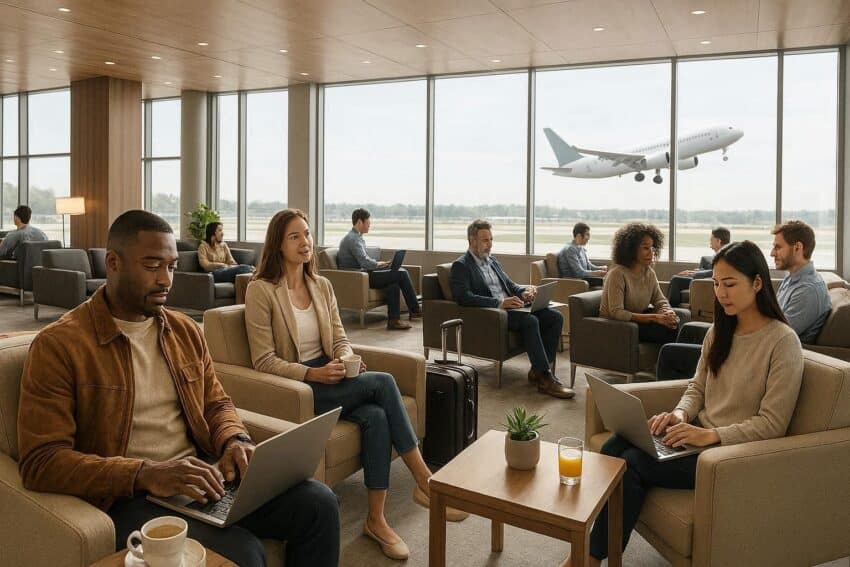
A major transformation is underway at San Francisco International Airport in 2026 as United Airlines prepares to open a new premium lounge featuring a 4,000-square-foot outdoor terrace. The development is expected to debut by the end of 2026 inside Terminal 2 at San Francisco International Airport.
This is not just another lounge upgrade. It signals a structural change in how airlines compete for high-value passengers. The timing matters because global carriers are rapidly shifting toward experience-driven travel. Premium flyers, business travellers, and loyalty members are now choosing airlines based on comfort before boarding, not just in-flight service.
Advertisement
Advertisement
The key impact is clear. Airport lounges are evolving into destination spaces. And United’s latest design move is directly aimed at redefining what modern travel comfort looks like in a post-pandemic, experience-first aviation economy.
San Francisco Becomes a Global Testing Ground for Lounge Innovation
San Francisco is emerging as a strategic laboratory for airline experience design. The new United Club will become the airline’s fourth and largest lounge at the airport, reinforcing the city’s importance as a premium transpacific hub.
Advertisement
Advertisement
The facility will span 25,000 square feet, making it larger than United’s existing airport lounges at SFO. It will sit beneath the Air Canada Maple Leaf Lounge, placing it inside a high-traffic alliance ecosystem.
What makes this development significant is its positioning within a broader global race. Airlines are no longer competing only on routes or fares. They are competing on “pre-flight experience architecture.” San Francisco is now at the centre of that competition.
Advertisement
Advertisement
Key strategic shifts include:
- Expansion of long-stay lounge environments
- Increased focus on natural light and outdoor integration
- Strong alignment with business travel recovery trends
- Enhanced alliance hub coordination
Inside the 4,000-Square-Foot Outdoor Terrace Experience
The most defining feature of the new lounge is its 4,000-square-foot outdoor terrace overlooking the airfield. This is the largest outdoor lounge space ever built by United.
Advertisement
Advertisement
The terrace has been designed to function as a hybrid social and relaxation zone. It includes seating areas for solo travellers and groups, offering flexible usage patterns depending on passenger flow.
A standout feature is a “pass-through bar” concept, allowing passengers to order drinks without fully entering the indoor lounge space. This reflects a growing shift toward fluid mobility within airport environments.
Additional design elements include:
- Partially covered seating zones
- Built-in heating systems for winter comfort
- Shade-optimized layouts for summer travel peaks
- Direct airfield visibility for aircraft viewing
The design aims to extend usability across all seasons, reflecting the Bay Area’s mild climate and United’s push for year-round experiential consistency.
Advertisement
Advertisement
San Francisco Eclectic Design and the Rise of Biophilic Aviation Spaces
The lounge will feature a “San Francisco eclectic” design language inspired by local parks, creative culture, and public outdoor living spaces. This represents a wider aviation trend where airlines integrate city identity into airport interiors.
The design direction aligns with growing biophilic principles in transport architecture. Natural airflow, outdoor connectivity, and open-air environments are now being prioritised to reduce passenger stress and improve dwell-time quality.
This shift reflects deeper behavioural changes:
- Travellers are spending more time in airports
- Premium passengers expect wellness-oriented environments
- Corporate travel recovery has increased lounge dependency
- Airports are becoming lifestyle ecosystems rather than transit points
United’s approach signals that the lounge is no longer a waiting area. It is a curated experience zone.
Global Lounge Competition Intensifies Across US Airports
The San Francisco project is part of a wider United expansion strategy across major US hubs. The airline is simultaneously building new premium clubs at Washington Dulles International Airport and Houston’s George Bush Intercontinental Airport.
The Houston lounge will be even larger at 54,000 square feet and will also include an outdoor terrace, reinforcing a clear competitive direction.
Advertisement
Advertisement
Other airlines are responding aggressively:
- American Airlines is introducing outdoor decks in Austin and Nashville
- Delta Air Lines operates premium terraces at Los Angeles and Seattle
- Amex Centurion lounges are integrating open-air seating concepts
This competitive escalation shows a clear trend: lounge design is becoming a key brand battleground in aviation.
Why Outdoor Terraces Are Becoming the New Aviation Luxury Standard
The rise of outdoor terraces reflects a deeper transformation in passenger psychology. Travellers are increasingly prioritising openness, air quality, and spatial freedom.
Key drivers include:
- Post-pandemic demand for open-air environments
- Increased stress levels in congested airports
- Demand for wellness-driven travel infrastructure
- Social media influence on experiential travel design
Airports are now competing to offer “Instagram-ready” environments without explicitly branding them as such. This subtle shift is reshaping architectural priorities across global terminals.
United’s SFO terrace is therefore not an isolated project. It is part of a systemic redesign of airport experience logic.
Advertisement
Advertisement
Airports Are Becoming Urban Lifestyle Extensions
The most important shift is not the terrace itself, but what it represents. Airports are no longer passive transit infrastructure. They are becoming extensions of urban lifestyle districts.
San Francisco is uniquely positioned for this transformation because of its cultural identity, tech-driven economy, and outdoor-centric lifestyle.
This creates a new aviation category:
- Airport as destination
- Lounge as social space
- Boarding gate as transition zone
- Travel as continuous experience flow
United’s terrace is effectively a preview of this future model.
Industry Commentary from TTW Leadership
According to Mr. Anup Kumar Keshan, Founder and Editor-in-Chief of Travel And Tour World, the shift represents a fundamental redefinition of airline competition.
He noted that premium aviation is no longer defined by seat quality alone, but by the emotional architecture of the journey. The San Francisco terrace demonstrates how carriers are now investing in psychological comfort, not just physical infrastructure.
Advertisement
Advertisement
He further emphasized that airlines failing to integrate outdoor, wellness-driven spaces risk losing high-yield corporate and premium leisure segments over the next decade.
A New Era of Airport Experience Has Begun
The 4,000-square-foot terrace at San Francisco is more than a design feature. It is a strategic signal of where global aviation is heading. Airports are being reimagined as lifestyle ecosystems, and lounges are becoming central to airline identity.
As 2026 approaches, the competition will intensify across major hubs, but San Francisco is already setting a benchmark. United’s move reflects a broader truth: the future of aviation will be defined by experience, not just movement.
Travellers, airlines, and airport operators must now adapt to this new reality where the journey begins long before take-off.
Advertisement
