
Eastern Europe Tourism Surges as Croatia and More Attract Digital Nomads and Long-Stay Travellers

Published
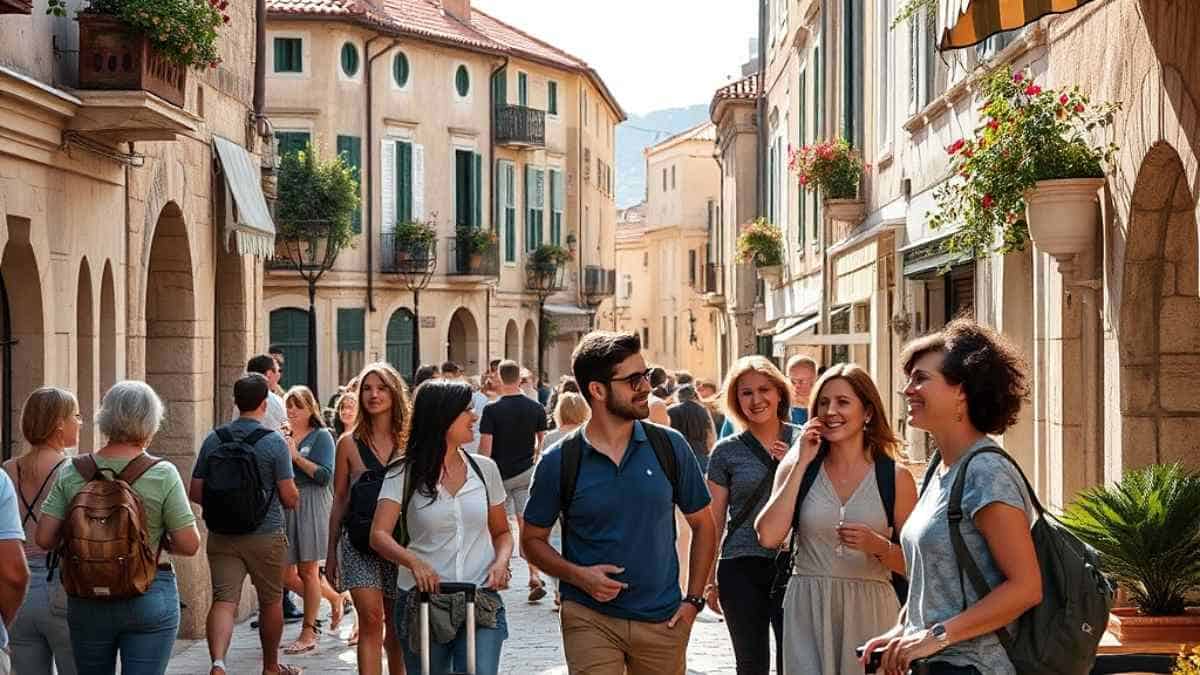
Image generated with Ai
An unprecedented structural realignment is being engineered across Eastern Europe and the Western Balkans as legacy Western European hotspots become constrained by over-tourism and regulatory caps. Driven by national digitisation programmes, legislative residence reforms, and modernised border operations, a transition is being undertaken from an unheralded transit periphery into a premier destination for long-stay professionals and transnational travellers. Central to this macroeconomic shift is the rapid evolution of post-Schengen tourism flows. By linking micro-regional visa alignments with decentralised transport infrastructure, transient seasonal visitors are converted into high-yield resident economic contributors by emerging corridor states, while the engagement of global travellers with Europe’s eastern frontier across competitive networks is redefined.
The Over-Tourism Exodus: Capacity Constraints Driving Traffic Eastward
An operational tipping point has been reached regarding the structural saturation of legacy destinations across Western Europe. Stringent regulatory mechanisms to curb excessive visitor density have been instituted by municipal administrations in premier urban centres—most notably Venice, Barcelona, Amsterdam, and Paris. These interventions range from day-tripper access levies and strict quotas on short-term holiday rentals to complete moratoria on hotel development and municipal caps on cruise ship arrivals. Concurrently, a fundamental reallocation of European travel capital has been accelerated by intense summer heatwaves across the Western Mediterranean basin, escalating cost-of-living overheads, and rising resident backlash against visitor influxes.
Advertisement
Advertisement
An escalating exodus of international leisure and business travellers seeking alternatives has been reported by institutional destination management organisations and corporate tour operators. Rather than constrained bed nights being competed for in hyper-regulated Western markets, capital flows and consumer footfall are being redirected toward secondary and tertiary corridors in Central Europe, the Baltic States, and the Western Balkans. This passenger dispersion is not merely geographic; a qualitative shift in market demand is represented. Destinations characterised by low visitor density, intact cultural landscapes, competitive pricing structures, and uncrowded municipal infrastructure are increasingly gravitated toward by affluent travellers and remote knowledge workers.
High-value market segments are being captured by regional tourism boards across the eastern frontier through the systematic addressing of these evolving consumer preferences. A strategic departure is made from low-margin, high-volume mass tourism in favor of regenerative models whereby local commerce is stimulated throughout all four seasons. Consequently, their territories are being positioned by national planning bodies in Croatia, Albania, Serbia, Bosnia and Herzegovina, and the Baltic republics not as secondary alternatives to Western Europe, but as agile, primary hubs for post-Schengen travel.
Advertisement
Advertisement
Navigating the Post-Schengen Reality: EES Deployment and Border Logistics
A systemic transformation is being undergone by the geopolitical and operational architecture of European cross-border mobility following the comprehensive deployment of the European Union’s automated Entry/Exit System. Promulgated under European Commission directives to replace manual passport stamping at external Schengen perimeters, non-EU nationals travelling for short stays across all external land, air, and sea crossing points are registered by the automated platform.
Following formal adoption under Commission Implementing Decision (EU) 2025/1544, the collection of biometric data was initiated by border control agencies, whereby four individual fingerprints and a facial scan are required to be submitted by third-country nationals so that a digital profile valid for an extended multi-year duration may be established. The comprehensive deployment of automated registration infrastructure across all international border crossing points on its external perimeter was completed by Croatia, by which the European Union’s southeastern frontier is anchored.
Advertisement
Advertisement
While reliable tracking of short-stay authorisations is established by the digital transition without reliance on physical ink stamps, immediate operational friction at high-density road checkpoints has been introduced by the registration process. Because multi-minute dossier creation per passenger is required for the inaugural entry under the biometric system, processing queues at critical land borders during peak travel periods have been lengthened substantially.
This biometric friction is particularly visible along the Karasovići – Debeli Brijeg border crossing, by which Croatia’s Dubrovnik Riviera is linked with Montenegro along the Adriatic Highway. Substantial queuing timeframes and extensive vehicular queues are consistently generated during high-volume summer operations and peak holiday congestion surges.
Advertisement
Advertisement
Acute seasonal congestion during diaspora holiday transit windows is similarly experienced along major overland passenger and freight routes across the Western Balkans, including the Gradina – Kalotina corridor between Serbia and Bulgaria, as well as the Preševo – Tabanovce junction between Serbia and North Macedonia. High volumes of cross-border commuters, commercial freight, and seasonal tourists are navigated by checkpoints linking Croatia with Bosnia and Herzegovina, such as Maljevac and Slavonski Brod.
Automated transit tools are being introduced by regional transport ministries, border police directorates, and private operators so that border paralysis may be mitigated. A public web-portal providing refreshed live camera feeds across all land borders is operated by the Ministry of Interior of Montenegro. Simultaneously, real-time waiting-time telemetry and dispatch warnings are delivered by the Croatian Automobile Club. Smaller vehicular volumes are increasingly rerouted toward secondary crossings, such as the Vitaljina – Kobila checkpoint, by tour companies and cross-border carrier networks, while mobile applications that incorporate live border wait times into itinerary planning are deployed.
The Nomad Economy Transformation: Long-Stay Residencies and Hospitality Restructuring
Parallel to the implementation of automated border management systems, targeted micro-regional visa alignments have been enacted by governments across Eastern Europe and the Western Balkans so that high-value remote workers may be captured. Moving beyond short-term tourist entries and standard corporate visas, dedicated legal residence frameworks for location-independent tech professionals, management consultants, and digital entrepreneurs are offered through these legislative initiatives. Post-Schengen tourism flows are directly reshaped as mobile knowledge workers from the United Kingdom, North America, the Middle East, and Latin America are drawn into emerging lifestyle centres.
This legislative transformation in Southeastern Europe was spearheaded by Croatia through iterative amendments to its foundational Aliens Act (Zakon o strancima). Temporary residence may be secured by qualifying third-country remote professionals under the revised statutory framework. A central economic pillar of the Croatian regulation is formed by a blanket domestic personal income tax exemption on income earned from foreign-registered enterprises. In urban hubs such as Zagreb, Split, and Zadar, structural restructuring across the hospitality real estate sector has been driven by the expansion of the remote work programme. Short-term holiday apartments are being converted into year-round co-living hubs, winterised residential suites, and serviced desk offices by private real estate developers and independent operators. The extreme seasonal demand fluctuations that historically affected the Adriatic coast are dampened by this asset repositioning, while year-round revenue generation is supported for local landlords, utilities, and commercial districts.
Advertisement
Advertisement
In the Western Balkans, an agile talent attraction policy has been adopted by Albania, codified under the Law on Foreigners (Law No. 79/2021) and amended via Law 43/2025. Central to this policy is the Unique Permit (Leje Unike), a consolidated administrative instrument by which residence and work clearance are merged into a single electronic card issued via the e-Albania public portal. A residence permit may be obtained by non-EU remote workers and company directors under the subcategory for digital mobile workers (punonjës lëvizës), subject to basic subsistence verification, with an accessible pathway to permanent residency provided after continuous compliance.
Complementary legislative frameworks have been advanced by Montenegro, whereby Type D long-stay nomad structures are tailored so that technology specialists may be attracted, domestic technology ecosystems may be strengthened, and seasonal real estate markets outside peak summer periods may be balanced.
Within the European Union frontier, distinctive, mutually reinforcing models are offered by Estonia and Romania. Europe’s foundational benchmark for digital residency is maintained by Estonia, with its Digital Nomad Visa being integrated directly with its national e-Residency digital identity ecosystem. A strong position in the regional market has been established by Romania following the implementation of Law 22/2022 alongside the tax provisions codified in Law 69/2023. A full exemption on Romanian personal income tax and mandatory social contributions for an initial period of domestic residence is benefited from by qualifying non-EU remote employees and overseas business owners. Supported by Romania’s extensive high-speed gigabit fiber-optic network and competitive living costs, major digital nomad hubs have been developed across cities such as Bucharest, Cluj-Napoca, Timișoara, and Brașov.
A notable reduction in economic leakage is generated by the extended duration of stays under these micro-regional visa schemes. Whereas significant operational margins are channelled through overseas flight consolidators, foreign tour operators, and multinational booking engines by standard package tours, funds are injected directly into the local economy by digital nomads through long-term leases, domestic retail purchases, neighbourhood co-working memberships, and regional hospitality.
| Sovereign Jurisdiction | Primary Legal Instrument | Core Residence Duration Terms | Core Fiscal & Regulatory Benefits |
| Croatia | Aliens Act (Zakon o strancima) | Multi-month temporary residence | Exemption from domestic personal income tax on foreign-sourced earnings |
| Albania | Law on Foreigners No. 79/2021 & Law 43/2025 (Leje Unike) | Renewable term under multi-year framework | Single administrative permit card; accelerated path to permanent settlement |
| Romania | Law No. 22/2022 & Law No. 69/2023 | Initial year with extension provision | Exemption from local personal income tax and mandatory social contributions during initial period |
| Estonia | Aliens Act Amendments (Digital Nomad Visa) | Full-year Type D legal status | Direct integration with national e-Residency digital identity infrastructure |
Micro-Regional Multi-Destination Packaging and Integrated Corridors
In response to border digitisation and the rise of extended-stay remote travel, traditional single-city itineraries are being moved away from by commercial operators and regional destination management organisations. In their place, cross-border travel corridors connecting complementary destinations across administrative borders are being developed. Administrative friction is reduced along these integrated journeys through pre-cleared transport corridors, private transit logistics, and synchronized ticketing systems.
A prominent example is provided by the Southern Adriatic-Balkan transit route. The coastal destinations of the Albanian Riviera—such as Sarandë and Vlorë—are now bundled with inland cultural circuits around Lake Ohrid in North Macedonia by destination managers. Similarly, Dubrovnik is connected directly with the Bay of Kotor and the historic urban centres of Trebinje and Mostar by high-end private transfer providers. Reliable schedules are maintained despite physical border controls by cross-border operators through the scheduling of border transits during off-peak windows.
Advertisement
Advertisement
Complementing motorised transit links, primary, non-vehicular cross-border connectors are being established through active trail networks. Slovenia, Croatia, Bosnia and Herzegovina, Montenegro, Serbia, Kosovo, and Albania are connected by the Via Dinarica network across its White, Green, and Blue trails. The Trans Dinarica cycling corridor has been expanded through regional initiatives supported by European Union Interreg programmes and international development funding, integrating it with the Alpe-Adria system. National parks such as Sutjeska in Bosnia and Durmitor in Montenegro are linked by this initiative, whereby low-impact adventure tourism spending is directed into remote rural economies.
These multi-destination ground links are underpinned by the ongoing expansion of regional air transport networks. Direct scheduled connections linking the Gulf Cooperation Council with regional gateways such as Zagreb and Sarajevo are operated by international carriers, whereby direct inbound traffic from Asia and the Middle East is facilitated. Regional multi-country itineraries are fed by this air capacity without secondary transfers through congested Western European airports being required.
Niche Diversification: Eco-Adventure Trails and High-Yield Thermal Wellness
The maturation of post-Schengen tourism flows is closely tied to niche sector diversification. Moving away from standard seasonal sun-and-sea holidays, eco-tourism and wellness tourism offerings are being expanded by national tourism agencies and private operators, providing resilient, year-round revenue across interior regions.
In the adventure sector, the Carpathian Mountains in Romania and the Dinaric Alps across Bosnia and Herzegovina and Montenegro have become prime destinations for low-density outdoor recreation. Sustained growth in rural, agritourism, and mountain facilities throughout Transylvania and the northern Carpathians has been recorded, while international arrivals in Bosnia and Herzegovina have been supported by transboundary adventure activities such as white-water rafting on the Tara River canyon and multi-day trekking across Mount Maglić. Significant expansion has likewise been registered across nature-adjacent wellness districts and national park areas in Northern Serbia, including Fruška Gora and the Vrdnik Basin.
Concurrently, steady economic activity across Central and Eastern Europe is provided by medical wellness and thermal balneology. Well-developed therapeutic spa systems that combine historical mineral waters with modern clinical facilities are maintained by Hungary, Slovenia, and Latvia. Specialized balneotherapy, physical therapy, and elective dental care are delivered at a notable cost efficiency compared to Western European clinics across historic centres including Budapest and Lake Balaton/Hévíz in Hungary, Terme Čatež and Rogaška Slatina in Slovenia, and the Jūrmala coastal sanatoria in Latvia. A steady demographic of health and wellness travellers from the United Kingdom, Germany, and Northern Europe is drawn by this price advantage, paired with certified medical facilities and low wait times.
Strategic Blueprint: Actionable Takeaways for Travel Operators and Hospitality Developers
De-Silo Product Architecture into Fluid Transboundary Corridors
A transition must be executed away from single-country urban packages toward integrated multi-country itineraries. Growing consumer interest in diverse, uncrowded regional journeys is fulfilled when coastal destinations are combined with inland mountain circuits.
Advertisement
Advertisement
Implement Predictive Border Management Logistics
Entry/Exit System registration requirements must be managed proactively by ground logistics teams. Live camera feeds and traffic telemetry must be incorporated into route planning, border crossings should be scheduled during off-peak windows, and secondary passenger crossings should be utilised where appropriate.
Repurpose Hospitality Assets for Hybrid Occupancy
Seasonal properties across Adriatic and Balkan secondary cities should be updated by real estate investors and hoteliers to accommodate remote workers. Off-peak revenue is generated and seasonal downturns are mitigated when facilities are upgraded with high-speed internet, dedicated workspaces, and flexible extended rental terms.
Combine Certified Medical Wellness with Eco-Adventure
The regional price differential in clinical and therapeutic treatments should be leveraged by tour organizers through the bundling of thermal wellness programmes with low-impact nature excursions.
Align Operations with Modernising Digital Regulations
Ongoing changes in European border policy—including the upcoming European Travel Information and Authorisation System and potential Schengen expansions—must be tracked by commercial planning teams, ensuring booking workflows remain straightforward and compliant.
That a resilient, sustainable economic paradigm is being established by Eastern Europe and the Western Balkans is confirmed by the decentralisation of European visitor traffic. Economies are being insulated against Western European saturation by regional administrations through the coordination of progressive remote work residency schemes with upgraded transboundary infrastructure and diversified wellness assets. The commercial frontier of European tourism will be defined by early-moving investors and enterprise travel providers as digital border technologies mature and cross-border corridors expand, whereby administrative friction is transformed into lasting regional prosperity and growth.
Conclusion
Eastern Europe and Western Balkan countries have revolutionized the future of tourism in Europe due to digital residency programs, intelligent borders, trans-border travel corridors, wellness, and eco-tourism. Some of these countries that include Croatia, Albania, Montenegro, Romania, and Estonia have created prospects for prolonged stay and increased regional spending.
Advertisement
