
UK and More Reshape European Travel as EU Biometric Border Delays Boost Secondary Hubs

Published
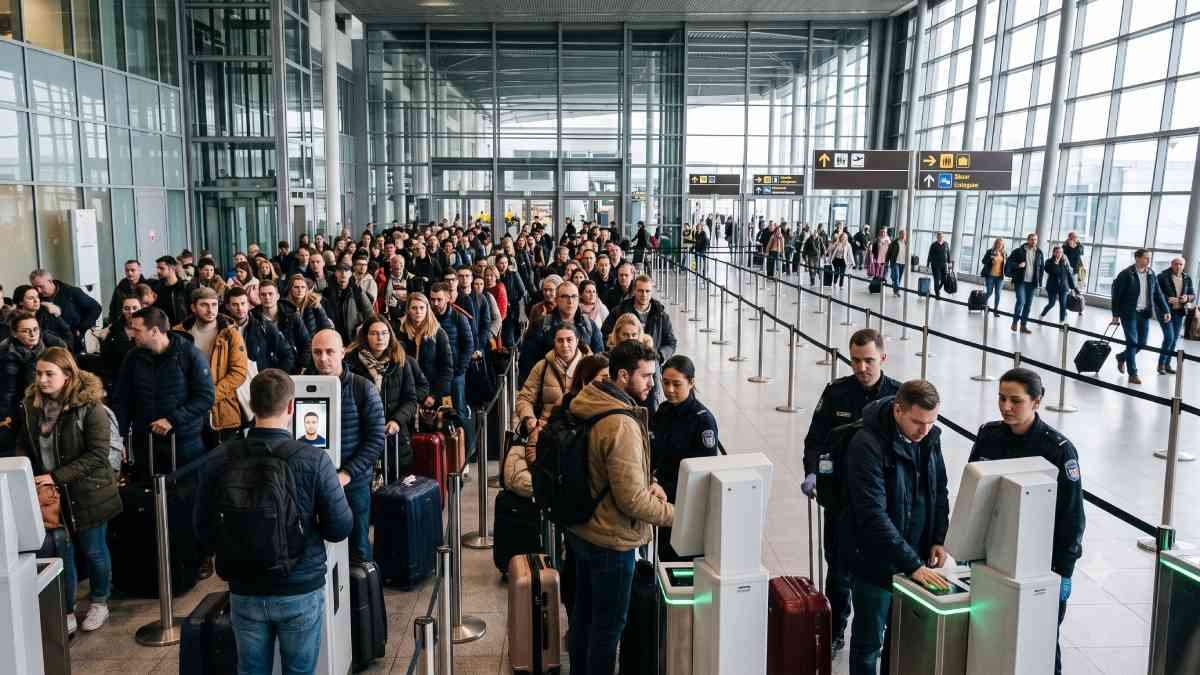
The very nature of international travel patterns is being radically altered by the concurrent implementation of biometric border policies within the EU in Europe’s borders. In view of the fact that the process of physically stamping passports is now being gradually automated, faster ways are being sought by passengers because of operational difficulties faced in the major Western transit gateways. The crowded gateways like Dover and Schiphol are now gradually being avoided by travelers as well as holidaymakers from regions in favor of the newly developed secondary gateways in Eastern and Northern Europe.
Background and Regulatory Architecture: The Implementation of EES and ETIAS
A transformative era marked by digitisation, automated identity verification, and central data management has been entered by the regulatory framework governing access to the European Schengen Area. The launch date for the progressive start of operations for the Entry/Exit System (EES) was formally set by the European Commission for mid-October 2025. Designed under the EU Smart Borders initiative to replace manual physical passport stamping across twenty-nine European states, an automated digital architecture is established by the EES so that non-EU short-stay visitors are registered each time Schengen Area external borders are crossed. Comprehensive alphanumeric profile details are captured by the system alongside biometric identifiers, specifically a high-resolution facial image and four individual fingerprints collected from all non-EU travelers who meet the age threshold.
The modernisation of border security, the systematic identification of visa overstayers, and the streamlining of verification for legitimate, frequent international travelers are regarded as the primary objectives of the EES. Once an initial biometric profile is completed at an external border kiosk or officer booth, that record is maintained within the central database for an extended multi-year validity window. During subsequent journeys within this window, travelers are theoretically subjected only to rapid biometric verification against their existing profile rather than full re-registration. Both short-stay visa holders and visa-exempt foreign nationals entering for tourism, business, or transit are covered by the system. It has been clarified that EU citizens, Schengen residents, and nationals of non-Schengen EU states such as Ireland and Cyprus are exempted from the EES.
To complement real-time biometric checks at external boundaries, the European Travel Information and Authorisation System (ETIAS) was conceptualised by the European Union as an automated pre-travel screening tool. Functioning similarly to electronic travel authorisations operated in the United States, Canada, and the United Kingdom, digital approval prior to departure is required from visa-exempt visitors from dozens of partner countries, including the United Kingdom, the United States, Canada, Australia, and Japan. The baseline application fee was formally adjusted under Commission Delegated Regulation to support expanded operational costs, cumulative inflation, and technical integration. An approved ETIAS clearance remains valid for multiple entries across several years or until the linked travel document expires.
Advertisement
Advertisement
Although a late-2026 operational target for ETIAS had been endorsed by EU Home Affairs Ministers, a significant recalibration of the overarching timeline was forced by systemic implementation challenges during the initial EES rollout. Following severe queuing across major European air, rail, and maritime terminals during peak summer travel periods, the launch target was quietly removed from official portals by the European Union. It was confirmed through independent reporting and technical evaluations conducted by eu-LISA that launching ETIAS during 2026 was no longer technically or operationally feasible. Consequently, the official launch of ETIAS has been deferred to 2027 at the earliest, pending formal timeline approval following eu-LISA administrative proceedings. When active enforcement is achieved, a mandatory transitional period followed by a grace period will be provided so that unprepared travelers are not abruptly turned away at departure gates.
Biometric Border Transition and Operational Friction Hubs
Western Gateway Bottlenecks
Acute operational vulnerabilities were revealed across primary Western European transport hubs during the practical execution of mandatory biometric collection under the EES. Because complete first-time registration was required of every non-EU traveler, severe operational bottlenecks were created at high-density gateways where physical space for self-service kiosks was constrained. The most pronounced congestion occurred at juxtaposed border controls linking the United Kingdom and France, notably at London St Pancras International (Eurostar), the Eurotunnel terminal at Folkestone, and the Port of Dover. Because British citizens were reclassified as non-EU nationals post-Brexit, full biometric enrolment was mandated for every UK traveler passing through these points. At Folkestone and Dover, where vehicle occupants were required to alight to register facial and fingerprint data at physical kiosks, prolonged processing delays extending across multiple hours were observed during peak travel periods.
Advertisement
Advertisement
Similar operational friction was experienced across major international airport hubs, including Amsterdam Schiphol, Paris Charles de Gaulle, and Frankfurt. Long lines of passengers waiting for self-service enrollment booths could barely be accommodated by the physical infrastructure of legacy terminals, which had been designed decades prior to automated biometric capture requirements. In response to growing systemic disruption, urgent appeals were issued to the European Commission by major industry coalitions—including Airports Council International (ACI Europe), Airlines for Europe (A4E), and the International Air Transport Association (IATA)—demanding that policy interventions be granted to alleviate terminal paralysis. During the peak summer travel window, regulatory flexibility provisions were exercised by at least nine EU member states to temporarily suspend or partially relax biometric data collection at overwhelmed checkpoints, thereby preventing total transport standstill.
To address these chronic delays, an integrated EU Digital Omnibus policy is being forcefully advocated by industry groups and border agencies. Voluntary biometric pre-screening mechanisms across all member states are intended to be harmonised through the legal recognition of pre-submitted digital identities under this proposed framework. Initial profile registration—including the uploading of passport data, facial image capture, and the completion of entry condition questionnaires—is facilitated up to several days prior to arrival through the Travel to Europe mobile app, developed under the oversight of the European Commission and eu-LISA. However, operational deployment of the mobile app has remained limited. Full app functionality was integrated by Sweden during early trial phases, whereas pre-arrival questionnaires were supported by Portugal, leaving full cross-border standardization dependent on future legislative adoption.
Advertisement
Advertisement
Modernised Secondary Hub Surge
While operational friction was wrestled with by primary Western gateways, digital border mandates were successfully converted into a competitive advantage by modernised secondary gateways in Northern and Eastern Europe. Early-adopting leadership in digital border management was demonstrated by the Baltic states. An international model for rapid biometric processing was established by Tallinn Airport in Estonia, where high-capacity automated digital self-service kiosks integrated directly with national border databases had been deployed well before mandatory enforcement deadlines. Initial biometric enrollment times were reduced significantly and terminal congestion was completely prevented through the pairing of automated e-Gates with clear passenger flow management. Matching self-service architecture was implemented by Riga Airport in Latvia, establishing the Baltic region as a low-friction entry point for long-haul and regional traffic.
In Central Europe, diverted passenger volumes were accommodated by Prague Airport in Czechia and Kraków Airport in Poland through their strategic locations and high-capacity regional transport infrastructure. Czechia has been highlighted by booking intelligence data as the fastest-growing booked destination among top European markets. By pairing efficient terminal processing with direct express rail links to major urban centers, Prague and Kraków were successfully positioned as primary intermodal transit gateways, absorbing international travelers who actively avoided congested Western transit points.
Geographic Redistribution to High-Value Alternatives
Regional Performance Divergence
A major geographic redistribution of international inbound traffic has been catalyzed by the operational bottlenecks associated with EES enforcement, combined with escalating accommodation costs in legacy Western capitals. A resilient broader market environment characterized by expanding passenger traffic, increased hotel occupancy, and rising average daily rates has been documented in joint market intelligence published by UN Tourism and Amadeus.
A clear performance divergence across the continent has been demonstrated through subregional analysis. The position of Central and Eastern Europe as the continent’s leading growth corridor has been consolidated through strong inbound international tourist arrival gains. This momentum has been matched by Northern Europe and Southern Mediterranean Europe, whereas Western Europe has lagged behind with modest expansion. Traveler resistance to combined pressures—specifically prolonged queue times at primary entry points and hyper-inflated lodging prices in primary Western capitals—is reflected in the underperformance of Western European hubs.
Advertisement
Advertisement
A pronounced realignment in traveler preferences toward secondary gateways offering superior price-to-value ratios and strong public safety profiles has been underlined by data originating from long-haul source markets. Japanese travelers have represented the fastest-growing long-haul source market for European travel, generating substantial surges in flight searches and confirmed bookings that were heavily directed toward Central and Eastern Europe. Identical rerouting trends have been exhibited by transatlantic travelers from North America, with crowded Western hubs being increasingly bypassed in favor of direct or single-connect flights landing in secondary regional centers.
Secondary Urban Centers and Non-Schengen Outliers
Key beneficiaries of this market shift within Poland have included the urban centers of Gdańsk and Wrocław. Operating as cost-competitive urban destinations, price-sensitive Western European and transatlantic visitors seeking rich architectural heritage, culinary excellence, and affordable luxury accommodation without experiencing core capital rate spikes are absorbed by these cities. In Northern Europe, strong year-round and winter season expansion is being driven by Finnish hubs such as Tampere and Rovaniemi. Rovaniemi, benefiting from sustained direct flight expansion from UK and continental airports, has been transformed from a seasonal holiday market into a robust year-round destination for nature-led travel.
Simultaneously, alternative cultural crossroads outside the EU EES perimeter—such as Tbilisi in Georgia and Samarkand in Uzbekistan—have been turned to by international travelers seeking to bypass the Schengen border registration framework altogether. Uzbekistan and Tajikistan have been highlighted by travel intelligence as top global search outliers across Europe and neighboring subregions. Low-friction transit options are provided to long-haul explorers through direct visa-free access or streamlined electronic visa entry, modern airport infrastructure, and historical Silk Road cultural assets.
Experiential, Journey-Focused, and Culinary Mobility Models
Slow Travel Demographics and Rail Corridors
A fundamental transformation in consumer travel behavior has been triggered as the operational realities of mandatory border biometrics have collided with broader macroeconomic pressures. Traditional, fast-paced multi-city itineraries have been rendered economically unappealing for many international tourists by escalating hotel tariffs across core capitals. Instead of rapid city-hopping journeys entailing multiple border checks and hotel transfers, journey-focused travel models prioritizing depth over breadth are being adopted.
The continental shift toward slow travel is being actively led by mature travelers, who form the single largest visitor demographic across Europe. Extended stays in secondary locations, immersion in regional gastronomy, and seamless transit via cross-border rail connections are prioritized within this mobility model, aligning with the strategic offerings of secondary European hubs.
| Focus Dimension | Baseline (Primary Western Hubs) | Emerging Focus (Eastern & Northern Europe) |
| Border Infrastructure | Manual processing queues; severe congestion at land, sea, and air gateways (e.g., Dover, Folkestone, Schiphol). | Automated digital self-service kiosks; early-adopting pre-registration hubs (e.g., Tallinn, Riga, Prague). |
| Inbound Visitor Dynamics | Yield pressure from price-sensitive travelers; lagging arrival growth. | Surging arrival growth across CEE and Northern Europe; strong long-haul booking conversion. |
| Hospitality ADR Pressures | Severe rate spikes in core capitals; compressed lengths of stay. | Favorable price-to-value ratios; competitive lodging rates encouraging extended, multi-week stays. |
| Tourism Product Strategy | High-density urban check-ins; rapid multi-city city breaks; crowded attraction queues. | Slow travel, scenic cross-border rail connections, regional gastronomy, and nature-centric stays. |
Central and Eastern Europe’s slow-travel corridors are anchored by regional culinary and rail hubs like Brno in Czechia and Ljubljana in Slovenia. Positioned along major rail arteries connecting Prague, Vienna, Bratislava, and Budapest, access to authentic South Moravian wine regions, modernist architecture, and vibrant food scenes is provided by Brno without the crowding or price premiums of major capitals. Similarly, seamless travel between urban culinary centers, subterranean cave systems, and Alpine lakes is enabled by Ljubljana via Slovenia’s integrated electrified rail network.
Advertisement
Advertisement
In Northern Europe, experiential mobility is exemplified by coastal and fjord transit itineraries across Norway. Cities such as Bergen and Tromsø serve as strategic launch points for nature-centric travel models centered around scenic maritime voyages rather than high-density urban sightseeing. By utilizing sustainable coastal express vessels and scenic rail lines like the Flåm Railway, the transit experience itself is transformed into the central highlight of the journey. Visitor expenditure is dispersed directly into regional fjord communities while low-friction, high-value experiences that bypass mainland airport congestion entirely are delivered.
Economic and Policy Implications: The Airline Network Shift
Profound long-term implications for airline network planning, airport infrastructure investment, and regional economic development are carried by the ongoing shift toward secondary European hubs. Fleet deployment strategies are being actively adjusted by commercial airlines faced with chronic congestion and unpredictable border processing delays at primary hubs. Direct point-to-point transatlantic and long-haul routes into secondary regional airports are being enabled by the rapid adoption of modern long-range, single-aisle aircraft.
Congested hub airports are bypassed, turnaround delays are reduced, and overall operational landing fees are lowered as direct flights are operated into cities such as Kraków, Gdańsk, Wrocław, Tallinn, and Rovaniemi. European air traffic is decentralised through this structural aviation shift, providing secondary destinations with permanent direct connections to major global origin markets. An unprecedented opportunity to capture high-spending, long-stay international demographics through targeted, story-led marketing campaigns is presented to destination marketing organizations (DMOs) in Central and Eastern Europe and Northern Europe.
At the legislative level, political momentum for the proposed EU Digital Omnibus policy has been accelerated by the operational friction observed during initial border deployments. Standardized regulations mandating the implementation of voluntary pre-registration mobile applications and harmonized e-Gate protocols across all member states are being urged by European transport coalitions. The establishment of unified technical standards across all Schengen states is recognized as a vital prerequisite for maintaining continental mobility, ensuring border security, and supporting the long-term economic resilience of Europe’s travel ecosystem.
Future Outlook and Structural Realignment
The European travel landscape will be permanently defined by digital border integration and decentralized passenger flows as future milestones are approached. As operational stabilization is completed by the EES and full implementation is reached by ETIAS following revised timelines, the historic dominance of primary Western European hubs will continue to rebalance in favor of modernised secondary gateways. Long-standing traveler habits have been fundamentally disrupted by the initial friction experienced at legacy borders, confirming that global travel demand can be successfully redirected by efficient digital processing, reasonable accommodation pricing, and high-quality regional experiences.
Above-average inbound arrival growth will continue to be secured by regions that proactively invest in automated digital self-service kiosks, intermodal rail infrastructure, and sustainable slow-travel tourism products. Far from being a temporary disruption, the implementation of EU biometric border mandates has served as a powerful structural catalyst, ushering in a more geographically balanced, digitally advanced, and resilient era for European international travel. Transit pathways, hospitality investments, and regional economic development across the continent are being reshaped by this operational evolution.
Conclusion
Europe’s biometric border revolution changes the way we travel The congestion at key European entry points is drawing travelers to more efficient secondaries. Estonia, Poland, Czechia, Finland and others can take advantage of more advanced digital processes, a still competitive cost base and a resilient rail network. This may permanently shift the center of European tourism
Advertisement
