 Somudranil Sarkar Somudranil Sarkar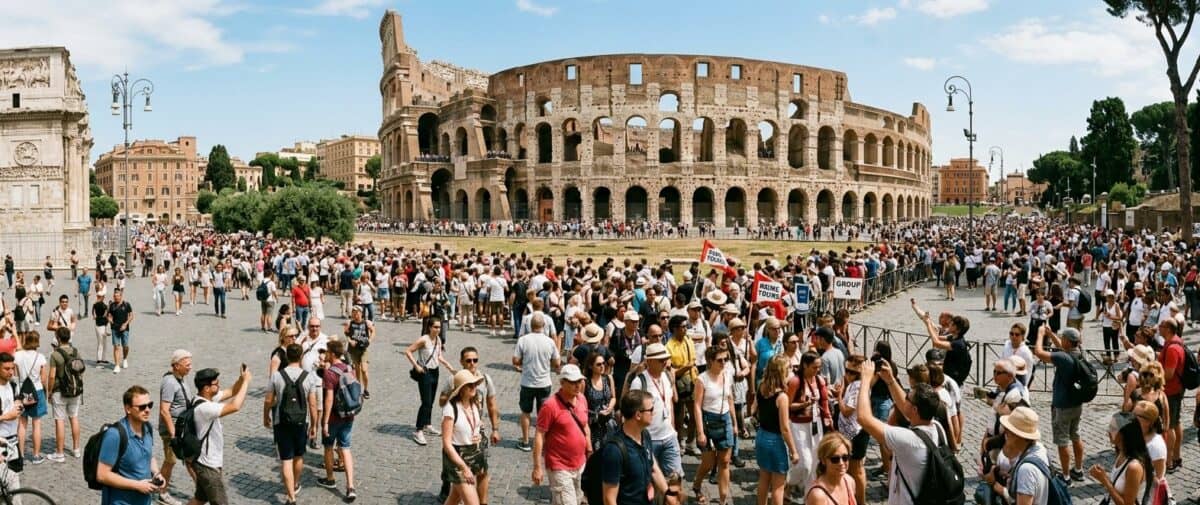
Image generated with Ai
Rome is going to make history again in 2026 with a record breaking tourism boom. Following the Jubilee year, tourism in Rome is booming while the rest of the country is lagging. Rome is the tourism capital of Italy by far. Rome is balancing the demands of tourists with the preservation of its history by being the first in Italy to pioneer advanced technologies in hotel management. Rapid development in Rome is creating jobs and increasing local government imcome. Here are the statistics about the tourism boom in Rome.
The year 2026 has unequivocally cemented the Rome tourism boom as a transformative era for the Italian capital. Surpassing all previous historical benchmarks, the city has evolved into a masterclass of modern hospitality, blending its ancient archaeological heritage with cutting-edge tourism infrastructure. This extraordinary resurgence is not merely a post-pandemic rebound but a structural evolution of how the city accommodates, manages, and entertains its colossal influx of international and domestic guests. From sprawling luxury developments to intricate digital crowd-management systems, Rome is setting a global precedent for urban tourism management. The sheer scale of this growth requires a deep dive into the underlying statistics, government policies, and economic shifts that are currently redefining the Italian travel landscape.
The foundation of the 2026 Rome tourism boom rests upon staggering official statistics recorded at the close of 2025. According to the Lazio Bilateral Tourism Board and official municipal data, Rome recorded an astonishing 22.9 million tourist arrivals in 2025, marking a robust 3.42% increase from the previous high set in 2024. Even more impressive is the total number of overnight stays, which reached nearly 52.92 million, reflecting an almost 3% rise year-on-year. Over half of these visitors—approximately 12 million—originated from outside of Italy, underscoring the city’s enduring global appeal. Rome’s Mayor, Roberto Gualtieri, officially welcomed these results, describing the period as an intense, challenging, yet highly positive year that was successfully navigated through targeted urban planning and improved municipal services.
A crucial catalyst for this sustained Rome tourism boom was the Catholic Jubilee Year hosted by the Vatican throughout 2025. This monumental religious event, which occurs every 25 years, attracted millions of pilgrims and religious tourists from across the globe. However, the strategic brilliance of the Italian tourism sector lay in leveraging this religious influx to stimulate broader travel. Rome acted as a central hub for wider travel around central Italy, encouraging visitors to explore beyond the Vatican walls. Furthermore, local authorities deliberately hosted numerous high-profile exhibitions, international concerts, and prestigious fashion gatherings throughout the year to diversify the visitor base and promote off-season travel. The momentum generated by the Jubilee has seamlessly transitioned into 2026, maintaining extraordinarily high occupancy rates across the capital’s sprawling accommodation sector.
Advertisement
Advertisement
To support the relentless influx of global travellers, the Rome hotel network has undergone a massive and highly strategic expansion. As the most visited city in Italy, Rome logically commands the largest and most sophisticated hospitality infrastructure in the nation. This network is not merely expanding in sheer volume but is rapidly elevating in quality, transitioning towards higher-tier offerings to satisfy the evolving demands of affluent international demographics. The collaboration between the Ministry of Tourism and private developers has facilitated a golden age of hospitality real estate within the Eternal City.
According to the latest Eurostat and national statistics, Italy boasts a monumental accommodation capacity, with hotel and similar accommodation bed-places exceeding 2.29 million by the end of 2025. Rome represents the absolute epicentre of this capacity. To accommodate the nearly 53 million overnight stays logged annually, the city’s hotel infrastructure has been pushed to its maximum efficiency. In response to sustained international demand, market projections indicate that the average nightly hotel rate in Rome is expected to increase between 7% and 11% throughout 2026. This upward pricing trend is a direct result of the Rome tourism boom, reflecting both the high demand for centrally located beds and the massive capital investments poured into renovating historic properties to meet contemporary international standards.
A defining characteristic of the 2026 Rome tourism boom is the aggressive expansion of the luxury accommodation sector. International luxury brands and boutique hoteliers have aggressively acquired and converted historic palazzos into five-star establishments. The United States has become increasingly vital for the Italian tourism economy, particularly driving demand for luxury travel and high-spending city breaks. American travellers, who are highly visible throughout Rome, demand premium amenities, experiential concierge services, and exclusive access to the city’s heritage. Consequently, the Rome hotel network is deliberately pivoting to capture this high-yield demographic. The availability of these upgraded accommodation options has played a significant role in encouraging extended visits, as tourists now view their hotels not just as places to sleep, but as integral components of their Roman holiday experience.
The true magnitude of the Rome tourism boom is best understood through the rigorous data provided by the Italian National Institute of Statistics (ISTAT) and the Ministry of Tourism. These official figures provide a granular look at how travel patterns are evolving, highlighting the specific sectors and demographics driving Italy’s economic engine in 2026.
The official ISTAT report for the first quarter of 2026 paints a picture of relentless nationwide growth, heavily anchored by Rome’s performance. Across Italy, accommodation establishments recorded 23 million arrivals and 71.6 million tourist presences in Q1 2026. Compared to the same quarter in 2025, tourist flows increased significantly, showing a +4.2% rise in arrivals and a +7.5% jump in overall presences. March emerged as the busiest month of the quarter, accounting for 37.6% of total attendance, signalling a remarkably strong start to the spring travel season. The data conclusively demonstrates that the Rome tourism boom is defying traditional seasonal slumps, maintaining high volumes of visitor traffic throughout the traditionally quieter winter and early spring months.
The driving force behind the 2026 surge is undeniably the international market. ISTAT data reveals that over half of all visitors in the first quarter of 2026 were foreigners, representing 54.6% of the total. Foreign tourist arrivals increased by a staggering 12.3% compared to the previous year, while domestic Italian visitors showed a more modest increase of 2.2%. Notably, foreign visitors also tend to stay longer, recording an average stay of 3.53 nights compared to 2.74 nights for domestic travellers. This dynamic is particularly evident in Rome, where the Rome hotel network caters extensively to long-haul travellers from North America and Asia who naturally require longer stays to justify their extended transit times.
With great volume comes great administrative responsibility. The sheer scale of the Rome tourism boom has necessitated unprecedented governmental intervention to ensure the city remains livable for its residents while continuing to provide a world-class experience for its visitors. Local authorities, backed by national government initiatives, have introduced a suite of bold policies designed to manage crowds, protect historical monuments, and streamline border entry.
One of the most heavily publicised policy shifts of 2026 is the introduction of targeted crowd-management tools at major heritage sites. Most notably, Rome officials successfully implemented a new entry fee for tourists wishing to visit the iconic Trevi Fountain. This bold initiative is designed to carefully manage access, prevent dangerous overcrowding, and raise essential municipal funds for the ongoing maintenance of the city’s ancient infrastructure. Alongside financial deterrents, the city has piloted sophisticated digital queueing systems at major attractions, effectively smoothing out the peaks and troughs of daily visitor traffic. These measures underscore a mature approach to the Rome tourism boom, prioritising sustainable visitor flow over unchecked volume.
Beyond local municipal policies, the European Union’s broader border strategies are profoundly impacting the Rome tourism boom. The expected launch of the European Travel Information and Authorisation System (ETIAS) in 2026 requires non-EU visitors to register and gain authorisation before entering the Schengen Area. Rome officials have been working diligently alongside national border agencies to ensure a seamless transition. By proactively educating international travel partners and streamlining local processing capabilities, Rome aims to guarantee that the city remains an effortlessly accessible destination for its crucial North American and Asian demographics, despite the new bureaucratic requirements.
The financial ramifications of the Rome tourism boom cannot be overstated. Tourism is a foundational pillar of the Italian economy, and Rome serves as its most lucrative epicentre. The influx of tens of millions of visitors has triggered a cascade of wealth generation that touches virtually every sector of the local economy, from high-end retail and gastronomy to transport and heritage conservation.
Official economic assessments confirm the staggering financial footprint of the travel sector. In 2024, tourism brought an estimated €13.3 billion directly into Rome’s municipal economy. With the continuous upward trajectory witnessed through 2025 and into 2026, alongside the projected 7% to 11% increase in hotel rates, this revenue figure is expected to break new historical records,. On a national scale, the tourism industry generated a massive €237.4 billion impact on the Italian GDP in 2025. The Rome tourism boom acts as a primary catalyst for this national wealth, funneling international capital directly into the domestic market and empowering continuous reinvestment into the Rome hotel network and public infrastructure.
Perhaps the most universally welcomed aspect of the Rome tourism boom is its impact on local employment. The tourism industry currently employs a staggering 13.2% of the national workforce across Italy. In Rome specifically, city officials report that tourism-related employment has increased by a remarkable 5.5% each year over the last three years. This robust job creation spans the entirety of the hospitality spectrum. It encompasses hotel management, front-of-house staff, multilingual tour guides, transport logistics workers, and thousands of related service roles. As the Rome hotel network expands its luxury offerings, there is a concurrent demand for highly skilled, specialised hospitality professionals, thereby driving up wages and improving the overall quality of employment within the sector.
The profile of the average tourist contributing to the Rome tourism boom has evolved significantly by 2026. Data from the Ministry of Tourism and ENIT (Italian National Tourist Board) reveals a fascinating shift in who is visiting Rome, how long they are staying, and what they expect from their travel experience. Understanding this demographic shift is vital for hoteliers and policymakers alike.
While Italy welcomed over 185 million visitors in 2025, the composition of these arrivals is highly concentrated. European neighbours continue to provide a massive foundational baseline. Germany remains one of Italy’s largest source markets, alongside France, the United Kingdom, Switzerland, and the Netherlands,. However, the United States has solidified its position as the most critical driver of high-yield revenue within the Rome tourism boom. American travellers are highly visible throughout the capital, heavily favouring the luxury Rome hotel network, exclusive cultural tours, and high-end gastronomy. Their willingness to spend significantly above the average daily rate has been a primary driver of the sector’s exceptional profitability in 2026.
Another defining trend of 2026 is the robust recovery and expansion of the Asian tourism market. Following years of suppressed travel, visitors from China, Japan, and South Korea have returned in massive numbers to Rome’s major cultural destinations and luxury shopping districts. This demographic is highly sought after by the high-end retail sector and luxury hoteliers. The Rome tourism boom has directly benefited from the influx of these long-haul travellers, who often combine their Roman itineraries with trips to Florence and Venice. Their return has fully normalised the international travel ecosystem in Italy, replacing any lingering domestic-heavy dependencies with a highly lucrative, globally diversified visitor base.
While the economic benefits of the Rome tourism boom are universally acknowledged, the sheer volume of human traffic presents severe logistical and social challenges. Overcrowding, noise pollution, and strain on public utilities are genuine concerns for the local populace. Consequently, Rome’s municipal government has pivoted aggressively towards a model of sustainable urban tourism, seeking to balance profitability with the fundamental right to a liveable city for its residents.
City leaders have repeatedly emphasised their mandate to make tourism compatible with everyday life. The rapid growth of short-term rentals has become a politically sensitive issue, particularly in historic centres where local authorities are attempting to balance lucrative tourism income with housing affordability for permanent residents. The Rome tourism boom has placed immense pressure on the housing market, prompting calls for stricter regulations on non-hotel accommodations. In practice, municipal strategies now heavily focus on protecting public spaces, actively avoiding severe overcrowding at historical pinch-points, and aggressively reducing noise and waste in historically residential areas.
To alleviate pressure on the immediate historic centre, tourism boards are actively promoting the decentralisation of visitor flows. Officials have linked the continued success of the Rome tourism boom to improved marketing and the intelligent bundling of experiences. By promoting museum passes, guided tours, and event packages that highlight lesser-known neighbourhoods and peripheral attractions, the city is successfully spreading the economic benefits of tourism while reducing congestion at hyper-famous sites. Furthermore, younger travellers are increasingly taking advantage of Italy’s high-speed rail network to combine their Roman city breaks with day trips to Naples, Florence, or the coastal regions, thereby extending their overall stay in the country while momentarily easing the density within the capital.
The success of the Rome tourism boom does not occur in a vacuum; it acts as a massive gravitational force that pulls the entirety of the Italian tourism sector upward. As the primary point of entry for millions of international visitors, Rome’s performance dictates the fortunes of surrounding regions and supplementary accommodation sectors.
The phenomenal statistics generated by Rome have fundamentally elevated the surrounding Lazio region. Driven by the capital’s success and the residual momentum of the Jubilee, the Lazio region exceeded a staggering 82 million tourist stays in 2025, firmly establishing it as a dominant force in the national tourism landscape alongside traditional heavyweights like Veneto. While regions such as Campania and Tuscany continue to boast incredible numbers and high per-capita expenditure, it is the sheer volume processed by the Rome hotel network that solidifies central Italy as the undisputed engine of the national visitor economy.
The accommodation data from 2025 and Q1 2026 highlights a fascinating duality within the Italian hospitality market. While the traditional Rome hotel network remains the dominant force—with hotel arrivals increasing by 3% in 2025 to reach over 104.6 million nationally—the extra-hotel sector is experiencing explosive growth. Arrivals in holiday apartments, bed-and-breakfasts, and short-term rentals surged by an incredible 13% in 2025, climbing to over 80.6 million. This trend continued into the first quarter of 2026, where non-hotel establishments saw a remarkable 14.7% increase in guests, compared to a 3.9% increase in the traditional hotel sector. This data confirms that while luxury hotels are capturing the high-spending demographic, families, younger travellers, and long-term visitors are increasingly favouring flexible, apartment-style accommodations to experience the Rome tourism boom on their own terms.
As 2026 progresses, the outlook for the Rome tourism boom remains overwhelmingly positive. However, maintaining this unprecedented momentum requires continuous forward planning, infrastructural investment, and a steadfast commitment to sustainable practices. The city must evolve from simply accommodating tourists to actively curating and managing the overall travel ecosystem.
To sustain the largest hotel network in the country, Rome is heavily reliant on superior transport connectivity. The city’s airports are continually expanding their international route networks to facilitate the growing demand from North America and Asia. Furthermore, on the broader transport front, Italian ports recorded over 14 million cruise passenger movements in 2025, with global traffic projected to hit 37 million in 2026. While this booming sector presents challenges related to overtourism, seamless integration between cruise terminals, rail networks, and the Rome hotel network is vital for efficiently dispersing large volumes of transient visitors without overwhelming municipal infrastructure.
According to projections by Demoskopika, the Italian tourism sector is forecast to reach 141.2 million arrivals and an astounding 478.6 million stays nationwide throughout 2026. Rome is unequivocally positioned to capture the lion’s share of this traffic. The competitiveness of the Rome tourism boom over the next decade will depend heavily on the city’s ability to transition from a logic of isolated, hyper-concentrated mass tourism to a highly integrated, system-wide approach. By leveraging extensive data analysis, enhancing emerging peripheral destinations, and enforcing strict yet fair regulations on both the traditional Rome hotel network and short-term rentals, local authorities are safeguarding the city’s future. The Eternal City has proven that it can adapt to the modern age, ensuring that its unparalleled historical heritage continues to generate unprecedented economic prosperity for generations to come.
The Rome tourism boom has made it, without a doubt, the most completely desirable global destination in 2026. The city is the first in Italy to have the largest hotel network in the country. To deal with the record high levels of tourism, Rome has created a novel way to control crowd levels by implementing an entry fee to the Trevi Fountain. According to the most recent statistics by ISTAT and the Ministry of Tourism, Rome is experiencing the most economically advantageous period with a record high level of employment and travel that is finally sustainable. Given the current direction of travel in Rome, it will forever hold the title of best international travel destination it is today.
Advertisement
Tags: ISTAT statistics, Italy travel 2026, Luxury travel Rome, Ministry of Tourism Italy, Rome hotel network
Advertisement
Advertisement













Saturday, September 5, 2026
Saturday, September 5, 2026

Saturday, September 5, 2026

Saturday, September 5, 2026

Saturday, September 5, 2026
Saturday, September 5, 2026

Saturday, September 5, 2026

Saturday, September 5, 2026



