
Spain Aligns With The UK and Other Nations On Aviation Carbon Rules

Published
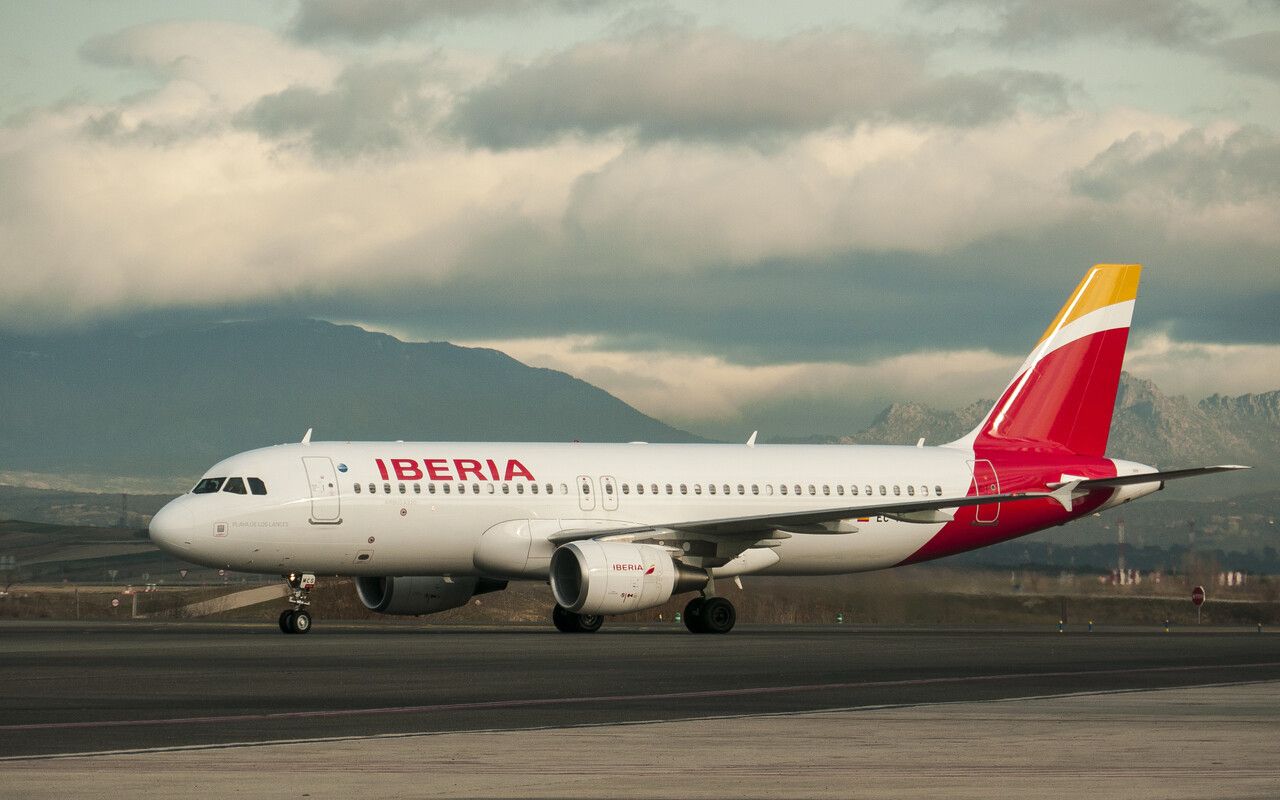
Spain joins the UK and others in opposing EU rules on carbon emissions while European skies undergo major eco-friendly changes. Airline companies pay for carbon emissions. See what global airlines do to combat.
Spain joins the UK and others in opposing EU rules on carbon emissions as European skies undergo major eco-friendly changes. Airlines pay for carbon emissions. Global carriers fight back.
Spain joins the UK and other countries in opposing EU rules on carbon emissions in an effort to fundamentally change global flight economics. Airlines face rising costs as carbon-free emission permits disappear from European airspace. Spain joins the UK and other countries in opposing EU rules on carbon emissions because of stringent environmental guidelines that require immediate operational modifications. Major airlines are now required to buy every emission allowance at market price. Passengers face rising ticket prices. Airline companies use clean fuel and modernize aging aircraft to reduce costs. This landmark measure is set to change how international airline companies comply, maintain operating margins and ensure long-term sustainability.
The implementation of full market auctioning of emissions under the EU ETS has completely overhauled airline economics, shifting environmental compliance from a minor regulatory issue to a major balance sheet item. Global carriers operating in European airspace need to buy 100 percent of required compliance units in the present system, which has forced airline executives to rethink network planning, pricing schemes and asset management strategies.
Advertisement
Advertisement
How does full carbon auctioning reshape airline financial engineering?
The elimination of free carbon allocations forces commercial airline treasuries to treat emission allowances as an unavoidable, variable input cost comparable to jet fuel procurement. Financial controllers must now actively hedge carbon unit price volatility alongside traditional petroleum futures to protect operating margins across regional networks. This structural shift disproportionately penalizes short-haul high-frequency routes where per-passenger emissions intensity remains significantly higher relative to long-haul alternatives. Airline revenue management systems are consequently embedding real-time carbon surcharges directly into ticket pricing matrices for European itineraries. Investors and lessors closely scrutinize an operator’s fleet age and route mix to evaluate long-term exposure to these escalating regulatory liabilities. Companies lacking capital access for rapid fleet modernization face severe cash flow contractions under the fully phased-in cap-and-trade regime. Consequently, strategic asset allocation decisions are increasingly dictated by a carrier’s ability to minimize carbon overhead per available seat kilometer.
Fleet financing agreements now incorporate strict environmental covenants tied directly to an airline’s projected compliance costs and emissions trajectory. Banking syndicates demand granular transparency regarding carbon exposure before extending favorable credit terms for aircraft acquisitions or major lease restructurings. Older, less fuel-efficient airframes are suffering from accelerated depreciation schedules as secondary market demand shifts toward modern, lower-emission variants. Asset lessors routinely re-evaluate residual value assumptions for older narrowbody fleets due to the compounding financial burden of purchasing unallocated allowances. Airlines are forced to accelerate capital expenditure plans to phase out legacy turbine engines well ahead of previous corporate timelines. This intense financial pressure transforms environmental compliance into a central driver of corporate restructuring and competitive market differentiation. Executive boards must continuously balance short-term profitability against the absolute necessity of green technology investments.
Advertisement
Advertisement
For full official documentation on regional compliance and trading rules, consult the European Commission EU ETS Framework and the UK Government ETS Aviation Guidance.
What operational modifications optimize compliance under strict emissions caps?
Flight dispatchers and operational control centers now integrate real-time carbon tracking software directly into daily flight planning and routing optimization algorithms. Ground operations are heavily scrutinized to minimize auxiliary power unit runtime and eliminate inefficient taxiing delays across congested European hub airports. Flight crews receive specialized training focused on continuous descent operations and optimal altitude selection to shave fractions of fuel burn per trip. Every single kilogram of unnecessary weight aboard commercial aircraft is systematically removed to drive down cumulative emissions totals. Maintenance engineering teams execute frequent engine washes and aerodynamic modifications to preserve peak fuel efficiency across active fleets. These meticulous operational adjustments provide immediate, albeit incremental, relief against soaring monthly allowance purchasing requirements. Dispatch procedures also factor in strict non-carbon dioxide emissions monitoring parameters established under emerging European regulatory reporting mandates.
Collaborative digital platforms allow airlines to share best practices for minimizing environmental compliance exposure across shared European airspace corridors. Ground handling agents adopt electric-powered ramp equipment to reduce stationary emissions footprints at major international terminal gates. Maintenance schedules are rigorously optimized to ensure turbine performance remains at peak operating levels throughout heavy operational cycles. Operational risk managers conduct continuous audits to verify that internal data collection workflows align precisely with statutory monitoring standards. Flight planners leverage advanced meteorological forecasting tools to sidestep headwinds and reduce unnecessary fuel consumption on marginal routes. These comprehensive adjustments ensure that every department within an airline contributes directly to minimizing regulatory financial exposure. Operational excellence thus serves as the primary operational defense against escalating market-driven carbon costs.
“Spain aligns with the UK and other nations on aviation carbon rules to reshape global flight economics forever. Experts warn that eliminating free carbon permits will permanently alter ticket pricing structures across every major European corridor. Airlines must now absorb massive operational costs or pass them directly to passengers. Industry leaders emphasize that fleet modernization and sustainable aviation fuel adoption are no longer optional corporate goals. Instead, they represent absolute survival strategies in a ruthless market. As regulatory scrutiny intensifies, proactive compliance will separate thriving global carriers from those struggling under heavy environmental financial burdens.”
— Anup Kumar Keshan, Founder and Editor-in-Chief, Travel And Tour World
Why do multi-layered compliance frameworks create international administrative friction?
The simultaneous enforcement of the regional EU ETS and the global Carbon Offsetting and Reduction Scheme for International Aviation creates complex compliance burdens for foreign operators. International carriers flying into European hubs must navigate overlapping reporting jurisdictions, disparate verification timelines, and distinct offset purchasing criteria. Foreign government ministries frequently argue that regional mandates impose unfair extraterritorial financial penalties on non-European commercial aviation businesses. Legal teams spend countless hours reconciling conflicting data requirements to ensure compliance with both domestic and international statutes. Industry trade associations continue lobbying for unified global standards to eliminate costly administrative redundancies and reduce regulatory friction. Diplomatic channels remain active as nations negotiate compromise solutions to prevent potential international trade retaliation and airspace disputes. Transparent data-sharing protocols are gradually being established to bridge the operational gap between regional regulators and global oversight bodies.
Advertisement
Advertisement
Developing economies express ongoing concern that rigid carbon pricing frameworks restrict their future economic connectivity and tourism growth potential. Foreign legacy carriers operating lucrative transatlantic legs must absorb these layered compliance overheads while competing against non-regulated regional alternatives. Strategic legal planning becomes indispensable for multinational airlines managing multi-jurisdictional tax and environmental liabilities simultaneously. Regulatory authorities maintain that regional urgency remains fully justified while global consensus mechanisms evolve at a slower pace. Harmonization working groups meet regularly to align carbon accounting methodologies and prevent double-counting across international borders. The aviation sector adapts incrementally to this intricate regulatory reality through robust compliance infrastructure and proactive diplomatic engagement. Strategic foresight and advanced data management systems remain the ultimate prerequisites for surviving this complex era of global environmental accountability.
| Country / Jurisdiction | Primary Airline Stakeholders | Stance on EU Carbon Trading Revisions | Key Strategic & Operational Adaptation |
| Spain | IAG (Iberia, Vueling), AENA | Supportive of European green goals; cautious about inbound tourism and ticket price elasticity. | Fleet renewal programs, utilizing ETS-backed modernization funds for sustainable aviation fuel (SAF) adoption. |
| The Netherlands | KLM, Amsterdam Airport Schiphol | Strongly champions strict environmental rules, though navigating domestic capacity caps and hub constraints. | Aggressive SAF integration, operational efficiency optimization, and managing strict noise/emissions limits. |
| United Kingdom (Post-Brexit) | British Airways, easyJet | Aligned in principle with European stringency; operates a parallel UK ETS with potential linking mechanisms. | Dual-market compliance tracking across UK and EU airspace, strict domestic SAF blending mandates (10% by 2030). |
| Canada (Transatlantic Partner) | Air Canada, WestJet | Prefers global UN CORSIA frameworks over regional overlapping mandates; wary of administrative friction. | Long-haul flight profile optimization, forging direct North American SAF supply partnerships. |
Here is a detailed breakdown of how each of these four countries approaches and adapts to the European carbon trading and aviation sector revisions:
Spain manages massive inbound and outbound tourism flows, anchored by major transport hubs like Madrid-Barajas and Barcelona-El Prat, alongside powerful airline groups like International Consolidated Airlines Group (IAG), which includes Iberia and Vueling. Spanish authorities and local carriers generally support the broader European decarbonization roadmap. However, tourism-dependent regions and airline executives frequently voice concerns over ticket price inflation and the risk of losing market share to non-EU transiting corridors. To offset full market auctioning costs, Spanish carriers are accelerating fleet modernization programs and leveraging EU ETS-backed modernization funds to secure and scale up sustainable aviation fuel (SAF) integration across their short- and medium-haul networks.
Centered around Amsterdam Airport Schiphol and flagship carrier KLM, the Netherlands acts as a premier European mega-hub heavily dependent on connecting global passenger traffic. The Dutch government strongly champions stringent European environmental regulations. At the same time, the country walks a delicate domestic tightrope, balancing strict airport capacity caps and local emissions/noise restrictions with the economic realities of maintaining its hub status. KLM faces immediate financial pressure from the complete phase-out of free allowances. In response, Dutch aviation stakeholders are aggressively deploying operational slot optimizations, investing in electric ground-handling equipment, and pioneering corporate SAF adoption across European routes.
Operating outside the European Union yet deeply entangled in European airspace through major hubs like London Heathrow, the UK maintains massive trans-European flight volumes driven by carriers like British Airways and easyJet. The UK closely mirrors many of the EU ETS stringency measures to prevent regulatory arbitrage and has explored mechanisms to link the UK ETS with the EU system. British authorities emphasize aligning carbon pricing to ensure domestic airlines remain competitive on overlapping routes. UK carriers operating flights to and within the EEA must navigate dual-market compliance tracking. To counter soaring carbon liabilities, the UK government has enforced strict domestic SAF blending mandates targeting 10% by 2030, compelling airlines to secure long-term alternative fuel supply contracts.
As a major non-European player with numerous long-haul flights over the Atlantic connecting Canada’s transport hubs with European entry points, Canadian carriers account for significant volumes of traffic between the two continents. At the same time, Canada has always promoted international regulation at the level of the UN, and the country’s transport sector representatives have voiced concerns regarding the unilateral imposition of carbon pricing on airlines by individual EU countries. Canadian carriers operating flights to the EEA have to track and report greenhouse gas emissions for each flight leg subject to the EU’s ETS and offset them if required. To reduce exposure to potential carbon costs imposed by the EU, Canadian carriers look to establish direct purchase links with regional SAF producers and optimize long-haul flight operations.
Advertisement
Advertisement
Spain backs UK and others on carbon rules for planes to create strict net-zero rules. The regional authorities canceled free allowances. This means that the airline companies are forced to buy back permits. This creates a financial push for more green fuel and modernization of aircraft.
Reasons why Spain supports the UK and other nations in terms of carbon regulations regarding the world of aviation includes the fact that the skies today require responsibility. The aviation industry managed to survive and grow as a result of quick adaptation, intelligent strategies, compliance, and an eye on sustainability.
Image Source: Spain -US Chamber Of Commerce
Advertisement
