
Portugal Matches Spain and More as Maison Voyage and Global Luxury Travel Houses Transform Bespoke Journeys for International Travellers

Published
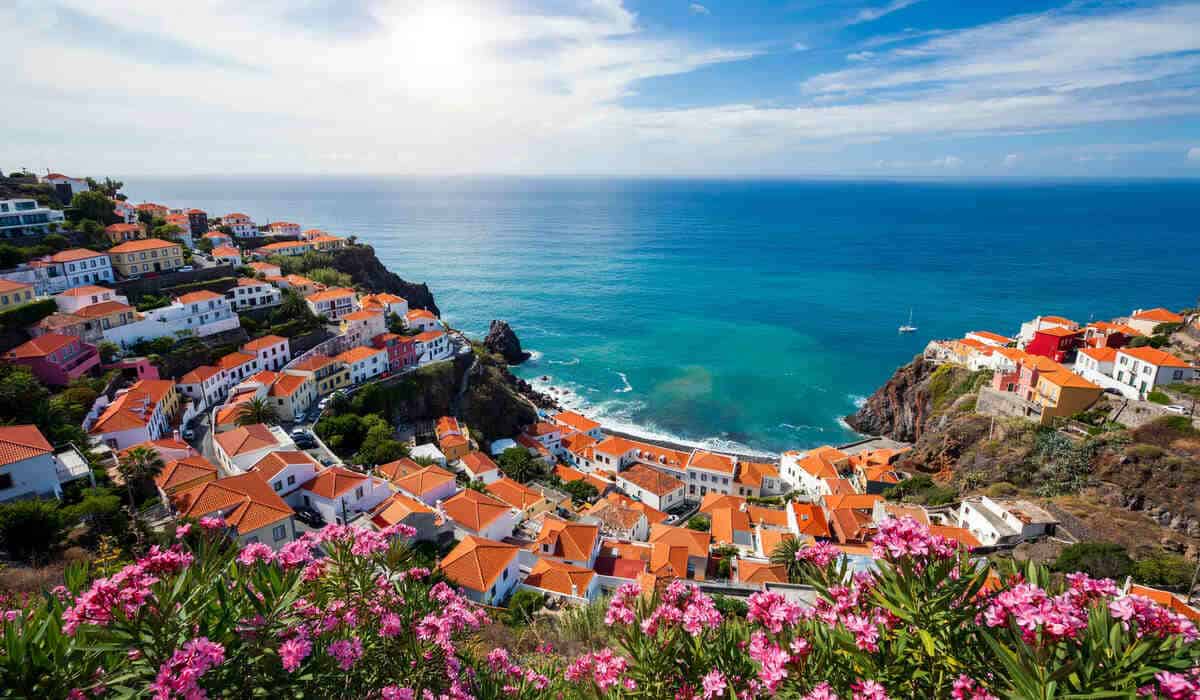
Image generated with Ai
Portugal now matches Spain and more as Maison Voyage and global luxury travel houses reshape bespoke journeys for international travellers. Portugal matches Spain and more in attracting travellers seeking personalised experiences, while Maison Voyage brings a modern travel-planning vision from Lisbon. Meanwhile, global luxury travel houses are creating carefully designed journeys around culture, cuisine, accommodation, wellness and distinctive experiences. As international travellers look beyond conventional holidays, bespoke journeys are gaining fresh attention. Therefore, Travel And Tour World urges readers to explore this entire story and discover how Portugal, Spain and more destinations are becoming important stages for modern luxury travel and personalised international journeys.
Maison Voyage Portugal Opens the Door to a New Era of Curated European Luxury Travel
Maison Voyage’s launch from Lisbon arrives at a time when Portugal and several major European destinations are attracting large international visitor volumes. The company’s model focuses on bespoke journeys combining accommodation, transport, destination specialists, dining, aviation, yachts and private experiences.
For travellers, the wider story is bigger than one new travel house. Europe now offers a large ecosystem of destinations where personalised travel planning can connect luxury accommodation with cultural discovery, food, nature and slower itineraries.
Portugal recorded 32.5 million guests in tourist accommodation in 2025. Foreign guests accounted for 19.7 million, while the country recorded 82.1 million overnight stays. Tourism receipts reached €29.1 billion for the year, according to Turismo de Portugal and official statistical sources.
Advertisement
Advertisement
This creates a substantial destination platform for modern travel planners. The following destinations provide useful comparisons for travellers considering a personalised European journey.
European Destinations With Comparable Bespoke Luxury Travel Planning
| Destination | Comparable luxury travel-planning example | 2025 tourism indicator | Signature travel themes |
|---|---|---|---|
| Spain | Bravo Luxury Travel | 96.8 million international tourists | Cities, islands, gastronomy, beaches |
| Italy | Innamo | 185 million accommodation arrivals reported by Italy’s Interior Ministry | Art, food, fashion, coastlines |
| Greece | Bravo Luxury Travel | 43.31 million inbound travellers | Islands, archaeology, sailing, gastronomy |
| Austria | International bespoke planners serving Austria | 40.47 million accommodation arrivals | Alps, music, heritage, wellness |
| France | Damoisel | 102 million international visitors | Art, fashion, gastronomy, wine |
| Portugal | Maison Voyage | 32.5 million accommodation guests | Coast, wine, heritage, design |
The statistics are not directly interchangeable because national agencies use different definitions. Spain and France report international visitors, Greece reports inbound travellers, while Portugal and Austria report accommodation arrivals or guests. Italy also has separate accommodation and border-based measures. These distinctions matter when comparing markets.
Advertisement
Advertisement
Spain Creates a Strong Luxury Travel Canvas From Madrid to Mallorca
Spain offers a broad combination of urban culture, Mediterranean islands, food destinations and historic landscapes. Its official tourism portal highlights Madrid, Barcelona, Valencia, Seville, Málaga, Bilbao, the Canary Islands and the Balearic Islands among its major destination choices.
Bravo Luxury Travel is one example of a private travel planner offering customised itineraries covering Spain, Italy, Portugal, France, Greece and Croatia. Its stated model involves tailor-made journeys and destination-specific guides.
Advertisement
Advertisement
Spain received 31.2 million international tourists in 2021, followed by 71.7 million in 2022, 85.2 million in 2023, 93.8 million in 2024 and 96.8 million in 2025. The 2025 figure represented another historical high in Spain’s official FRONTUR series.
For a luxury-focused journey, travellers can begin in Madrid with museums, historic districts and Spanish cuisine. Barcelona adds architecture, Mediterranean atmosphere and creative neighbourhoods. Seville provides Andalusian heritage, while Málaga connects city culture with the Costa del Sol.
A longer itinerary can continue toward Mallorca or the Canary Islands. Each location offers a different travel rhythm.
Food should be part of the route rather than an afterthought. Travellers can explore tapas, regional seafood, paella, Iberian ham and local wines. Dining choices should be made according to region because Spanish cuisine varies significantly between territories.
Advertisement
Advertisement
For accommodation, travellers can consider historic hotels, design properties, countryside estates and private villas. A bespoke planner can coordinate the accommodation style with the itinerary rather than selecting hotels independently.
A practical 10-day route could begin with three nights in Madrid, followed by three nights in Barcelona, two nights in Seville and two nights in Mallorca. Travellers should allow additional time when using internal flights or connecting through major transport hubs.
The route can be slowed further by removing one city. This allows more time for food, neighbourhood exploration and local experiences.
Italy Connects Art, Cuisine, Fashion and Coastal Escapes
Italy offers one of Europe’s richest combinations of cultural attractions, culinary traditions and luxury accommodation. The official Italia.it portal highlights destinations including Rome, Venice and Florence, while regional travel opportunities extend toward Tuscany, the Amalfi Coast, Sicily, Sardinia and the Italian lakes.
Innamo provides an example of a bespoke luxury travel model operating across Europe, with Italy identified as its specialist market. Its published destination portfolio includes France, Spain, Portugal, Greece, Croatia, Switzerland and Mediterranean islands.
Italy’s official statistics recorded 139.6 million arrivals and 466.2 million overnight stays in tourist accommodation during 2024. Foreign visitors accounted for 53% of accommodation arrivals and 54.5% of overnight stays.
Advertisement
Advertisement
The Italian Interior Ministry separately reported more than 185 million accommodation arrivals through its Alloggiati Web system in 2025. Foreign arrivals in that dataset reached 104 million. Because the Interior Ministry and ISTAT use different collection systems and definitions, these figures should not be directly substituted for one another.
A classic luxury itinerary can begin in Rome. Travellers can spend three nights exploring ancient sites, museums, churches and neighbourhood restaurants.
Florence works well for another three nights. The city combines Renaissance heritage, museums, crafts, fashion and Tuscan cuisine. The official tourism portal describes Florence’s historic centre as a UNESCO World Heritage site and highlights its museums, gardens, architecture and food culture.
Travellers can then move toward Tuscany for countryside experiences. Wine estates, hill towns, olive-oil producers and farm-based dining can add a slower dimension.
For a coastal ending, the Amalfi Coast or Sicily can replace Tuscany. Sardinia provides another option for travellers prioritising beaches and private-villa stays.
Italian food should be organised regionally. Pasta, risotto, pizza, fresh seafood, gelato, regional cheeses and local wines vary considerably between destinations.
Advertisement
Advertisement
A 12-day route could include three nights in Rome, three in Florence, three in Tuscany and three on the Amalfi Coast. Travellers wanting less movement can combine Rome and Tuscany only.
Greece Combines Island Travel With Culture and Private-Sea Experiences
Greece offers a particularly strong environment for personalised journeys because travellers can combine Athens with islands, archaeological sites, mountain landscapes and food destinations.
Bank of Greece data show that inbound traveller flows reached 15.25 million in 2021, 29.88 million in 2022, 36.08 million in 2023, 40.69 million in 2024 and 43.31 million in 2025.
Greece recorded €23.63 billion in travel receipts in 2025. Average expenditure per overnight stay reached €96.60, while the average length of stay was 5.6 nights.
Attica was the most visited region by regional visits in 2025, followed by the Southern Aegean, Central Macedonia, Crete and the Ionian Islands.
A traveller can begin in Athens for three nights. The Acropolis and wider archaeological landscape provide the cultural foundation.
Advertisement
Advertisement
The journey can then move toward the Cyclades. Santorini is suitable for dramatic volcanic scenery, while Mykonos provides beaches and island nightlife. Travellers seeking a more varied itinerary can consider Crete.
Crete offers more than beaches. The official Visit Greece portal highlights its Minoan heritage, more than 1,000 kilometres of coastline, historic towns and distinctive gastronomy. The Minoan Palatial Centres were added to the UNESCO World Heritage List in 2025.
Food should include Greek salads, grilled seafood, local cheeses, olive oil, herbs, regional pastries and traditional dishes such as dakos and moussaka.
For accommodation, travellers can select boutique hotels, villas or resorts depending on the island and season.
A 10-day route could include three nights in Athens, three nights in Santorini and four nights in Crete. A private sailing segment can be added between islands where weather, vessel availability and regulations permit.
Travellers should avoid overloading the itinerary with too many islands. Ferry schedules and seasonal services can make excessive island-hopping tiring.
Advertisement
Advertisement
Austria Adds Alpine Luxury, Music and Wellness
Austria offers a different form of luxury travel. Its appeal combines imperial heritage, classical music, alpine scenery, lakes, winter sports and wellness.
Statistics Austria recorded 40.47 million accommodation arrivals in 2025, compared with 40.26 million in 2024, 39.91 million in 2023, 38.88 million in 2022 and 29.60 million in 2021. Overnight stays reached 157.29 million in 2025.
Vienna can serve as the cultural opening. Travellers can explore imperial architecture, museums, concert venues, historic coffee houses and major art collections.
Salzburg adds a smaller urban scale with music, architecture and alpine access. Innsbruck works particularly well for travellers who want a city-and-mountain combination.
Austria’s culinary experience goes beyond the famous Wiener schnitzel. Travellers can explore tafelspitz, goulash, Austrian pastries, regional cheeses, breads and alpine specialities.
Luxury travellers can also build wellness into the itinerary. Alpine resorts provide access to spas, hiking, skiing and nature-based activities.
Advertisement
Advertisement
A nine-day plan could include three nights in Vienna, two nights in Salzburg and four nights in the Tyrol or another alpine region.
Winter travellers should plan around snow conditions and mountain operating schedules. Summer visitors can use the same route for hiking, cycling, lakes and cultural festivals.
The main advantage of an itinerary designed around Austria’s geography is the ability to alternate urban experiences with quieter mountain stays.
That rhythm closely matches the broader philosophy of modern bespoke travel: fewer unnecessary transfers and more time in each location.
France Extends the Bespoke Travel Concept From Paris to Provence
France provides another major market for personalised international travel. The French government reported 102 million international visitors in 2025, compared with 100 million in 2024. International tourism receipts reached €77.5 billion in 2025.
Government figures show 93 million international visitors in 2022 and 100 million in 2023. The 2021 market was still heavily affected by pandemic travel restrictions, making direct comparisons with later years difficult.
Advertisement
Advertisement
Damoisel is an example of a Paris-based luxury destination-management company designing bespoke journeys throughout France. Its published portfolio includes Paris, Provence and the Basque Country among its destinations.
Paris naturally forms the first part of a luxury itinerary. Travellers can combine museums, architecture, fashion, gastronomy and neighbourhood exploration.
A second stage can move toward Versailles or another heritage destination. Travellers interested in gardens, historic estates and architecture can build a countryside component into the trip.
Provence provides a contrasting experience with villages, markets, landscapes, food and Mediterranean culture. The French Riviera offers another route, connecting Nice, Cannes, Antibes and nearby coastal destinations.
Food planning can focus on regional identity. Travellers can explore French pastries, cheeses, seafood, Provençal dishes and regional wines.
A 12-day journey could include four nights in Paris, two nights around Versailles or another nearby heritage area, three nights in Provence and three nights on the Riviera.
Advertisement
Advertisement
Travellers should account for seasonal conditions. The Mediterranean has a different climate and travel rhythm from northern France.
France also illustrates why luxury travel houses can focus on curation rather than simply adding more destinations. The country is large enough to support several distinct travel styles without requiring international border crossings.
Five-Year Tourism Comparison: Portugal and Comparable European Markets
| Destination | 2021 | 2022 | 2023 | 2024 | 2025 |
|---|---|---|---|---|---|
| Portugal – accommodation guests | 14.46m | 26.52m | 30.03m | 31.59m | 32.48m |
| Spain – international tourists | 31.2m | 71.7m | 85.2m | 93.8m | 96.8m |
| Greece – inbound travellers | 15.25m | 29.88m | 36.08m | 40.69m | 43.31m |
| Austria – accommodation arrivals | 29.60m | 38.88m | 39.91m | 40.26m | 40.47m |
| France – international visitors | ~48m | 75m | 100m | 100m | 102m |
| Italy – accommodation arrivals* | 78.7m | 115m | 132.2m | 139.6m | 185m** |
*Italy’s 2021–2024 figures refer to the official accommodation-arrival series, while the 2025 figure cited by the Interior Ministry comes from its Alloggiati Web system. These systems have different methodologies and should not be treated as a perfectly continuous statistical series.
Portugal’s figures are based on guests recorded in tourist accommodation. Pordata’s INE-based historical series gives 14.46 million guests in 2021, 26.52 million in 2022, 30.03 million in 2023 and 31.59 million in 2024. Turismo de Portugal reports 32.5 million guests in 2025.
Spain’s figures come from the FRONTUR international tourist survey. The 2025 total of 96.8 million followed 93.8 million in 2024 and 85.2 million in 2023.
Greece’s series comes from the Bank of Greece’s international travel statistics. The 2025 figure was 43.31 million inbound travellers, up from 40.69 million in 2024.
Advertisement
Advertisement
Austria’s official accommodation series shows 29.60 million arrivals in 2021 and 40.47 million in 2025. Overnight stays increased from 32.08 million in 2021 to 157.29 million in 2025.
France’s international visitor figures show the scale of its global tourism market. The French government reports 102 million international visitors in 2025, after 100 million in both 2023 and 2024.
Five-Year Tourism Recovery Comparison
| Destination | 2021–2025 change in reported indicator | 2025 additional indicator |
|---|---|---|
| Portugal | 14.46m → 32.48m accommodation guests | €29.1bn tourism receipts |
| Spain | 31.2m → 96.8m international tourists | €134.7bn non-resident expenditure |
| Greece | 15.25m → 43.31m inbound travellers | €23.63bn travel receipts |
| Austria | 29.60m → 40.47m accommodation arrivals | 157.29m overnight stays |
| France | ~48m → 102m international visitors | €77.5bn international receipts |
| Italy | 78.7m → 185m* accommodation arrivals | €22.7bn tourism surplus |
Spain recorded €134.712 billion in expenditure by non-resident tourists in 2025.
Greece recorded €23.627 billion in travel receipts during 2025.
Portugal recorded €29.1 billion in tourism receipts during the 12 months of 2025.
Italy’s international tourism survey reported a €22.7 billion tourism surplus in 2025, while spending by foreign travellers increased by 4.6%.
Advertisement
Advertisement
France recorded €77.5 billion in international tourism receipts in 2025, according to the French government.
Portugal Tourism in Greater Detail
Portugal’s 2025 accommodation sector recorded 32.5 million guests and 82.1 million overnight stays. Foreign guests numbered 19.7 million, making international demand an important component of the country’s accommodation market.
The United Kingdom remained Portugal’s largest source market by guest numbers with 2.5 million guests. The United States followed with 2.4 million, Spain with 2.3 million, Germany with 1.8 million and France with 1.5 million.
Foreign visitors generated 57 million overnight stays in 2025. The United Kingdom produced 10.1 million foreign overnight stays, Germany 6.4 million, France 3.2 million, the United States 3.1 million and Spain 2.9 million.
Portugal’s accommodation capacity also expanded. Turismo de Portugal reported 8,502 establishments, 220,872 rooms and 505,385 beds in 2025. Average room occupancy reached 66.1%, while RevPAR reached €72.40.
These figures help explain why Portugal can support different travel styles. Lisbon works for culture and city breaks. Porto adds architecture and food. The Algarve brings beaches and resorts. The Douro Valley connects wine, landscapes and slower travel.
Advertisement
Advertisement
A Detailed Portugal Luxury Travel Plan
| Day | Base | Suggested experience | Travel focus |
|---|---|---|---|
| 1 | Lisbon | Arrival and relaxed city walk | Baixa, riverfront |
| 2 | Lisbon | Historic Lisbon | Alfama, São Jorge Castle, Fado |
| 3 | Lisbon | Belém and museums | Jerónimos, Belém waterfront |
| 4 | Sintra | Palace and gardens | Sintra heritage |
| 5 | Cascais | Atlantic coast | Coastal walking and seafood |
| 6 | Porto | City discovery | Ribeira and Douro |
| 7 | Porto | Culture and gastronomy | Historic centre |
| 8 | Douro Valley | Vineyard experience | Wine country |
| 9 | Algarve | Coastal relaxation | Beaches and cliffs |
| 10 | Algarve | Slow travel | Local food and coastline |
| 11 | Algarve | Flexible day | Wellness or private experience |
| 12 | Lisbon | Departure connection | Final shopping and departure |
Portugal’s official tourism portal recommends Lisbon’s Baixa, Praça do Comércio, São Jorge Castle, Alfama, Jerónimos Monastery and Belém Tower. It also highlights Cascais, Sintra, Ericeira and Óbidos as accessible additions from the capital.
For food, travellers can build the route around Portuguese seafood, grilled fish, regional cheeses, pastries, olive oil, cod dishes and wines.
Pastel de nata remains an easy introduction to local food culture. In Porto and the Douro, wine-related experiences can become a central part of the itinerary.
Accommodation can range from design hotels in Lisbon and Porto to vineyard estates, countryside properties and coastal resorts.
Travellers seeking privacy should ask their travel planner whether villas, private transfers, guides and exclusive experiences are available for their dates.
Where to Eat and What to Experience
| Destination | Food to explore | Experience to consider |
|---|---|---|
| Lisbon | Pastel de nata, seafood, cod | Alfama and Fado |
| Sintra | Regional pastries | Palaces and gardens |
| Porto | Francesinha, seafood, pastries | Douro waterfront |
| Douro | Regional dishes and wine | Vineyard visit |
| Algarve | Fresh fish, shellfish | Coastal landscapes |
| Madrid | Tapas, Iberian ham | Museums and historic centre |
| Florence | Tuscan dishes, gelato | Renaissance art |
| Athens | Greek mezze, seafood | Acropolis and old districts |
| Vienna | Schnitzel, pastries | Museums and classical music |
| Paris | Pastries, cheese, regional cuisine | Museums and neighbourhoods |
What Modern Luxury Travel Planning Can Add
The data shows that these European markets have very different tourism structures. Some are dominated by major cities. Others rely heavily on islands, coastal regions or alpine destinations.
Advertisement
Advertisement
That difference makes itinerary design important.
A traveller combining Portugal, Spain and Italy could easily create a multi-country itinerary. However, adding too many cities can turn a luxury holiday into a sequence of airport transfers and hotel check-ins.
A modern travel house can potentially help by organising the journey around pace rather than simply destination count.
For example, a 14-day European itinerary could begin in Lisbon, continue to Seville, move to Florence and end in the Italian Lakes. The route would combine Portugal’s Atlantic culture, Andalusian heritage, Italian art and alpine scenery.
Another option could connect Lisbon, Paris and the French Riviera. This would create a different balance of architecture, gastronomy, fashion and coastal travel.
A family could instead choose Lisbon, Porto and the Algarve. This removes international transfers while still creating three distinctly different experiences.
Advertisement
Advertisement
How Travellers Should Evaluate a Luxury Travel House
Travellers considering a bespoke agency should ask several practical questions before paying a design fee or confirming bookings.
First, request a complete explanation of the planning service. The traveller should know which elements are included and which are separately charged.
Second, ask whether hotels, villas, aviation, yachts and activities are booked directly or through third-party suppliers.
Third, check cancellation policies. Each supplier can have different rules.
Fourth, ask how disruptions are handled. Weather, transport delays, strikes and operational changes can affect international itineraries.
Fifth, confirm whether the proposed itinerary allows enough free time. Luxury travel does not necessarily require an activity for every hour.
Advertisement
Advertisement
Finally, verify passports, visas, entry conditions, travel insurance and official travel advisories independently.
The Bigger European Luxury Travel Picture
The launch of Maison Voyage illustrates a broader travel-planning environment where travellers can access increasingly personalised services.
Portugal’s tourism figures provide a strong foundation. Spain and France operate at much larger international visitor volumes. Greece combines strong inbound travel with extensive island and coastal options. Italy provides an unusually broad combination of cultural, culinary and lifestyle destinations. Austria adds mountains, wellness and heritage.
For travellers, the key opportunity is flexibility.
A luxury journey can focus on food, architecture, nature, wellness, family time, sailing, wine, art or simply longer stays.
The best-designed itinerary is therefore not necessarily the one containing the greatest number of destinations.
Advertisement
Advertisement
It is the one that matches the traveller’s available time, interests, budget, preferred accommodation and desired pace.
Maison Voyage enters this environment from Lisbon with an international model built around curated travel planning. Its launch gives global travellers another option to consider when arranging complex journeys across Portugal, Europe and beyond.
Key Data Sources and Traveller Resources
The principal tourism statistics used in this extension come from Turismo de Portugal, Statistics Portugal/INE, Spain’s INE, Bank of Greece, Statistics Austria, Italy’s ISTAT and Interior Ministry, and France’s INSEE and French government tourism authorities.
Travellers should use official tourism and government portals when checking current entry rules, transport information, regional regulations and destination advisories.
The Maison Voyage announcement itself states that the company was founded in Lisbon in 2026 and operates as a modern luxury travel house focused on bespoke international journeys.
For destination planning, Portugal’s official tourism portal provides information on Lisbon, Sintra, Cascais, Ericeira and other destinations.
Advertisement
Advertisement
Spain’s official tourism portal provides destination information covering Madrid, Barcelona, Valencia, Seville, Málaga, Bilbao, the Balearic Islands and the Canary Islands.
Italy’s official tourism portal provides destination information for Rome, Venice, Florence and other regions.
Greece’s official tourism portal provides destination information for Crete and other Greek regions and islands.
For travellers considering a modern luxury travel house, these official destination resources can be used alongside professional planning services. They provide an independent way to verify attractions, regional information and practical travel requirements before a journey is confirmed.
Conclusion
Portugal matches Spain and more as Maison Voyage and global luxury travel houses bring fresh attention to bespoke journeys for international travellers. From Lisbon and Porto to Madrid, Barcelona, Rome, Athens, Vienna and Paris, travellers can now explore diverse destinations through carefully planned experiences. Moreover, luxury travel is increasingly about personal interests, local culture, exceptional dining and meaningful stays rather than simply visiting more places. As Maison Voyage develops its Portugal-born international vision, global travellers have another option for creating personalised journeys. Travel And Tour World urges travellers to research destinations, compare services and plan every journey carefully before booking.
Advertisement
