
Las Vegas Travel Undergoes Dramatic Change as Lower Room Prices Meet Softer Visitor Demand

Published
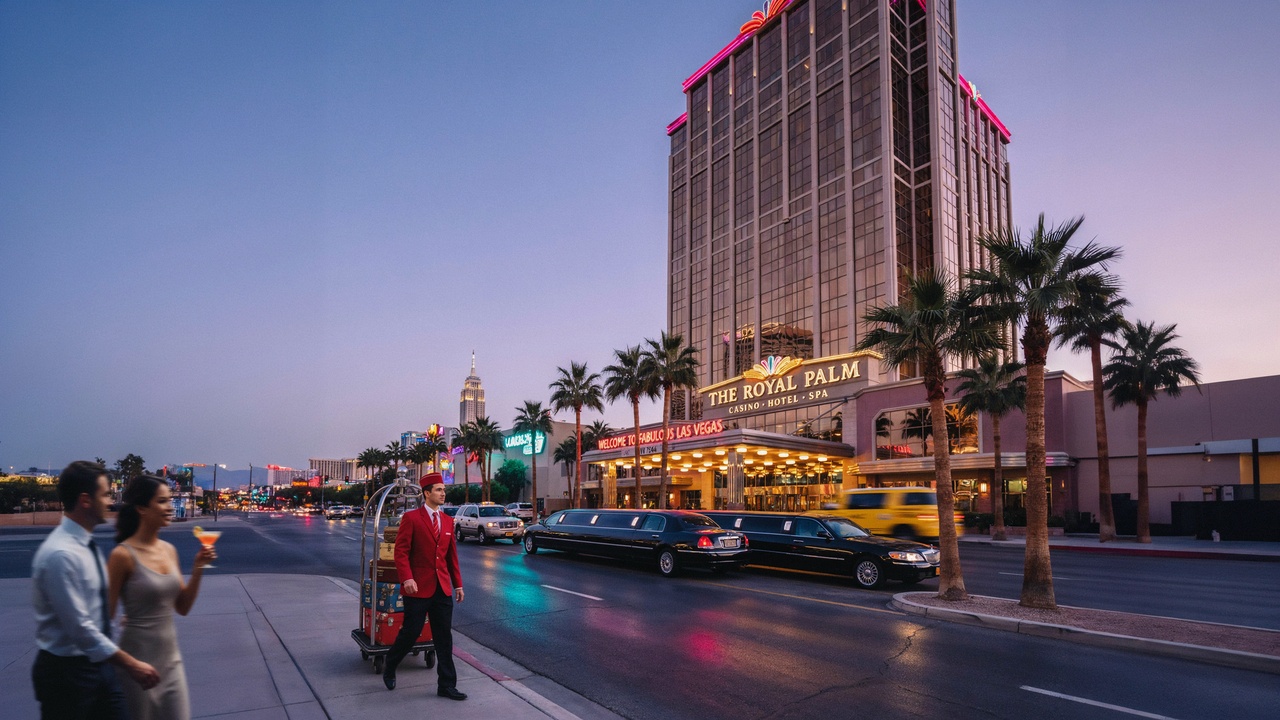
Image generated with Ai
Las Vegas Travel is facing a fresh shift as August 2026 brought fewer visitors and lower hotel occupancy despite room rates falling to their lowest level of the year. Las Vegas recorded about 3.03 million visitors, down 4.3% from August 2025, while the average daily hotel rate fell to $150.32 and occupancy slipped to 74.1%. The figures reveal a more complicated tourism market rather than a simple collapse. Weekend demand remained considerably stronger than midweek demand, convention attendance increased and gaming revenue remained comparatively resilient. For travellers, the changing market could create opportunities for better hotel value, particularly on flexible dates, but event calendars, resort fees and total trip costs remain crucial when planning a Las Vegas escape.
Las Vegas Travel Faces a Sharp August Visitor Decline
Las Vegas welcomed approximately 3.03 million visitors in August 2026, representing a 4.3% decline from August 2025. The figure was also about 136,700 below July’s visitor total.
The reduction is significant because Las Vegas depends on a large and consistent flow of leisure, convention and business travellers.
Yet the monthly figure needs context.
Advertisement
Advertisement
August 2026 did not simply show a destination with empty hotels and declining activity everywhere.
Several tourism segments performed differently.
Advertisement
Advertisement
Convention attendance increased.
Casino revenue remained relatively strong.
Advertisement
Advertisement
Weekend hotel occupancy was much higher than midweek occupancy.
The result is an uneven market in which certain parts of Las Vegas continue to attract strong demand while other periods are becoming more competitive.
Hotel Rates Fall as Las Vegas Searches for Demand
Hotels responded to weaker demand by lowering room prices.
The citywide average daily rate fell to $150.32 in August, approximately 7.4% below August 2025 and about $7 below July’s figure.
Advertisement
Advertisement
On the Las Vegas Strip, the average daily rate reached $153.15.
However, lower prices did not prevent occupancy from declining.
Citywide occupancy dropped to 74.1%, down 3.4 percentage points from August 2025.
That creates an important signal for travellers.
Las Vegas hotels are competing more aggressively for demand, but the reduction in room prices has not yet produced a comparable increase in bookings.
For visitors, that can mean greater negotiating power during weaker periods.
Advertisement
Advertisement
It does not mean every date or hotel will suddenly become inexpensive.
Midweek Las Vegas Travel Is Facing Greater Pressure
The difference between weekend and midweek demand is particularly striking.
Weekend hotel occupancy reached 85.5%, while midweek occupancy fell to 69.4%.
That gap matters because Las Vegas has a huge convention, entertainment and business infrastructure designed to generate demand throughout the week.
When Sunday-to-Thursday demand weakens, hotels have a stronger incentive to use discounts and promotional packages.
Travellers with flexible schedules can potentially benefit.
Advertisement
Advertisement
A visitor who can avoid Friday and Saturday nights may find substantially different room prices.
The pattern also suggests that Las Vegas remains highly event-driven.
A major convention, concert, sporting event or holiday can quickly change hotel availability and rates.
Strip and Downtown Las Vegas Tell Different Stories
The overall city figures hide significant differences between tourism districts.
On the Las Vegas Strip, occupancy reached 77%, while the average daily rate was $153.15.
Downtown Las Vegas faced considerably weaker hotel demand.
Advertisement
Advertisement
The average room rate was approximately $85.68, but occupancy was only 53%.
For travellers, this creates two very different accommodation markets.
The Strip provides proximity to major resorts, shows, restaurants and entertainment.
Downtown can offer lower room prices and a different atmosphere around Fremont Street and the surrounding entertainment district.
The best choice therefore depends on the traveller’s priorities.
A cheaper room can be useful, but transport costs and the location of planned activities should also be considered.
Advertisement
Advertisement
Hotel Revenue Falls More Than Room Rates
The pressure becomes clearer when looking at revenue per available room, or RevPAR.
Las Vegas RevPAR fell 11.5% to $111.39 in August.
Occupied room nights also declined by 3.7%, representing approximately 134,400 fewer occupied room nights and bringing the total to 3.46 million.
These figures indicate that the issue is broader than headline hotel prices.
Hotels are receiving fewer occupied room nights and less revenue from their available inventory.
That can encourage operators to compete more aggressively through room promotions, packages and discounts.
Advertisement
Advertisement
For travellers, it means comparing the entire booking proposition becomes increasingly important.
Air Travel Adds Another Pressure Point
Harry Reid International Airport recorded a 9% year-on-year decline in passenger traffic in August, according to the supplied tourism reporting.
Domestic aviation was particularly weak.
Domestic passenger traffic declined approximately 10.2%.
Southwest Airlines, the airport’s largest carrier, handled around 1.75 million arriving and departing passengers during the month, down 4.6% from August 2025.
Delta passenger numbers declined 8.8%, while Frontier recorded a 35.3% increase.
Advertisement
Advertisement
The official Harry Reid International Airport newsroom separately reported more than 4.1 million passengers in August 2026, showing the enormous scale of the airport operation even during the year-on-year decline.
The aviation numbers therefore reinforce the hotel data.
Las Vegas was dealing with softer visitor demand across important travel channels.
A Calendar Shift Complicates the August Comparison
There is another important factor.
Labor Day fell on 1 September in 2025, meaning some holiday travel activity occurred during late August.
In 2026, Labor Day fell on 7 September, shifting the holiday weekend into September.
Advertisement
Advertisement
That calendar difference affects the year-on-year comparison.
Some travel that appeared in August 2025 was likely shifted into September 2026.
This means the August decline should not automatically be interpreted as evidence of a permanent collapse in Las Vegas tourism.
September data will provide a clearer indication of whether some demand simply moved between months.
Convention Travel Provides a Major Bright Spot
One part of the Las Vegas visitor economy moved in the opposite direction.
Convention attendance increased 6% year-on-year to 622,700 in August.
Advertisement
Advertisement
Event scheduling contributed to that increase.
The CHAMPS trade show, which attracted around 24,000 attendees, moved from July in 2025 to August in 2026.
Other major events included DEF CON 2026, Black Hat/WebTech USA, MAGIC Fall and SuperZoo.
Convention travellers are particularly valuable because they can support midweek hotel occupancy.
They also generate spending across restaurants, entertainment, transport and retail.
The increase therefore provided an important counterweight to softer leisure demand.
Advertisement
Advertisement
Gaming Remains More Resilient Than Hotel Demand
The tourism slowdown has not translated into an equivalent decline in casino revenue.
Nevada’s statewide gaming revenue increased 3.1% in August, while Las Vegas Strip gaming revenue increased approximately 0.7% to $684.1 million.
Baccarat performed particularly strongly during the month and helped offset declines in several other casino categories.
This creates an unusual tourism picture.
Fewer visitors were staying in hotels, yet gaming revenue remained relatively resilient.
It demonstrates why hotel occupancy and casino revenue should not be treated as identical measures of Las Vegas demand.
Advertisement
Advertisement
Could Las Vegas Travel Become Cheaper?
The August data indicate that some travellers may find better accommodation value.
The citywide average daily rate of $150.32 was substantially below the $183.52 average recorded across 2025.
However, this does not mean every hotel is now cheap.
Las Vegas room prices remain highly sensitive to:
Major conventions.
Concerts.
Advertisement
Advertisement
Sports events.
Weekends.
Holiday periods.
Hotel location.
Room category.
Resort demand.
Advertisement
Advertisement
The city also has a very large hotel inventory, with roughly 150,300 rooms.
That creates substantial choice.
But a major event can still push prices sharply higher.
What Las Vegas Travel Offers Beyond the Strip
A softer hotel market does not mean fewer things for visitors to experience.
The Strip remains the centre of major resort entertainment, restaurants, shows and attractions.
Downtown Las Vegas provides a different atmosphere through the Fremont Street Experience, restaurants, museums and independent venues.
Advertisement
Advertisement
Travellers can also move beyond the urban resort corridor.
Red Rock Canyon National Conservation Area offers hiking, climbing, scenic drives, cycling and wildlife viewing. The area is approximately 17 miles from the Las Vegas Strip, according to the National Park Service’s nearby-attractions information.
Lake Mead National Recreation Area provides another major outdoor option.
The National Park Service describes it as a year-round recreation area spanning approximately 1.5 million acres, with opportunities for boating, hiking, cycling and fishing.
Hoover Dam Adds History to a Las Vegas Trip
Visitors can also combine Las Vegas with Hoover Dam.
The National Park Service describes the dam as a National Historic Landmark and one of the defining engineering achievements of the American West.
Advertisement
Advertisement
It sits approximately 30 miles southeast of Las Vegas on the Nevada-Arizona border.
The wider Lake Mead area provides opportunities for guided cruises, rafting and water-based experiences.
The National Park Service says visitors can take guided trips on the Black Canyon National Water Trail and explore the Colorado River beneath Hoover Dam.
This gives travellers another reason to extend a Las Vegas stay beyond the resort corridor.
Autumn Offers Better Conditions for Outdoor Travel
For visitors considering outdoor excursions, seasonal timing matters.
The National Park Service lists October through December as the autumn period at Lake Mead, with typical daytime highs ranging from 59°F to 83°F. Summer can reach considerably higher temperatures and may create dangerous hiking conditions.
Advertisement
Advertisement
That makes autumn and winter particularly relevant for travellers wanting to combine Las Vegas with desert recreation.
The park recommends checking current alerts, weather and launch-ramp conditions before visiting.
Visitors planning water activities should also follow safety requirements.
The NPS warns that water conditions can change quickly, while cold water and boat traffic create additional risks for paddlers.
Should Travellers Still Visit Las Vegas?
The August figures do not indicate that travellers should avoid Las Vegas.
Instead, they show a destination experiencing softer demand and greater price sensitivity during a particular month.
Advertisement
Advertisement
For flexible travellers, that can create opportunities.
Midweek stays may offer lower rates than peak weekends.
Downtown accommodation may provide a lower entry price than major Strip resorts.
Travellers can also compare hotel packages with the full cost of accommodation, resort fees, parking, food, entertainment and transport.
A low room rate does not necessarily mean a low-cost holiday.
The Bigger Las Vegas Travel Picture
The August data reveal a complex market.
Advertisement
Advertisement
Visitor numbers fell.
Hotel occupancy fell.
Average room rates fell.
RevPAR fell.
Airport passenger traffic fell.
Yet convention attendance increased.
Advertisement
Advertisement
Gaming revenue remained comparatively resilient.
And Las Vegas continues to operate as one of America’s largest tourism and convention destinations.
The calendar shift surrounding Labor Day further complicates the August comparison.
The next monthly results will therefore be important in determining whether the August weakness was primarily calendar-driven and seasonal or part of a more sustained change in travel demand.
Conclusion
Las Vegas Travel is entering a more value-sensitive phase after August 2026 brought fewer visitors, lower hotel occupancy and the year’s lowest average room rates, but the destination remains far from a simple tourism collapse. Visitor numbers fell 4.3% to about 3.03 million, while citywide occupancy reached 74.1% and the average daily hotel rate dropped to $150.32. At the same time, convention attendance rose 6%, gaming revenue remained comparatively resilient and Las Vegas retained its enormous entertainment infrastructure. For travellers, the changing market could create opportunities to find better hotel value, particularly during flexible midweek dates. But the smartest Las Vegas trip still requires more than chasing a cheap room. Event calendars, resort fees, transport, dining and attraction costs all matter. With the Strip, Downtown, Red Rock Canyon, Lake Mead and Hoover Dam offering very different experiences, visitors can also turn a potentially cheaper city break into a broader Nevada adventure.
Advertisement
