
Slovakia Teams Up With Estonia and More as Europe’s Secret Village Getaways Enter the Global Travel Spotlight

Published
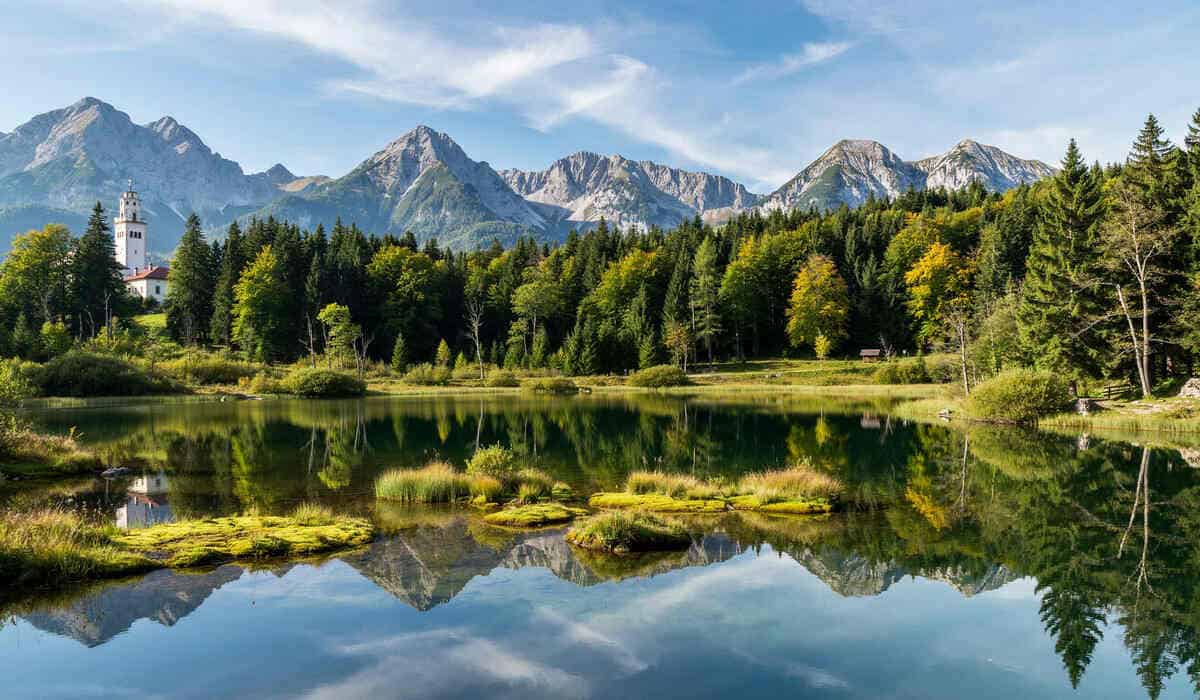
Slovakia Teams Up With Estonia and more as Europe’s secret village getaways enter the global travel spotlight, creating fresh reasons for travellers to explore beyond famous cities. Moreover, Slovakia and Estonia reveal secret village getaways where heritage, nature and local traditions meet. These Europe destinations offer global travellers a slower and more authentic holiday experience. Meanwhile, hidden villages across Europe are gaining attention among tourists seeking memorable journeys away from crowded attractions. Travel And Tour World explores how Slovakia teams up with Estonia and more destinations to showcase Europe’s secret village getaways. As these villages enter the global travel spotlight, travellers can discover remarkable landscapes, cultural treasures and unforgettable experiences.
Slovakia Village Tourism and Six Lesser-Known European Villages Global Travellers Can Explore
Slovakia Village Tourism Gains a Wider European Context
Slovakia offers travellers an increasingly useful model for exploring Europe through villages, mountain communities and traditional rural landscapes.
The country’s tourism statistics show that this interest is not limited to Bratislava. Slovakia accommodated 6.3 million visitors in 2025, up more than 7% from 2024. Visitors generated 16.2 million overnight stays, while the average stay reached 2.5 nights.
Foreign visitors accounted for approximately 2.4 million arrivals, while domestic visitors represented about 3.9 million. The figures show that international demand has been an important part of Slovakia’s tourism recovery.
Advertisement
Advertisement
Žilina and Prešov regions are particularly relevant for village-focused holidays. Both achieved post-pandemic annual records in 2025. Žilina, in particular, recorded a 9.8% year-on-year increase in accommodated visitors, the strongest regional performance reported by the Slovak Statistical Office.
Slovakia Tourism Statistics at a Glance
| Indicator | 2019 | 2020 | 2021 | 2022 | 2023 | 2024 | 2025 |
|---|---|---|---|---|---|---|---|
| Visitors in accommodation establishments | 6.39m | sharply reduced | about half of 2019 level | recovering | recovering strongly | 5.9m | 6.3m |
| Overnight stays | — | pandemic affected | pandemic affected | recovering | recovering | — | 16.2m |
| Foreign visitors | pre-pandemic peak | sharply reduced | strongly restricted | recovering | accelerating | recovering | 2.4m |
| Domestic visitors | pre-pandemic level | relatively resilient | strong domestic demand | recovering | 3.9m range | majority | 3.9m |
| Average stay | — | — | — | — | — | — | 2.5 nights |
The Statistical Office says 2025 was Slovakia’s second-most successful tourism year, with only about 86,000 visitors separating it from the 2019 record.
Advertisement
Advertisement
Accommodation capacity has also expanded. Slovakia had 6,140 accommodation establishments in 2025, 875 more than in 2024. Those establishments offered around 85,000 bedrooms and 260,000 bed places, including camping facilities.
The Žilina region is especially relevant to village tourism. It added 274 accommodation establishments during 2025, a 19% increase, while available bed places increased by approximately 20%.
Advertisement
Advertisement
For travellers, this means that rural Slovakia can increasingly be incorporated into multi-night itineraries rather than treated only as a day-trip destination.
Six Lesser-Known European Villages to Add to a Rural Travel Itinerary
Europe has thousands of small communities with historic architecture, food traditions and access to natural landscapes. The six destinations below provide alternatives to Europe’s most heavily visited villages.
Because official statistics are generally collected by municipality, district or tourism region, the visitor table below distinguishes between village-specific data and the official statistical area covering the village.
1. Štanjel, Slovenia – A Karst Village With Stone Houses and Mediterranean Flavours
Štanjel is one of Slovenia’s most atmospheric rural settlements, located in the Karst area of the country’s western region. The village is part of Komen Municipality, whose official statistical profile recorded 8,167 tourist arrivals and 17,069 overnight stays in 2025. Foreign visitors accounted for 13,023 of those overnight stays. The municipality’s tourism overnight stays increased from 10,968 in 2018 to 17,069 in 2025, demonstrating the scale of accommodation activity surrounding Štanjel, although the figures cannot be assigned entirely to the village itself. Travellers should begin with the medieval village core, explore the compact stone lanes and visit the historic Ferrari Garden. The surrounding Karst landscape is suitable for walking and cycling. Food is another reason to slow down here. Visitors can look for Karst prosciutto, local cheeses, seasonal vegetables and the region’s distinctive wines. The best stay is a family-run guesthouse, rural apartment or agritourism property in Štanjel or nearby Karst villages. A two-night plan works well. Arrive from Ljubljana or the coast, explore Štanjel on the first afternoon, spend the next morning walking through the surrounding countryside and dedicate the afternoon to a winery or food experience. Visitors can then continue towards Sežana, Lipica or the Slovenian coast. Slovenia’s official statistical system identifies Komen as a low-density municipality with only around 3,500 residents in 2024, reinforcing the rural character of the area.
Advertisement
Advertisement
Komen and Štanjel Tourism Data
| Year | Official municipality tourism indicator |
|---|---|
| 2021 | Official village-level series not separately published |
| 2022 | Official village-level series not separately published |
| 2023 | Municipality-level tourism series available |
| 2024 | Municipality-level tourism series available |
| 2025 | 8,167 arrivals; 17,069 overnight stays |
| Foreign nights, 2025 | 13,023 |
Travel plan: 2 nights
Visit: Štanjel old village, Ferrari Garden, Karst countryside
Eat: Karst prosciutto, local cheese, seasonal dishes and regional wine
Stay: Guesthouse, rural apartment or agritourism property
Best for: Culture, food, photography, slow travel and cycling
2. Soča Valley Villages, Slovenia – Alpine Rivers Beyond the Classic European Trail
The villages of the Soča Valley provide a strong rural alternative for travellers who want mountains without concentrating their holiday around major Alpine resorts. Villages and settlements around Bovec, Kobarid and Tolmin sit beside the emerald Soča River and provide access to hiking, cycling, rafting and historical sites. The official Soča Valley tourism organisation recorded 47,220 visits to its tourist information centres in 2025, compared with 42,621 in 2024. Bovec accounted for 28,055 information-centre visits, Kobarid recorded 10,899 and Tolmin recorded 8,276. These are information-centre visits rather than total tourist arrivals, so they should not be confused with accommodation statistics. The destination also has a strongly international visitor base. German visitors represented 28.8% of information-centre visitors in 2025, followed by Slovenian visitors at 14.5% and French visitors at 7.3%. The wider Bovec municipality recorded 235,614 tourist arrivals and 621,121 overnight stays in 2025, although these figures cover the municipality rather than the small villages alone. Travellers should use Bovec or Kobarid as bases and explore smaller surrounding settlements. Activities include hiking along the Soča Trail, rafting, cycling and visiting First World War heritage sites. Food options include regional cheese, jota-style dishes, mountain trout and traditional Alpine cuisine. A three-night itinerary allows travellers to combine adventure with village exploration. Stay in a family guesthouse, mountain lodge or rural apartment. The area is highly seasonal, so travellers should check opening schedules outside summer.
Bovec Municipality Tourism Data
| Year | Tourist data |
|---|---|
| 2021 | Village-level comparable data not separately available here |
| 2022 | Village-level comparable data not separately available here |
| 2023 | Official Slovenian statistics available at municipality level |
| 2024 | Official municipality-level statistics available |
| 2025 | 235,614 arrivals |
| 2025 overnight stays | 621,121 |
| Foreign overnight stays, 2025 | 577,851 |
| 2025 TIC visits, Soča Valley | 47,220 |
Travel plan: 3 nights
Visit: Bovec, Kobarid, Soča Trail and surrounding villages
Eat: Trout, mountain cheese, jota and local Alpine dishes
Stay: Mountain lodge, guesthouse or rural apartment
Best for: Adventure, hiking, rafting and nature
3. Koguva, Estonia – A Baltic Island Village for Slow Cultural Travel
Koguva on Muhu Island offers a very different interpretation of European village tourism. The settlement is associated with traditional island architecture, wooden buildings and a rural landscape shaped by centuries of farming and maritime life. Travellers can combine Koguva with a wider Muhu and Saaremaa itinerary. The village is particularly suitable for visitors interested in heritage rather than conventional sightseeing. The open-air museum environment provides insight into traditional island life, while cycling is one of the most practical ways to explore the surrounding countryside. Travellers can sample Estonian black bread, smoked fish, potatoes, dairy products and seasonal island cuisine. Accommodation is best approached through small guesthouses, farm stays and rural cottages rather than large hotels. A two-night itinerary can begin with a visit to Koguva, followed by cycling through Muhu’s villages and coastal landscapes. The following day can be devoted to Saaremaa, where travellers can continue towards Kuressaare and its castle. Official Estonian tourism statistics are generally reported at national, county and accommodation-establishment levels, meaning that a five-year visitor series for Koguva itself should not be presented as an official village statistic. This is important when comparing rural destinations. The wider European tourism picture remains strong. Eurostat recorded more than 3 billion tourism nights across the EU in 2024, while 2025 reached an estimated 3.08 billion nights. Koguva therefore fits into a broader European shift towards accommodation and experiences outside traditional metropolitan centres.
Koguva Visitor-Data Note
| Year | Koguva-specific official annual arrivals |
|---|---|
| 2021 | Not separately published in the principal official tourism series |
| 2022 | Not separately published |
| 2023 | Not separately published |
| 2024 | Not separately published |
| 2025 | Not separately published |
| Wider EU context, 2024 | More than 3bn tourism nights |
| Wider EU context, 2025 | Estimated 3.08bn tourism nights |
Travel plan: 2 nights
Visit: Koguva village museum area, Muhu countryside and coastal settlements
Eat: Smoked fish, rye bread, potatoes and island-style seasonal food
Stay: Farm guesthouse, cottage or small rural inn
Best for: Heritage, cycling, photography and slow travel
4. Monsanto, Portugal – A Granite Village Above the Central Portuguese Landscape
Monsanto provides travellers with an unusual village experience because its traditional houses are integrated into a dramatic granite landscape. Large boulders form part of the settlement, creating narrow passages and distinctive stone buildings. The village can be incorporated into a longer Central Portugal itinerary that includes historic towns, castles and rural landscapes. Travellers should explore the medieval streets on foot and climb towards the castle area for panoramic views. The surrounding countryside is suited to walking and scenic drives. Food should focus on central Portuguese flavours, including regional cheeses, cured meats, bread, soups and traditional meat dishes. Local restaurants and family-run establishments are more appropriate for the experience than international chains. Visitors can stay in village guesthouses, rural tourism properties or accommodation in nearby settlements. A two-night itinerary allows sufficient time for Monsanto without rushing. Day one can concentrate on the village and castle. Day two can include nearby historic communities and rural landscapes. Official Portuguese statistics generally provide tourism accommodation data through municipality-level and regional classifications, rather than a continuous five-year visitor series for Monsanto itself. For that reason, a village-specific annual visitor table should not be manufactured. Portugal forms part of the wider EU tourism recovery, and Eurostat reported that EU tourism nights surpassed three billion in 2024. For international travellers, Monsanto works particularly well as part of a road trip through central Portugal. Its relatively remote position also makes advance planning useful, especially outside major summer travel periods.
Advertisement
Advertisement
Monsanto Tourism Data Availability
| Year | Monsanto village-specific annual arrivals |
|---|---|
| 2021 | Not separately reported in the principal comparable official series |
| 2022 | Not separately reported |
| 2023 | Municipality/regional statistics available |
| 2024 | Municipality/regional statistics available |
| 2025 | Municipality/regional statistics available |
| Recommended comparison | Use Idanha-a-Nova municipality data rather than invent village totals |
Travel plan: 2 nights
Visit: Historic village core, castle and surrounding granite landscape
Eat: Regional cheese, cured meats, soups, bread and central Portuguese dishes
Stay: Rural guesthouse or village accommodation
Best for: Road trips, heritage, photography and countryside
5. Vrbnik, Croatia – A Historic Island Settlement With Wine and Adriatic Views
Vrbnik offers travellers a compact combination of Croatian heritage, island scenery, local food and wine culture. Located on Krk Island, the historic settlement sits above the Adriatic and is known for its narrow lanes and traditional stone architecture. Official tourism statistics from Vrbnik’s tourist board show 21,181 tourist arrivals and 141,282 overnight stays in 2025. Foreign visitors generated 19,339 arrivals and 127,119 overnight stays, while domestic visitors accounted for 1,842 arrivals and 14,163 overnight stays. The 2025 total represented 97.4% of the previous year’s arrivals and 98.7% of the previous year’s overnight stays. Summer remains central to the destination. July and August together generated more than 87,000 overnight stays in 2025, according to the local tourism report. Travellers should walk through the old town, visit viewpoints, explore nearby coastal areas and experience the area’s wine culture. Vrbnička žlahtina is the local wine associated with Vrbnik and should be included in a food-and-wine itinerary. Visitors can also look for seafood, grilled fish, lamb, local cheese and Croatian pastries. Stay inside or close to the old town for a walkable experience. A three-night trip works well, particularly when combined with other Krk Island communities. Visitors arriving during peak summer should reserve accommodation early and consider morning or evening sightseeing for a more relaxed experience.
Vrbnik Tourism Statistics
| Year | Tourist arrivals | Overnight stays |
|---|---|---|
| 2021 | Local comparable figure should be checked in Croatia’s official eVisitor/DZS database | Official series |
| 2022 | Official eVisitor/DZS series | Official eVisitor/DZS series |
| 2023 | Official eVisitor/DZS series | Official eVisitor/DZS series |
| 2024 | 21,753 | 143,159 |
| 2025 | 21,181 | 141,282 |
The local 2025 report confirms that foreign tourists remained the dominant market.
Travel plan: 3 nights
Visit: Vrbnik old town, viewpoints, coastal areas and vineyards
Eat: Seafood, grilled fish, lamb, local cheese and regional pastries
Drink: Vrbnička žlahtina
Stay: Old-town apartment, guesthouse or small hotel
Best for: Food, wine, history and Adriatic scenery
6. Komen and the Karst Villages, Slovenia – A Food-Led Rural Escape
The wider Karst area around Komen provides another route for travellers who want village experiences combined with food and wine. Small settlements are spread through a limestone landscape where stone houses, vineyards and rural roads create a distinctly Mediterranean-Central European setting. Komen municipality had approximately 3,500 residents in 2024, according to Slovenia’s Statistical Office, making the area substantially smaller and less urban than Slovenia’s principal tourism centres. Tourism activity is nevertheless significant compared with the resident population. The municipality recorded 8,167 arrivals and 17,069 overnight stays in 2025, with foreign guests responsible for 13,023 overnight stays. Travellers should combine Štanjel with other Karst settlements rather than treating the village as an isolated attraction. Cycling, walking and wine tourism are particularly suitable. Food should focus on Karst specialities, including prosciutto, cheeses and locally produced wines. Rural accommodation can include farm stays, guesthouses and countryside apartments. A three-day itinerary allows visitors to explore Štanjel on day one, spend day two visiting wineries and nearby villages, and use day three for the wider Karst landscape. Travellers can then continue towards Trieste, the Slovenian coast or Ljubljana. The destination also illustrates why village statistics require careful interpretation. Komen’s official tourism figures represent the entire municipality, not simply Štanjel. Publishing those figures as Štanjel-only visitors would overstate the available evidence. For travel journalism, the municipality-level figures provide a useful indication of tourism activity while preserving statistical accuracy.
Komen Tourism Indicators
| Indicator | Figure |
|---|---|
| Population, 2024 | 3,500 |
| Area | 103 sq km |
| Tourist arrivals, 2025 | 8,167 |
| Overnight stays, 2025 | 17,069 |
| Foreign overnight stays, 2025 | 13,023 |
| Overnight stays, 2018 | 10,968 |
| Overnight stays, 2025 | 17,069 |
Official Slovenian statistical data confirms the municipality’s rural demographic profile.
Advertisement
Advertisement
Travel plan: 3 nights
Visit: Štanjel, Karst villages, vineyards and rural landscapes
Eat: Karst prosciutto, cheese, seasonal vegetables and regional wine
Stay: Farm stay, guesthouse or rural apartment
Best for: Wine, food, cycling and heritage
Five-Year European Tourism Context
Village tourism cannot be understood separately from Europe’s wider accommodation market.
Eurostat estimates that European Union tourism reached approximately 3.08 billion overnight stays in 2025, following more than three billion in 2024. International visitors represented approximately 49% of EU tourism nights in 2025, while domestic visitors represented about 51%.
The recovery from the pandemic is particularly visible when the five-year period is considered.
EU Tourism Nights Comparison
| Year | EU tourism nights | Travel context |
|---|---|---|
| 2020 | About 1.4bn | Major pandemic disruption |
| 2021 | About 1.8bn | Partial recovery |
| 2022 | About 2.7bn | Strong reopening phase |
| 2023 | About 2.9bn | Pre-pandemic level surpassed |
| 2024 | More than 3.0bn | Record tourism year |
| 2025 | About 3.08bn | New record estimate |
Eurostat’s long-term series shows that tourism nights were approximately 2.9 billion in 2019, fell to around 1.4 billion in 2020, recovered to about 1.8 billion in 2021 and approximately 2.7 billion in 2022, before surpassing the pre-pandemic level in 2023.
This wider recovery provides important context for smaller destinations.
Advertisement
Advertisement
More travellers are again moving through Europe, but village destinations do not necessarily receive the same volume as capitals, major resorts or famous heritage cities.
How the Six Villages Compare
| Destination | Country | Main attraction | Best travel style | Official data level | Suggested stay |
|---|---|---|---|---|---|
| Štanjel | Slovenia | Karst heritage and wine | Food and culture | Municipality | 2 nights |
| Soča Valley villages | Slovenia | Alps and Soča River | Adventure | Municipality/destination | 3 nights |
| Koguva | Estonia | Island heritage | Slow travel | Regional/national | 2 nights |
| Monsanto | Portugal | Granite architecture | Road trip | Municipality/regional | 2 nights |
| Vrbnik | Croatia | Adriatic heritage and wine | Food and coast | Local tourism board | 3 nights |
| Karst villages | Slovenia | Rural culture and vineyards | Cycling and food | Municipality | 3 nights |
Best Way to Build a European Village-Tourism Route
Travellers do not need to choose one village and end the journey there.
A multi-stop route can create a more varied experience.
One option begins in Slovenia with Štanjel and continues towards the Soča Valley. The route combines Karst landscapes with Alpine scenery.
Another itinerary can pair Monsanto with central Portugal’s historic towns and countryside.
Vrbnik works particularly well as part of an island-focused Croatian journey.
Advertisement
Advertisement
Koguva can be combined with Muhu and Saaremaa for a longer Baltic island holiday.
The key is to avoid treating small villages as short photographic stops.
Travellers should allow time for local museums, walking routes, traditional food, family-run accommodation and nearby natural attractions.
Practical Planning Data for Global Travellers
| Travel factor | Recommended approach |
|---|---|
| Accommodation | Guesthouses, farm stays, rural cottages and small hotels |
| Transport | Rental car for remote villages; public transport where practical |
| Ideal duration | 2–3 nights per village area |
| Food | Prioritise regional dishes and local producers |
| Activities | Walking, cycling, food tours, heritage and nature |
| Booking | Reserve early during summer and major festivals |
| Connectivity | Check rural transport schedules before departure |
| Cash | Carry a backup payment method in smaller settlements |
| Weather | Check regional forecasts before mountain activities |
| Responsible travel | Follow marked trails and local conservation rules |
Why Village Tourism Gives Travellers More Than a Photograph
The strongest reason to explore smaller European villages is the ability to connect several travel experiences in one place.
A village can provide heritage in the morning, a walking route in the afternoon and regional food in the evening.
That combination can make a short stay feel more substantial.
Advertisement
Advertisement
Slovakia’s official tourism portal highlights that more than half of the country consists of mountains and highlands and that the country has nine national parks. It also identifies Vlkolínec and Čičmany among important examples of traditional Slovak village architecture.
Čičmany contains 136 houses within its architectural reserve, with its distinctive geometric exterior decoration forming one of the village’s most recognisable cultural features.
Meanwhile, Slovakia’s expanding accommodation base gives travellers more opportunities to spend nights outside major urban centres.
In 2025, Slovak accommodation providers generated €709 million in turnover excluding VAT, while domestic visitors contributed about €442 million and foreign visitors around €287 million.
For global travellers, these figures add useful context to the broader village-tourism story.
The opportunity is not simply to find a quieter photograph.
Advertisement
Advertisement
It is to create a journey around local architecture, food, landscapes, outdoor activities and communities.
Traveller-Focused Conclusion
Slovakia provides a strong starting point for discovering Europe’s rural side, with villages such as Čičmany and Vlkolínec connecting architecture with mountain landscapes.
Beyond Slovakia, Štanjel, the Soča Valley, Koguva, Monsanto, Vrbnik and the wider Karst villages show how small destinations can become meaningful travel stops.
The available statistics also underline an important point.
Village-level visitor numbers are often difficult to compare because European statistical systems use different geographical units.
For responsible travel reporting, municipality and regional figures should therefore be clearly separated from village-specific visitor counts.
Advertisement
Advertisement
For travellers, however, the planning opportunity is straightforward.
Choose a village, stay locally, eat regional food, explore the surrounding landscape and connect it with neighbouring communities.
That approach can transform an ordinary European itinerary into a slower and more culturally focused journey.
Conclusion
Slovakia Teams Up With Estonia and more as Europe’s secret village getaways enter the global travel spotlight, giving global travellers fresh reasons to explore beyond crowded cities. From Slovakia’s traditional villages to Estonia’s peaceful rural landscapes, these destinations offer culture, nature, local food and slower experiences. Moreover, travellers can discover Europe through authentic communities rather than conventional tourist routes. Travel And Tour World highlights how these secret village getaways are creating exciting possibilities for curious travellers seeking meaningful journeys. As Slovakia, Estonia and more European destinations gain attention, their villages invite visitors to explore, experience and discover another side of Europe.
Advertisement
