
Breaking: American Airlines Flight AAL1373 Scheduled from Phoenix but Diverted at Nashville International Airport Instead of Atlanta

Published
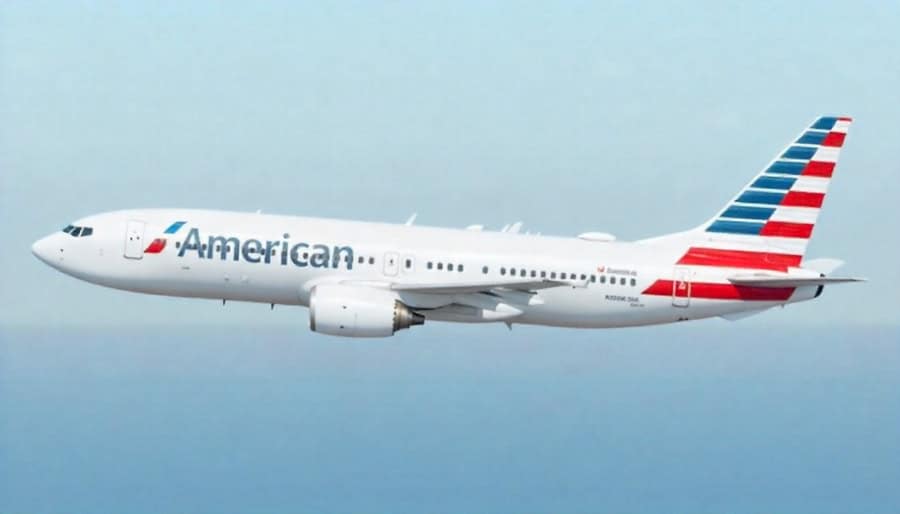
American Airlines Flight AAL1373 scheduled from Phoenix but diverts at Nashville International Airport instead of Atlanta, leaving passengers grounded away from their planned landing. With a scheduled time of arrival (STA) set for 15:55 EST, the Airbus A321 faced severe airborne holds. Consequently, air traffic controllers redirected the jet straight towards Tennessee. Meanwhile, travellers scrambled as flight crews prioritised fuel safety over direct routing. Although pilots aimed for Georgia, intense convective storms disrupted regional flight tracks. Therefore, the aircraft safely touched down in Nashville.
Why Did American Airlines Flight AAL1373 Divert to Nashville International Airport?
The unexpected rerouting of American Airlines Flight AAL1373 occurred when powerful convective thunderstorm cells swept across the regional airspace surrounding Atlanta, forcing local air traffic control to enforce strict ground delay programs and holding patterns for incoming commercial aircraft. As the Airbus jet cruised towards its destination, the flight crew on American Airlines Flight AAL1373 monitored decreasing fuel reserves during the extended holding sequence, ultimately selecting Nashville International Airport as the most viable alternate touchdown site.
Navigational controllers carefully evaluated the surrounding atmospheric risks, determining that diverting American Airlines Flight AAL1373 away from the immediate lightning zones was far safer than risking an extended low-fuel scenario over Georgia. Consequently, the captain commanding American Airlines Flight AAL1373 initiated a smooth altitude adjustment towards Tennessee, ensuring complete alignment with standard aviation safety guidelines during unexpected meteorological disruptions.

What Happened Onboard American Airlines Flight AAL1373 During the Journey from Phoenix?
Departing Phoenix Sky Harbor International Airport shortly after its scheduled morning slot, American Airlines Flight AAL1373 initially enjoyed a smooth cross-country passage across the central southern corridor of the United States. Passengers aboard American Airlines Flight AAL1373 reported that early flight conditions were calm and unremarkable until the aircraft approached the southeastern border regions, where severe atmospheric turbulence prompted the flight crew to illuminate the seatbelt signs.
Advertisement
Advertisement
As the aircraft entered holding circuits north of Atlanta, the cabin crew on American Airlines Flight AAL1373 maintained professional composure while delivering timely status updates regarding the mounting weather congestion ahead. Although travelers on American Airlines Flight AAL1373 experienced moderate shaking due to the nearby convective storms, the flight crew managed the situation efficiently before executing the turn toward Nashville.
Advertisement
Advertisement
How Did Air Traffic Management Handle American Airlines Flight AAL1373 over Georgia Airspace?
Southeastern air traffic controllers faced a monumental task as severe storm systems blanketed major arrival lanes, leaving American Airlines Flight AAL1373 amidst dozens of inbound flights vying for limited approach vectors. Regional vectoring units instructed the pilots of American Airlines Flight AAL1373 to maintain a circular holding pattern, closely monitoring radar sweeps as convective activity intensified over Hartsfield-Jackson International Airport.
When estimated landing clearance times began stretching beyond safe contingency fuel parameters, controllers coordinated swiftly with American Airlines Flight AAL1373 to clear a direct northern corridor toward Tennessee. This proactive management guaranteed that American Airlines Flight AAL1373 avoided hazardous wind shear conditions while preserving crucial operational safety margins throughout the unexpected descent.
How Were Passengers on American Airlines Flight AAL1373 Accommodated in Nashville?
Upon touching down safely at Nashville International Airport, the ground handling team for American Airlines Flight AAL1373 marshaled the Airbus A321 directly to a designated gate position to facilitate immediate refueling operations and cabin checks. Ground personnel swiftly coordinated with the flight crew on American Airlines Flight AAL1373 to ensure passengers received complimentary refreshments and updated itinerary information while regional weather patterns were reassessed.
Airline customer support specialists worked diligently behind the scenes to arrange onward travel logistics for everyone aboard American Airlines Flight AAL1373, offering alternative hub connections or local accommodations where necessary. Despite the inconvenience caused by the severe weather diversion, travelers praised the transparent communications provided by the crew of American Airlines Flight AAL1373 throughout their unexpected layover in Nashville.
What Standard Safety Protocols Guided American Airlines Flight AAL1373 to Land in Tennessee?
Federal aviation regulations dictate that every commercial flight plan must include designated alternate airports, a rule that proved vital when American Airlines Flight AAL1373 encountered impassable storm fronts over Georgia. The decision-making framework utilized by the captain of American Airlines Flight AAL1373 prioritized absolute fuel safety, ensuring the aircraft possessed ample reserve fuel to reach Nashville well before reaching critical operational thresholds.
Advertisement
Advertisement
By adhering strictly to established flight operations manuals, the flight crew of American Airlines Flight AAL1373 demonstrated the robust redundancies built into modern commercial aviation systems during severe weather events. Modern flight dispatchers continuously monitored telemetry data alongside the crew of American Airlines Flight AAL1373, validating that the chosen diversion route provided the safest possible outcome for all onboard.

What Is the Broader Impact of Weather Diverting American Airlines Flight AAL1373?
The diversion of American Airlines Flight AAL1373 occurred primarily due to severe convective weather systems across the Atlanta airspace, causing extensive holding patterns and ground delay programs. As the aircraft approached its scheduled 15:55 EST arrival time, air traffic controllers and flight management monitored critical fuel thresholds while holding over the region. Consequently, the flight crew executed standard safety protocols and elected to alter course toward Nashville International Airport as their designated regional alternate.
By diverting safely to Tennessee, the crew successfully managed onboard fuel reserves and avoided prolonged airborne hazards. Following a scheduled ground stop for refueling and flight plan updating, the aircraft resumed its journey once atmospheric conditions cleared. Official aviation safety records confirm that all operational decisions prioritised passenger safety, adhering strictly to standard federal aviation guidelines during severe weather interventions.
Advertisement
