
US Travel’s Hidden Pay Gap Puts Flight Attendants in Focus When Holiday Flights Board Twice

Published
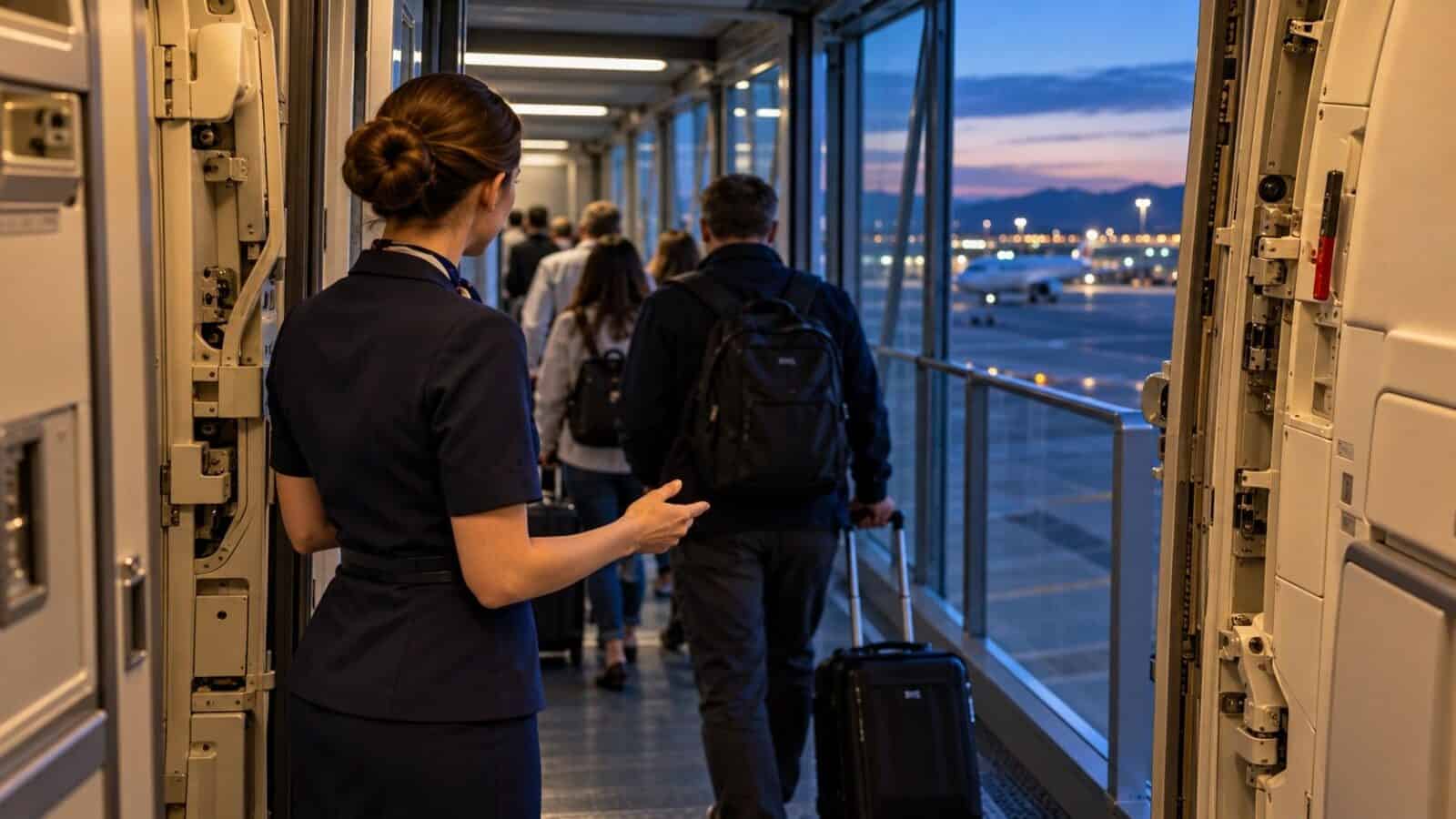
A holiday flight that boards twice can create two separate pay events for cabin crew, even when passengers complete only one journey. Boarding pay now recognises this repeated work under specific American Airlines and United Airlines arrangements. However, eligibility depends on what happened inside the aircraft, rather than simply how long travellers waited. As US passengers prepare for Thanksgiving travel in November 2026, those distinctions deserve attention. Official union guidance explains qualifying reboardings, while United’s September implementation update addresses how disrupted flights enter payroll records. For travellers, understanding the difference between crew compensation and passenger rights helps avoid costly assumptions.
Boarding pay recognises work before departure
The important distinction is between time spent working and the particular payment attached to it. Boarding, waiting with passengers and operating a flight can fall under different contractual provisions.
Advertisement
Advertisement
At American Airlines, the Association of Professional Flight Attendants announced that boarding compensation would begin on 1 April 2025. That implementation date matters: agreeing a contract and introducing a benefit are separate developments.
Its implementation notice explains that payment covers scheduled boarding time. Starting earlier does not increase that payment, while closing the door earlier does not reduce it. APFA
Advertisement
Advertisement
Consequently, boarding compensation should not be described as a continuous clock covering every minute before take-off. Other contractual protections must be considered before assessing total earnings.
When one journey creates two boarding events
For passengers, leaving an aircraft and returning later can feel like restarting the same flight. For payroll purposes, the second boarding can be a separate qualifying event.
Advertisement
Advertisement
American’s official union pay guidance says flight attendants receive 50% of their applicable hourly rate for scheduled boarding periods. It also states that when all passengers deplane, each boarding event attracts boarding compensation. APFA
The distinction rewards repeated boarding work without treating the journey as two completed flights. However, the published rule does not establish that every additional minute spent waiting receives the same payment.
United’s update shows why recording matters
United’s Joint Implementation Team published a specific payroll update on 9 September 2026. It said payments for qualifying reboardings and cancellations during the June, July and August bid months would be processed separately.
From the September bid month, those events were to appear on regular monthly pay registers. Crew were advised to allow two calendar days after completing their assigned trip for records to update.
The implementation guidance also identifies circumstances that may require a request, including replacement crews and an entire trip cancelled after boarding. This documents an administrative process, rather than proof that every affected worker remained unpaid. Section 4 Compensation
Leaving voluntarily is a different situation
United’s guidance distinguishes a company-required full deplaning followed by reboarding from an optional opportunity to leave during a delay. The latter does not create another boarding payment under that provision; holding-pay rules apply instead. Section 4 Compensation
Advertisement
Advertisement
That distinction is useful for travellers because similar-looking disruptions can have different contractual consequences.
| Situation | What the official guidance establishes |
|---|---|
| American passengers all deplane and board again | Each qualifying boarding event attracts payment |
| American boarding starts earlier than scheduled | Additional minutes do not increase scheduled boarding pay |
| United requires everyone to leave, then reboards the flight | The repeat-boarding provision applies |
| United offers passengers an optional exit | Additional boarding pay does not apply under that provision |
Sources: APFA pay guidance and United Joint Implementation Team.
A crew payment is not a passenger refund
A second boarding does not automatically establish a traveller’s right to cash compensation. Crew contracts and passenger protection rules answer different questions.
The US Department of Transportation’s refund guidance explains that cancellation or a significant flight change can trigger refund rights when the passenger declines travel and qualifying alternatives. Continuing with the significantly delayed journey generally removes entitlement to a ticket refund on that basis. US Department of Transportation
Passengers should therefore ask what has changed about their itinerary. The number of times they entered the aircraft does not, by itself, settle the refund question.
Why holiday businesses should pay attention
The tourism significance lies in the difference between flight recovery and holiday recovery. Getting an aircraft away eventually does not necessarily restore a traveller’s original plans.
Advertisement
Advertisement
A delayed arrival can leave a visitor needing to rearrange a transfer, contact accommodation or change an excursion. These are potential consequences, rather than measured losses established by the payroll documents.
For travel sellers, the practical response is clear communication. Confirm revised arrival details and check individual booking conditions before promising reimbursement for services outside the airline ticket.
What the evidence cannot establish
The official documents explain payment entitlements and implementation. They do not quantify how often US holiday flights board twice or calculate resulting tourism losses.
They also do not demonstrate that boarding compensation changes airfares, staffing levels or cancellation rates. Claims linking those outcomes would require additional operational and financial evidence.
The defensible finding is narrower: repeated boarding can generate additional compensation, and accurate recording helps workers receive contractual payments.
Traveller FAQs
Does boarding twice mean my flight attendant receives two payments?
Advertisement
Advertisement
It can. American and United publish qualifying repeat-boarding provisions, but the circumstances and applicable contract determine entitlement. APFA
Can I claim a refund simply because everyone left the aircraft?
No automatic entitlement follows from deplaning alone. Cancellation, significant itinerary changes and whether you accept onward travel determine refund eligibility. US Department of Transportation
What should I check before accepting an alternative flight?
Confirm its departure, arrival and connection details. Ask about refund eligibility before accepting an alternative, then contact any separately booked holiday suppliers.
The distinction travellers need to understand
Repeat boarding exposes a part of air travel that passengers rarely see: the same journey can generate several distinct work events. Official American and United guidance recognises qualifying additional boardings, while payroll instructions show why accurate records matter. Those provisions should not be confused with proof of universal underpayment or automatic passenger compensation. For holidaymakers, the practical priority remains the revised itinerary, refund eligibility and arrangements waiting at the destination. For airlines, the published commitments concern recognising eligible work and processing it correctly. The story rests on those documented distinctions, rather than assumptions about every delay or every payslip.
Advertisement
Advertisement
Official Sources
- APFA: https://www.apfa.org/resources/pay/pay-types/
- United Joint Implementation Team: https://sites.google.com/unitedafa.org/jit-updates-cba2026/section-4-compensation
- US Department of Transportation: https://www.transportation.gov/individuals/aviation-consumer-protection/refunds
Advertisement
