
Cape York Workforce Under Pressure as Visa Changes Spark Fears for Remote Tourism

Updated
Published
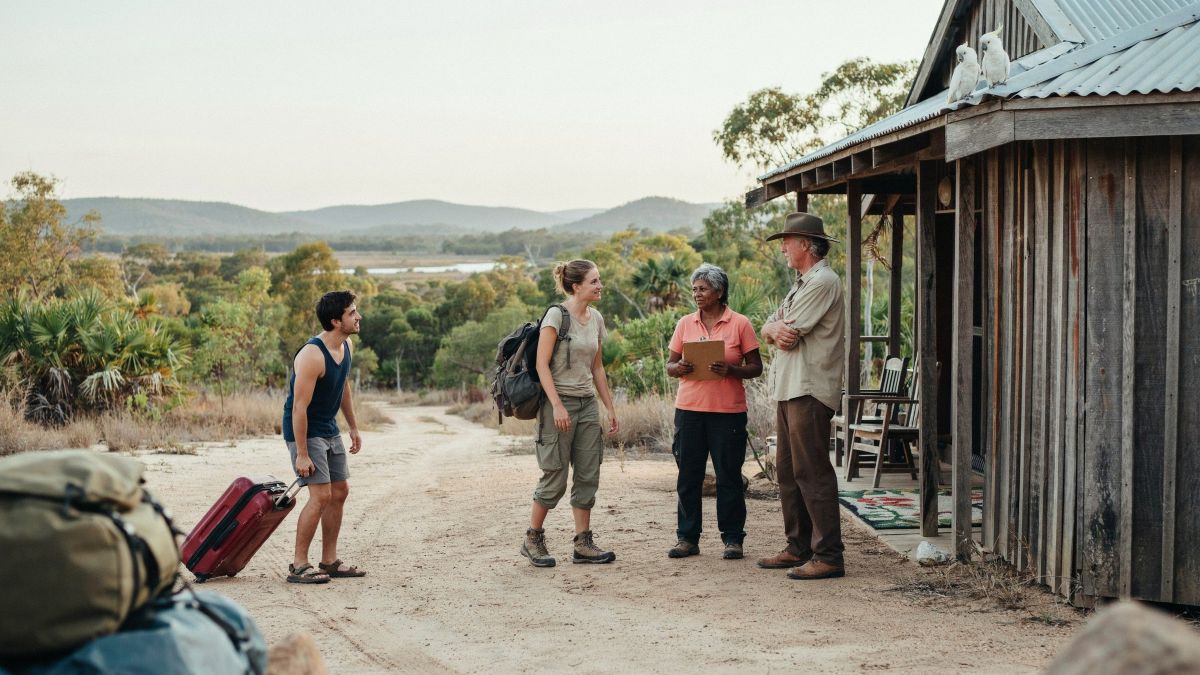
The Cape York workforce faces challenges as proposed visa changes have raised fears regarding remote tourism within the area. The Federal Government has ballot plans for Working Holiday Makers seeking second and third years in the country. Even though applicants will be required to undertake regional work, the completion of this task will not automatically lead to an additional year within the country. Instead, the officials have suggested allocating 45,000 visas for the second year and only 5,000 visas for the third year. The numbers have been alarming for businesses that depend on seasonal labor for meeting the requirements of visitors within the peninsula. However, the impact is unclear as the government has not yet announced the date from which renewal ballots will commence. The short dry season within the Cape York Peninsula makes the situation more challenging. The recruitment, training and accommodation of employees will have to be completed before some of the roads become unusable during the wet season. Thus, the debate has implications beyond numbers of immigrants.
What has the Government announced?
On 17 September 2026, Home Affairs Minister Tony Burke announced a plan to use ballots for people seeking second- and third-year Working Holiday Maker visas. Applicants would still need to complete the required regional work before entering a ballot. The announcement said the second-year ballot would have 45,000 places and the third-year ballot 5,000.
This means the work would no longer guarantee another year in Australia. Instead, eligible workers would need to be selected. That uncertainty worries businesses that hire people for seasonal jobs and invest time in training them.
However, the rules need careful wording. Home Affairs says the wider migration changes will be introduced over the next 12 months. Its current guidance says there are no caps for second- or third-year Work and Holiday visas. The Government’s announcement did not give a clear start date for the new renewal ballots. So the article should describe an announced change and explain that the exact rollout remains unclear.
Advertisement
Advertisement
How large are the proposed visa limits?
The proposed limits are far below the number of people who qualified in the previous year. The minister said about 57,000 people qualified for a second year, compared with 45,000 planned ballot places. About 31,000 were in the third-year group, compared with 5,000 planned places.
Those old numbers were not former visa caps. They describe previous qualifying groups. That difference matters when explaining the change. The comparison suggests a limit about 21 per cent below the earlier second-year group and nearly 84 per cent below the earlier third-year group. These percentages are calculations from the minister’s figures. They do not show how many workers Cape York will lose.
Advertisement
Advertisement
The “one-in-six chance” sometimes used to describe the third-year ballot also needs context. It comes from dividing 5,000 places by the previous group of about 31,000. Actual odds would depend on how many people enter the ballot and on the final selection rules.
Why could the impact begin before the ballot?
The biggest effect may happen before workers reach their second or third year. Some backpackers choose regional jobs because the work helps them qualify for another year in Australia. If that next year becomes uncertain, some may decide not to travel far from larger cities in the first place.
Advertisement
Advertisement
That could matter in Cape York, where long distances make hiring difficult. Businesses may compete for a smaller pool of people willing to travel north, take seasonal work and stay in a remote area.
The Queensland Tourism Industry Council says regional work is a key reason some young travellers go outside cities. It argues that removing certainty could weaken that incentive. This is an industry view, not a government forecast. It is still a useful question for reporting: will the ballot change workers’ choices before it changes the number of visas granted?
What do the business survey figures really show?
The Queensland Tourism Industry Council surveyed 38 tourism businesses across 11 Queensland regions between 24 September and 5 October 2026. Four in five respondents said they may cut trading hours or days, or close, if they cannot find enough workers. More than four in five said they might reduce or delay planned investment. Two in three expected their revenue to fall by more than 10 per cent.
These figures add detail to the warnings from Cape York operators. But they do not mean that four in five Cape York businesses will close. The survey covered different regions and a small number of businesses. It should be presented as a warning from the businesses that took part, not as a result for the whole state.
Advertisement
Advertisement
The council also reported that, among its respondents, every business that had advertised locally in the previous year said the response fell short. Nearly nine in ten received very few local applicants or none. These figures describe the surveyed businesses. They do not prove that no local worker could fill any role.
Why does Cape York’s short season matter?
Cape York has a strong wet-and-dry pattern. Queensland Parks says May to October is usually the best time to travel on the peninsula. Many roads and tracks can become impassable during the wet season, which often runs from late November to April.
That makes the timing of recruitment important. A worker who arrives late may miss a large part of the operating season. Businesses also need time to train staff before visitor numbers rise. If visa processing takes longer or workers are unsure they can stay, managers may find it harder to plan rosters months ahead.
Home Affairs says average processing times for most Working Holiday Maker applications are expected to be around three months. The department also warns that this is a guide, not a promise for each application.
A useful article could compare this processing period with the dates when Cape York businesses recruit, reopen and need extra staff. That would show whether the problem is only the number of places, or also the timing and certainty of decisions.
Could a lack of staff housing make hiring harder?
Employers need more than willing workers. They also need somewhere for those workers to live. Cook Shire’s Local Housing Action Plan describes pressure on housing from people who travel into the area for work. It says some workers use hotel rooms or rent whole homes, which can reduce accommodation available to visitors and residents.
Advertisement
Advertisement
The plan carries an important caution. It is dated August 2024 and relies in part on 2021 Census data. Cook Shire Council says those figures do not fully capture the area’s housing needs. It points to off-grid homes and itinerant farm workers that may be missed.
This gives the story a fresh line of inquiry: are remote businesses short of workers, beds for workers, or both? Ask employers how many staff beds they have, how much they cost, and whether applicants have turned down jobs because they could not find somewhere to stay.
Are road upgrades getting ahead of the workforce?
Queensland and the Australian Government are funding major road works on Cape York. Stage 2 of the Cape York Region Package has a total investment of A$323.13 million. The project aims to improve access to communities, health services, freight, education and economic opportunities. Works are expected to continue through 2028–29.
This creates a powerful question for the article: will better access lead to more tourism if businesses cannot staff the services visitors need? More reliable roads may help travellers, local communities and freight. But tourism also needs open rooms, meals, tours and support on the ground.
The available evidence does not show that the road programme has failed or that the visa plan has reduced its benefits. The article can examine whether workforce planning is keeping pace with public investment. Ask local councils and tourism bodies whether visitor growth plans include staffing and accommodation forecasts.
Can other worker programmes replace backpackers?
Other recruitment routes exist, but they may not be a quick replacement for seasonal backpackers. The Pacific Australia Labour Mobility scheme, or PALM, includes hospitality and tourism among the sectors it covers. Employers must meet eligibility, location and sponsorship requirements. Sole traders cannot become approved PALM employers.
Advertisement
Advertisement
The scheme also has formal duties around worker accommodation, transport and wellbeing. Its guidance distinguishes approved employers from host organisations that receive workers through an approved employer.
Far North Queensland also has a Designated Area Migration Agreement. This can provide access to some occupations beyond the standard skilled migration programme, but businesses need endorsement and must follow the relevant labour-agreement process.
The article should ask whether these routes suit short seasonal roles. Compare the time, costs, housing needs and paperwork for each pathway. The existence of another visa scheme does not prove that it can fill a vacancy before the next dry season.
Do all backpackers face the same rules?
No. The UK has a special arrangement under the Australia–UK Free Trade Agreement. Eligible UK passport holders can apply for up to three Working Holiday visas without completing specified regional work.
This means the regional-work incentive does not affect all nationalities equally. It also makes it risky to describe every Working Holiday Maker as depending on 88 days of regional work to stay longer.
At the same time, Australia widened the age range for some Working Holiday applicants in 2026. Passport holders from Cyprus, Finland, Germany and the Republic of Korea became eligible up to age 35. That change could widen the pool of people who can apply, but it does not show how many will arrive or choose remote jobs.
Advertisement
Advertisement
The article can use these differences to explain why a national visa total does not tell the full story of Cape York’s workforce. Local recruitment data by visa stage, nationality and season would make the picture clearer.
What would show the real local labour shortage?
An operator’s account can show how a shortage feels on the ground, but it cannot measure the whole region. Jobs and Skills Australia’s Cairns report offers broader context. It received responses from 88 Cairns employers for the year to February 2026. Among businesses that were recruiting, 31 per cent reported difficulty. Employers cited a lack of applicants, unsuitable applicants, remote location and difficult hours. The agency warns that small regional samples need care. These are Cairns figures, not specific Cape York tourism figures.
A strong report should ask what makes each job hard to fill. The answer may include distance, housing, transport, wages, work hours, training or the length of the season. It should also include local and Indigenous employment organisations.
Any discussion of overseas workers should include fair treatment. The Fair Work Ombudsman says visa holders have the same workplace protections and entitlements as other employees in Australia.
What is the wider migration argument?
The Government says its wider migration changes aim to support net overseas migration forecasts of 245,000 for 2026–27 and 225,000 for 2027–28. Those goals cover the broader migration programme. They are not a forecast of the effect of the Working Holiday Maker ballots alone.
There is also a difference between a temporary visa and the way migration is counted. The Australian Bureau of Statistics uses a time-based rule. A person can count towards net overseas migration if they spend at least 12 months in Australia during a 16-month period, even if they hold a temporary visa and plan to return home.
Advertisement
Advertisement
That distinction could help readers understand why a backpacker may be both a temporary visitor and part of the migration figures. The central question is whether reducing those figures will also reduce the workers and visitor spending that remote businesses rely on.
The key question for Cape York
The workforce in Australia’s Cape York faces pressures as new visa regulations generate anxiety for the area’s tourism industry, but the situation goes beyond the number of workers who will be able to continue working for one more year. The employers require workers willing to work and adequate accommodation facilities. At the same time, there is no space in the short period of tourism in the area for recruitment delays. The tourism council’s survey suggests some concerns, although it does not predict the situation for all businesses. The announced visa restriction raises a new issue – when will the new regulation come into force? There is no information about that in the examined government advice. In addition, road building on Cape York peninsula may increase the importance of the tourism services in the approaching tourist season. The facts about the situation are necessary to assess its influence. They may include vacancies, accommodation facilities, recruitment dates, shorter working hours, canceled reservations, and canceled services.
Advertisement
